Support our educational content for free when you purchase through links on our site. Learn more
🪄 Magic Tricks: From Ancient Mystery to Modern Wonder

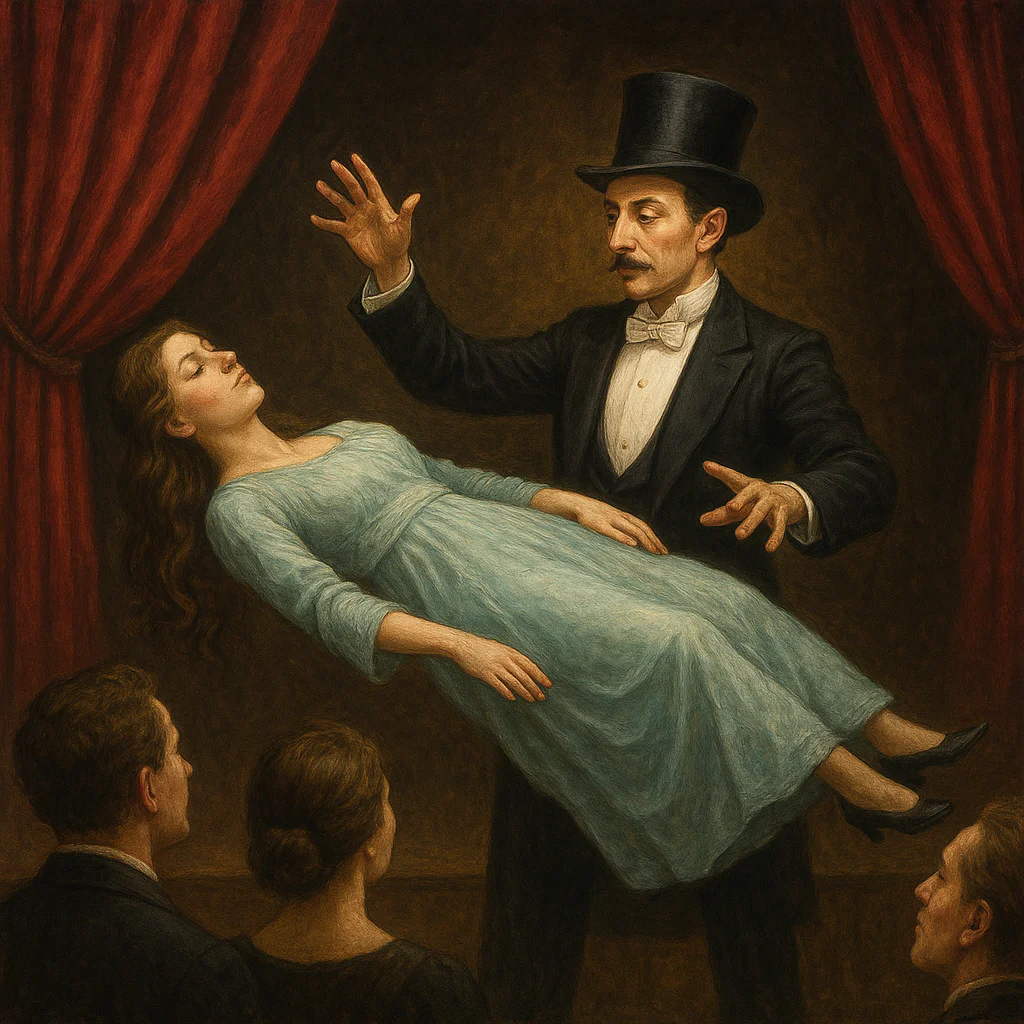
Magic tricks began as a blend of ritual, deception, mechanical ingenuity, and entertainment. The answer to “What are the origins of magic tricks and how have they evolved over time?” stretches from ancient Egyptian stories and cups-and-balls routines to theatrical illusion, television spectacle, street magic, smartphones, and artificial intelligence.
One of the earliest famous accounts appears in the Egyptian Westcar Papyrus, which describes the magician Dedi performing astonishing feats before Pharaoh Khufu. We cannot verify every detail as a literal trick, but the story proves that the magician was already a recognizable cultural figure thousands of years ago.
The props have changed dramatically. The audience has not: people still lean forward when an ordinary coin vanishes, insist they were watching closely, and then discover that their attention took a perfectly timed holiday. At Magic Trick™, we see that continuity as magic’s real secret: technology evolves, but human perception remains wonderfully vulnerable to a good story and a well-timed gesture.
Key Takeaways
- Magic began in ancient ritual, storytelling, engineering, and sleight of hand, with early evidence from Egypt and other civilizations.
- The cups-and-balls routine is one of the oldest recognizable magic plots still performed today.
- Printing, urban theaters, and industrial technology transformed conjuring from portable entertainment into professional stage magic.
- Jean-Eugène Robert-Houdin helped create the modern magician’s image, while Harry Houdini made escapology a global spectacle.
- Television, film, street magic, and social media changed how audiences judge mystery, making framing and authenticity increasingly important.
- Modern magic relies on psychology as much as props, using attention, memory, timing, misdirection, and audience participation.
- Smartphones, augmented reality, and artificial intelligence are extending magical performance, but human storytelling remains the ingredient technology cannot replace.
Table of Contents
-
The Short Answer: Magic Began as Mystery, Ritual, and Entertainment
-
🏺 Ancient Origins of Magic Tricks: Egypt, Greece, Rome, and Beyond
-
Roman Street Performers, Cup-and-Ball Tricks, and Charlatans
-
Magic Traditions in India, China, Persia, and the Islamic World
-
🕯️ Medieval Magic: Street Entertainers, Court Illusionists, and Witchcraft
-
🖨️ The Renaissance and the Birth of Magic as a Published Art
-
🎭 The Birth of Modern Stage Magic in the 18th and 19th Centuries
-
🎬 Magic Tricks on Television, Radio, Film, and Popular Culture
-
The Influence of Orson Welles, Paul Daniels, and The Magic Castle
-
The Evolution of Props: Cups, Cards, Coins, Boxes, and Electronics
-
The Growth of Mentalism, Psychic Entertainment, and Mind Reading
-
African, Latin American, and Indigenous Performance Traditions
-
Cultural Exchange, Appropriation, and Responsible Storytelling
-
Artificial Intelligence and the Future of Magical Performance
-
👩 🎩 Women, Diverse Performers, and Underepresented Voices in Magic
-
The Magic Circle, Society of American Magicians, and Academy of Magical Arts
-
🧒 Magic Tricks for Children, Beginners, and Aspiring Magicians
-
Practice, Performance Ethics, and Respect for Magical Secrets
-
⚖️ Ethics, Exposure, Fraud, and the Future of Magical Secrets
-
The Difference Between Entertainment Magic and Paranormal Claims
-
❓ Frequently Asked Questions About the Origins and Evolution of Magic Tricks
Quick Tips and Facts
Magic has never been only about pulling rabbits from hats. It is a performing art built on deception, psychology, engineering, storytelling, and audience trust. If you want the shortest answer to “What are the origins of magic tricks and how have they evolved over time?”, start with our guide to what is the oldest magic trick?, then keep these facts in your pocket:
| Question | Best-supported answer |
|---|---|
| How old are magic tricks? | Recognizable conjuring appears in ancient written and artistic records, including the Egyptian Westcar Papyrus and ancient cups-and-balls imagery. |
| What may be the oldest surviving trick? | The cups-and-balls routine is often traced to at least the 3rd century BCE, though similar deception may be older. |
| Who is the father of modern stage magic? | Jean-Eugène Robert-Houdin, who opened a theatrical magic venue in Paris in 1845. |
| When did magic become a professional theater art? | Most dramatically during the 18th and 19th centuries, as fairground conjuring moved into ticketed theaters and permanent venues. |
| Why did magic evolve? | New venues, printing, mechanical technology, electricity, cinema, television, and the internet all changed what magicians could present. |
| What makes magic work? | Misdirection, secret methods, timing, psychology, choreography, apparatus, and carefully managed perspective. |
| Is magic supernatural? | Stage magic is presented as entertainment using natural methods. Fraud begins when performers claim supernatural powers to obtain money, influence, or authority. |
The big historical pattern
We can summarize the evolution in five movements:
- Ritual and wonder: Ancient performers mixed religious ceremony, engineering, storytelling, and deception.
- Portable entertainment: Juglers, street performers, and fairground conjurers carried tricks from town town.
- Theatrical respectability: Robert-Houdin and his contemporaries placed magic in elegant theaters with polished costumes and dramatic staging.
- Mass media spectacle: Vaudeville, film, radio, television, and touring shows expanded audiences.
- Personalized and digital magic: Close-up magic, street magic, mentalism, social media, smartphones, and interactive video now share the stage.
That progression sounds tidy. It wasn’t. Magic constantly borrowed from science while pretending to defy it, and that delicious contradiction is where much of its charm lives. 🪄
What counts as a magic trick?
A magic trick is an apparently impossible effect achieved through concealed natural means. The effect may involve:
- Making an object appear or vanish
- Changing one object into another
- Restoring something torn or broken
- Moving an object from one place to another
- Escaping restraints
- Predicting a choice
- Reading thoughts or influencing decisions
- Making someone appear to levitate
- Creating the impression that solid objects pass through one another
Magicians often describe these as effect categories, not explanations. “Vanish” tells you what the audience experiences; it does not reveal how the method works. The same routine may combine a vanish, transformation, penetration, and prediction.
For a closer look at one of the most enduring forms, visit our Close-up Magic category.
A useful distinction: magic, illusion, and conjuring
These words overlap, but they carry different historical flavors:
| Term | Typical meaning | Where you’ll hear it |
|---|---|---|
| Magic trick | A specific deceptive effect | Casual conversation, beginner instruction |
| Conjuring | Traditional theatrical or close-up magic | Historical writing and professional communities |
| Illusion | Often a large-scale stage effect, though broadly used | Theater, television, stage shows |
| Sleight of hand | Skillful manipulation of objects | Card magic, coin magic, cups-and-balls |
| Mentalism | Apparent mind reading, prediction, or influence | Cabaret, stage, television |
| Escapology | Escapes from restraints or confinement | Houdini-style performance |
| Special effects | Cinematic or technological deception | Film, television, digital media |
The label matters because it shapes audience expectations. A close-up card trick invites scrutiny. A stage illusion asks you to surrender control of distance, lighting, and perspective. A mentalism act asks a more uncomfortable question: did the performer influence me, or did I freely choose?
Key dates in the evolution of magic
| Date or period | Development | Why it matters |
|---|---|---|
| c. 170 BCE | The Westcar Papyrus describes the magician Dedi | One of the earliest famous literary references to conjuring-like feats |
| At least 3rd century BCE | Cups-and-balls tradition is documented or represented | Demonstrates the remarkable longevity of sleight-of-hand structures |
| 1489 | Natural and Unatural Magic circulates | Early printed efforts to describe deceptive and mechanical effects |
| 1584 | Reginald Scot publishes The Discoverie of Witchcraft | Challenges supernatural explanations and documents tricks |
| 18th century | Fairground magic becomes increasingly commercial | Conjurers build repeatable public careers |
| 1840 | John Henry Anderson opens the New Strand Theatre | Shows how advertising and permanent venues professionalized magic |
| 1845 | Robert-Houdin opens his Paris theater | Helps establish modern theatrical magic |
| 1873–1904 | Maskelyne and Cooke perform at London’s Egyptian Hall | Long-running illusion theater becomes a commercial model |
| 1905 | The Magic Circle is founded in London | Professional magic gains an organized institution |
| Late 19th–early 20th century | Golden Age of magic | Touring, vaudeville, posters, and theater create international stars |
| 1896 onward | Magicians influence early cinema | Stage illusion techniques become film special effects |
| 20th century | Radio, television, and large-scale touring shows expand reach | Magic becomes mass entertainment |
| 1990s onward | Street magic and close-up television surge | Unscripted-looking reactions become part of the appeal |
| 2020 onward | Video-conference and social-media magic accelerate | Performance adapts to screens, cameras, and remote audiences |
Background: What Did “Magic” Originally Mean?
The word magic did not begin as a synonym for a card trick. Its linguistic history points toward ancient religious specialists and foreign ritual practices.
The English word derives through Latin and Greek from terms associated with the Persian magi, a priestly or scholarly class. The Encyclopaedia Britannica’s discussion of magic explains that the word developed from associations with ritual power, occult knowledge, and practices considered outside accepted religion.
Over time, the word broadened. It could describe:
- Religious rites
- Astrology and divination
- Alchemy
- Healing practices
- Alleged supernatural powers
- Mechanical demonstrations
- Sleight of hand
- Theater and entertainment
That expanding meaning produced a historical blur. An Egyptian temple ceremony, a medieval astrological manuscript, a Victorian stage illusion, and a modern card trick might all be called “magic,” but they served very different social purposes.
Ritual magic versus performance magic
The boundary was not always obvious to spectators.
| Ritual or alleged supernatural practice | Performance magic |
|---|---|
| Claims access to hidden spiritual powers | Presents an impossible effect as theatrical entertainment |
| Often tied to religion, healing, prophecy, or authority | Usually tied to tickets, applause, and artistic reputation |
| May depend on belief in the performer’s powers | Depends on the audience accepting a temporary fictional premise |
| Can become fraud when money or obedience is extracted | Ethical when the entertainment frame remains clear |
| Methods may be concealed to preserve authority | Methods are concealed to preserve wonder |
Ancient priests, court astrologers, traveling performers, and modern magicians sometimes used similar tools: smoke, darkness, hidden mechanisms, dramatic language, and carefully controlled attention. The crucial difference was what the audience was expected to believe afterward.
A theater magician says, “Enjoy the mystery.” A fraudulent medium says, “Pay me, and I will contact the dead.” That is not merely a difference in costume; it is an ethical boundary.
Why the word “conjurer” matters
“Conjurer” historically suggested someone who invoked spirits or supernatural forces. By the 18th and 19th centuries, performers increasingly used the term to mean a person who produced astonishing effects through skill and apparatus.
That shift helped magic survive the Enlightenment. As scientific explanations replaced many supernatural beliefs, conjurers could reposition themselves as:
- Entertainers
- Demonstrators of perception
- Mechanical innovators
- Masters of dexterity
- Storytellers who staged impossible events
The trick remained secret. The explanation for the secret changed.
Ancient Origins of Magic Tricks: Egypt, Greece, Rome, and Beyond
Ancient civilizations did not separate religion, science, engineering, and entertainment as sharply as modern audiences often do. A clever mechanism might animate a temple statue, impress a royal court, or amuse a crowd. The same principle could wear several costumes.
The Westcar Papyrus and the magician Dedi
The most frequently cited early account is the Egyptian Westcar Papyrus, a literary manuscript generally associated with the Second Intermediate Period. One story describes Dedi, a magician invited to perform before Pharaoh Khufu.
The account attributes astonishing feats to Dedi, including:
- Reattaching the head of a goose after decapitation
- Performing similar demonstrations with other animals
- Knowing secret information
- Producing extraordinary effects for the royal court
Should we treat this as a literal record of a successful ancient performance? Not necessarily. It is a literary tale, and its supernatural framing may be part of the storytelling. Still, it is valuable evidence that audiences in ancient Egypt recognized the cultural figure of the magician as a specialist in impossible demonstrations.
The first video featured in this article presents the Dedi story as an early example of magic tricks and places it within a broad timeline from ancient Egypt to modern technology. You can revisit that perspective at #featured-video. Its historical value is strongest as a starting point for the idea of conjuring, not as proof that Dedi literally performed modern stage magic.
What might Dedi’s trick have been?
We cannot reconstruct the method with confidence. A performance involving animal could have included:
- A theatrical substitution
- A prepared prop
- A verbal deception
- A staged narrative rather than a genuine physical restoration
- A symbolic ritual presented as magical power
This is a recurring problem in magic history: ancient sources usually preserve the effect, not the method. They tell us what people said happened, not what an audience member would have seen from three feet away.
Egyptian temple technology and engineered wonder
Ancient Egyptian religious sites used visual and mechanical effects that could appear miraculous. Historians and archaeologists have documented sophisticated knowledge of:
- Water movement
- Counterweights
- Hidden chambers
- Light and shadow
- Sound projection
- Automata and mechanical figures
Not every temple effect was a “magic trick” in theatrical sense. However, controlled environments allowed priests and engineers to create experiences that felt supernatural. A door opening at a chosen moment or a voice emerging from a hidden location could transform engineering into authority.
Our magicians at Magic Trick™ see this as an important distinction: the mechanism does not determine the category; the presentation does. The same hidden lever can be a religious wonder, a scientific demonstration, or a theater prop.
Greek cups, pebbles, and deceptive objects
Ancient Greek writers and later historians describe forms of deception involving cups, balls, pebbles, and small objects. The precise continuity is difficult to prove, but the structure resembles what we now call:
- Cups-and-balls
- Shell games
- Street gambling scams
- Misdirection demonstrations
- Object transpositions
The basic plot is almost insultingly simple:
- Place an object under one of several containers.
- Move the containers.
- Invite the spectator to follow the object.
- Secretly control where attention and the object go.
- Reveal an impossible result.
Yet the plot survives because it exploits a powerful weakness: people track the story they expect, not every physical movement.
Ancient versions may have been entertainment, gambling, or deception. The modern cups-and-balls routine adds theatrical structure, comic timing, impossible final loads, and a performer-audience relationship. Explore related techniques in our Illusions section.
Roman street performers and professional deception
Roman public life included entertainers who worked in markets, festivals, banquets, and theaters. Juglers, acrobats, puppeters, and performers using small props occupied a social world where amusement and fraud could sit dangerously close together.
Small-object magic had practical uses beyond entertainment:
- Demonstrating dexterity
- Distracting gamblers
- Selling “miracle” remedies
- Creating a reputation for supernatural skill
- Drawing crowds for a larger act
- Separating spectators from their money
This is why magic history cannot be reduced to a parade of famous names. The same methods that delight a theater audience can cheat a passerby at a street corner.
India, China, Persia, and the wider ancient world
Historical claims about “the Indian rope trick” or ancient Chinese magic are often repeated too confidently. Some traditions are old; some popular stories were shaped by colonial-era journalism, tourism, and later stage adaptation.
China developed rich traditions of:
- Linking rings
- Silk production and vanishes
- Umbrella and fan manipulation
- Fire and paper effects
- Acrobatics and juggling
- Theater-based illusion
India developed diverse performance traditions involving:
- Street conjuring
- Basket and rope narratives
- Shell games
- Animal performance
- Religious storytelling
- Breath control and physical feats
Persian and Islamic intellectual traditions contributed to:
- Automata
- Optics
- Mechanical engineering
- Scientific demonstrations
- Manuscripts describing ingenious devices
A reliable principle is to distinguish a documented performance tradition from a later legend about that tradition. The Metropolitan Museum of Art and the British Museum offer stronger starting points for cultural context than viral retellings.
How Far Back Can We Trace Conjuring and Sleight of Hand?
The honest answer is: farther than the surviving evidence allows us to document, but not always as far as popular histories claim.
People have always manipulated objects, hidden information, and exploited attention. But historians need evidence such as:
- Written descriptions
- Images or carvings
- Surviving apparatus
- Archaeological context
- Independent accounts
- Demonstrable continuity between old and modern methods
The oldest known trick is not necessarily the oldest invented trick
The cups-and-balls routine is frequently called the oldest magic trick still performed. That claim is useful but should be treated carefully.
It means:
- Versions or representations exist from antiquity.
- The core plot remains recognizable.
- The routine has survived across many performance cultures.
- Its method relies on universal human attention patterns.
It does not mean:
- The first person to perform it lived in ancient Greece.
- No older trick ever existed.
- Every modern cups-and-balls routine descends directly from one uninterrupted performer lineage.
- Ancient spectators interpreted the trick exactly as modern spectators do.
We prefer the phrase “one of the oldest continuously recognizable conjuring plots”. It is less flashy, but history deserves more than a top hat and a questionable date.
Archaeological evidence versus written accounts
| Evidence type | Strength | Limitation |
|---|---|---|
| Written narrative | Reveals language, social role, and claimed effect | May exaggerate or use fiction |
| Illustration or sculpture | Shows objects and gestures | Usually omits method and context |
| Surviving apparatus | Demonstrates construction and technology | May not reveal original performance |
| Legal or religious record | Shows social concern about magic | Often hostile or biased |
| Oral tradition | Preserves cultural memory | Difficult to date and verify |
| Modern reconstruction | Tests plausibility | Cannot prove the historical method |
A papyrus may tell us that Dedi was famous. A painting may show a performer bending over cups. A surviving mechanical device may prove ancient engineering skill. None automatically proves a modern-style stage trick.
Why ancient magic was often believed to be real
Modern audiences arrive with a strong expectation that theater is artificial. Ancient audiences could see performances in festivals, temples, royal courts, markets, and religious settings where the boundaries were less stable.
Belief was encouraged by:
- Limited access to scientific explanations
- Social hierarchy
- Ritual authority
- Dramatic costumes and language
- Controlled lighting or architecture
- Scarcity of repeat performances
- Fear of divine or royal punishment
- The performer’s reputation
A person who saw a hidden mechanism once might not have had the opportunity to inspect it, compare methods, or search a library. Today, an audience member can replay a video frame by frame. Ancient spectators had memory, rumor, and the storyteller standing in front of them.
Medieval Magic: Street Entertainers, Court Illusionists, and Witchcraft
The medieval period was not a blank space between ancient Egypt and Houdini. Magic continued through markets, courts, manuscript culture, religious storytelling, and traveling performance.
It was also a dangerous period for anyone accused of using supernatural powers.
Juglers, troubadours, and traveling conjurers
The medieval word juggler could refer to a performer who:
- Sang or recited poetry
- Played instruments
- Juggled objects
- Performed sleight of hand
- Told stories
- Demonstrated physical feats
- Sold charms or remedies
These performers were mobile, adaptable, and often economically precarious. They performed wherever crowds gathered:
- Fairs
- Marketplaces
- Taverns
- Noble courts
- Religious festivals
- Private banquets
Their social status varied. A skilled entertainer might receive royal patronage, while another could be dismissed as a vagrant or fraud.
That tension shaped the evolution of magic. The more a performer presented magic as a skill, the safer it could be; the more they claimed supernatural authority, the greater the danger.
The cups-and-balls trick and its enduring legacy
The cups-and-balls routine became a durable foundation because it offers a perfect theatrical engine:
- A small object visibly disappears.
- The audience believes it remains under a cup.
- The performer reveals it elsewhere.
- The object appears to travel, multiply, or return.
- Larger objects appear under the cups in impossible locations.
Its success rests on several principles:
- Repetition: The audience thinks it understands the pattern.
- False explanations: The performer appears to show the method.
- Rhythm: Secret actions occur during pauses, jokes, or moments of emphasis.
- Object familiarity: Ordinary cups and balls make the impossible more personal.
- Escalation: The final reveal exceeds the earlier events.
We have performed versions of this routine for spectators who confidently announce, “I know exactly where the ball is.” That sentence is usually the moment the ball is safest somewhere else. 😄
Learn related object manipulation through our Coin Tricks resources.
Alchemy, astrology, and grimoires
Medieval and early modern texts often combined:
- Astrology
- Alchemy
- Natural philosophy
- Medicine
- Prayer
- Spirit invocation
- Divination
- Mechanical recipes
To modern readers, this mixture can look irrational. Historically, it reflects a world where the categories of science, religion, magic, and medicine were still being negotiated.
Some practitioners sought genuine knowledge. Others sold mystery. Many did both.
The performance of an astrological chart, a healing ceremony, or an alchemical demonstration could rely on the same theatrical ingredients as conjuring:
- Special objects
- Formal language
- Secret procedures
- Delayed revelations
- Authority symbols
- Controlled access
Magic and accusations of witchcraft
The association between magic and the devil intensified in parts of medieval and early modern Europe. Not every performer was prosecuted, and not every accusation concerned sleight of hand. But the fear of witchcraft created a hostile environment for people claiming occult powers.
Reginald Scot later challenged such beliefs in The Discoverie of Witchcraft, published in 1584. The book argued against witch persecution while also explaining methods involving:
- Coins
- Ropes
- Cards
- Knives
- Paper
- Apparent supernatural effects
Scot’s work is historically important because it places skepticism and exposure inside the history of magic itself. Magicians did not merely inherit secrets; some also actively dismantled false explanations.
The Renaissance and the Birth of Magic as a Published Art
The Renaissance transformed magic by changing how knowledge moved. Printing made secrets more portable, repeatable, and difficult to contain.
Before mass printing, a performer’s knowledge might pass through:
- Apprenticeship
- Family tradition
- Informal clubs
- Oral instruction
- Handwritten manuscripts
- Court networks
After printing, a reader could acquire a method without ever meeting its originator. That was liberating, commercially useful, and deeply annoying to anyone trying to protect a signature effect.
Reginald Scot and The Discoverie of Witchcraft
Scot’s 1584 book is often described as one of the earliest major English works to expose conjuring methods. It covered tricks that could be mistaken for supernatural feats and argued that many accusations of witchcraft were rooted in ignorance, fear, or fraud.
Its importance reaches beyond individual methods:
- It separated secret technique from supernatural explanation.
- It preserved details of early performance practice.
- It treated deception as something that could be analyzed.
- It gave skeptical readers tools to challenge alleged miracles.
- It helped establish a printed tradition of magic instruction.
The history is not perfectly neat. Accounts that King James I ordered the book burned are widely repeated, but the scale and certainty of that destruction are debated. As always, a dramatic story is not automatically a well-documented story.
The influence of printing on secret tricks
Printing changed magic in four major ways:
| Change | Effect on performers | Effect on audiences |
|---|---|---|
| Wider distribution | Secrets became teachable beyond local circles | More people could learn tricks |
| Standardized terminology | Performers could discuss methods | Magic became a recognizable field |
| Commercial instruction | Books became products | Beginners gained structured training |
| Exposure and competition | Magicians needed originality and presentation | Spectators became harder to surprise |
The result was not the death of mystery. It produced a new kind of mystery: audiences could know that methods existed without knowing which method was being used now.
That remains true with a marked deck, a gimmicked coin, or a phone-based prediction. Knowledge of technique does not equal knowledge of the specific technique.
Magic, science, and the rise of skepticism
The Renaissance and Enlightenment encouraged observation, measurement, experiment, and skepticism. This created both a threat and an opportunity.
Magic lost some authority when natural phenomena gained scientific explanations. At the same time, conjurers gained new material from:
- Magnetism
- Electricity
- Optics
- Pneumatics
- Chemistry
- Clockwork
- Illusions of perspective
- Mechanical automation
A performer could frame a trick as:
- A scientific demonstration
- A mechanical marvel
- A philosophical puzzle
- A supernatural mystery
- A theatrical illusion
The choice depended on the audience and venue.
Early card tricks, coin vanishes, and mental effects
Cards became increasingly important as playing-card production spread through Europe. Card magic grew from gambling culture, gaming technology, and the performer’s ability to manipulate a familiar object.
Early card effects commonly involved:
- Finding a chosen card
- Producing cards from impossible locations
- Changing one card into another
- Predicting a selection
- Causing cards to rise, vanish, or transpose
Coins and small objects offered different strengths:
- They were ordinary and examinable.
- They worked intimate settings.
- They made sound and visual contact important.
- They encouraged close-up handling.
- They could be borrowed from spectators.
The foundations of modern Card Tricks and coin magic were already emerging: control, concealment, timing, and the dramatic contrast between what the hands do and what the audience remembers seeing.
The Birth of Modern Stage Magic in the 18th and 19th Centuries
The 18th and 19th centuries delivered the great makeover. Magic moved from the fairground toward theater, and the magician changed from a rough traveling wonder-worker into a polished professional.
The trick mattered. The brand, venue, costume, lighting, advertising, and storyline mattered just as much.
From fairground tricks to elegant theater performances
Until the 18th century, conjuring was commonly presented alongside:
- Juggling
- Sword swallowing
- Fire eating
- Acrobatic feats
- Animal acts
- Puppet theater
- Traveling medicine shows
As belief in witchcraft declined in some European settings, performers could frame magic as entertainment or natural philosophy. Wealthy patrons and urban theater audiences offered new opportunities.
This was a major shift in audience contract:
| Fairground model | Theatrical model |
|---|---|
| Passing crowd | Ticketed audience |
| Short demonstrations | Structured program |
| Portable props | Designed apparatus |
| Informal pater | Rehearsed script |
| Immediate sales pitch | Repeat attendance and reputation |
| Performer as curiosity | Performer as artistic personality |
Theatrical magic did not become respectable simply because its methods improved. It became respectable because the entire presentation looked like culture.
Jean-Eugène Robert-Houdin and modern conjuring
Jean-Eugène Robert-Houdin was originally trained as a clockmaker, a background that shaped his interest in precision, mechanism, and elegant apparatus. In 1845, he opened a magic theater in Paris.
He is often called the Father of Modern Magic, a title that should be understood as a statement about theatrical influence rather than a claim that no one before him performed sophisticated magic.
Robert-Houdin helped redefine the magician as:
- A refined gentleman
- A technical innovator
- A theatrical host
- A master of elegant apparatus
- A performer who could command a serious audience
His shows featured:
- Mechanical automata
- Electrical and clockwork demonstrations
- Transformations
- Spiritual or mysterious themes presented theatrically
- Costuming that distinguished him from fairground performers
He replaced the image of the raged conjurer with the image of the modern professional magician in formal evening dress.
John Henry Anderson and the power of promotion
John Henry Anderson, known as The Great Wizard of the North, helped establish magic as a large-scale commercial attraction in Britain. He opened the New Strand Theatre in London in 1840 and became known for publicity, touring, and spectacle.
Anderson’s example demonstrates a truth sometimes missed in trick-centered histories: marketing is part of magic history.
His success relied on:
- Memorable stage identity
- Posters and newspaper advertising
- Grand claims
- International touring
- A recognizable repertoire
- A promise of novelty
A modern social-media magician who builds a distinctive visual brand is following Anderson’s path more than they may realize. The platform changed; the need to make the audience curious did not.
The transformation of magic props and stage machinery
Industrial manufacturing made it easier to build elaborate apparatus. Stage magic benefited from:
- Precision metalwork
- Improved glass
- Hidden hinges and locks
- Gears and puleys
- Electric lighting
- Theater fly systems
- Mirrors and transparent screens
- More reliable transportation
- Mass-produced playing cards and props
Apparatus became part of a magician’s identity. A performer could own a signature cabinet, levitation system, automaton, or production box that audiences associated with that act.
This also introduced drawbacks:
- Large props were expensive to transport.
- Mechanical systems could fail publicly.
- Assistants became essential.
- Designs were copied or pirated.
- Hidden mechanisms sometimes created safety risks.
- The spectacle could overwhelm the performer’s personality.
Our practical advice is simple: a clever prop cannot rescue a dull performance. A small coin vanish with good timing can outlive a massive machine with no emotional story.
Maskelyne, Devant, and the permanent magic theater
John Nevil Maskelyne and David Devant helped establish a long-running model at London’s Egyptian Hall. The venue became associated with magic and illusion for decades, demonstrating that audiences would return to see new programs in a dedicated setting.
Permanent venues offered advantages that fairgrounds could not:
- Controlled sightlines
- Consistent lighting
- Hidden backstage equipment
- Repeatable staging
- Comfortable seating
- Professional ticketing
- Public reputation
- The ability to develop longer narratives
They also made magic more collaborative. Large shows required:
- Designers
- Builders
- Stage managers
- Assistants
- Costumers
- Publicists
- Musicians
- Venue owners
The magician became less like a lone trickster and more like the creative director of a theatrical production.
The magician’s emerging public image
Alexander Herrmann, known as Herrmann the Great, helped popularize a recognizable magician persona:
- Top hat
- Tailcoat
- Goatee
- Wavy hair
- Confident posture
- Mysterious but charismatic manner
This image became so influential that it still appears in Halloween costumes and cartoon symbols. Yet it was never inevitable. It was branding.
That point matters because later performers deliberately rejected it:
- Harry Houdini emphasized physical danger and personal endurance.
- Dai Vernon emphasized intimate technical skill.
- David Blaine favored stripped-down street presentation.
- Penn & Teller made skepticism and comedy part of the brand.
- Derren Brown foregrounded psychology and suggestion.
- Shin Lim emphasizes visual elegance and cinematic close-up choreography.
The costume tells you what kind of impossible world the performer wants you to enter.
The Golden Age of Magic: 10 Pioners Who Changed Conjuring
The late 19th and early 20th centuries are often called the Golden Age of Magic. That label reflects the growth of theater, vaudeville, touring circuits, illustrated posters, mass newspapers, and commercial entertainment.
The period produced stars, but it also created a professional ecosystem. Here are ten influential figures and the innovations they represent.
1. Harry Houdini and the art of the escape
Harry Houdini turned escape into a dramatic narrative of danger, control, and survival.
His acts involved:
- Handcuffs
- Straitjackets
- Locked containers
- Water escapes
- Public challenges
- Police restraints
- Elaborate publicity
Houdini’s genius was not simply that he could escape. It was that he made the escape feel like a contest between the performer and the world.
He also investigated fraudulent mediums, demonstrating that a magician’s knowledge of deception could serve skeptical inquiry. The Smithsonian and Library of Congress provide useful starting points for researching his public career.
One historical caution: Houdini’s stage name honored Robert-Houdin, but Houdini later criticized him in The Unmasking of Robert-Houdin. The relationship between admiration and rivalry is one of magic history’s recurring little dramas.
2. Howard Thurston and the grand illusion show
Howard Thurston built a large touring production with:
- Assistants
- Costumes
- Music
- Painted scenery
- Animals
- Illusions
- Dramatic lighting
- Strong advertising
His work helped establish the idea of magic as an evening-length spectacular rather than a sequence of unrelated tricks.
Thurston’s production model also foreshadowed modern touring shows: the performer was the public face of a substantial logistical operation.
3. Harry Kellar and the spirit cabinet
Harry Kellar became one of America’s leading stage magicians and was known for large illusions and spirit-themed presentations.
His career shows how Victorian magic borrowed from spiritualism while maintaining a theatrical frame. Audiences enjoyed mysterious cabinets, floating objects, and unseen forces, but the performer’s success depended on the same tools found throughout conjuring:
- Secret compartments
- Assistants
- Timing
- Hidden access
- Controlled viewpoint
- Dramatic suggestion
4. Alexander Herrmann and the charismatic magician
Herrmann’s importance lies in performance identity. He made the magician himself a visual attraction.
His appearance and manner helped standardize an archetype that audiences still recognize. He was not merely presenting tricks; he was presenting Herrmann the Great.
This shift toward celebrity would later shape Houdini, Copperfield, Blaine, Angel, and every magician whose name becomes part of the product.
5. David Devant and professional magic culture
David Devant was a major British performer, inventor, writer, and organizer. He helped develop the professional culture around modern magic and worked with Maskelyne at the Egyptian Hall.
Devant understood that magic required:
- Originality
- Clear presentation
- Reliable methods
- Audience management
- Professional ethics
- Institutional support
His influence can be felt in the modern expectation that magicians share a craft vocabulary and professional standards rather than merely hoarding tricks.
6. Chung Ling Soo and the power of persona
Chung Ling Soo was the stage identity of American magician William Ellsworth Robinson, who performed in an intentionally constructed Chinese persona.
His success highlights both the effectiveness and the ethical problems of theatrical exoticism. The persona created instant differentiation, but it also relied on stereotypes and cultural performance.
This history deserves a balanced reading: branding can be artistically powerful while still carrying cultural costs.
7. Maskelyne and Devant’s production model
The Maskelyne and Devant tradition demonstrated the strength of a permanent magic venue. Their work combined:
- Stage illusion
- Mechanical apparatus
- Comedy
- Escapology
- Audience management
- Carefully framed theatrical mystery
The Egyptian Hall model influenced later magic theaters and helped move magic from informal spectacle to repeatable commercial production.
8. Dai Vernon and the “Professor” of close-up magic
Dai Vernon, known as The Professor, reshaped close-up and card magic through technical precision and relentless analysis.
His influence centered on:
- Natural handling
- Convincing timing
- Directing attention
- Eliminating unnecessary movement
- Making methods look like ordinary actions
- Studying the spectator’s experience rather than merely the performer’s mechanics
Vernon helped elevate close-up magic from a side attraction to a respected art form. For a practical introduction to this style, see our Close-up Magic collection.
9. Joseph Dunninger and the popularity of mentalism
Joseph Dunninger brought mentalism to broad audiences through radio, stage, and television. His performances included:
- Apparent thought reading
- Predictions
- Audience tests
- Psychic demonstrations
- Psychological framing
Mentalism developed alongside spiritualism but could be presented as entertainment, psychology, intuition, or paranormal suggestion. That ambiguity is both its appeal and its ethical hazard.
A responsible mentalist makes the entertainment frame clear, especially when discussing grief, trauma, health, or personal beliefs.
10. Harry Blackstone and family-friendly illusion
Harry Blackstone Sr. and later Harry Blackstone Jr. helped make stage magic accessible to wide family audiences.
Their work emphasized:
- Visual clarity
- Comedy
- Colorful props
- Assistants
- Audience participation
- Big reveals
- A warm theatrical tone
The Blackstone tradition demonstrates that a magic act does not need menace or occult imagery to feel astonishing. Sometimes a floating light bulb and a smiling host are enough to make a room lean forward.
Magic Tricks on Television, Radio, Film, and Popular Culture
Every new medium forced magicians to answer the same question: what happens to mystery when the audience gets a better view?
The answer was not disappearance. It was adaptation.
How broadcast media changed the magician’s audience
Radio made voice and imagination central. Television made framing, camera placement, editing, and live audience reactions central. Film allowed cuts, reversals, and visual effects. The internet added replay, comments, reaction videos, and global distribution.
| Medium | New opportunity | New problem |
|---|---|---|
| Radio | Voice, imagination, mentalism | No visual proof |
| Film | Editing, camera tricks, visual transformation | Audience may suspect post-production |
| Live television | Huge audience and immediacy | Restricted camera control and technical risk |
| Recorded television | Repeatability and spectacle | Editing can weaken trust |
| Social media | Viral reach and intimate framing | Exposure, compression, replay, and skepticism |
| Video calls | Direct participation from home | Latency, camera angles, and technical glitches |
Television magic often uses a live audience to reassure viewers that the effect was not created entirely in post-production. That reassurance is part of the performance.
Georges Méliès and magic’s influence on cinema
Georges Méliès was a magician who became a pioneer of film illusion. His work used techniques such as:
- Stop-camera substitution
- Multiple exposures
- Forced perspective
- Painted scenery
- Stage machinery
- Costume transformation
- Disappearing and appearing figures
The Institut Méliès and the Library of Congress provide valuable context for his contribution.
Méliès did not merely record magic shows. He translated the logic of stage magic into cinema. Film could do what a theater could not:
- Freeze time
- Repeat an action
- Change viewpoint
- Multiply a person
- Remove physical limitations
- Cut directly from one reality to another
Modern visual effects owe a surprising debt to conjuring’s old question: what must the audience see, and what must remain outside the frame?
Orson Welles and the magician’s authority
Orson Welles combined performance, deception, theater, film, and broadcasting. His work illustrates how audiences respond not only to visual evidence but also to voice, confidence, and narrative authority.
A persuasive presenter can make ordinary events feel extraordinary. That is useful in entertainment and dangerous in misinformation. The magician’s tools are morally neutral; the purpose determines the consequence.
David Copperfield and television-scale illusion
David Copperfield helped define television’s era of large-scale illusion through productions involving:
- Vanishes
- Levitation
- Escapes
- Travel
- Historical landmarks
- Elaborate stage design
- Cinematic storytelling
His performances emphasized emotional narrative as much as technical method. An illusion became more memorable when it represented freedom, romance, danger, or transformation.
This is one of the great developments in modern magic: the trick became a story about the performer and the audience, not merely an object changing location.
Penn & Teller, Criss Angel, and contrasting modern styles
Penn & Teller built a style around:
- Comedy
- Skepticism
- Exposure with boundaries
- Visual surprise
- Audience participation
- Commentary on belief
Criss Angel emphasized:
- Rock-concert presentation
- Dark visual design
- Street and stage hybrids
- Camera-aware spectacle
- Shock and danger
Neither approach is “more authentic” by default. They represent different answers to the question of what modern magic should feel like.
David Blaine and the return to apparent spontaneity
David Blaine’s television specials helped popularize a stripped-down form of street and close-up magic. The aesthetic emphasized:
- Ordinary locations
- Unprepared spectators
- Minimal props
- Silent or subdued presentation
- Intense reactions
- A feeling of uncontrolled reality
This style made the spectator’s reaction central. The audience was no longer merely watching a polished performer; it was watching people discovering the impossible in real time.
Online magic and viral deception
Digital platforms have created new forms of magic:
- Interactive predictions
- Smartphone illusions
- Screen-based vanishes
- Optical illusions
- Camera-angle effects
- Live-streamed card magic
- Augmented reality filters
- Algorithmic personalization
They also make exposure easier. A trick can be paused, replayed, zoomed, mirrored, and discussed by thousands of viewers within minutes.
The online performer therefore needs more than a secret. They need:
- Strong framing
- Original presentation
- Camera literacy
- Ethical editing
- Clear disclosure of staged footage
- Awareness that spectators may watch repeatedly
How Magic Tricks Have Evolved Over Time
Magic evolves through a conversation between method, medium, audience, and culture.
A trick may remain mechanically similar for centuries while its meaning changes completely. The cups-and-balls in a medieval market, a Victorian theater, and a modern close-up restaurant are not the same experience, even if the hidden move has family resemblance.
From secret rituals to audience-centered entertainment
The historical shift can be visualized like this:
Ritual authority
 ↓
Courtly wonder
 ↓
Fairground dexterity
 ↓
Ticketed theatrical magic
 ↓
Mass-media spectacle
 ↓
Close-up authenticity
 ↓
Interactive and digital illusion
``

Each stage changed the audience’s role:

| Era | Audience relationship |
|---|---|
| Ancient ritual | Witnesses a sacred or authoritative event |
| Medieval court or fair | Spectators evaluate skill, novelty, and status |
| 18th-century public show | Customers purchase wonder |
| 19th-century theater | Audience follows a designed dramatic program |
| Television era | Viewers judge authenticity through the camera |
| Street magic era | Spectators become evidence of the impossible |
| Digital era | Users interact, replay, share, and sometimes co-create the effect |

The magician’s job evolved from “show something mysterious” to **design the spectator’s entire experience**.

### The evolution of props

Magic props tell a story about available technology and audience expectations.

| Prop | Historical value | Modern development |
|---|---|---|
| Cups and balls | Ancient, portable, direct | Final loads, comedy, close-up choreography |
| Coins | Familiar, borrowable, tactile | Shells, gimmicks, magnetic devices, digital framing |
| Playing cards | Linked to games and gambling | Marked decks, prepared decks, advanced sleights |
| Silk handkerchiefs | Highly visible and colorful | Productions, vanishes, color changes |
| Boxes and cabinets | Ideal for concealment and transport | Escape apparatus, teleportation, stage illusions |
| Mirrors | Useful for perspective and concealment | Often replaced by modern optical engineering |
| Automata | Demonstrated mechanical life | Motorized, electronic, and programmable props |
| Smartphones | Personal and interactive | Prediction, information force, augmented reality |

The strongest props share three qualities:

- They are **recognizable**.
- They allow a clear effect.
- They support a memorable story.

A prop does not need to be old-fashioned to feel magical. A phone can be as mysterious as a brass box if the audience understands what should be possible with it.

### From stage illusions to close-up and street magic

Large stage magic requires:

- Distance
- Lighting
- Assistants
- Music
- Scenery
- Large apparatus
- Controlled sightlines

Close-up magic requires different strengths:

- Natural handling
- Fine motor control
- Verbal timing
- Social awareness
- Spectator management
- Angles and body positioning
- Strong reactions at very short range

Street magic combines the two. It borows stage structure but presents it in ordinary environments.

The apparent spontaneity is powerful because it removes theatrical safety nets. A spectator may think:

> “There is no stage, no curtain, no trapdoor, and no time to prepare.”

That perception is part of the method’s emotional force, even when the performer has prepared extensively.

### The growth of mentalism and psychological magic

Mentalism became increasingly prominent as audiences grew interested in:

- Spiritualism
- Hypnosis
- Psychology
- Telepathy
- Suggestion
- Human potential
- Body language
- Decision-making

Modern mentalism can be framed in several ways:

| Presentation | Audience interpretation |
|---|---|
| Psychic | The performer may possess supernatural ability |
| Psychological | The performer reads behavior and suggestion |
| Intuitive | The performer notices subtle cues |
| Theatrical | The effect is a dramatic fiction |
| Skeptical | The performer demonstrates how belief can be manipulated |

The ethical framing matters. A mentalist can create a powerful experience without claiming genuine access to private thoughts or supernatural powers.

### How psychology and misdirection became central

Early descriptions often focus on secret apparatus. Modern magic studies the spectator’s mind with equal intensity.

Misdirection may involve:

- Looking toward a harmless object
- Asking a question during a secret action
- Creating a false moment of completion
- Using rhythm to disguise a move
- Giving spectators a reason to look away
- Making the method seem too obvious to be the method
- Dividing attention between hands, words, and emotion

Research by psychologists and magicians has explored how attention can be diverted during apparently visible events. The [Association for Psychological Science](https://www.psychologicalscience.org/) offers accessible material on perception and attention, while academic work by researchers such as Gustav Kuhn examines magic’s value for studying cognition.

Our favorite rule at Magic Trick™ is this: **misdirection is not merely making someone look away; it is making them look exactly where you want while remembering the wrong thing**.

### Why simple tricks still fool modern audiences

A trick does not become obsolete merely because the audience owns a smartphone. Human attention still has limits.

Simple methods remain effective because:

- People assume ordinary objects are harmless.
- Spectators remember the effect, not every motion.
- Confidence influences judgment.
- Repetition creates false familiarity.
- Social pressure discourages constant suspicion.
- A good story organizes perception.
- The audience wants to experience surprise.

A coin vanish can defeat a high-definition camera if the camera is framed badly. A sophisticated electronic prop can fail if the performer’s timing is clumsy.

## The Secret Mechanics Behind Magic Tricks

A responsible history of magic should explain methods without exposing every commercial secret. The goal is to understand **how deception works**, not to flatten every performance into a puzzle solution.

### Misdirection, attention, and perception

Misdirection is often misunderstood as “look over there.” It is more accurately the management of:

- Attention
- Expectation
- Memory
- Meaning
- Timing
- Social interaction

A performer can misdirect without moving the eyes. For example:

1. Ask a question that demands mental processing.
2. Make a natural gesture.
3. Perform a secret action during the response.
4. Continue the story.
5. Later, ask the spectator what they noticed.
6. The spectator reports the meaningful action, not the secret one.

This works because attention is selective. We do not record every event equally. We construct a coherent memory from fragments.

### Sleight of hand and manual dexterity

Sleight of hand includes techniques such as:

- Palming
- False transfers
- Switches
- Controls
- False shuffles
- Retention vanishes
- Double lifts
- Top changes
- Coin rolls
- Shuttle passes
- Lapping
- Secret loads

A beginner often tries to move quickly. Professionals usually aim for the opposite: **the secret action should look like the slowest, most ordinary action in the routine**.

Practice should progress through:

1. Learn the grip or position.
2. Perform the movement slowly.
3. Watch for tension in the fingers, wrists, shoulders, and face.
4. Make both hands look equally natural.
5. Practice without pater.
6. Add words and eye contact.
7. Test under real lighting and angles.
8. Record performance from the spectator’s viewpoint.
9. Remove unnecessary motion.
10. Repeat until the action no longer attracts attention.

### Gimmicked props and mechanical principles

Gimmicks are specially prepared objects that create hidden possibilities. Common principles include:

- False bottoms
- Secret openings
- Magnets
- Elastic threads
- Shells
- Double walls
- Pulls
- Trapdoors
- Prepared cards
- Hidden compartments
- Optical surfaces
- Electronic triggers

A gimmick does not perform by itself. It must be integrated into:

- Handling
- Timing
- Lighting
- Script
- Audience position
- Reset procedure
- Safety protocol

The drawback is dependence. If a gimmicked prop breaks, the routine may collapse. The advantage is consistency: a well-designed gimmick can allow a performer to create an effect impossible through manual skill alone.

### Optical illusions, perspective, and lighting

Stage magic has long used:

- Forced perspective
- Mirrors
- Scrims
- Black art principles
- Shadows
- Concealed platforms
- Trapdoors
- Reflective surfaces
- Controlled illumination

The audience does not see “reality.” It sees the portion of reality selected by the performance.

This is why lighting is not decoration. It can:

- Hide a necessary action
- Direct the eye
- Flatten depth
- Separate foreground from background
- Make a transparent object seem opaque
- Create a false edge
- Transform a person into a silhouette

Large illusions often depend less on a single secret than on **a complete visual environment**.

### Timing, scripting, comedy, and audience management

A routine has a rhythm. Secret actions may occur:

- During laughter
- During applause
- During a question
- During a spectator’s movement
- During a change in music
- Immediately after an apparent failure
- Just before a reveal

Comedy is especially useful because laughter creates a natural break in attention. But comedy can also weaken an effect if it makes the audience suspect that the joke is hiding the method.

Audience management includes:

- Selecting a cooperative volunteer
- Defining where people stand
- Preventing spectators from holding dangerous props
- Controlling angle and distance
- Giving clear instructions
- Handling interruptions
- Ending before the effect becomes repetitive

The best magicians do not fight the audience. They **design conditions in which the audience helps create the illusion**.

### Why knowing the secret does not always ruin the trick

Many spectators enjoy learning methods. Others prefer mystery. Both responses are legitimate.

Knowing a secret may:

- Increase appreciation for skill
- Reveal the importance of timing
- Encourage a person to learn magic
- Reduce belief in supernatural fraud
- Shift attention from effect to presentation

But it may also:

- Weaken an emotional experience
- Encourage spectators to hunt for methods
- Harm a working performer’s commercial repertoire
- Reduce respect for originality

A method is only one layer. The full performance includes:

- Effect
- Method
- Presentation
- Character
- Timing
- Audience relationship
- Emotional meaning

That is why two magicians can use the same basic principle and create completely different experiences.

## Magic Across Cultures and Continents

Magic history is global, but older histories were often written through European categories. A responsible account should avoid treating one tradition as the universal template.

### Indian street magic and the rope-trick myth

The famous Indian rope trick became a global legend involving a rope rising into the air and a boy climbing it, sometimes followed by disappearance or dismemberment.

However, historians have questioned whether the story describes a single widespread traditional performance or a myth amplified by colonial reporting and retelling. The legend may combine:

- Actual Indian conjuring
- Snake-charming imagery
- Travel writing
- Newspaper exaggeration
- Western expectations of “exotic” magic
- Later stage recreations

This does not diminish Indian magic traditions. It means we should distinguish **rich living performance cultures** from a sensational story whose historical documentation is uncertain.

### Chinese linking rings and traditional conjuring

Chinese magic includes long-standing traditions involving:

- Linking rings
- Silk production
- Paper effects
- Fire
- Fans and umbrellas
- Acrobatics
- Theater conventions
- Hand manipulation

The linking rings became internationally popular through both Chinese performance traditions and Western stage adaptation. Their appeal is universal: solid rings visibly connect, separate, and pass through one another.

The routine also demonstrates cultural exchange. A performance may travel, change props, gain new pater, and become associated with a different national identity over time.

### Japanese tezuma

Japanese **tezuma** is a traditional form of conjuring often associated with refined hand manipulation, storytelling, and theatrical presentation. Performers may use:

- Fans
- Silk
- Paper
- Small objects
- Traditional costume
- Music
- Gesture and posture

Tezuma shows that magic is not merely a set of technical secrets. It is a cultural performance language. The same vanish means something different when surrounded by different music, manners, costume, and narrative.

### European parlour magic and American vaudeville

European parlour magic developed in rooms where spectators could see the performer at relatively close range. American vaudeville expanded the scale and pace of entertainment through:

- Variety bills
- Short acts
- Touring circuits
- Posters
- Newspaper publicity
- Audience turnover
- Competitive booking

Vaudeville rewarded acts that communicated quickly. A magician needed a clear opening, recognizable visual effects, and a strong ending.

This accelerated the evolution toward:

- Fast pacing
- Big visual productions
- Distinctive characters
- Repeatable routines
- Shorter, stronger material

### African, Latin American, and Indigenous performance traditions

Magic histories often underepresent African, Latin American, and Indigenous performers because archives were shaped by colonial institutions and commercial publishing.

Research should ask:

- Who recorded the performance?
- In what language?
- Was the performer credited?
- Was the act categorized as magic, ritual, theater, or folklore?
- Did colonial observers misunderstand the performer’s purpose?
- Were traditions transmitted orally rather than printed?

We should avoid treating every ritual as a “magic trick.” Cultural practices deserve their own context. At the same time, performance traditions across the world frequently use shared tools:

- Misdirection
- Symbolic objects
- Transformation narratives
- Audience participation
- Music and rhythm
- Dramatic revelation
- Controlled access to information

### Cultural exchange and responsible storytelling

Modern performers often borrow:

- Costumes
- Names
- Music
- Props
- Myths
- Gestures
- Spiritual imagery

Borrowing can create artistic dialogue, but it can also become stereotyping or appropriation. Responsible performers should:

- Credit the tradition
- Research its context
- Avoid pretending to be an authority they are not
- Avoid reducing a culture to exotic mystery
- Compensate or collaborate where appropriate
- Separate entertainment from sacred practice

A magician’s mystery should not depend on erasing the people who created the source tradition.

## Magic, Science, and the Psychology of Deception

Magic has become a valuable partner for scientific research because it reveals how people perceive, remember, and make decisions.

### What magicians teach neuroscientists about attention

Magicians exploit ordinary features of human cognition:

- Selective attention
- Inattentional blindness
- Change blindness
- Predictive processing
- Memory reconstruction
- Confidence without accuracy
- Social compliance
- Expectation effects

A spectator can watch a hand closely and still miss the secret action if the action is framed as ordinary. This is not stupidity. It is the normal cost of efficient perception.

Our brains cannot process every detail with equal intensity. They prioritize what seems relevant. Magicians manipulate that priority.

### Choice, suggestion, memory, and false certainty

A spectator may feel they freely chose a card, number, or object even when the performer subtly shaped the decision.

Influence can occur through:

- Wording
- Gesture
- Repetition
- Placement
- Timing
- Tone of voice
- Social pressure
- Apparent freedom
- Limited options
- Priming

The key issue is not whether influence exists; it is how strongly it operates and whether the performer honestly frames the experience.

Memory adds another layer. After a trick, spectators may confidently report:

- That the deck was thoroughly shuffled
- That their hands were empty
- That they chose any card
- That the performer never touched the object
- That the effect happened in a different order

The remembered story may be emotionally accurate but factually incomplete.

### The science of why people see impossible things

A magic performance works because perception is an interpretation, not a camera recording.

The audience combines:

- Sensory input
- Expectations
- Prior knowledge
- Language
- Social cues
- Emotional state
- Assumptions about fairness

When those inputs conflict, the brain often selects the most coherent story. If the performer says, “The coin is in my left hand,” and the audience sees a convincing gesture, many spectators remember a transfer even if the coin never moved.

### Magicians as skeptics and investigators of fraud

Magicians have often exposed fraudulent claims because they understand:

- Concealed movement
- Gimmicked objects
- Secret assistants
- Camera restrictions
- Audience plants
- Psychological forcing
- Staged evidence

Harry Houdini challenged spiritualist frauds. James Randi demonstrated how paranormal effects could be reproduced through conjuring methods. Penn & Teller use theatrical exposure and skepticism in performance.

The [James Randi Educational Foundation](https://web.randi.org/) archive remains useful for studying skepticism, while the [Committee for Skeptical Inquiry](https://skepticalinquirer.org/) publishes research on extraordinary claims.

The ethical lesson is direct: **a magician should never use theatrical deception to exploit someone’s grief, health anxiety, finances, or religious trust**.

## Technology’s Role in the Evolution of Illusion

Technology does not replace magic. It changes the audience’s assumptions about what is possible.

### Mechanical magic in the Industrial Revolution

Industrial manufacturing expanded the magician’s toolkit through:

- Precision gears
- Better springs
- Reliable locks
- Metal fabrication
- Glasswork
- Electrical components
- Improved stage construction
- Portable trunks and cases

Mechanical magic became especially popular in the 19th century. Apparatus could simulate:

- Animated objects
- Independent movement
- Teleportation
- Levitation
- Spirit activity
- Impossible production
- Human transformation

The drawback was visibility. The more complex the apparatus, the more the audience expected a hidden machine. The magician had to make the mechanism feel incidental.

### Electricity, projectors, and early special effects

Electricity gave magicians new ways to create:

- Glowing objects
- Suden illumination
- Animated signs
- Invisible-thread effects
- Sound cues
- Stage transitions
- Apparent spiritual phenomena

Projectors and photographic techniques also changed illusion. Images could appear, disappear, enlarge, or move independently of physical objects.

Victorian audiences experienced technology itself as magical. A telephone, electric light, or moving image could be framed as wonder. Modern audiences are harder to impress with machinery, so performers often conceal technology behind ordinary devices.

### Lasers, radio-controlled props, and digital devices

Contemporary stage magic may use:

- Radio-controlled mechanisms
- Servo motors
- Programmable lighting
- Lasers
- Projection mapping
- Remote triggers
- Miniature cameras
- Smartphone communication
- Wireless audio
- Digital screens

These tools enable effects that would have required large crews or impossible engineering in earlier eras.

They also create new risks:

- Technical failure
- Battery loss
- Signal interference
- Accidental exposure
- Cybersecurity problems
- Overeliance on spectacle
- Audience suspicion that everything is edited

Technology works best when the audience understands the effect before the mechanism becomes the story.

### Augmented reality, virtual reality, and smartphone magic

Smartphones are unusually powerful magic props because they are:

- Personal
- Familiar
- Networked
- Camera-equipped
- Interactive
- Capable of storing private information
- Connected to unpredictable live data

A phone-based trick can make a spectator feel that the performer has entered their private world. That creates strong reactions but also raises privacy concerns.

Augmented-reality magic may involve:

- Objects appearing on screens
- Virtual overlays
- Location-based reveals
- Interactive filters
- Digital predictions
- Shared camera illusions

The danger is that spectators may not know where the performance ends and data collection begins. Ethical digital magic should make consent and recording clear.

### Artificial intelligence and the future of magical performance

Artificial intelligence can support:

- Personalized scripts
- Real-time audience interaction
- Voice transformation
- Image prediction effects
- Adaptive storytelling
- Virtual performers
- Automated card or number systems
- Personalized digital reveals

But AI also creates a major trust problem. If a prediction is secretly generated after the choice, or a reaction is edited, the effect may be impressive but less magical because the audience suspects ordinary digital manipulation.

The future will likely reward performers who combine technology with:

- Live interaction
- Transparent framing
- Human vulnerability
- Strong storytelling
- Original physical technique
- Ethical data practices

The more technology disappears into daily life, the more valuable **human presence** may become.

## Women, Diverse Performers, and Underepresented Voices in Magic

Magic’s public history has often centered men, even though women performed, assisted, created, managed, and sustained acts throughout the profession.

### Women magicians in a traditionally male profession

Women performers faced barriers involving:

- Access to training
- Professional recognition
- Ownership of acts
- Publicity
- Safety
- Expectations about femininity
- Credit for inventions
- Dependence on male managers or partners

Assistants were frequently essential to major illusions but rarely received equal historical attention. A woman might design choreography, manage props, rehearse escapes, and perform physically dangerous work while the male star received the billing.

This does not mean every historic partnership was exploitative. It means the archive often tells an incomplete story.

### Adelaide Herrmann and the professional stage

Adelaide Herrmann continued and developed the Herrmann theatrical tradition after Alexander Herrmann’s death. Her career challenges the idea that women merely assisted male magicians.

She helped demonstrate that women could lead large-scale productions, manage touring operations, and command a public identity of their own.

### Dell O’Dell and comic performance

Dell O’Dell became known for comedy, stage magic, and a strong professional persona. Her career illustrates how women performers sometimes used:

- Humor
- Glamour
- Direct audience address
- Television exposure
- Self-promotion
- Distinctive character work

to claim authority in a male-dominated field.

### Contemporary performers expanding the magic community

Modern magic includes performers working across:

- Stage illusion
- Close-up
- Mentalism
- Street magic
- Digital magic
- Comedy
- Storytelling
- Social justice themes
- Community education

Organizations such as [The Magic Circle](https://themagicircle.co.uk/), the [Society of American Magicians](https://www.magicsam.com/), and the [International Brotherhood of Magicians](https://www.magician.org/) provide pathways into professional and amateur communities, though representation continues to require active attention.

### How representation changes magical storytelling

When more people design magic, the repertoire expands. Performers bring different:

- Personal histories
- Cultural references
- Languages
- Bodies and movement styles
- Relationships to risk
- Ideas about mystery
- Audience expectations

Representation does not merely add faces to old routines. It changes which stories are considered magical in the first place.

## Museums, Archives, Magic Societies, and Living History

Magic is ephemeral. The performance disappears, props wear out, posters fade, and methods are often deliberately concealed. Museums and societies preserve the evidence.

### The American Museum of Magic

The [American Museum of Magic](https://americanmuseumofmagic.com/) in Marshall, Michigan, preserves material connected to American conjuring, including:

- Props
- Posters
- Books
- Ephemera
- Costumes
- Historical objects
- Personal collections

Its history resources emphasize the transition from fairground entertainment to theatrical magic and highlight figures such as Robert-Houdin, John Henry Anderson, Maskelyne and Cooke, Herrmann, Houdini, and later television performers.

The museum’s perspective is especially useful for understanding how **venues, publicity, and performer identity** shaped modern magic alongside the tricks themselves.

### The Magic Circle, Society of American Magicians, and Academy of Magical Arts

Important organizations include:

- [The Magic Circle](https://themagicircle.co.uk/), founded in London in 1905
- [Society of American Magicians](https://www.magicsam.com/)
- [International Brotherhood of Magicians](https://www.magician.org/)
- [Academy of Magical Arts](https://www.magicastle.com/), associated with the Magic Castle in Hollywood
- [Conjuring Arts Research Center](https://conjuringarts.org/)

These organizations support:

- Performance practice
- Historical research
- Libraries and archives
- Lectures
- Competitions
- Ethical discussion
- Community and mentorship

### Where to see historic magic props and ephemera

Useful institutions and collections include:

- [American Museum of Magic](https://americanmuseumofmagic.com/)
- [Magic Castle](https://www.magicastle.com/)
- [The Magic Circle Museum](https://themagicircle.co.uk/)
- [Society of American Magicians Hall of Fame and Magic Museum](https://www.magicsam.com/)
- [Library of Congress](https://www.loc.gov/)
- [British Museum](https://www.britishmuseum.org/)
- [Smithsonian Institution](https://www.si.edu/)
- [Museum of the Moving Image](https://movingimage.org/)

Before visiting, check access rules. Some collections are appointment-only, and some institutions emphasize research rather than public display.

### How to support the preservation of magic history

You can help by:

- Donating historical programs and posters
- Preserving family magic sets
- Recording oral histories
- Digitizing fragile documents
- Supporting specialist museums
- Buying reputable historical books
- Crediting inventors and performers
- Avoiding the sale of stolen or misidentified apparatus
- Sharing provenance when donating artifacts

A battered deck or handwritten notebook may look ordinary. It could preserve a vanished performance tradition.

## Magic Tricks for Children, Beginners, and Aspiring Magicians

Magic history becomes more meaningful when you try a routine yourself. You quickly discover that the hard part is not learning where the object goes. It is making the audience care.

### The best historical tricks to learn first

For beginners, we recommend historically important plots that teach transferable skills:

| Trick type | Skills developed | Beginner benefit |
|---|---|---|
| Cups-and-balls | Misdirection, loads, timing | Introduces classic conjuring structure |
| Coin vanish | Palming, natural gestures | Uses familiar objects |
| Card control | Handling, memory, audience management | Builds foundation for card magic |
| Rope restoration | Display, timing, storytelling | Clear visual effect |
| Prediction | Scripting, choice management | Introduces mentalism |
| Linking rings | Rhythm, angles, presentation | Teaches stage visibility |
| Silk vanish | Color, gesture, visual framing | Good for family audiences |

Start with one routine, not twenty. A polished two-minute effect is more valuable than a suitcase of half-learned secrets.

### Books, magic sets, clubs, and online learning

Useful resources include:

- [Royal Road to Card Magic](https://www.amazon.com/s?k=Royal+Road+to+Card+Magic&tag=bestbrands0a9-20&tag=bestbrands0a9-20) by Jean Hugard and Frederick Braué
- [Modern Coin Magic](https://www.amazon.com/s?k=Modern+Coin+Magic+J.B.+Bobo&tag=bestbrands0a9-20&tag=bestbrands0a9-20) by J. B. Bobo
- [Mark Wilson’s Complete Course in Magic](https://www.amazon.com/s?k=Mark+Wilson%27s+Complete+Course+in+Magic&tag=bestbrands0a9-20&tag=bestbrands0a9-20)
- [The Discoverie of Witchcraft](https://www.amazon.com/s?k=The+Discoverie+of+Witchcraft+Reginald+Scot&tag=bestbrands0a9-20&tag=bestbrands0a9-20)
- [Vanishing Inc.](https://www.vanishingincmagic.com/)
- [Penguin Magic](https://www.penguinmagic.com/)
- [Theory11](https://www.theory11.com/)
- [Ellusionist](https://ellusionist.com/)

Beginer magic sets can be useful, but quality varies. Look for:

✅ Clear instructions
✅ Safe, durable props
✅ Routines that teach principles
✅ Age-appropriate materials
✅ No dangerous fire, weapon, or escape components

Avoid:

❌ Sets promising instant mastery
❌ Unsafe penetration or choking effects
❌ Tricks that depend on misleading children about real supernatural powers
❌ Products with vague instructions and disposable gimmicks
❌ Learning only from short viral clips

### Practice, performance ethics, and respect for magical secrets

A sensible practice routine:

1. Learn the effect and the audience viewpoint.
2. Practice the secret move without speaking.
3. Practice the script without props.
4. Combine movement and language.
5. Test in a mirror, then against a camera.
6. Perform for one trusted person.
7. Ask what they remember, not whether they “saw the trick.”
8. Adjust timing and clarity.
9. Repeat the same routine until it feels boring to you.
10. Perform it for real audiences before adding new material.

Respect for secrets does not require treating every method like a state secret. It means:

- Do not expose another performer’s signature material for attention.
- Credit creators when learning published routines.
- Do not claim someone else’s invention.
- Avoid revealing methods to spectators who did not ask.
- Make the entertainment frame clear when performing mentalism or psychic-themed effects.

### How to build a personal magic act

A strong act can follow this structure:

1. **Opening image:** Something visual happens quickly.
2. **Connection:** The performer establishes a reason to care.
3. **Escalation:** The effects become more impossible.
4. **Variation:** Change pace, object, or emotional tone.
5. **Audience role:** A spectator makes a meaningful choice.
6. **Climax:** The strongest effect arrives last.
7. **Exit:** End cleanly rather than apologizing or adding “one more.”

Choose a character that fits your actual personality. A quiet performer should not imitate a loud vaudeville comedian unless they have a compelling reason. The best persona is usually an **amplified version of who you already are**, not a costume glued over your personality.

## Ethics, Exposure, Fraud, and the Future of Magical Secrets

Magic depends on deception, but not every deception is equal.

### The unwritten code of professional magicians

Traditional ethics often include:

- Protecting methods
- Credit for creators
- Avoiding unauthorized copying
- Respecting another performer’s material
- Not exposing secrets merely for attention
- Keeping audiences safe
- Separating entertainment from genuine supernatural claims
- Treating assistants and volunteers fairly

Professional organizations may formalize these principles differently, but the central idea is consistent: **mystery is a shared artistic resource**.

### When revealing a trick helps or harms the art

Exposure can help when it:

- Teaches history
- Debunks fraud
- Encourages responsible learning
- Explains psychology
- Preserves a disappearing technique
- Gives context to an old apparatus

Exposure can harm when it:

- Reveals a working performer’s commercial material
- Spoils a live audience’s experience
- Misattributes an invention
- Encourages spectators to harass performers
- Turns a nuanced method into a shallow “gotcha”
- Makes fraudulent supernatural claims seem more credible by association

The strongest educational exposure explains **why the method works**, not merely “the magician used a hidden object.”

### Entertainment magic versus paranormal claims

A stage magician may say:

> “Watch me make this coin vanish.”

A fraudulent claimant may say:

> “I can remove your illness through invisible energy.”

The physical deception might be similar. The ethical consequences are entirely different.

Warning signs of harmful paranormal claims include:

- Requests for escalating payment
- Claims involving medical treatment
- Pressure to sever relationships
- Guarantes of wealth or reconciliation
- Exploitation of grief
- Demands for secrecy
- Claims that failure is the victim’s fault
- Refusal to permit controlled testing

Magicians such as Houdini, James Randi, Penn & Teller, and Derren Brown have shown how entertainment methods can imitate supernatural phenomena. That work protects audiences by making deception visible.

### Copyright, intellectual property, and original illusions

Magic methods occupy a complicated legal and artistic space. A general principle may be difficult to protect, while:

- Scripts
- Choreography
- Illustrations
- Video instructions
- Brand names
- Apparatus designs
- Original presentations

may receive different forms of protection.

Magicians should:

- Credit published sources
- Buy legitimate instruction
- Avoid copying a living performer’s complete presentation
- Document original ideas
- Use contracts with builders and collaborators
- Clarify ownership of recorded performances
- Respect trademarks and licensing

The craft advances through influence, but influence is not the same as imitation.

## Frequently Asked Questions About the Origins and Evolution of Magic Tricks

### How did magic tricks originate in ancient civilizations?

Magic tricks emerged from a mixture of **ritual performance, mechanical ingenuity, storytelling, gambling deception, and entertainment**.

Ancient Egyptian literature, especially the Westcar Papyrus, describes the magician Dedi performing extraordinary feats before Pharaoh Khufu. Ancient Greek and Roman traditions included deceptive object handling, cups-and-balls-like routines, juggling, automata, and public demonstrations.

However, ancient sources rarely explain methods. They record what was claimed or remembered. The safest conclusion is that ancient people practiced recognizable forms of conjuring and deception, but we should avoid pretending that every legendary feat can be reconstructed as a modern trick.

### Who are the most influential magicians in the history of magic?

The answer depends on the kind of influence being measured.

- **Jean-Eugène Robert-Houdin:** Helped establish modern theatrical magic.
- **John Henry Anderson:** Advanced touring, publicity, and large-scale performance.
- **John Nevil Maskelyne and David Devant:** Built a durable permanent theater model.
- **Alexander Herrmann:** Shaped the magician’s celebrity image.
- **Harry Houdini:** Made escapology globally famous and investigated fraudulent spiritualism.
- **Howard Thurston:** Developed large touring illusion productions.
- **Dai Vernon:** Transformed close-up and card magic.
- **Joseph Dunninger:** Popularized mentalism through mass media.
- **Harry Blackstone Sr. and Jr.:** Expanded family-friendly theatrical illusion.
- **David Copperfield:** Made television-scale narrative magic internationally prominent.
- **Penn & Teller:** Combined magic, comedy, skepticism, and cultural commentary.
- **David Blaine:** Helped popularize modern street and close-up television magic.
- **Derren Brown:** Expanded psychological and theatrical mentalism.

Influence does not always mean inventing a method. Often it means changing **how magic is staged, marketed, understood, or trusted**.

### How have magic tricks evolved with advances in technology?

Technology changed magic through:

- Clockwork and automata
- Industrial manufacturing
- Electricity and stage lighting
- Photography and cinema
- Radio and television
- Wireless devices
- Digital screens
- Smartphones
- Video conferencing
- Augmented reality
- Artificial intelligence

Each advance created new effects and new suspicion. Film allowed impossible edits; television raised questions about camera manipulation; social media enabled replay and exposure; AI creates personalized effects but also makes audiences wonder whether anything was generated after the fact.

The central principle remains unchanged: technology is most effective when the audience understands the apparent impossibility before noticing the technology.

### What are the different types of magic tricks and how do they work?

Magic tricks are often grouped by effect:

- **Production:** Something appears.
- **Vanish:** Something disappears.
- **Transformation:** One thing changes into another.
- **Restoration:** A damaged object is repaired.
- **Transposition:** Two objects exchange places.
- **Teleportation:** An object moves from one location to another.
- **Levitation:** An object or person appears to float.
- **Penetration:** Solid objects pass through one another.
- **Escape:** A performer escapes restraints or confinement.
- **Prediction:** The performer appears to know a future choice.
- **Mentalism:** The performer appears to read or influence thoughts.

Methods may involve:

- Sleight of hand
- Gimmicked props
- Hidden compartments
- Mechanical devices
- Optical principles
- Secret assistants
- Misdirection
- Psychological forcing
- Camera framing
- Editing

Most strong routines combine several categories. The cups-and-balls, for example, can include vanishes, productions, transpositions, penetrations, and final loads.

### What is the oldest magic trick still performed today?

The **cups-and-balls** is the leading candidate for the oldest continuously recognizable conjuring routine. It appears in ancient contexts and remains common in stage, close-up, and street magic.

Its exact origin cannot be assigned to one inventor. Similar object-concealment practices may have developed independently in different cultures because cups, pebbles, and small balls are universally available.

### Is magic the same as witchcraft or supernatural power?

No. Stage magic is a performing art that uses natural methods to create impossible-seming experiences. Witchcraft and supernatural magic refer to different religious, cultural, or alleged paranormal systems.

Historically, the words overlapped, and performers sometimes encouraged supernatural interpretations. Modern ethical magic should distinguish theatrical deception from claims of genuine paranormal power.

### Why did magic move from fairs into theaters?

The shift happened because of:

- Urban audiences
- Ticketed entertainment
- Printing and advertising
- Improved stage technology
- Declining fear of witchcraft in some settings
- Wealthy private patrons
- Permanent venues
- Professional touring networks

Robert-Houdin’s Paris theater and Maskelyne and Devant’s Egyptian Hall helped demonstrate that magic could support repeat theatrical attendance rather than depend solely on passing fairground crowds.

### How did Harry Houdini change magic?

Houdini transformed escape into a major performance genre. He added:

- Public challenges
- Physical danger
- Dramatic suspense
- Media publicity
- Personal celebrity
- Skeptical investigation

He also showed that a magician’s public identity could be as important as any individual method. Houdini was not simply an escape technician; he was the story of escape.

### Did television make magic less mysterious?

Television changed mystery rather than destroying it.

It provided:

- Close-up views
- Huge audiences
- Repeat broadcasts
- Camera-controlled framing
- Live reaction shots
- Cinematic storytelling

It also created suspicion about editing, camera tricks, and paid participants. Successful television magicians responded by using live audiences, clear framing, strong characters, and effects designed for the medium.

### Why do simple coin and card tricks still fool people?

Because human perception remains selective. Spectators do not process every motion equally, and they often remember a coherent story rather than a complete record of events.

Simple props also help. A borrowed coin ordinary deck appears fair, familiar, and ungimmicked. The performer’s timing, confidence, and management of attention do more work than the object itself.

### How can beginners learn magic responsibly?

Start with a reputable book, course, magic club, or established dealer such as [Vanishing Inc.](https://www.vanishingincmagic.com/), [Penguin Magic](https://www.penguinmagic.com/), or [Theory11](https://www.theory11.com/).

Choose one routine and practice:

- Secret mechanics
- Natural handling
- Script
- Eye contact
- Audience instructions
- Angles
- Safety
- A clear ending

Avoid dangerous stunts, fraudulent psychic claims, and revealing other performers’ working material without permission.

### Where can I learn more about magic history?

Good starting points include:

- [American Museum of Magic](https://americanmuseumofmagic.com/)
- [The Magic Circle](https://themagicircle.co.uk/)
- [Society of American Magicians](https://www.magicsam.com/)
- [International Brotherhood of Magicians](https://www.magician.org/)
- [Conjuring Arts Research Center](https://conjuringarts.org/)
- [Smithsonian Institution](https://www.si.edu/)
- [British Museum](https://www.britishmuseum.org/)
- [Library of Congress](https://www.loc.gov/)
- Magic Trick™’s [Magic History](https://www.magictrick.app/category/magic-history/) category

Magic history rewards skepticism. If a claim sounds perfectly neat, impossibly ancient, and repeated on every website, check the source before putting it on a poster.

## Conclusion: From Ancient Mystery to Modern Wonder

Magic tricks began wherever people discovered that **attention could be guided, objects could be concealed, and stories could make ordinary actions feel impossible**. Ancient Egypt gives us one of the earliest famous literary magician figures in Dedi. The cups-and-balls tradition shows how a simple plot can cross centuries. Medieval performers carried conjuring through markets and courts. Printed books transformed secrets into teachable knowledge. Robert-Houdin and his contemporaries moved magic into theaters. Houdini turned escape into global spectacle. Television, cinema, street magic, smartphones, and artificial intelligence then reshaped the audience’s expectations again.

The biggest lesson from Magic Trick™ is that magic evolved through more than clever methods. It evolved through:

- **Venue:** from temples and fairs to theaters, television studios, and phone screens
- **Technology:** from cups and clockwork to projection, wireless devices, and AI
- **Psychology:** from hidden action to sophisticated attention management
- **Branding:** from anonymous conjurer to recognizable celebrity
- **Ethics:** from supernatural claims toward clearer entertainment boundaries
- **Audience participation:** from passive witness to volunteer, caller, user, and co-creator

Our recommendation is to study magic on three levels:

1. **Learn a classic plot**, such as a coin vanish, card control, or cups-and-balls routine.
2. **Study the history and psychology** behind it rather than treating the method as the whole art.
3. **Perform honestly**, keeping entertainment separate from fraudulent supernatural claims.

That is why the oldest tricks still work. The props change, the platforms change, and the costumes change, but human attention remains gloriously, wonderfully fallible. ✨

## Recommended Links

### Explore Magic Trick™ categories

- [Magic History](https://www.magictrick.app/category/magic-history/)
- [Coin Tricks](https://www.magictrick.app/category/coin-tricks/)
- [Card Tricks](https://www.magictrick.app/category/card-tricks/)
- [Close-up Magic](https://www.magictrick.app/category/close-up-magic/)
- [Illusions](https://www.magictrick.app/category/illusions/)

### Historical books and learning resources

- **Jean Hugard and Frederick Braué, *The Royal Road to Card Magic*:** [Amazon](https://www.amazon.com/s?k=Royal+Road+to+Card+Magic&tag=bestbrands0a9-20&tag=bestbrands0a9-20)
- **J. B. Bobo, *Modern Coin Magic*:** [Amazon](https://www.amazon.com/s?k=Modern+Coin+Magic+J.B.+Bobo&tag=bestbrands0a9-20&tag=bestbrands0a9-20)
- **Mark Wilson, *Mark Wilson’s Complete Course in Magic*:** [Amazon](https://www.amazon.com/s?k=Mark+Wilson%27s+Complete+Course+in+Magic&tag=bestbrands0a9-20&tag=bestbrands0a9-20)
- **Reginald Scot, *The Discoverie of Witchcraft*:** [Amazon](https://www.amazon.com/s?k=The+Discoverie+of+Witchcraft+Reginald+Scot&tag=bestbrands0a9-20&tag=bestbrands0a9-20) | [Internet Archive](https://archive.org/details/discoverieofwitc00scot)
- **Jim Steinmeyer, *Hiding the Elephant: How Magicians Invented the Impossible and Learned to Disappear*:** [Amazon](https://www.amazon.com/s?k=Hiding+the+Elephant+Jim+Steinmeyer&tag=bestbrands0a9-20)
- **Peter Lamont and Richard Wiseman, *Magic in Theory*:** [Amazon](https://www.amazon.com/s?k=Magic+in+Theory+Peter+Lamont+Richard+Wiseman&tag=bestbrands0a9-20)

### Reputable magic organizations and brands

- **The Magic Circle:** [Official Website](https://themagicircle.co.uk/)
- **Society of American Magicians:** [Official Website](https://www.magicsam.com/)
- **International Brotherhood of Magicians:** [Official Website](https://www.magician.org/)
- **Academy of Magical Arts and Magic Castle:** [Official Website](https://www.magicastle.com/)
- **Conjuring Arts Research Center:** [Official Website](https://conjuringarts.org/)
- **Vanishing Inc. Magic:** [Official Website](https://www.vanishingincmagic.com/)
- **Penguin Magic:** [Official Website](https://www.penguinmagic.com/)
- **Theory11:** [Official Website](https://www.theory11.com/)
- **Ellusionist:** [Official Website](https://ellusionist.com/)

### Museums, archives, and historical sources

- **American Museum of Magic:** [Official Website](https://americanmuseumofmagic.com/)
- **British Museum:** [Official Website](https://www.britishmuseum.org/)
- **Smithsonian Institution:** [Official Website](https://www.si.edu/)
- **Library of Congress:** [Official Website](https://www.loc.gov/)
- **Metropolitan Museum of Art:** [Official Website](https://www.metmuseum.org/)
- **Museum of the Moving Image:** [Official Website](https://movingimage.org/)

## FAQ

### Is magic older than recorded history?

Probably. Humans have hidden objects, used symbolic rituals, manipulated attention, and staged surprising events for far longer than written records survive. What we can document begins with ancient texts, images, and archaeological evidence.

### What is the difference between an illusion and a magic trick?

A magic trick usually refers to a specific effect, while an illusion often describes a larger stage production. In everyday use, the terms overlap. Both rely on natural methods presented as impossible or mysterious.

### Did Robert-Houdin invent modern magic?

He did not invent conjuring itself. His importance lies in transforming the magician’s public image and theatrical setting. He helped present magic as an elegant, professional art rather than merely a fairground attraction.

### Why are magic secrets protected?

Secrets support the audience’s experience, protect creators’ work, and allow professional performers to present original material. However, secrecy should not protect fraud, abuse, unsafe methods, or false supernatural claims.

### Can technology replace a magician?

Technology can create effects, but it cannot automatically create meaning, timing, trust, or emotional connection. The strongest magic uses technology as part of a performance rather than as a substitute for one.

### What should I learn first: card magic or coin magic?

Choose the object you enjoy handling. **Card magic** offers a huge literature and many structured routines. **Coin magic** teaches concealment, touch, sound, and natural movement. Beginners often benefit from learning one effect in each style.

## Reference Links

- [American Museum of Magic: History of Magic](https://americanmuseumofmagic.com/history-of-magic/)
- [American Museum of Magic](https://americanmuseumofmagic.com/)
- [Encyclopaedia Britannica: Magic](https://www.britannica.com/topic/magic-supernatural-phenomenon)
- [British Museum Collection: Westcar Papyrus](https://www.britishmuseum.org/collection/object/Y_EA300)
- [Library of Congress](https://www.loc.gov/)
- [Smithsonian Institution](https://www.si.edu/)
- [Metropolitan Museum of Art: Heilbrunn Timeline of Art History](https://www.metmuseum.org/toah/)
- [The Magic Circle](https://themagicircle.co.uk/)
- [Society of American Magicians](https://www.magicsam.com/)
- [International Brotherhood of Magicians](https://www.magician.org/)
- [Academy of Magical Arts and Magic Castle](https://www.magicastle.com/)
- [Conjuring Arts Research Center](https://conjuringarts.org/)
- [James Randi Educational Foundation Archive](https://web.randi.org/)
- [Committee for Skeptical Inquiry](https://skepticalinquirer.org/)
- [Institut Lumière](https://www.institut-lumiere.org/)
- [On Humans – Apple Podcasts](https://podcasts.apple.com/us/podcast/on-humans/id1646943842)
- [On Humans official website](https://onhumans.substack.com/about)