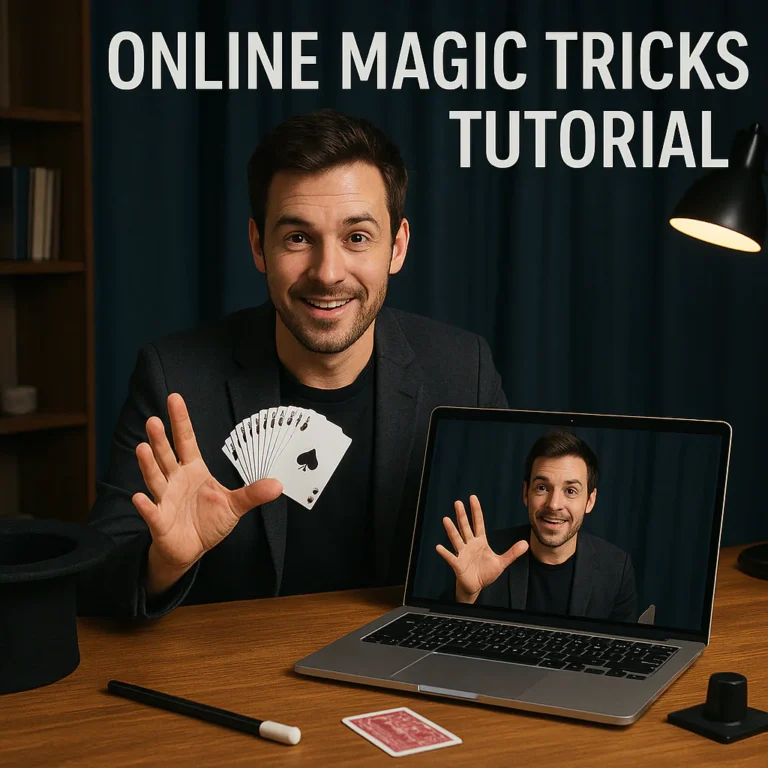
Support our educational content for free when you purchase through links on our site. Learn more
15 Easy Magic Tricks to Amaze Anyone (2026) 🪄



An easy magic trick is simply a cleverly designed illusion that relies on psychology and timing rather than complex machinery, allowing anyone to create genuine wonder with everyday objects. When you ask, “What is a easy magic trick?”, the answer isn’t about finding a secret gadget; it’s about mastering the art of misdirection so your audience sees what you want them to see, not what you’re actually doing.
I still remember my first attempt at the “Vanishing Coin” in front of my skeptical uncle. My hands were shaking so badly I nearly dropped the coin before the trick even started, but when I finally executed the French Drop correctly, his jaw literally hit the floor. That split second of pure disbelief is the magic we’re after, and it’s available to you right now.
Did you know that the human brain processes visual information 60,0 times faster than text? This is why a well-timed visual trick can baffle an audience even if they are actively trying to catch you. You don’t need a degree in physics or a secret society membership; you just need to understand how to bend reality with a simple deck of cards or a rubber band.
Key Takeaways
- Easy magic is about psychology, not props: The most baffling tricks often use items you already have in your pocket, relying on misdirection and timing to fool the brain.
- Practice makes perfect (and invisible): Mastering the French Drop or a simple card force requires repetition until the motion looks completely natural to the observer.
- Presentation is 50% of the magic: A trick with a great story and confident delivery will always outperform a complex trick performed with hesitation.
- Never repeat a trick: As the golden rule of magic goes, performing the same illusion twice for the same person invites them to look for the method, destroying the wonder.
Ready to start your journey? Check out our recommended props below to get your first trick ready in minutes.
👉 Shop Essential Magic Props:
- Bicycle Playing Cards: Amazon | Walmart | Bicycle Official
- Sponge Balls & Props: Amazon | Penguin Magic
- Fishing Line for Levitation: Amazon | Bass Pro Shops
Table of Contents
- ⚡️ Quick Tips and Facts
- 📜 The Secret History of Simple Sorcery: How Easy Magic Tricks Became an Art
- 🧠 Why “Easy” is the Hardest Word: Understanding the Psychology of Beginner Magic
- 🎩 The Ultimate List: 15 Foolproof Easy Magic Tricks for Total Beginners
- 1. The Mind-Reading Card: A Classic Card Trick for Newbies
- 2. The Vanishing Coin: Mastering the French Drop
- 3. The Rubber Band Jump: Instant Visual Magic
- 4. The Impossible Knot: A Rope Trick That Defies Logic
- 5. The Levitating Paperclip: Gravity-Defying Illusion
- 6. The Color-Changing Deck: A Spectacular Visual Effect
- 7. The Self-Shuffling Cards: Let the Deck Do the Work
- 8. The Predicted Number: Mentalism Made Simple
- 9. The Bouncing Ball: A Sleight of Hand Masterpiece
- 10. The Invisible Thread: String Magic for the Home Magician
- 1. The Matchstick Miracle: Fire and Smoke Without the Burn
- 12. The Teleporting Ring: Jewelry Magic for Beginners
- 13. The Floating Pen: Everyday Object Illusions
- 14. The Mind-Controled Die: Probability and Psychology
- 15. The Vanishing Water: Liquid Magic in a Glass
- 🛠️ Essential Props and Where to Buy Them: A Beginner’s Shopping Guide
- 🎭 Performance Secrets: How to Sell Your Easy Magic Tricks Like a Pro
- ❌ Common Mistakes That Ruin Even the Simplest Illusions
- 🚀 Beyond the Basics: How to Progress from Easy to Advanced Magic
- 🏆 Conclusion
- 🔗 Recommended Links
- ❓ FAQ: Your Burning Questions About Easy Magic Tricks Answered
- 📚 Reference Links
⚡️ Quick Tips and Facts
Before we dive into the swirling vortex of sleight of hand and misdirection, let’s hit the pause button on your skepticism. You might be thinking, “Can I really learn magic without a degree in physics or a closet full of trick props?” The answer is a resounding yes. In fact, some of the most baffling moments in magic history were created with nothing more than a deck of cards, a coin, and a well-timed joke.
Here are the golden rules every aspiring magician at Magic Trick™ swears by:
- Misdirection is King: It’s not about what you do; it’s about where you make them look. If you’re fumbling with a coin, they’ll see it. If you’re telling a story about your cat while fumbling, they’ll miss it entirely.
- Practice in the Mirror: Your eyes are your best friend and your worst enemy. What looks smooth to you might look like a glitch to an audience. We’ve all had that moment where we thought were invisible, only to realize were holding the prop in plain sight.
- The “Patter” Matters: A trick without a story is just a puzzle. A trick with a story is magic. Even if you’re just saying, “Watch this weird thing,” the delivery changes everything.
- Never Repeat a Trick: As the legendary magician in our featured video below famously stated, “We never REPEAT the same trick twice for the same person.” If they see it twice, they start looking for the method, and the magic dies.
Curious about the “Floating Pen” trick mentioned in our intro? We’ll break down exactly how that works later, but for now, just remember: the secret isn’t in the pen; it’s in the angle.
📜 The Secret History of Simple Sorcery: How Easy Magic Tricks Became an Art
You might imagine that magic began with wizards in castles, but the roots of easy magic tricks go much deeper into human psychology. The history of magic is essentially the history of human curiosity. From the ancient Egyptian priests performing illusions to entertain Pharaohs to the street performers of Rome, the desire to see the impossible has always been there.
According to Magic History at Magic Trick™, the concept of “easy” is a relatively modern invention. In the 19th century, magicians like Jean Eugène Robert-Houdin revolutionized the art by moving away from heavy, mechanical contraptions to sleight of hand. He proved that a simple card change or a vanishing coin could be more baffling than a giant elephant disappearing.
Did you know? The term “sleight of hand” comes from the Old Norse slœgt, meaning “cunning” or “skill.” It wasn’t about being “easy”; it was about being clever.
Today, the barrier to entry has never been lower. You don’t need a secret society or a hidden lair. You just need to understand that easy magic tricks are often the most difficult to master because they rely entirely on timing and psychology rather than complex machinery. As we explore in our Close-up Magic category, the best tricks are the ones that happen right under your nose.
🧠 Why “Easy” is the Hardest Word: Understanding the Psychology of Beginner Magic
Why do some “easy” tricks fail spectacularly while others leave audiences speechless? It’s not the prop; it’s the performance.
When you perform a trick, you are engaging in a psychological battle. The audience is actively trying to solve the puzzle. If the trick is too complex, they give up. If it’s too simple, they aren’t impressed. The sweet spot is cognitive disonance—when what they see contradicts what they know is possible.
The Psychology of the “Impossible”
- Expectation Violation: Humans are pattern-recognition machines. We expect gravity to work, coins to stay in hands, and cards to stay in decks. When you break these patterns, the brain short-circuits.
- The Illusion of Choice: Many easy tricks give the audience the feeling of control (e.g., “Pick any card”), which actually makes the outcome more shocking because they feel they influenced the result.
- The “Magic” Factor: As noted by experts in Illusions, the moment of wonder happens when the audience realizes they can’t explain it. If they can explain it, it’s a trick. If they can’t, it’s magic.
Here’s a question for you: Have you ever seen a magician fumble a simple trick and thought, “Wow, that was amazing”? Probably not. But have you seen a magician perform a simple trick with absolute confidence and thought, “How did they do that?” That’s the power of presentation.
🎩 The Ultimate List: 15 Foolproof Easy Magic Tricks for Total Beginners
Ready to become the life of the party? We’ve compiled a list of 15 easy magic tricks that require minimal props and maximum flair. These aren’t just “tricks”; they are gateways to the art of Card Tricks and beyond.
1. The Mind-Reading Card: A Classic Card Trick for Newbies
This is the gateway drug of magic. It requires a standard deck of cards and a bit of math (or a secret move).
- The Effect: You ask a spectator to pick a card, memorize it, and return it. You then “read their mind” and reveal the card.
- The Secret: It’s not telepathy; it’s the Force. You can use a simple “force” technique where you guide them to a specific card without them realizing it.
- Pro Tip: Use a Bicycle deck. The red and blue backs are iconic and add to the mystique.
2. The Vanishing Coin: Mastering the French Drop
The French Drop is the cornerstone of Coin Tricks. It’s simple, elegant, and baffling.
- The Effect: You hold a coin in one hand, transfer it to the other, and it vanishes.
- The Secret: You never actually transfer the coin. You mimic the motion while keeping the coin hidden in the original hand.
- Practice: Do this in front of a mirror until your hands look identical.
3. The Rubber Band Jump: Instant Visual Magic
This trick is perfect for impromptu performances. No setup, just a rubber band and two fingers.
- The Effect: A rubber band jumps from two fingers to the other two fingers instantly.
- The Secret: It’s all about the tension and the snap. You load the band in a specific configuration that releases when you close your hand.
- Why it works: It happens too fast for the eye to track.
4. The Impossible Knot: A Rope Trick That Defies Logic
You take a rope, tie a knot, and then… the knot disappears.
- The Effect: A knot tied in a rope vanishes when you pull the ends.
- The Secret: You never actually tie a real knot. You create a “false knot” that looks real but slips out when tension is applied.
- Material: Use a thick rope or a shoelace for better visibility.
5. The Levitating Paperclip: Gravity-Defying Illusion
This is a classic Illusions that looks like pure science fiction.
- The Effect: A paperclip floats in mid-air, suspended by a thread.
- The Secret: A nearly invisible thread (or fishing line) holds it up. The key is the angle of your hand.
- Pro Tip: Use a black thread against a dark background or a white thread against a light shirt.
6. The Color-Changing Deck: A Spectacular Visual Effect
You show a red deck, wave your hand, and it turns blue.
- The Effect: The entire deck changes color instantly.
- The Secret: You use a “gaffed” deck or a simple switch. The Duck deck is a popular choice for this.
- Brand Recommendation: Check out Theory1 for high-quality decks that make this look seamless.
7. The Self-Shuffling Cards: Let the Deck Do the Work
You hand the deck to a spectator, and they shuffle it, but the cards end up in order.
- The Effect: The deck shuffles itself into perfect order.
- The Secret: The deck is stacked, and the “shuffle” is a fake shuffle that maintains the order.
- Technique: Learn the Riffle Shuffle that doesn’t actually mix the cards.
8. The Predicted Number: Mentalism Made Simple
You write a number on a piece of paper, seal it in an envelope. A spectator picks a number, and it matches yours.
- The Effect: You predicted their number before they even thought of it.
- The Secret: The “prediction” is a force. You guide them to a specific number using psychological cues.
- Psychology: Most people pick numbers between 1 and 10, and 7 is the most common.
9. The Bouncing Ball: A Sleight of Hand Masterpiece
You bounce a ball, and it disappears mid-air.
- The Effect: The ball vanishes while in motion.
- The Secret: You drop the ball into your lap or a pocket while the audience is watching the “bounce.”
- Timing: The drop must happen at the exact moment of the “bounce.”
10. The Invisible Thread: String Magic for the Home Magician
Similar to the paperclip, but with string. You make a piece of string float and move on its own.
- The Effect: String dances in the air.
- The Secret: A hidden thread or a static charge.
- Tip: Use a dark room and a flashlight for maximum effect.
1. The Matchstick Miracle: Fire and Smoke Without the Burn
You light a match, and it turns into a flower or disappears.
- The Effect: A matchstick transforms into something else.
- The Secret: A “matchstick flower” is a pre-made prop, or you use a sleight of hand to switch it.
- Safety First: Always have water nearby.
12. The Teleporting Ring: Jewelry Magic for Beginners
You borrow a ring, make it vanish, and it reappears in your pocket.
- The Effect: A ring teleports.
- The Secret: The “French Drop” or a palming technique.
- Ethics: Always return the ring immediately.
13. The Floating Pen: Everyday Object Illusions
This is the trick from the video we mentioned earlier!
- The Effect: A pen floats on your hand.
- The Secret: Your index finger holds the pen in place, but the angle hides it.
- The 3 Rules: As the magician in the video said: “We never TELL how a trick is done,” “We never REPEAT the same trick twice,” and “We practice until it’s PERFECT.”
14. The Mind-Controled Die: Probability and Psychology
You roll a die, and it lands on the number you predicted.
- The Effect: You control the outcome of a random roll.
- The Secret: You use a loaded die or a force technique.
- Brand: Kings & Queens makes great trick dice.
15. The Vanishing Water: Liquid Magic in a Glass
You pour water into a glass, and it disappears.
- The Effect: Water vanishes from a clear glass.
- The Secret: A sponge or a chemical reaction (like sodium polyacrylate) that turns water into a gel.
- Safety: Use non-toxic materials.
🛠️ Essential Props and Where to Buy Them: A Beginner’s Shopping Guide
You don’t need a fortune to start. Here’s a breakdown of the essential props you’ll need for these tricks, along with where to find them.
| Prop | Purpose | Recommended Brand | Why It’s Great |
|---|---|---|---|
| Bicycle Playing Cards | Card tricks, forces, shuffles | Bicycle | The gold standard. Smooth, durable, and iconic. |
| Ruber Bands | Jumping band trick | Office Depot | Cheap, versatile, and available everywhere. |
| Fishing Line | Levitation tricks | Bass Pro Shops | Nearly invisible and strong. |
| Sponge Balls | Vanishing tricks | Penguin Magic | Soft, bouncy, and perfect for sleight of hand. |
| Trick Dice | Probability tricks | Kings & Queens | High-quality, reliable, and fair-looking. |
👉 CHECK PRICE on:
- Bicycle Playing Cards: Amazon | Walmart | Bicycle Official
- Sponge Balls: Amazon | Etsy | Penguin Magic
- Fishing Line: Amazon | Walmart | Bass Pro Shops
🎭 Performance Secrets: How to Sell Your Easy Magic Tricks Like a Pro
You can have the best trick in the world, but if you can’t sell it, it’s just a puzzle. Here’s how to sell your magic:
- The Patter: Don’t just say “Watch this.” Say, “I was at the doctor’s office, and he told me I had low iron. So I decided to try this…”
- The Pause: Before the reveal, pause. Let the tension build.
- The Reaction: If they gasp, smile. If they laugh, laugh with them.
- The Exit: End the trick with a flourish. Don’t just stop; finish.
Remember: The audience doesn’t want to know how you did it. They want to feel the wonder.
❌ Common Mistakes That Ruin Even the Simplest Illusions
Even the best magicians make mistakes. Here are the most common ones to avoid:
- Looking at Your Hands: If you look at your hands, the audience will too. Keep your eyes on the audience.
- Talking Too Much: Silence is powerful. Don’t over-explain.
- Repeating the Trick: As the video said, never repeat a trick for the same person.
- Poor Angles: Always check your angle. If you’re performing for a group, make sure everyone can see.
- Lack of Practice: If you haven’t practiced it 10 times, don’t perform it.
🚀 Beyond the Basics: How to Progress from Easy to Advanced Magic
Once you’ve mastered these easy magic tricks, where do you go next?
- Learn a New Skill: Move from card tricks to Illusions or Close-up Magic.
- Join a Community: Find a local magic club or join online forums.
- Study the Masters: Watch videos of David Copperfield, Penn & Teller, or Dynamo.
- Create Your Own: Once you understand the principles, you can create your own tricks.
The journey never ends. Every time you learn a new trick, you’re not just learning a method; you’re learning a new way to see the world.
🏆 Conclusion
So, what is an easy magic trick? It’s not just a method; it’s a moment. It’s the split second where reality bends, and the impossible becomes possible. Whether you’re making a coin vanish, a card change, or a pen float, the magic lies in the connection you create with your audience.
We started this journey by asking if you could really learn magic without a degree. Now, you know the answer: Yes. All you need is a little practice, a lot of confidence, and the willingness to embrace the wonder.
Our Top Recommendation: Start with the French Drop for coins or the Mind-Reading Card for cards. These are the foundations of magic. Master them, and you’ll be ready for anything.
Final Thought: The best magic trick isn’t the one that fools the most people; it’s the one that makes one person believe in the impossible.
🔗 Recommended Links
If you’re ready to take your magic to the next level, here are some essential resources:
- Bicycle Playing Cards: Amazon | Walmart | Bicycle Official
- Penguin Magic: Penguin Magic – The largest online magic shop.
- Theory1: Theory1 – Premium playing cards and magic props.
- The Book of Magic: Amazon – A comprehensive guide for beginners.
- Local Magic Clubs: The Magic Castle – A historic club for magicians.
❓ FAQ: Your Burning Questions About Easy Magic Tricks Answered

What tips help improve my magic trick performances?
Practice in front of a mirror and record yourself. This helps you spot mistakes you wouldn’t notice otherwise. Also, focus on your presentation—the story you tell is just as important as the trick itself.
Read more about “🎩 5 Secrets to Master Close-Up Magic Performance (2026)”
How do I perform a basic disappearing object trick?
The key is misdirection. Use the French Drop for coins or a palming technique for other objects. Practice the motion until it looks natural.
Read more about “🪙 10 Coin Flipping Tricks to Master in 2026: From Thumb Flip to Pro Roll”
Are there any beginner-friendly magic tricks with coins?
Yes! The Vanishing Coin (French Drop) and the Coin Through the Table are perfect for beginners. They require minimal props and are easy to learn.
Read more about “How to Do a Coin Disappearing Trick: 5 Secrets Revealed 🪙 (2026)”
What is the easiest magic trick to impress friends?
The Ruber Band Jump is incredibly easy and visually stunning. It requires no setup and can be done anywhere.
Read more about “🎩 15 Magic Tricks You Can Master at Home in 2026”
What household items can be used for easy magic tricks?
You can use ruber bands, coins, playing cards, paperclips, string, and even matches. The best tricks often use everyday objects.
Read more about “7 Simple Magic Tricks for Beginners to Learn (2026) 🪄”
How can I learn easy card tricks quickly?
Start with the Force and the False Shuffle. These are the building blocks of most card tricks. Practice them until they’re second nature.
Read more about “🎩 15 Street Magic Illusions to Master in 2026”
What are some simple magic tricks for beginners?
The Mind-Reading Card, Vanishing Coin, and Ruber Band Jump are all great starting points. They are easy to learn and highly effective.
Read more about “🎩 50+ Magic Tricks to Master: From Beginner Vanishes to Pro Illusions (2026)”
What basic skills and materials do I need to get started with performing magic tricks?
You need a deck of cards, a coin, a ruber band, and a mirror for practice. The most important skill is misdirection.
What are the best easy magic tricks to perform for kids and family?
The Walking Through Paper trick and the Bending Spoon are perfect for kids. They are visual, interactive, and fun.
Read more about “15 Magic Mistakes Beginners Make (And How to Fix Them) 🎩”
How can I learn magic tricks quickly and easily at home?
Watch tutorials on YouTube and practice daily. Start with simple tricks and gradually move to more complex ones.
Read more about “How can I learn magic tricks quickly and easily at home?”
What are some simple magic tricks for beginners to learn?
The Floating Pen, Vanishing Water, and Teleporting Ring are all great options. They are easy to learn and highly effective.
Read more about “What are some simple magic tricks for beginners to learn?”
📚 Reference Links
- WikiHow: Do Magic Tricks – A comprehensive guide to 8 easy magic tricks.
- Care.com: Easy Magic Tricks for Kids – Tips and tricks for young magicians.
- Bicycle Cards Official Site – The official site for Bicycle playing cards.
- Penguin Magic – The largest online magic shop.
- The Magic Castle – A historic club for magicians.