Support our educational content for free when you purchase through links on our site. Learn more
🎩 Who Is the Father of Modern Magic? Robert-Houdin

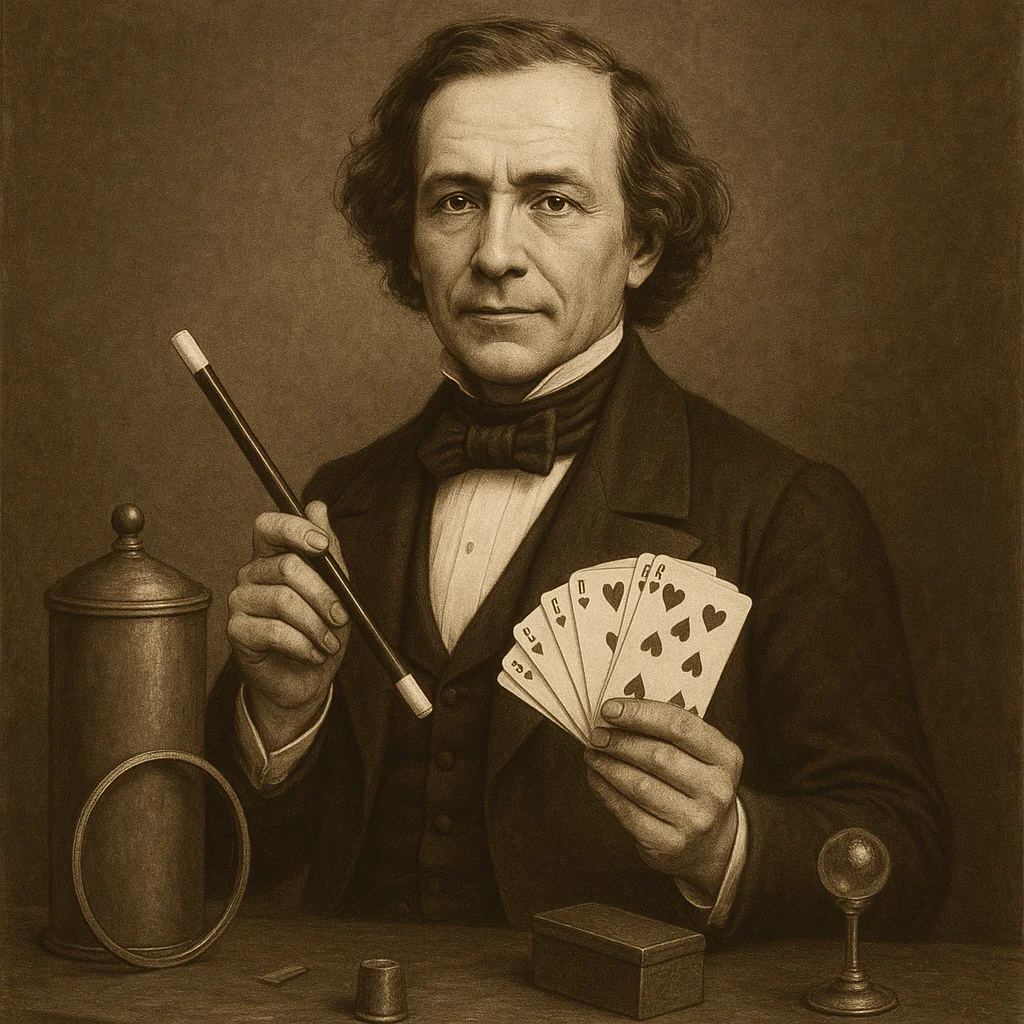
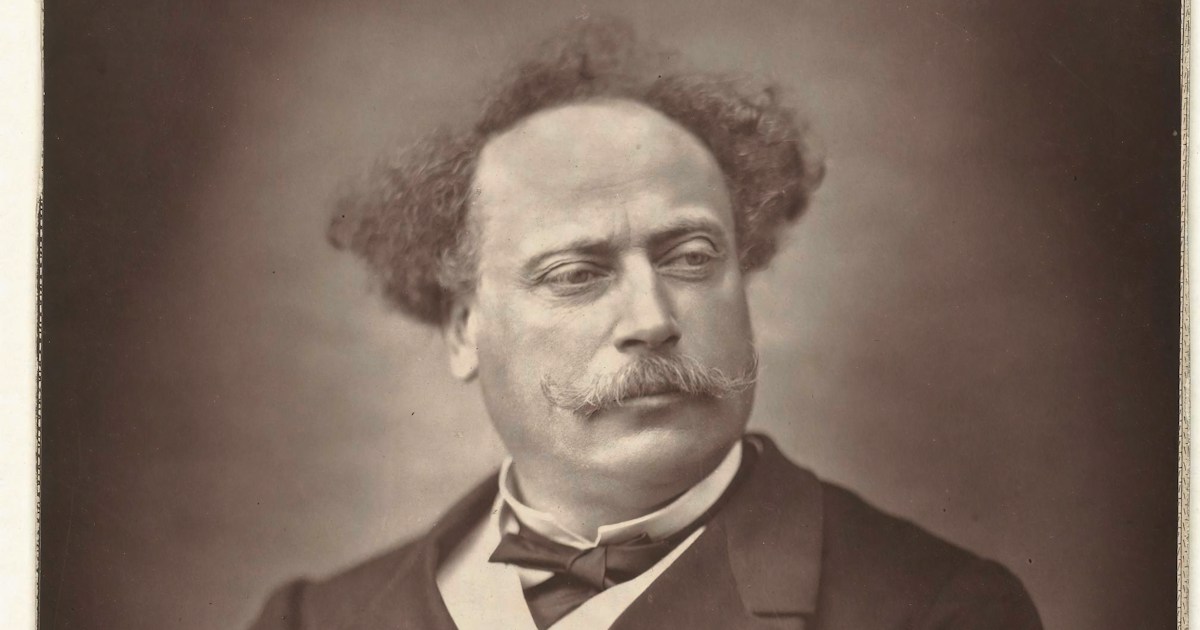
Jean-Eugène Robert-Houdin is widely considered the father of modern magic for transforming conjuring into polished theatrical entertainment. In answer to “Who is considered the father of modern magic and what contributions did they make to the art?”, the key is that he brought together inventive mechanisms, elegant stagecraft, and a compelling magician’s persona.
A trained watchmaker, Robert-Houdin opened a Paris theatre devoted to magic in 1845. Instead of appearing as a mysterious sorcer, he performed in formal evening clothes—a deceptively simple choice that helped present magic as a refined art built on skill and ingenuity.
His influence even reached Harry Houdini, who adopted his stage name as a tribute. Houdini later challenged Robert-Houdin’s reputation, proving that magic history can be as full of spirited rivalry as a card trick is full of suspicious shuffles.
Key Takeaways
- Jean-Eugène Robert-Houdin is commonly called the father of modern magic.
- He helped move conjuring from fairs and informal performances into dedicated theatres and polished stage shows.
- His watchmaking background informed his interest in mechanical illusions and ingenious apparatus.
- Effects such as Second Sight, The Marvelous Orange Tree, and The Light and Heavy Chest showcased his theatrical approach.
- His legacy rests not on inventing magic itself, but on helping shape the modern magician’s style, staging, and performance craft.
Table of Contents
- ⚡️ Quick Tips and Facts
- 🎩 Who Is Considered the Father of Modern Magic?
- Why Jean-Eugène Robert-Houdin Earned the Title
- Robert-Houdin vs. Harry Houdini: Clearing Up the Name Confusion
- 📜 History of Modern Magic: From Street Conjuring to the Stage
- Magic Before Robert-Houdin
- How 19th-Century Paris Changed Conjuring
- 🕰️ Robert-Houdin’s Early Life and Entrance into Conjuring
- Aprentice Clockmaker: The Craft Behind the Conjuror
- How He Entered the World of Magic
- Marriage to Josèphe Cecile Houdin and His Stage Name
- ✨ Robert-Houdin’s Contributions to Modern Magic
- 1. Bringing Magic into the Elegant Theatre
- 2. Replacing Robes and Conjuring Tables with Modern Dress
- 3. Blending Mechanics, Science, and Sleight of Hand
- 4. Developing Story-Driven Stage Illusions
- 5. Inspiring Generations of Magicians
- 🏛️ The Théâtre Robert-Houdin and the Palais-Royal Era
- Opening the Théâtre Robert-Houdin
- Why His Paris Magic Shows Became a Sensation
- 🪄 Famous Robert-Houdin Illusions and How They Worked
- Second Sight: The Mind-Reading Act That Astonished Paris
- The Ethereal Suspension
- The Marvelous Orange Tree
- The Light and Heavy Chest
- Other Notable Mechanical Illusions
- 🔧 Inventions, Deceptions, and Disputed Claims
- Robert-Houdin’s Mechanical Magic and Apparatus
- Was His Work Pirated or Borrowed?
- What We Know—and What Remains Uncertain
- 🌍 Robert-Houdin on Tour and His Mission to Algeria
- The French Government’s Request
- Performing for Algerian Audiences
- Separating Historical Record from the Legend
- 📖 Robert-Houdin’s Books and Writings on Conjuring
- The Memoirs of Robert-Houdin
- His Influence on Magic Literature
- 🏡 Retirement, Final Years, and Death
- 🌟 Robert-Houdin’s Legacy in Magic Today
- How His Ideas Shaped Stage Magic
- Magicians Influenced by Robert-Houdin
- Films, Television, and Popular Culture
- 🔍 Was Robert-Houdin Really the First Modern Magician?
- Other Figures Who Helped Shape Modern Conjuring
- Why the “Father of Modern Magic” Title Still Fits
- ✅ Conclusion
- 🔗 Recommended Links
- ❓ FAQ
- Who is called the father of modern magic?
- What did Jean-Eugène Robert-Houdin contribute to magic?
- Was Robert-Houdin a magician or an inventor?
- Did Harry Houdini take his name from Robert-Houdin?
- What were Robert-Houdin’s most famous illusions?
- Did Robert-Houdin really perform a magic mission in Algeria?
- 📚 Reference Links
⚡️ Quick Tips and Facts
- Jean-Eugène Robert-Houdin (1805–1871) is widely regarded as the father of modern magic. He was a French watchmaker, inventor, author, and stage magician.
- His lasting contribution wasn’t a single secret trick. It was a new way to present conjuring: theatrical, polished, inventive, and grounded in apparent science.
- In 1845, he opened the Théâtre Robert-Houdin in Paris, where his Soirées fantastiques helped make magic a fashionable evening’s entertainment.
- His famous effects included Second Sight, The Ethereal Suspension, The Marvelous Orange Tree, and The Light and Heavy Chest.
- Harry Houdini adopted his stage name in tribute to Robert-Houdin, though Houdini later challenged his predecessor’s reputation in The Unmasking of Robert-Houdin.
- Magic has a much older history than Robert-Houdin; our guide to what is the oldest magic trick? explores that deeper history.
- For a short video perspective, visit the featured video. It emphasizes Robert-Houdin’s blend of science, elegance, and theatrical presentation.
| Fact | At a glance |
|---|---|
| Full name | Jean-Eugène Robert-Houdin |
| Lifespan | 1805–1871 |
| Nationality | French |
| Early trade | Watchmaker and clockmaker |
| Paris theatre | Théâtre Robert-Houdin, opened in 1845 |
| Best-known legacy | Making magic feel like refined theatrical entertainment |
| Often-confused figure | Harry Houdini, who took inspiration from Robert-Houdin |
Our magician’s take: Robert-Houdin didn’t invent magic. He helped reinvent the magician—from a mysterious figure in a booth to a composed performer who could command a theatre in evening dress. That shift is why his name still matters. ✨
🎩 Who Is Considered the Father of Modern Magic?
The title “father of modern magic” most commonly refers to Jean-Eugène Robert-Houdin, a 19th-century French magician whose work reshaped stage conjuring. Encyclopedic and museum accounts describe him as a major figure in the development of modern magic, particularly for bringing technical ingenuity together with a more sophisticated style of performance. Explore more biographies and milestones in our Magic History collection.
The title is a useful shorthand, not a claim that one man created magic from scratch. Conjuring, sleight of hand, and deceptive wonders existed for centuries before his birth. Robert-Houdin’s distinction was that helped establish a modern theatrical model: a magician in contemporary formal clothes, performing carefully paced illusions in a dedicated theatre for a paying audience.
Why Jean-Eugène Robert-Houdin Earned the Title
Robert-Houdin earned his reputation through a combination of craft and presentation:
- Mechanical ingenuity: His experience with clocks and precision mechanisms informed his automata and stage apparatus.
- A new stage image: He performed in formal evening wear rather than relying on the traditional costume of a wizard or sorcer.
- Theatrical structure: His shows were designed as entertainments, with pacing, surprise, humour, and escalating effects.
- A dedicated venue: His Paris theatre gave magic a setting associated with refined, ticketed performance.
- Written influence: His books helped preserve and circulate his ideas about conjuring and performance.
That combination matters more than any one device. A clever mechanism can amaze once; a compelling performer can make an audience care about what happens next. That principle remains central in modern illusions and close-up performance alike.
Robert-Houdin vs. Harry Houdini: Clearing Up the Name Confusion
The similar names invite confusion, but the two men were different performers from different generations:
| Jean-Eugène Robert-Houdin | Harry Houdini | |
|---|---|---|
| Born | 1805, France | 1874, Hungary |
| Best known for | Mechanical illusions and theatrical magic | Escapes, publicity, and spectacular challenges |
| Connection | Established a model of modern stage magic | Adopted a stage name in homage to Robert-Houdin |
| Later relationship | Became a subject of Houdini’s historical criticism | Wrote The Unmasking of Robert-Houdin |
Houdini’s admiration was not simple, lifelong agreement. He initially took inspiration from Robert-Houdin, then argued that the older magician’s reputation had been exaggerated. That tension is a helpful reminder: a magician can inherit a legacy and still interrogate it.
📜 History of Modern Magic: From Street Conjuring to the Stage
Magic did not begin in 19th-century Paris. It had roots in ancient performance, religious spectacle, street entertainment, courtly amusement, and printed books of tricks. Robert-Houdin’s importance lies in how he adapted conjuring for a new kind of audience and venue. For a broader timeline, browse our Magic History articles.
Magic Before Robert-Houdin
Long before Robert-Houdin, performers used sleight of hand, misdirection, gimmicked props, and theatrical storytelling to create impossible-seming effects. The famous cups-and-balls plot, for example, has a long history in European conjuring. Audiences have always enjoyed the same delicious puzzle: “I saw everything—so how did that happen?”
What changed over time was not the human appetite for wonder, but the way performers packaged it. Some earlier conjurers worked at fairs or in public spaces, where they had to compete with noise, crowds, and the temptation to pass a hat. Robert-Houdin’s approach leaned into theatre: a focused audience, a designed programme, and a performer whose manner helped make the deception feel elegant rather than rough-and-ready.
How 19th-Century Paris Changed Conjuring
Paris had a thriving theatre culture and an audience for novelty, mechanics, and spectacle. Robert-Houdin’s dedicated venue suited that environment. Rather than framing his act as supernatural power, he presented wonders through the language of ingenuity, experiment, and skill.
That distinction became part of magic’s modern identity. A performer could invite the audience to suspect a clever method while still keeping the secret hidden. The audience doesn’t need to believe in real sorcery; it needs to believe that the impossible might happen right in front of them.
🕰️ Robert-Houdin’s Early Life and Entrance into Conjuring
Robert-Houdin was born Jean-Eugène Robert in Blois, France, in 1805. His early training in precision craft gave him skills that would later serve both his inventions and his performances. The familiar story of the clockmaker who became a magician is true in broad outline—but his journey involved more than simply swapping a workbench for a stage.
Aprentice Clockmaker: The Craft Behind the Conjuror
Robert-Houdin trained in clockmaking and worked with fine mechanisms. That background is especially relevant because stage magic often depends on reliable timing, controlled movement, hidden compartments, and apparatus that behaves consistently under pressure.
A magician’s craftroom is not so different from a watchmaker’s bench in one important respect: tiny errors have a way of becoming enormous in front of an audience. A concealed mechanism that catches, a prop that fails to reset, or a cue that arrives late can expose the method—or flatten the suspense.
From the workshop to theatre: Robert-Houdin’s mechanical interests helped him build devices, but his real achievement was making the audience watch the effect, not the machinery.
How He Entered the World of Magic
Robert-Houdin’s path into conjuring grew from his interest in mechanical curiosities and performance. He studied magic, developed his own routines, and brought his inventions into theatrical presentations. His work bridged two worlds: the precision of the maker and the timing of the performer.
We see that bridge clearly in the way his illusions were described. The apparatus could be intricate, but the audience’s experience needed to feel effortless. That’s a lesson we still use when teaching card tricks and coin tricks: the secret method may be technical; the performance should feel natural.
Marriage to Josèphe Cecile Houdin and His Stage Name
After marrying Josèphe Cecile Houdin, Robert adopted Houdin as part of his professional name and became known as Robert-Houdin. The hyphenated name is significant: it distinguishes him from Harry Houdini, who later added an “i” to his adopted stage name in homage to the French magician.
✨ Robert-Houdin’s Contributions to Modern Magic
Robert-Houdin’s greatest contribution was a performance system, not a single secret. He combined invention, staging, character, and pacing to make magic feel like a polished theatrical art.
| Contribution | What changed | Why it still matters |
|---|---|---|
| Dedicated theatre | Magic had a purpose-built performance setting | Venue and atmosphere shape audience expectations |
| Contemporary formal dress | The magician looked like a modern gentleman | Performance style can make an effect feel credible |
| Mechanical innovation | Apparatus created seemingly impossible actions | Technology can serve mystery without becoming the story |
| Structured routines | Effects built toward stronger surprises | Pacing turns a collection of tricks into a show |
| Written accounts | Ideas reached readers beyond theatre | Books help preserve magic’s history and methods |
1. Bringing Magic into the Elegant Theatre
In 1845, Robert-Houdin opened a theatre in Paris dedicated to magic. The venue helped frame conjuring as an evening’s entertainment rather than merely a fairground attraction. Audiences came to watch a planned show, not just a succession of demonstrations.
This change also gave the magician control over the environment: lighting, sightlines, entrances, exits, and the order of effects. In magic, the room is part of the method—not necessarily because it hides a secret, but because attention is easier to guide when the performance is designed around it.
2. Replacing Robes and Conjuring Tables with Modern Dress
Robert-Houdin performed in formal evening clothes, presenting himself less as a supernatural figure and more as a skilled, composed host. The familiar image of a magician in a tailcoat is often associated with this shift.
The costume choice carried a subtle message: “I’m not claiming to be a wizard. I’m showing you something extraordinary, and I’m in control of the room.” That balance—confidence without explaining the secret—remains a powerful performance tool.
3. Blending Mechanics, Science, and Sleight of Hand
Robert-Houdin’s mechanical background fed his interest in automata and apparatus. But technology alone wasn’t the trick. A mechanism had to be integrated into a routine so the audience saw an impossible result rather than a clever piece of engineering.
His approach anticipated a principle familiar in modern stage magic: the method should support the effect, not compete with it. A beautifully made prop is useful only if the audience understands the dramatic question it creates.
4. Developing Story-Driven Stage Illusions
Many of Robert-Houdin’s best-known effects had a clear premise and a visual payoff. An orange tree blossoming is memorable because it has a beginning, a transformation, and a final image. A box becoming impossibly heavy is memorable because spectators first understand the ordinary object, then watch that understanding collapse.
In our experience, a strong routine often follows a simple rhythm:
- Establish the rules: Show what the object seems to be.
- Create a question: Give the audience a reason to watch closely.
- Delay the answer: Let expectation build.
- Deliver the impossible moment: Make the change unmistakable.
- Leave room for reaction: Don’t rush past the astonishment.
5. Inspiring Generations of Magicians
Robert-Houdin influenced later magicians through his theatre, inventions, and books. His impact is particularly visible in how performers treat magic as a designed art: not just “Here’s another trick,” but a sequence of experiences with a recognizable style and dramatic shape.
In the video linked as the featured video, the narrator highlights this blend of scientific ingenuity and elegance. That is a useful interpretation of his legacy, even if some details about individual inventions and their influence are difficult to verify independently. The central point is well supported: Robert-Houdin helped redefine what a professional magician could look and sound like.
🏛️ The Théâtre Robert-Houdin and the Palais-Royal Era
Robert-Houdin’s Paris theatre was a home for his Soirées fantastiques, or “fantastic evenings.” The dedicated stage offered him a consistent setting for his mechanical illusions and carefully paced programme.
Opening the Théâtre Robert-Houdin
The Théâtre Robert-Houdin opened in 1845 and is commonly described as a small, roughly 200-seat venue. That intimacy suited the act: the audience could follow the objects, gestures, and reactions without the scale of a vast spectacle swallowing the details.
The phrase “Palais-Royal” sometimes appears in accounts of Robert-Houdin’s Paris period, but the most reliable general description is that he established his own theatre and performed there. The venue’s significance is clearer than every detail of its address or later history, which can be simplified in secondary retellings.
Why His Paris Magic Shows Became a Sensation
The theatre offered more than a room. It gave magic a polished context and allowed Robert-Houdin to present mechanical wonders as a coherent entertainment. His calm, formal stage image contrasted with the often-rougher image of public conjuring.
For performers today, the lesson is practical: the audience reads the entire scene—clothing, music, props, lighting, and the magician’s manner. A card trick performed at a kitchen table and the same trick performed in a velvet-curtained theatre may use the same method, but they do not tell the same story.
🪄 Famous Robert-Houdin Illusions and How They Worked
Robert-Houdin’s famous illusions are best understood as stage effects, not as supernatural events. Historical descriptions explain what audiences saw; they do not always preserve every technical detail of the original method. We’ll distinguish the reported effect from claims about precisely how each apparatus worked.
| Illusion | What the audience saw | Main theatrical idea |
|---|---|---|
| Second Sight | A blindfolded assistant appeared to identify objects | Communication and controlled information |
| Ethereal Suspension | A person seemed to float | A visual impossibility framed by a scientific story |
| Marvelous Orange Tree | A tree blossomed and produced fruit | Transformation and a cascading reveal |
| Light and Heavy Chest | A small chest became immovable | Audience participation and apparent force |
| Portfolio effect | A thin case produced an array of objects | Escalation and comic surprise |
Second Sight: The Mind-Reading Act That Astonished Paris
In Robert-Houdin’s “Second Sight” act, his son Émile was blindfolded and appeared to identify objects chosen or handled by spectators. Accounts describe Robert-Houdin communicating information in ways that seemed minimal—or, at moments, not at all.
The dramatic engine was the gap between what the audience believed had been communicated and what the performer and assistant could actually convey. The exact methods used in historical versions of second-sight routines varied across performers; it would be misleading to claim that one documented signal explains every performance.
Why the illusion worked theatrically:
- The audience supplied objects, making the demonstration feel less controlled.
- The blindfold created a visible condition to scrutinize.
- The assistant’s confident answers appeared to confirm an extraordinary ability.
- The performer controlled the sequence and attention, even when the audience felt it was testing him.
That structure survives in modern mentalism: a routine feels more impossible when the audience believes it has set the conditions.
The Ethereal Suspension
In this illusion, Robert-Houdin’s son appeared to float or remain suspended in an unnatural position. The effect was framed with an explanation involving ether, reflecting 19th-century fascination with science and invisible forces.
That explanation was part of theatrical presentation—not proof that ether caused a real suspension. The important distinction is the effect the audience saw versus the story used to frame it. As with many historical stage illusions, surviving accounts may describe the presentation more clearly than the precise apparatus.
The Marvelous Orange Tree
The Marvelous Orange Tree combined several transformations into a visual finale. In commonly repeated descriptions, a borrowed handkerchief passed through a sequence involving an egg, lemon, and orange; a seemingly barren tree then blossomed and produced oranges, with clockwork butterflies revealing the handkerchief.
The routine worked as a chain of escalating surprises:
- A familiar borrowed object gave the effect a personal hook.
- A series of impossible passages made the handkerchief seem to travel through solid objects.
- The tree’s transformation shifted the routine from small-scale magic to stage spectacle.
- The final reveal connected the opening object to the ending image.
The exact staging can differ among historical descriptions, but the strength of the plot is easy to see: every beat prepares the audience for a bigger one.
The Light and Heavy Chest
The Light and Heavy Chest appeared easy for a child to lift but impossible for an adult to move. Robert-Houdin used the effect during his 1856 visit to French Algeria, where it was presented as evidence of his skill and French technical ingenuity rather than supernatural power.
Descriptions commonly connect the chest to an electrical mechanism. Historical summaries do not always provide enough technical detail to reconstruct the original apparatus confidently, so we should avoid treating one simplified explanation as a complete engineering diagram.
Its performance design, however, is clear:
- Let a spectator see that the chest is small and apparently ordinary.
- Establish that a child can lift it.
- Invite an adult to try.
- Allow the failed attempt to become the climax.
- Present the outcome as a mystery, not a lecture.
The audience became part of the demonstration—and that made the effect harder to dismiss as a simple stage illusion.
Other Notable Mechanical Illusions
Robert-Houdin’s repertoire also included a thin portfolio that appeared to produce a succession of objects, from drawings and hats to larger surprises. Accounts also credit him with mechanical figures such as a singing bird, a tightrope dancer, and a cups-and-balls automaton.
Some retellings name the Componium, an automaton associated with musical composition, as part of his technological legacy. Because claims about specific machines can be repeated without clarifying what Robert-Houdin built, exhibited, or merely worked on, it is wise to check museum or specialist histories before treating every attribution as certain.
For magicians, the broader point is more robust than any single catalogue entry: automata let an object appear to have intention. That makes them natural partners for theatrical magic.
🔧 Inventions, Deceptions, and Disputed Claims
Robert-Houdin’s reputation sits at the intersection of theatre, craft, and invention. Some claims about his accomplishments are well established; others are repeated in simplified form. A careful history keeps those categories separate.
Robert-Houdin’s Mechanical Magic and Apparatus
His clockmaking expertise made mechanical devices a natural part of his work. Accounts associate him with automata, stage apparatus, and the mystery clock, a clock designed to appear to operate without an obvious mechanism.
| Claim | What can be said confidently | What merits caution |
|---|---|---|
| He was a trained watchmaker | His craft background is central to his biography | Not every device attributed to him has a complete surviving record |
| He used mechanical apparatus | His stage work included mechanical effects | A modern retelling may simplify how a particular effect operated |
| He created or popularized automata | Mechanical figures were part of his work and public identity | Exact authorship and technical details can vary by source |
| He invented the mystery clock | He is widely credited with the form | “Invented” can obscure earlier related designs or later refinements |
Was His Work Pirated or Borrowed?
The history of magic is full of disputed ownership. Methods are hidden, apparatus may be copied, and performers sometimes reinvent similar effects independently. As a result, claims that a specific illusion was “pirated” should be backed by evidence about dates, designs, and documented access—not just repeated as a colourful accusation.
Robert-Houdin’s own ideas influenced later performers, while later magicians also criticized his accounts. Harry Houdini’s The Unmasking of Robert-Houdin is a famous example of that skepticism. It is valuable as a historical source about Houdini’s view, but it is also an argument by a magician with his own position, not a neutral final verdict.
What We Know—and What Remains Uncertain
A practical way to read magic history is to separate three layers:
- Documented biographical facts: dates, publications, theatres, and known tours.
- Reported stage effects: descriptions of what spectators saw.
- Reconstructed methods: explanations of how a specific apparatus or routine may have worked.
The first category is generally easier to confirm. The second often depends on eyewitness or later accounts. The third is where certainty can evaporate—because magicians are famously reluctant to leave their secrets neatly labelled in a museum drawer.
🌍 Robert-Houdin on Tour and His Mission to Algeria
Robert-Houdin’s trip to French Algeria in 1856 is one of the most striking episodes in his biography. It illustrates that magic can entertain, persuade, and serve political aims—and that those aims deserve scrutiny.
The French Government’s Request
French authorities asked Robert-Houdin to travel to Algeria and perform for local audiences. Accounts frame the assignment as an effort to counter the influence of marabouts—religious or spiritual leaders whom French officials regarded as influential. Because this was a colonial setting, the mission should be understood in the context of French rule and its political objectives, not simply as a neutral exchange of entertainment.
Performing for Algerian Audiences
Robert-Houdin presented effects including the Light and Heavy Chest and used them to demonstrate that apparently impossible feats could be produced by skill and apparatus rather than supernatural power. He later described his purpose in terms of showing that his effects were “only the result of skill” and were not connected with sorcery.
That account reflects Robert-Houdin’s own framing. It does not remove the political context: his performance was part of an effort by French authorities to influence public perception. Magic can make a persuasive argument—but the magician’s sponsor and purpose matter, too.
Separating Historical Record from the Legend
The story is sometimes retold as if Robert-Houdin simply defeated local supernatural beliefs in a contest of tricks. That is an oversimplification. The trip was a colonial mission, the available accounts are shaped by the perspectives of the people who recorded it, and the audience’s reactions cannot be reduced to a single neat moral.
A balanced reading recognizes both facts: Robert-Houdin used conjuring to demonstrate technical skill, and French authorities intended the demonstrations to serve a political goal. The illusions were entertainment; the mission was not politically neutral.
📖 Robert-Houdin’s Books and Writings on Conjuring
Robert-Houdin’s books helped extend his influence beyond the audiences who saw him perform. His writing offered magicians and curious readers a glimpse into the craft, its presentation, and the performer’s professional identity.
The Memoirs of Robert-Houdin
His memoir, commonly published in English as The Memoirs of Robert-Houdin, recounts his life and work. Memoirs are useful firsthand sources, but they are not the same as independent verification. A performer may accurately describe a career while also shaping its story for readers.
For that reason, historians compare autobiographical claims with other records wherever possible. Readers can treat the memoir as both a valuable account and a self-fashioned portrait.
His Influence on Magic Literature
Robert-Houdin’s writing helped make the magician visible as a skilled professional and inventor. Later performers and historians could discuss his work, adapt its theatrical lessons, and argue about his claims.
For present-day students, the most useful takeaways are broader than any individual secret:
- Write down routines: structure and timing improve with revision.
- Think about character: how you present an effect changes its meaning.
- Design the audience’s experience: a method is only one part of a performance.
- Study sources critically: published accounts may reflect the author’s perspective.
🏡 Retirement, Final Years, and Death
Robert-Houdin eventually retired from regular performance and returned to the Blois area. He died in 1871, aged 65. His story did not end with the last curtain: his home in Blois is now associated with La Maison de la Magie Robert-Houdin, a museum and performance venue that keeps the history of magic visible to new audiences.
A museum visit also underlines an important distinction: the apparatus is only half the story. To understand an illusion, we have to ask what the audience saw, what they were invited to believe, and how the performer shaped their attention.
🌟 Robert-Houdin’s Legacy in Magic Today
Robert-Houdin’s influence is not limited to historical stage props. His work helped establish conventions that performers still use: an intentional persona, a carefully structured programme, and a presentation that makes the impossible feel at home in an ordinary world.
How His Ideas Shaped Stage Magic
His lasting influence can be summarized in four principles:
- Presentation matters: a trick needs a clear theatrical identity.
- Mechanics should disappear into the experience: the audience should remember the wonder, not the gears.
- Pacing creates impact: build expectation and give the climax room to land.
- A magician is a character: clothing, language, and confidence tell part of the story.
These ideas apply just as well to a small performance with coins or cards as to a theatre illusion. See our guides to close-up magic, coin tricks, and card tricks for examples of how presentation shapes a simple effect.
Magicians Influenced by Robert-Houdin
Harry Houdini is the most famous later magician connected to Robert-Houdin. He adopted his stage name in tribute, then later wrote a critical study of the French magician’s claims. That combination of admiration and critique is more interesting than a simple “Houdini copied his hero” story.
Robert-Houdin’s theatrical legacy also reaches beyond conjuring. The emphasis on stage illusion, mechanical spectacle, and visual storytelling has been connected to later entertainment traditions, including the work of Georges Méliès. Influence is rarely a straight line, though; shared techniques and ideas do not always prove direct borrowing.
Films, Television, and Popular Culture
Robert-Houdin’s name appears in biographies, magic histories, museum exhibits, and popular accounts of conjuring. La Maison de la Magie Robert-Houdin in Blois gives visitors a direct connection to his legacy through collections and performances.
For an accessible overview of the father-of-modern-magic idea, the featured video emphasizes his role as a magician of science and elegance. Treat its broad interpretation as a useful introduction, while checking specialist sources for precise claims about individual inventions and their attribution.
🔍 Was Robert-Houdin Really the First Modern Magician?
“Father of modern magic” is a title of influence, not a literal birth certificate for the art. Robert-Houdin transformed the presentation of conjuring, but he built on centuries of earlier practice and was not the only person shaping magic in his era.
Other Figures Who Helped Shape Modern Conjuring
The development of magic involved performers, inventors, authors, theatre-makers, and audiences. Earlier conjurers developed techniques and plots; later magicians expanded theatrical spectacle, escapes, mentalism, and close-up performance.
| Figure or tradition | Contribution to the broader story |
|---|---|
| Earlier European conjurers | Preserved and developed sleight-of-hand plots and public performance |
| Robert-Houdin | Helped establish polished, theatre-based modern conjuring |
| Harry Houdini | Popularized escapes and large-scale public challenges |
| Georges Méliès | Used theatrical illusion and visual effects in early cinema |
This is not a complete roll call; it is a reminder that a field’s history is a relay, not a solo act.
Why the “Father of Modern Magic” Title Still Fits
The title fits because Robert-Houdin’s influence is visible across several parts of the magician’s profession: the modern stage persona, the dedicated magic theatre, the integration of mechanical invention, and the emphasis on carefully constructed presentation.
It should not be taken to mean that all modern magic descended from him or that he invented every device associated with his name. The most accurate version is also the most compelling: helped turn conjuring into a modern theatrical art, while inheriting and transforming a much older tradition.
🎥 Featured Video: Robert-Houdin and the Foundations of Modern Magic
The video presents Robert-Houdin as a magician who combined scientific curiosity, mechanical ingenuity, and theatrical elegance. It highlights his watchmaker background, his stage presentation, his books, and the influence his approach had on later performers.
One point deserves careful wording: the video’s description associates him with the Componium and broad claims about his influence. Those claims may be useful leads, but individual invention atributions can be complicated. The most secure takeaway is the larger one: Robert-Houdin made the magician’s craft look like a deliberate art of performance, not merely a collection of secret methods.