
Support our educational content for free when you purchase through links on our site. Learn more
🪄 5 Essential Skills & Tools to Start Magic (2026)

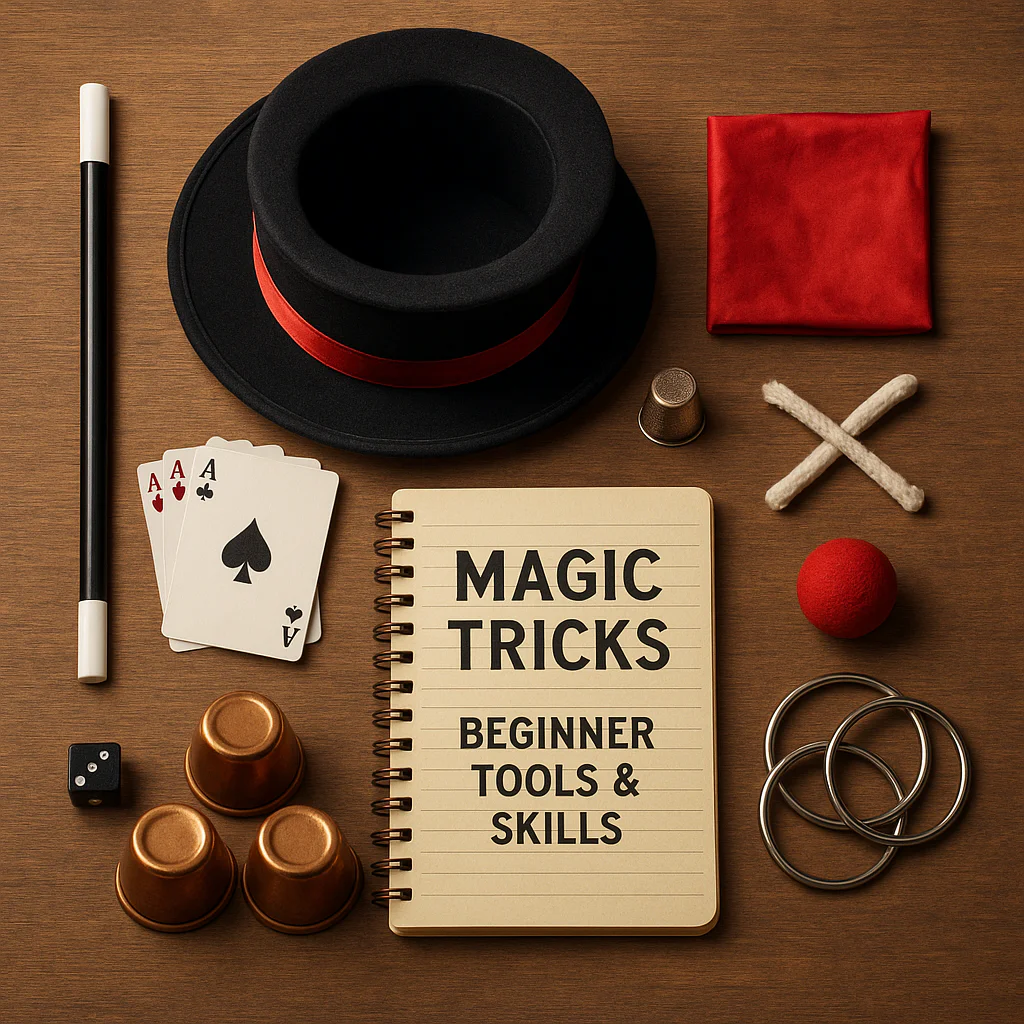
You don’t need a warehouse of props to perform magic; you only need a Bicycle deck, a Thumb Tip, and the discipline to practice the French Drop until it feels natural. If you are asking yourself, “What basic skills and materials do I need to get started with performing magic tricks?”, the answer is simpler than you think: start with the fundamentals of misdirection and dexterity using affordable, high-quality basics.
Many beginners make the mistake of buying expensive, gimmicky kits that fall apart after one performance. We’ve seen aspiring magicians spend hundreds on “magic sets” only to realize the cards stick together and the wand is hollow plastic. The real magic happens when you master the psychology of the performance, not just the mechanics.
Did you know the earliest recorded magic trick was performed in Ancient Egypt over 2,50 years ago? A magician named Dedi reportedly decapitated a goose and restored it to life right before the Pharaoh’s eyes. That same sense of wonder is what you can create today with just a few coins and a deck of cards.
Key Takeaways
- Start with Quality Basics: Invest in a Bicycle Rider Back deck and a solid wood wand rather than cheap, generic kits.
- Master the Fundamentals: Focus on learning the French Drop, False Shuffle, and misdirection before attempting complex illusions.
- Practice Consistently: Dedicate 10 minutes daily to build muscle memory; consistency beats intensity every time.
- Focus on Presentation: Your patter and eye contact are just as important as the sleight of hand itself.
- Avoid Common Pitfalls: Never reveal the secret, and always practice in front of a mirror before performing for an audience.
Table of Contents
- ⚡️ Quick Tips and Facts
- 📜 A Brief History of Magic: From Court Jesters to Close-Up Wizards
- 🎩 The Essential Toolkit: What Every Beginner Magician Needs in Their Pocket
- 1. The Deceptive Simplicity of a Bicycle Deck
- 2. Why You Need a Quality Magic Wand (And How to Choose One)
- 3. The Unsung Hero: Mastering the Thumb Tip and Gimmicks
- 4. Silk Scarves: The Versatile Prop for Visual Illusions
- 5. Coin Magic Essentials: From Half Dollars to Specialized Gimmicks
- 🧠 Mastering the Fundamentals: Core Skills That Separate Amateurs from Pros
- 1. Perfecting the False Shuffle and False Cut
- 2. The Art of Misdirection: Controlling Attention Like a Pro
- 3. Sleight of Hand: Developing Dexterity and Muscle Memory
- 4. Patter and Presentation: Selling the Illusion with Words
- 🛒 Where to Buy: Trusted Sources for Quality Magic Supplies
- 🚫 Common Pitfalls: What to Avoid When Starting Your Magic Journey
- 🎓 Recommended Learning Resources: Books, Videos, and Communities
- 🤔 Conclusion
- 🔗 Recommended Links
- ❓ FAQ
- 📚 Reference Links
⚡️ Quick Tips and Facts
Before you even think about buying a top hat or a wand that shoots real fire (spoiler: those are usually just fireworks and a lot of smoke), let’s get the ground rules straight. Magic isn’t just about the prop; it’s about the psychology and the practice.
Here are the non-negotiables for your journey:
- The “One Trick” Rule: Never perform a trick you haven’t practiced at least 50 times in front of a mirror. If you stumble once, the audience will know.
- Misdirection is King: The most powerful tool in your arsenal isn’t a gimmick; it’s your eyes. If you look at the secret move, the audience will too.
- Start Small: Don’t try to saw a person in half on day one. Master the French Drop or a simple Coin Vanish before attempting complex card manipulations.
- The Secret is Safe: Never reveal how a trick is done. It ruins the wonder for everyone, including future audiences.
- Practice Daily: Even 10 minutes a day builds muscle memory faster than a 5-hour binge session once a week.
If you’re wondering, “What is a easy magic trick?” to start with, we’ve broken down the absolute best entry points in our dedicated guide on What is a easy magic trick?. But first, let’s look at where this madness began.
📜 A Brief History of Magic: From Court Jesters to Close-Up Wizards

You might think magic is a modern invention born from neon lights and laser shows, but the roots go back thousands of years. The earliest recorded magic trick dates back to Ancient Egypt around 250 BCE, performed by a magician named Dedi who reportedly decapitated a goose and restored it to life. Talk about a high-stakes opening act! 🦢✨
Throughout history, the role of the magician has shifted:
- Ancient Times: Often viewed as religious figures or shamans channeling spirits.
- Middle Ages: Feared as witches or heretics (not a great career move).
- Renaissance: Court entertainers who blended science, illusion, and theater.
- 19th Century: The era of the “Great Illusionists” like Houdini, who moved magic from the parlor to the massive stage.
- Modern Era: The rise of Close-up Magic, where the magic happens inches from your nose, popularized by legends like David Copperfield and Dai Vernon.
Understanding this lineage helps you appreciate that when you perform a simple card trick, you are part of a lineage stretching back to Dedi. For a deeper dive into the evolution of our craft, check out our Magic History category.
🎩 The Essential Toolkit: What Every Beginner Magician Needs in Their Pocket
So, you want to start performing? You don’t need a warehouse full of props. In fact, having too much gear can clutter your mind and your pockets. We at Magic Trick™ believe in the philosophy of quality over quantity.
Here is the breakdown of the absolute essentials you need to build your first repertoire.
1. The Deceptive Simplicity of a Bicycle Deck
If you only buy one thing, make it a deck of cards. But not just any deck. You need a Bicycle Rider Back deck. Why? Because they are the gold standard for a reason. They have a specific texture (the “air-cushion finish”) that allows for smooth shuffling and dealing, and they are ubiquitous, meaning if you lose one, you can buy another at any gas station.
Why Bicycle?
- Durability: They last longer than cheap store-brand decks.
- Availability: Easy to replace mid-performance if a card gets damaged.
- Familiarity: Audiences trust them because they look “normal.”
Comparison: Bicycle vs. Generic Decks
| Feature | Bicycle Standard | Generic Store Brand |
|---|---|---|
| Card Stock | 10% Plastic Coated (Premium) | Paper or Low-grade Plastic |
| Shuffle Feel | Smooth, consistent snap | Sticky, uneven, prone to clumping |
| Durability | High (50+ shuffles) | Low (10 shuffles max) |
| Price Point | Mid-range | Very Low |
| Recommendation | ✅ Essential | ❌ Avoid |
👉 Shop Bicycle Decks on:
- Amazon: Bicycle Standard Rider Back Playing Cards
- Walmart: Bicycle Playing Cards
- Official Site: Bicycle Cards Official
2. Why You Need a Quality Magic Wand (And How to Choose One)
A wand isn’t just a stick; it’s a focal point. It directs the audience’s attention exactly where you want it. A cheap, hollow plastic wand will feel flimsy and ruin the illusion of power. You want something with weight and balance.
What to Look For:
- Material: Solid wood or high-quality acrylic.
- Length: 10 to 12 inches is the sweet spot for close-up.
- Finish: A matte or satin finish prevents glare under stage lights.
Top Picks for Beginners:
- The Classic Black Wand: Timeless, professional, and versatile.
- The Silver-Tipped Wand: Adds a touch of elegance formal performances.
👉 Shop Magic Wands on:
- Amazon: Professional Magic Wands
- Etsy: Handcrafted Wooden Magic Wands
- Official Site: Dale’s Magic Shop Wands
3. The Unsung Hero: Mastering the Thumb Tip and Gimmicks
This is where the magic really starts. A Thumb Tip is a small, flesh-colored plastic tip that fits over your thumb. It allows you to “produce” or “vanish” small objects like silk scarves, coins, or even a whole bouquet of flowers. It is the most versatile gimmick in existence.
How it Works:
- Concealment: The tip is hidden on your thumb.
- Loading: You secretly load an object (like a silk) into the tip.
- Production: You “pull” the object out of thin air.
- Vanish: You “push” the object back into the tip and drop it into your lap or a pocket.
Pros & Cons of Thumb Tips:
- ✅ Pros: Incredibly cheap, easy to learn, highly effective.
- ❌ Cons: Can be uncomfortable if the size is wrong; requires practice to look natural.
👉 Shop Thumb Tips on:
- Amazon: Magic Thumb Tips
- Etsy: Custom Fit Thumb Tips
4. Silk Scarves: The Versatile Prop for Visual Illusions
Silks are the perfect partner for your Thumb Tip. They are lightweight, colorful, and easy to manipulate. A 12-inch silk is the standard size for beginners.
Why Silks?
- Visual Impact: They move beautifully in the air.
- Color Changes: You can perform the classic “Color Changing Silk” trick.
- Portability: They fit in your pocket.
Recommended Brands:
- Penguin Magic Silks: Known for high-quality, vibrant colors.
- Ellusionist Silks: Great for performance-grade fabrics.
👉 Shop Silks on:
- Amazon: Magic Silks Scarves
- Official Site: Penguin Magic Silks
5. Coin Magic Essentials: From Half Dollars to Specialized Gimmicks
Coin magic is the purest form of sleight of hand. It requires no gimmicks (if you do it right) and happens right in the spectator’s hands.
The Essential Coin:
- US Half Dollar: The standard for coin magic. It’s large enough to see but small enough to hide.
- Silver Dollar: A classic choice, though less common in circulation now.
Gimmicks to Consider:
- Coin Shell: A hollow coin that fits over a real coin, allowing you to “vanish” it.
- Magnetic Coin: For those “impossible” vanishes where the coin sticks to your finger.
👉 Shop Coins and Gimmicks on:
- Amazon: Magic Coin Shells
- Official Site: Coin Magic Supplies
🧠 Mastering the Fundamentals: Core Skills That Separate Amateurs from Pros
You have your props. Now what? If you just wave a wand and say “Abracadabra,” you’re not a magician; you’re a person with a stick. The difference lies in the technique.
1. Perfecting the False Shuffle and False Cut
This is the bread and butter of card magic. You need to be able to shuffle the deck while keeping the order of the cards exactly the same.
The False Shuffle (Overhand):
- Step 1: Hold the deck in your left hand.
- Step 2: With your right hand, pull a small packet of cards from the top.
- Step 3: Instead of letting them fall into the left hand, hold them in your right hand.
- Step 4: Repeat this, but ensure the bottom card of the deck never moves.
- Result: The deck looks shuffled, but the order is preserved.
The False Cut:
- Step 1: Cut the deck into three piles.
- Step 2: Stack them back together in the exact same order.
- Result: The deck is cut, but the sequence remains intact.
Pro Tip: Practice this in front of a mirror. If you see the cards not mixing, the audience will too. For more on this, explore our Card Tricks section.
2. The Art of Misdirection: Controlling Attention Like a Pro
Misdirection isn’t about looking away; it’s about controlling the audience’s focus.
Types of Misdirection:
- Physical: Looking at your left hand while the right hand does the secret move.
- Verbal: Asking a question (“Did you pick a card?”) to shift mental focus.
- Temporal: Doing the secret move before the “magic” moment, so the audience thinks the magic happened later.
The “Look” Technique:
- Always look at the object you want the audience to look at.
- If you want them to look at the card, look at the card.
- If you want them to look away, look away first.
3. Sleight of Hand: Developing Dexterity and Muscle Memory
Sleight of hand is the physical manipulation of objects. It requires dexterity and repetition.
Key Techniques:
- The Palm: Hiding a card or coin in the palm of your hand.
- The Double Lift: Lifting two cards as one to show the “wrong” card.
- The French Drop: Vanishing a small object by pretending to transfer it to the other hand.
Practice Routine:
- Day 1-7: Learn the mechanics of the move.
- Day 8-30: Practice until you can do it without looking.
- Day 31+: Perform for friends and refine the presentation.
For a deep dive into specific moves, check out our Close-up Magic category.
4. Patter and Presentation: Selling the Illusion with Words
The trick is only 50% of the performance. The other 50% is the story.
Why Patter Matters:
- It distracts the audience from the method.
- It gives the trick emotional weight.
- It makes the magic memorable.
Example:
- Bad Patter: “Watch this card. It’s the Ace of Spades. Now it’s gone.”
- Good Patter: “I once lost a card in a storm. It was the Ace of Spades. I searched for years, but it was always out of reach. Until tonight…”
Tips for Great Patter:
- Keep it simple.
- Use humor.
- Relate it to the audience.
🛒 Where to Buy: Trusted Sources for Quality Magic Supplies
You don’t want to buy junk. Here are the trusted sources where the pros shop.
Top Recommendations:
- Penguin Magic: The largest online magic shop. Great for beginners and pros.
- Ellusionist: Known for high-quality playing cards and innovative tricks.
- Dale’s Magic Shop: A historic shop with a vast selection.
- Amazon: Good for basic supplies, but be careful of cheap knock-offs.
What to Avoid:
- Dollar Store Magic: These are usually broken or impossible to perform.
- Unknown Websites: If the price seems too good to be true, it probably is.
👉 Shop Magic Supplies on:
- Amazon: Magic Trick Supplies
- Etsy: Handmade Magic Props
- Official Site: Penguin Magic
- Official Site: Ellusionist
🚫 Common Pitfalls: What to Avoid When Starting Your Magic Journey
Even the best magicians make mistakes. Here are the traps to avoid.
1. Revealing the Secret
- The Mistake: Telling a friend how the trick works because they “really want to know.”
- The Fix: Say, “I can’t tell you, or the magic will disappear.”
2. Performing Without Practice
- The Mistake: Trying a trick for the first time in front of an audience.
- The Fix: Practice until you can do it in your sleep.
3. Using Bad Props
- The Mistake: Using a deck of cards that sticks together.
- The Fix: Invest in quality props from the start.
4. Ignoring the Audience
- The Mistake: Focusing only on the trick and not the people watching.
- The Fix: Engage with the audience. Make eye contact. Smile.
5. Trying Too Much Too Soon
- The Mistake: Learning 10 tricks at once.
- The Fix: Master one trick before moving to the next.
🎓 Recommended Learning Resources: Books, Videos, and Communities
You can’t learn magic just by reading this article. You need to study.
Books:
- “The Royal Road to Card Magic” by Jean Hugard and Frederick Braue: The bible of card magic.
- “Card College, Volume 1” by Roberto Giobi: Comprehensive and detailed.
- “Expert Card Technique” by Jean Hugard: Advanced techniques.
Videos:
- YouTube Channels:
Penguin Magic: Tutorials and reviews.
Ellusionist: High-quality production tutorials.
Jason Ladanye: For advanced sleight of hand. - Online Courses:
Vanishing Inc. Magic: Premium video courses.
Communities:
- The Magic Cafe: The largest online forum for magicians.
- Local Magic Clubs: Check for a club near you (IBM or SAM).
👉 Shop Books on:
- Amazon: Magic Books
- Official Site: The Magic Cafe
🤔 Conclusion
So, you’ve got the toolkit, the skills, and the resources. You know that a Bicycle deck is your best friend, that misdirection is your shield, and that practice is your sword. But here’s the question that keeps us all up at night: Are you ready to perform?
The journey from a beginner holding a deck of cards to a confident performer who can make a coin vanish in mid-air is paved with failure, frustration, and eventually, triumph. You will drop cards. You will fumble the French Drop. You will forget your patter. And that is okay. Every great magician started exactly where you are now.
The secret isn’t in the gimmick; it’s in the persistence. It’s in the decision to pick up that deck one more time, to practice that move one more time, and to step out there and share the wonder.
Remember, the goal isn’t just to fool people; it’s to create a moment of magic that they will remember forever. So, grab your deck, find a mirror, and start your journey. The world is waiting for your magic.
🔗 Recommended Links
Essential Products:
- Bicycle Rider Back Playing Cards: Amazon | Walmart | Bicycle Official
- Professional Magic Wands: Amazon | Etsy | Dale’s Magic
- Magic Thumb Tips: Amazon | Etsy
- Magic Silks: Amazon | Penguin Magic
- Coin Shells: Amazon | David’s Magic
Essential Books:
- “The Royal Road to Card Magic”: Amazon
- “Card College, Volume 1”: Amazon
- “Expert Card Technique”: Amazon
Learning Resources:
- Penguin Magic: Penguin Magic
- Ellusionist: Ellusionist
- The Magic Cafe: The Magic Cafe
❓ FAQ
What are the easiest magic tricks for beginners to learn?
The easiest tricks are those that rely on simple mechanics rather than complex sleight of hand.
- The French Drop: A classic coin vanish that requires only a coin and a bit of practice.
- The Ambitious Card: A card trick where a chosen card keeps returning to the top. It uses a simple move called the “double lift.”
- The Linking Rings (Simplified): Using a gimmicked version of the rings to create a visual illusion of them linking and unlinking.
- Silk Vanish: Using a thumb tip to make a silk disappear.
These tricks are perfect for building confidence because they are visually striking but technically manageable.
Read more about “What are the easiest magic tricks for beginners to learn?”
Where can I buy affordable magic trick kits for beginners?
While we generally recommend buying individual high-quality items, there are some great kits for beginners:
- Penguin Magic Beginner Kits: These often include a deck of cards, a thumb tip, and a few silks.
- Ellusionist Starter Sets: Focused on card magic, these sets come with a deck and a tutorial.
- Amazon Magic Kits: Look for kits with high ratings and reviews that mention “quality.” Avoid the $5 “magic sets” from the dollar store.
👉 Shop Beginner Kits on:
- Amazon: Magic Trick Kits for Beginners
- Penguin Magic: Beginer Magic Kits
Read more about “🪄 10 Tech-Enhanced Magic Props That Defy Logic (2026)”
How long does it take to master basic sleight of hand?
There is no magic number, but here is a realistic timeline:
- 1 Week: You can learn the mechanics of a move like the French Drop.
- 1 Month: With daily practice (15-30 mins), you can perform the move smoothly without looking.
- 6 Months: You can perform the move naturally in front of an audience, with good misdirection.
- 1 Year+: You can perform multiple moves in a row seamlessly.
Key Factor: Consistency is more important than duration. Practicing 10 minutes every day is better than 5 hours once a week.
Read more about “🎩 50+ Magic Tricks to Master: From Beginner Vanishes to Pro Illusions (2026)”
What are the most common mistakes new magicians make?
- Rushing: Trying to perform before the move is perfect.
- Over-explaining: Talking too much and giving away the secret.
- Poor Misdirection: Looking at the secret move instead of the audience.
- Using Bad Props: Using cheap, sticky cards or flimsy wands.
- Lack of Practice: Assuming they can “wing it.”
Avoid these, and you’ll be well on your way to becoming a magician.
📚 Reference Links
- Bicycle Cards: Bicycle Official Website
- Penguin Magic: Penguin Magic Official
- Ellusionist: Ellusionist Official
- The Magic Cafe: The Magic Cafe Forum
- Paul Gertner: Paul Gertner – Developing New Magic Trick
- Ekaterina Dobrokhotova: Ekaterina Dobrokhotova | Card Flourisher – Theory1
- History of Magic: Smithsonian Magazine – The History of Magic
- Psychology of Magic: The Royal Society – The Psychology of Magic


