Support our educational content for free when you purchase through links on our site. Learn more
12 Influential Magic Tricks That Changed Magic 🎩

The most influential magic tricks in history—from the Cups and Balls to Houdini’s escapes—gave modern magicians lasting tools for directing attention, building suspense, and turning simple objects into unforgettable mysteries. Their greatest legacy isn’t one secret method: it’s the ways performers keep reinventing classic ideas for new audiences.
A card repeatedly rising to the top of a deck can feel astonishing as a grand stage illusion when the timing and story are right. That’s the enduring lesson behind the question, “What are some of the most influential magic tricks in history and how have they inspired modern magicians?” The tricks that last make people wonder not only how something happened, but why that moment felt impossible.
Key Takeaways
- Classic plots keep inspiring new performances. Cups and Balls, Linking Rings, levitation, and the Ambitious Card have all proved adaptable across generations.
- Houdini made the performer part of the illusion. His escape acts turned challenge, suspense, and public persona into essential elements of magic.
- Misdirection is about attention, not simply distraction. Timing, expectations, storytelling, and audience participation all shape what spectators notice.
- Big spectacle isn’t the only path to amazement. A close-up coin or card trick can feel intensely personal when the audience is involved.
- History calls for careful fact-checking. Famous stories such as the Indian Rope Trick have lasting cultural influence, even when particular accounts are disputed.
- Safety and respect matter. Dangerous effects should never be imitated, and spectators, assistants, and collaborators deserve thoughtful treatment.
Table of Contents
- ⚡️ Quick Tips and Facts
- 🎩 How Magic Tricks Shape the Art of Illusion
- 📜 A Brief History of Influential Magic and Stagecraft
- 🌟 12 Influential Magic Tricks That Inspired Modern Magicians
- 1. Cups and Balls: The Foundation of Misdirection
- 2. The Linking Rings: A Classic of Visual Magic
- 3. The Indian Rope Trick: Legend, Mystery, and Media
- 4. The Vanishing Birdcage: Speed and Sleight of Hand
- 5. The Sawing-in-Half Illusion: Reinventing Grand Illusion
- 6. Houdini’s Escape Acts: Magic Meets Endurance
- 7. The Bullet Catch: The Risks and Ethics of Danger Magic
- 8. The Floating Lady: The Evolution of Levitation
- 9. The Zig Zag Girl: A New Shape for Stage Illusions
- 10. The Disappearing Elephant: Making Scale Part of the Secret
- 11. The Ambitious Card: A Close-Up Magic Milestone
- 12. The Sawing and Restoration of a Woman: From Shock to Storytelling
- 🧠 The Secrets Behind the Impact: Misdirection, Method, and Audience Psychology
- How magicians direct attention
- Why surprise, suspense, and storytelling matter
- The role of practice, timing, and presentation
- ✨ How Historic Tricks Inspired Modern Magic
- From parlor and vaudeville to television and social media
- How technology reshaped classic illusions
- Why magicians reinterpret rather than simply copy
- 🎭 Close-Up Magic, Stage Illusions, and Mentalism Compared
- ✅ What Makes a Magic Trick Truly Influential?
- 🛡️ Ethics, Safety, and Respect for Magic’s Secrets
- 🔭 The Future of Magic: New Technology, Old Principles
- 🏁 Conclusion
- 🔗 Recommended Links
- ❓ FAQ
- What is considered the oldest influential magic trick?
- Which magic trick has had the biggest influence on modern magicians?
- How did Houdini change the art of magic?
- Which historic magic tricks can beginners learn safely?
- How do modern magicians update classic illusions?
- Are famous magic tricks based on real supernatural abilities?
- 📚 Reference Links
⚡️ Quick Tips and Facts
The most influential magic tricks didn’t just fool an audience once. They gave later magicians a durable idea to reinvent: direct attention, create suspense, turn an ordinary object into a mystery, or make the performer’s apparent danger feel real.
The oldest examples are often harder to date than their legends suggest. For context, see our guide to what is the oldest magic trick?, then explore more stories in Magic History.
| Quick fact | Why it matters |
|---|---|
| Cups and Balls | A long-lived demonstration of sleight of hand, audience attention, and escalating surprise. |
| Linking Rings | A clear visual puzzle that works at a distance and invites modern variations. |
| Houdini’s escapes | Made the magician’s body, stamina, and public persona part of the illusion. |
| The Ambitious Card | Shows how a simple, repeated impossibility can build a compelling close-up routine. |
| The big lesson | A trick’s influence comes from its method, presentation, cultural reach, and adaptability, not simply its age. |
✅ Best starting point for a new student: Learn presentation and audience management alongside technique. A technically clean move without a reason to watch can feel like a hand exercise; a clear story gives the audience something to remember.
❌ Don’t confuse fame with reliable documentation. Some celebrated effects, especially the Indian Rope Trick, have accumulated conflicting eyewitness accounts and retellings. Treat legends as cultural history, not automatically as verified performance records.
🎩 How Magic Tricks Shape the Art of Illusion
Magic is not one secret method. It is a performance art built from technique, timing, perception, staging, and audience expectation. A classic trick becomes influential when performers can adapt its central idea across different settings and generations.
For instance, the Cups and Balls can be presented as a comic contest, a demonstration of skill, or a quiet close-up mystery. The props remain familiar; the dramatic structure and performer’s choices change.
What makes a trick influential?
We use six practical measures when discussing a trick’s historical impact:
| Measure | What to look for |
|---|---|
| Longevity | Has the effect been performed or adapted across many eras? |
| Portability | Can performers scale it from intimate close-up to a large stage? |
| Influence on method | Did it encourage new handling, apparatus, or approaches to misdirection? |
| Influence on presentation | Did it change how magicians build suspense or connect with spectators? |
| Cultural reach | Did books, theatre, journalism, or film make the effect widely recognizable? |
| Ethical and safety legacy | Did it prompt debate about danger, exposure, or responsible performance? |
These measures are not a mathematical ranking. A trick can be historically famous without being the most technically important, and a technique can transform the craft without becoming a household name.
The effect is only half the experience
A spectator remembers more than the visible event. They also remember where they were looking, what they expected, how close they were, and whether they felt involved.
That is why the same basic effect can feel completely different in different hands. In our own close-up work, we’ve found that a pause just before a reveal can make a familiar card effect land harder than adding another flourish. The pause gives the audience a moment to commit to what they think is happening—then the trick changes the picture.
For related examples, browse Close-up Magic, Card Tricks, and Illusions.
📜 A Brief History of Influential Magic and Stagecraft
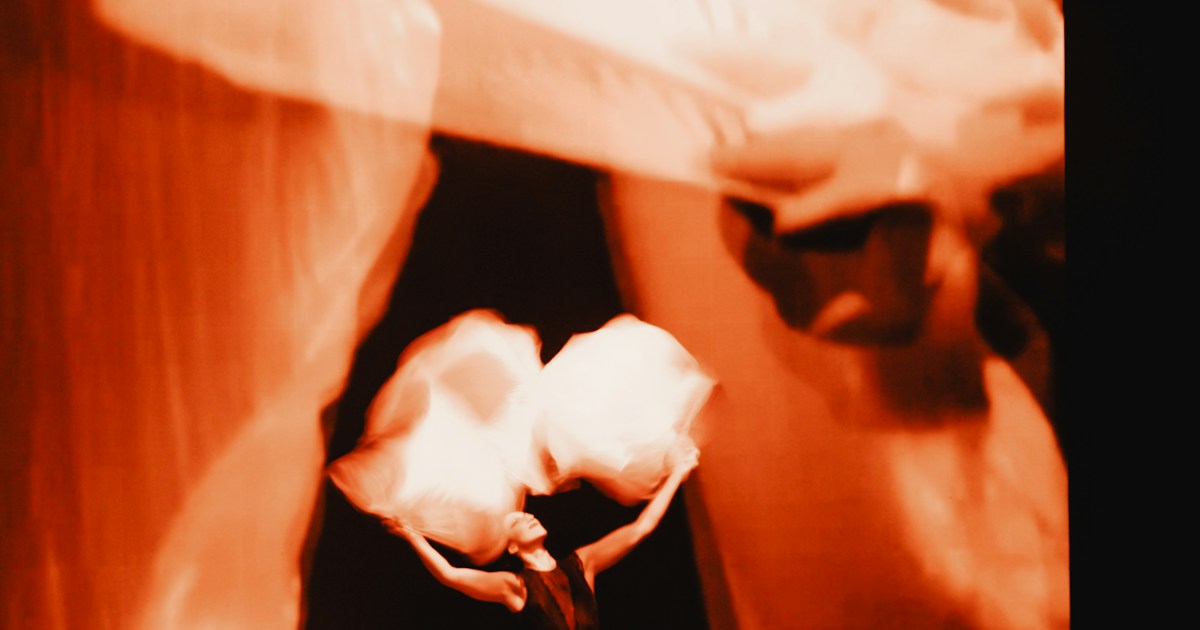
Magic’s story stretches from street performance and courtly entertainment to theatres, vaudeville, television, and close-up demonstrations recorded for online audiences. The performance conditions changed; the central challenge remained: how do you make a spectator interpret what they see in a surprising way?
The Library of Congress and the Victoria and Albert Museum preserve material relating to performance, popular entertainment, and theatrical history. For a focused account of a major figure, the Harry Houdini collection at the Library of Congress offers a useful starting point.
| Era or setting | What changed | Lasting influence |
|---|---|---|
| Ancient and early recorded performance | Accounts of conjuring circulated alongside religious, theatrical, and popular entertainment. | Magic’s uncertain boundary between wonder, deception, and belief became part of its appeal. |
| Street and fairground performance | Audiences gathered around visible demonstrations with compact props. | Strong visual effects and clear audience control became essential. |
| Theatre and grand illusion | Larger venues encouraged elaborate scenery, machinery, assistants, and dramatic staging. | Scale, suspense, and spectacle became central tools. |
| Vaudeville and popular touring shows | Acts competed for attention in fast-moving entertainment programmes. | Performers developed distinctive personas and repeatable signature effects. |
| Television and broadcast media | Camera framing introduced new possibilities and new audience skepticism. | Magicians had to think about what viewers could see through a lens. |
| Contemporary close-up and digital performance | Intimate performance moved into restaurants, street settings, and online video. | Natural objects, audience participation, and concise storytelling gained visibility. |
The historical record is uneven. A famous story may have been embellished over time; a documented performer may have used methods that cannot now be confirmed. We distinguish documented history, later tradition, and theatrical legend rather than treating them as interchangeable.
🌟 12 Influential Magic Tricks That Inspired Modern Magicians
These twelve effects are not a definitive leaderboard. They represent different kinds of influence: enduring sleight-of-hand plots, stage spectacles, escape performance, and effects whose reputations grew through stories as much as reliable documentation.
1. Cups and Balls: The Foundation of Misdirection
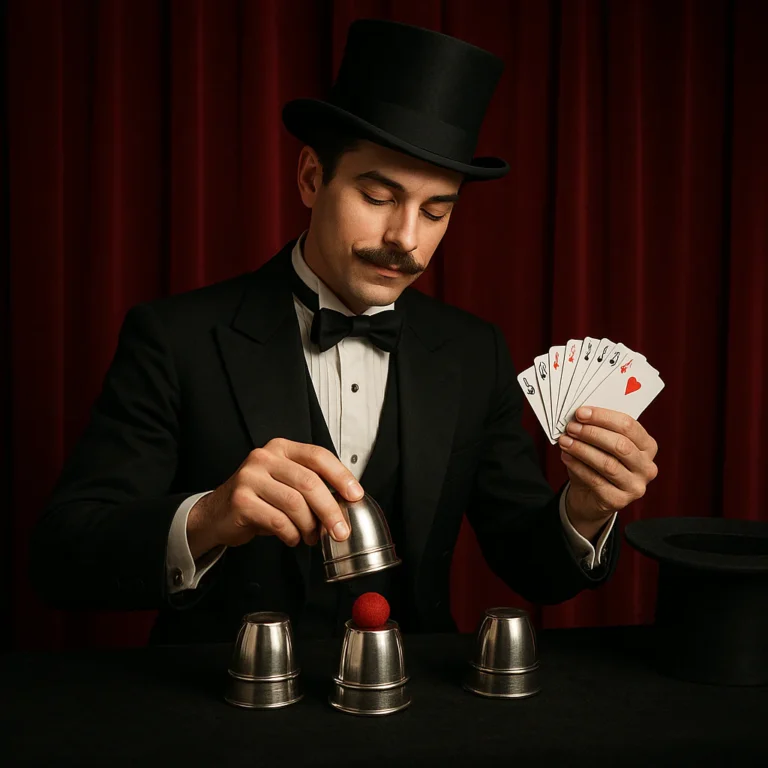
The Cups and Balls is among magic’s most recognizable sleight-of-hand plots: small objects appear, vanish, travel, or gather beneath cups. Its appeal lies in the contrast between simple props and increasingly impossible outcomes.
Why it influenced magicians:
- It makes attention management visible without explaining the method.
- It allows performers to build a routine in stages, adding surprises rather than relying one reveal.
- It can be adapted for street, close-up, and stage settings.
- Its familiar objects make the effect feel immediate: cups and balls are not mysterious apparatus.
Modern lesson: The audience should understand the apparent rules before the performer breaks them. In a good routine, each phase makes the next one harder to explain.
For more examples of hand-to-hand performance, see Close-up Magic.
2. The Linking Rings: A Classic of Visual Magic
Metal rings visibly link and separate, creating a clean visual paradox. The effect has remained popular because the audience can follow the central question from almost anywhere: are the rings solid, and how did they connect?
Strengths
- Clear visual premise for larger audiences.
- A flexible structure, from a short sequence to a full routine.
- Strong opportunities for rhythm, music, comedy, and audience participation.
Limitations
- The rings require careful handling and rehearsal.
- Poor angles or rushed timing can make the effect look like a puzzle rather than magic.
- The performer’s pacing matters; repeated links without escalation can flatten the routine.
The Rings demonstrate a principle that still guides stage magic: a simple image can travel farther than a complicated explanation.
3. The Indian Rope Trick: Legend, Mystery, and Media
Few magic stories are as famous—or as contested—as the Indian Rope Trick. In its most dramatic version, a rope rises unsupported, a boy climbs it, and events unfold beyond ordinary sight. Yet accounts vary greatly, and the full legendary version has not been established as a routinely documented historical performance.
That distinction matters. The trick’s cultural influence is real, even when specific accounts are doubtful. Newspaper stories, travel writing, stage adaptations, and public fascination helped make it an international symbol of exotic mystery. The Smithsonian Magazine provides a useful place to explore how popular history and spectacle can shape such legends; readers should compare claims against primary records where available.
What modern performers can learn from the legend:
- A story can be more influential than a single verified method.
- Mystery around an effect can attract attention—but can also distort history.
- Cultural framing deserves care. Avoid presenting a diverse tradition as a single exotic stereotype.
4. The Vanishing Birdcage: Speed and Sleight of Hand
The birdcage vanish became a classic stage image: a performer holds a cage, then it disappears in a startling instant. Its impact comes from speed, visual contrast, and the audience’s expectation that a solid object should remain present.
The effect also illustrates a recurring challenge in stage magic: the faster a visual vanish occurs, the more important it is that the rest of the act feels natural. A sudden movement can attract suspicion; a motivated gesture can make the same moment feel inevitable.
✅ Enduring idea: The audience does not merely see an object vanish. It sees the object vanish at a moment that seems impossible to choose.
5. The Sawing-in-Half Illusion: Reinventing Grand Illusion
The sawing illusion turns a theatrical danger into a structured visual narrative: a person enters a box, the apparatus is divided, and the performer appears to survive or restore the impossible. Its influence comes partly from the effect itself and partly from how many versions have been developed.
| Element | Dramatic purpose |
|---|---|
| The box | Establishes a visible boundary and a clear before-state |
| The saw or dividing action | Creates tension and a strong visual event |
| The assistant or participant | Gives the audience a human focus |
| The final reveal | Resolves the danger and rewards the suspense |
Benefits: highly legible, theatrical, adaptable to different staging styles.
Drawbacks: requires careful choreography, responsible assistant treatment, and a fresh presentation to avoid feeling familiar. The spectacle should never make a performer’s safety seem like an afterthought.
6. Houdini’s Escape Acts: Magic Meets Endurance
Harry Houdini’s lasting influence rests on more than locks and restraints. He built a public identity around challenge, risk, physical effort, and the suspense of escape. Contemporary accounts and archival material can be explored through the Library of Congress Houdini collection.
His performances made the audience ask a different question from the one posed by a card trick: not only “How is this done?” but “Will he get out in time?” That shift placed time, stamina, and public challenge at the centre of the dramatic structure.
What modern performers inherited:
- The challenge format, in which an audience or promoter defines the conditions.
- Suspense built around a visible countdown or physical obstacle.
- The idea that a magician’s public persona can become part of the effect.
- A heightened responsibility to distinguish theatrical danger from real risk.
Houdini’s legacy is not a recommendation to imitate dangerous stunts. His theatrical principles can be adapted safely through controlled staging, clear risk management, and effects that do not invite copycat attempts.
7. The Bullet Catch: The Risks and Ethics of Danger Magic
The Bullet Catch is one of magic’s most notorious danger-themed effects. Its theatrical premise is stark: a performer apparently catches a fired bullet. The history of versions and claims is complicated, and the effect has been associated with real injuries and deaths.
Our position is firm: do not attempt or reproduce dangerous methods. A stage effect that implies a lethal act can create risk even when the performer believes the method is controlled. The U.S. Consumer Product Safety Commission offers general safety information, but no public-facing safety resource can make a hazardous stunt suitable for amateur imitation.
The trick’s historical influence is best understood through its dramatic structure:
- A seemingly irreversible action creates intense suspense.
- The audience’s attention is tightly focused on the outcome.
- The performer’s credibility and composure become part of the spectacle.
- The ethical stakes are inseparable from the illusion.
The lesson is not “make danger more convincing at any cost.” It is to understand how strongly perceived risk affects an audience—and to choose safer ways to create tension.
8. The Floating Lady: The Evolution of Levitation
Levitation effects suggest that a person has escaped gravity. Stage versions use carefully designed apparatus, controlled sightlines, and theatrical pacing; close-up performances may create a different impression with small objects.
The long-term influence is broader than any one method. Levitation has encouraged magicians to explore:
- Suspension: the body appears to rest unsupported.
- Flight: the performer or object seems to move through space.
- Separation: the body appears detached from a support or surface.
- Transformation: the apparent floating becomes part of a larger story.
A successful levitation is not simply a technical display. The audience needs time to read the impossible image, so lighting, distance, music, and stillness are as important as the effect’s mechanics.
9. The Zig Zag Girl: A New Shape for Stage Illusions
The Zig Zag illusion takes the classic divided-body premise and gives it a striking geometric form. Instead of merely sawing a performer in a box, the apparatus appears to shift sections of the body sideways.
Its influence lies in design and readability: spectators can see the apparent misalignment from a distance. The effect also shows how a classic plot can be renewed by changing its visual silhouette, not just its secret.
Practical takeaway for designers: ask what the audience can identify in a single glance. On a large stage, a strong outline may communicate more clearly than fine detail.
10. The Disappearing Elephant: Making Scale Part of the Secret
Vanishing a large animal became a headline-making example of spectacle. The effect is remembered not only for the disappearance but for the boldness of the claim: the larger the object, the harder it seems to hide.
Large-scale illusions teach performers and designers to consider:
- How the audience is positioned.
- Which sightlines need to be controlled.
- How the stage picture changes before and after the vanish.
- Whether the audience’s attention is on the object, the performer, or the space around them.
A giant effect can be memorable, but size is not automatically impact. A small object vanishing in a spectator’s own hand can feel more impossible because the audience experiences it at close range.
11. The Ambitious Card: A Close-Up Magic Milestone
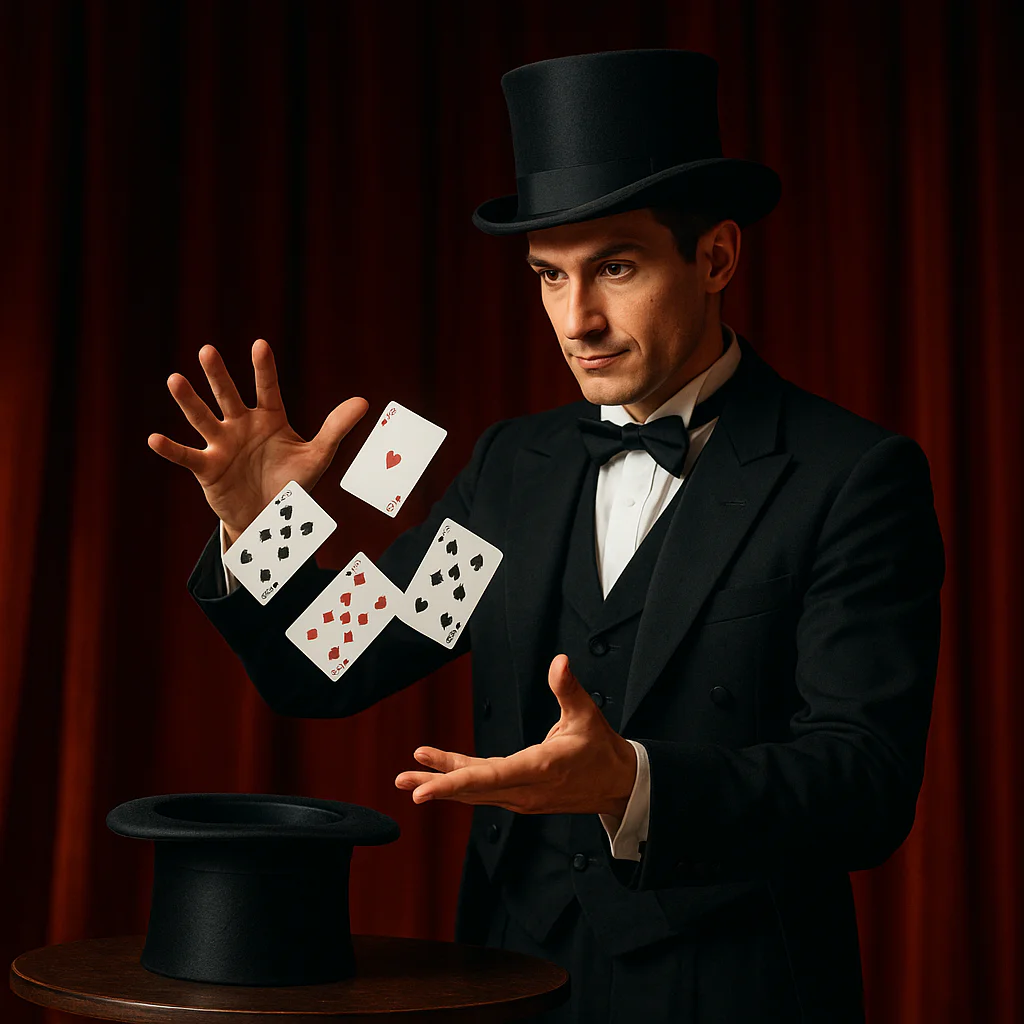
In the Ambitious Card plot, a selected card repeatedly rises to the top of the deck despite being placed elsewhere. The effect is a masterclass in repetition with variation: the audience understands the premise, then watches it happen again under seemingly stronger conditions.
Why it remains useful for students and professionals:
- The plot is easy to explain in one sentence.
- Each phase can raise the stakes.
- The card and deck are familiar objects.
- The performer can emphasize comedy, skill, intimacy, or impossibility.
Common weakness: repeating the same apparent moment without changing the conditions. A strong routine varies the method, handling, or emotional beat so the audience feels escalation rather than duplication.
Explore related material in Card Tricks.
12. The Sawing and Restoration of a Woman: From Shock to Storytelling
The sawing illusion has appeared in many forms, and its cultural meaning has changed with performance norms. Early presentations often used shock and danger as the main attraction. Contemporary performers may place more emphasis on the assistant’s agency, humour, theatrical character, or the audience’s expectations.
This is not a cosmetic issue. The assistant is a performer, not a prop. Respectful staging means:
- Giving the assistant a clear role and presence.
- Rehearsing entrances, exits, and cues collaboratively.
- Avoiding language that reduces a colleague to an object.
- Considering how the routine will read to different audiences.
The effect’s history is therefore also a history of changing expectations around stagecraft, representation, and professional collaboration.
🧠 The Secrets Behind the Impact: Misdirection, Method, and Audience Psychology
A good magic effect does not require the spectator to be foolish. It works because human attention is selective: we cannot process every detail equally, and expectations influence what we notice.
Researchers study related phenomena such as inattentional blindness and change blindness. The American Psychological Association defines inattentional blindness as failing to notice a visible but unexpected object when attention is engaged elsewhere. This is a useful concept for understanding performance, though magic is not simply a laboratory demonstration: technique, context, and theatrical framing matter too.
How magicians direct attention
Misdirection is not always a dramatic gesture pointing away from the secret. It can be a look, a question, a pause, a change of rhythm, or a spectator’s own expectation.
A performer may guide attention by:
- Establishing a reason to look: a visible action or verbal instruction gives the audience a focal point.
- Managing timing: a move is placed during a natural transition rather than highlighted as a special event.
- Creating contrast: a sudden change is more noticeable when the preceding action is calm.
- Inviting participation: a spectator concentrates on their choice, the object, or the outcome.
- Using framing: the audience sees a carefully composed moment rather than an unstructured sequence.
The ethical point is straightforward: misdirection is a performance technique, not permission to exploit or humiliate spectators.
Why surprise, suspense, and storytelling matter
Surprise provides the sudden contradiction; suspense makes the audience care about the outcome; storytelling gives the effect meaning. These elements work together, but they are not interchangeable.
| Ingredient | Audience experience | Common mistake |
|---|---|---|
| Surprise | “That changed when I wasn’t expecting it.” | Revealing the effect before the moment has room to land |
| Suspense | “What will happen next?” | Draging out a sequence without adding stakes |
| Story | “I understand why this moment matters.” | Adding a long backstory that delays the magic |
| Participation | “My choice shaped what happened.” | Making the spectator feel tested or blamed |
The most memorable routine often leaves one question open until the reveal. We’ll return to that idea when we look at contemporary performance: why do some modern magicians make an effect feel intimate even when the method is anything but simple?
The role of practice, timing, and presentation
Practice is not merely repeating a move until the hands feel comfortable. Professional rehearsal tests what the audience can see, whether the timing feels motivated, and whether the effect survives distraction.
A useful practice sequence:
- Learn the plot: describe the effect clearly without explaining the secret.
- Map the audience’s view: identify what they should see and what must remain unnoticed.
- Rehearse slowly: make the handling controlled before adding speed or performance.
- Add motivation: give every major movement a reason within the routine.
- Test with a small audience: observe confusion, laughter, and attention rather than fishing for praise.
- Revise the presentation: remove unnecessary actions and clarify the climax.
- Rehearse the recovery: know how to respond if a prop slips or a spectator reacts unexpectedly.
✅ Practice the audience experience, not just the mechanics. A move can be technically correct and still look suspicious if it arrives at the wrong moment.
✨ How Historic Tricks Inspired Modern Magic
Modern magic rarely replaces old principles wholesale. It recombines them. A classic card plot can become an intimate story; a stage illusion can use contemporary lighting; a prediction effect can invite audience choices while preserving the magician’s control over the performance.
A supplied summary of an article about Randall Richman describes a contemporary approach that combines mathematics, psychology, close-up magic, and audience participation, including predictions and vanishing-object effects. The summary also gives the line, “Magic is not about making the impossible possible—it’s about making the possible feel impossible.” That is a compelling description of modern presentation, but the available summary does not establish specific historical tricks Richman originated or independently document a broad influence on other magicians. We treat it as an example of a modern philosophy, not proof of a historical claim.
From parlor and vaudeville to television and social media
Each performance setting changes the audience’s relationship to magic:
- Parlor performance allows conversation and spectators close enough to study the performer.
- Vaudeville and theatre reward strong sightlines, memorable staging, and a clear persona.
- Television makes framing and editing part of the viewing experience.
- Social video invites replay, slow-motion analysis, and rapid sharing.
- Live-streamed performance adds latency, screen layouts, and remote participation.
The modern performer faces a distinct challenge: viewers can replay a clip, but replay does not necessarily recreate the live experience. The camera may show a method more clearly—or hide a crucial part of the performance context.
A note on the featured performance
The first video in this article features Eric Chien performing close-up card and coin illusions. The supplied video summary identifies Chien as a top prize winner at the 2018 World Championships of Magic, organized by the International Federation of Magic Societies. It describes visual transformations, changing card values and suits, and coins appearing and disappearing.
That performance is best understood as a showcase of contemporary close-up craft, not as a history lesson. Its connection to older magic is in its use of familiar principles—visual change, controlled attention, and carefully paced reveals—presented with modern speed and polish.
How technology reshaped classic illusions
Technology can expand a magician’s toolkit, but it does not remove the need for strong performance. Lighting, projection, video, sound, and digital interfaces can make a stage picture larger or add new layers to an effect. They can also distract from a weak premise.
| Tool or format | Possible contribution | Trade-off |
|---|---|---|
| Projection and screens | Bring details to a large audience | Camera framing can reveal or distort |
| Sound design | Shape suspense and rhythm | Overuse can make a routine feel overproduced |
| Mobile devices | Make everyday technology part of the story | Device handling and audience privacy require care |
| Virtual or augmented reality | Create interactive visual environments | The audience may focus on the technology rather than the magic |
| Social platforms | Reach viewers beyond theatre | Short clips can strip away context and encourage exposure culture |
Technology is most effective when it strengthens the premise. A prediction that depends on a tablet still needs a reason the audience cares about the prediction.
Why magicians reinterpret rather than simply copy
Magic is a craft with a long tradition of shared plots and evolving methods. A performer can honour a classic without reproducing another person’s entire routine. Meaningful reinterpretation may involve:
- A new character or story.
- A different audience relationship.
- A change in pacing or structure.
- A safer or more considerate staging approach.
- New choreography or visual language.
- A focus on the underlying principle rather than surface imitation.
This is where old tricks keep working: the effect provides a framework; the performer makes it personal.
🎭 Close-Up Magic, Stage Illusions, and Mentalism Compared
These branches overlap, but each asks different things of the performer. Close-up magic depends on intimate attention; stage illusion depends on visual clarity across a room; mentalism presents apparent knowledge, prediction, or influence.
| Form | Typical setting | Main strength | Main challenge |
|---|---|---|---|
| Close-up magic | A few spectators, often within arm’s reach | Personal involvement and detail | Managing angles and attention at very short range |
| Stage illusion | Theatre, event stage, or large venue | Scale and visual spectacle | Sightlines, choreography, and technical coordination |
| Mentalism | Close-up, stage, or broadcast | Psychological suspense and personal relevance | Avoiding unsupported claims about genuine psychic abilities |
| Street magic | Public or informal setting | Spontaneity and direct reactions | Consent, noise, surroundings, and unpredictable interruptions |
Mentalism deserves particular care in its presentation. A performer may dramatize apparent mind reading without claiming genuine supernatural powers. Clear entertainment framing helps audiences understand the act as performance while preserving the mystery.
Explore more in Illusions, Close-up Magic, and Card Tricks.
✅ What Makes a Magic Trick Truly Influential?
Popularity is one measure, but it is not enough. A trick’s influence may come from how it changes the craft, how long it remains performable, or how powerfully it enters popular culture.
We recommend asking four questions:
- Did it establish a plot or structure that others could adapt?
- Did it change audience expectations about what a magician could do?
- Can its central idea survive changes in technology and venue?
- Is its historical reputation supported by evidence, or mainly by later retellings?
| Type of influence | Example from this guide | What endured |
|---|---|---|
| Technique | Cups and Balls | Attention, concealment, and escalating phases |
| Visual design | Linking Rings and Zig Zag | Strong, readable images |
| Performer persona | Houdini’s escapes | Challenge, suspense, and public identity |
| Cultural legend | Indian Rope Trick | The power—and risk—of repeated storytelling |
| Close-up structure | Ambitious Card | Repetition, variation, and a clear premise |
| Ethical debate | Bullet Catch and sawing illusions | Safety, representation, and responsible staging |
A useful distinction: a trick can inspire without being directly copied. Modern performers may inherit its rhythm, audience relationship, or dramatic premise rather than its apparatus.
🛡️ Ethics, Safety, and Respect for Magic’s Secrets
Magic depends on a willing audience. People agree to watch a performance without knowing how it works; that agreement is not permission to frighten, shame, or endanger them.
Safety comes before spectacle
- Do not attempt dangerous stunts based on descriptions, videos, or historical accounts.
- Use qualified professional supervision for stage apparatus and technical effects.
- Check equipment, rehearsal conditions, exits, and performer communication.
- Never encourage audience members to imitate a dangerous illusion.
- Do not present a hazardous stunt as a reliable do-it-yourself effect.
The U.S. Occupational Safety and Health Administration provides workplace safety guidance, while venue and production teams should follow applicable local requirements. For entertainment involving riging, pyrotechnics, weapons, or special effects, consult qualified specialists rather than relying on a magician’s general experience.
Respect spectators and fellow performers
Good audience management includes clear boundaries. Invite participation, but give people room to decline. Avoid turning a spectator’s mistake, appearance, or personal information into the punchline.
Assistants and collaborators deserve the same respect. The history of grand illusion is not just a history of apparatus; it is a history of people whose skill, timing, and performance make the effect possible.
Protecting secrets while discussing history
There is a difference between teaching general principles and exposing a working method. Responsible discussion can cover:
- The effect’s historical context.
- How presentation and audience attention contribute.
- Why an effect influenced later performers.
- Safety and ethical concerns.
- Publicly documented accounts and sources.
We favour understanding the art over spoiling the experience. A spectator can appreciate how misdirection works in broad terms without needing a performer’s complete method.
🔭 The Future of Magic: New Technology, Old Principles
New formats will keep changing where magic happens, but the fundamentals are likely to remain familiar: a clear premise, a meaningful choice, controlled attention, and a satisfying surprise.
Potential directions include:
- Interactive theatre, where audience decisions shape the story.
- Augmented and virtual reality, which can create new visual environments.
- Hybrid live-stream performances, designed for both room and screen.
- Personalized mentalism, using information the audience knowingly provides.
- Accessible performance design, making routines easier to follow for audiences with varied sensory needs.
- More transparent safety practices, especially in large-scale illusion and escape performance.
Ideas such as AI-driven misdirection, eye-tracking, or holographic staging are possibilities, not proof of a particular performer’s current work. The technology may change the canvas; it cannot guarantee a memorable effect.
The question we left open—why can a small modern trick feel more intimate than a giant illusion? The answer is participation. When the spectator makes a choice, holds an object, or watches a transformation from inches away, the event feels personally connected to them. Scale creates spectacle; involvement creates ownership. A magician who understands both can make a coin vanish in a palm feel every bit astonishing as an elephant disappearing behind a curtain.