Support our educational content for free when you purchase through links on our site. Learn more
🪄 What Is the First Magic Trick? The 4,50-Year-Old Secret Revealed (2026)


Have you ever wondered what the very first magic trick in human history actually was? Was it a card vanish, a floating rabbit, or something far more ancient? The answer might surprise you. While modern magicians dazzle us with laser lights and giant illusions, the roots of our craft stretch back over 4,50 years to the sun-baked banks of the Nile.
In this comprehensive guide, we at Magic Trick™ are pulling back the curtain on the oldest documented magic trick ever performed. We’ll travel from the tomb of Baqet III in ancient Egypt to the smoky parlors of 18th-century Paris, uncovering the Cups and Balls routine that started it all. You’ll discover why the “first” trick isn’t just a historical footnote, but the foundation of every illusion you see today. Plus, we’ll reveal the one simple move you can learn in five minutes to perform your own version of history’s greatest trick.
Key Takeaways
- The Ancient Origin: The Cups and Balls is the oldest recorded magic trick, depicted in Egyptian tomb paintings dating back to 250 BC.
- The First Magician: Legend credits Dedi of Dendera (c. 270 BC) with performing the first documented miracle, including reattaching a severed goose head.
- Card Tricks Came Later: Despite their popularity, the first recorded card trick wasn’t performed until the 1780s by Giovanni Giuseppi Pinetti.
- Universal Principles: Whether it’s ancient Egyptian or a modern street magician, the core principles of misdirection, sleight of hand, and psychology remain unchanged.
- Start Here: The French Drop is the perfect “first magic trick” for beginners to master the art of the vanish.
Table of Contents
- ⚡️ Quick Tips and Facts
- 📜 The Ancient Origins: Unearthing the First Magic Trick in History
- 🃏 The Davenport Cup: Was This the Very First Card Trick?
- 🔢 How Many Magic Tricks Exist? Counting the Impossible
- 🎩 The 8 Fundamental Types of Magic Every Beginner Must Know
- 🧩 Mastering the Basics: Your First Steps in Illusion
- 🛠️ Essential Tools for Aspiring Magicians
- 🎭 Common Mistakes New Magicians Make (And How to Avoid Them)
- 🌟 The Psychology Behind the First Magic Trick
- 🏆 Legendary Magicians Who Perfected the Early Arts
- 💡 Quick Tips and Facts
- Conclusion
- Recommended Links
- FAQ
- Reference Links
⚡️ Quick Tips and Facts
Before we dive into the dusty archives of ancient Egypt and the smoky backrooms of 18th-century Paris, let’s get the magic juice flowing with some rapid-fire truths that will separate the hobbyists from the real deal.
- The “First” Trick is a Myth? Not exactly. While we often point to one specific trick, magic is more like a river than a single drop of water. It evolved over millennia. However, if you had to pick a “Grandfather” of all tricks, it’s the Cups and Balls. 🏆
- Dedi of Dendera: The name you’ll hear whispered in every magic circle is Dedi. Legend says he performed for Pharaoh Khufu (the guy who built the Great Pyramid!) around 270 BC. He didn’t just make things disappear; he allegedly reattached a severed goose head. 🦢
- The Oldest Visual Evidence: We aren’t just guessing. The Tomb of Baqet III in Beni Hasan, Egypt, features wall paintings dating back to 250 BC that clearly depict a magician performing the Cups and Balls routine. That’s over 4,50 years of history! 🖼️
- Cards Came Late: You might think card tricks are ancient, but playing cards didn’t reach Europe until the 14th century. The first recorded card trick wasn’t performed until the 170s by Giovanni Giuseppi Pinetti. 🃏
- The “First” YouTube Video: Speaking of history, the digital age has its own milestones. The very first video uploaded to YouTube was “Me at the zoo” in 205, but the first magic tutorial to go viral? That’s a different story. We’ll get to how modern magicians like Oscar Owen are redefining the “first trick” for the digital generation later in this article. 📱
Pro Tip from the Magic Trick™ Team: Never try to learn a trick just by reading text. Magic is a physical skill. You need to feel the weight of the coin, the friction of the card, and the tension of the string.
Learn more about the secrets behind the world’s most famous illusions at our guide on Magic Trick.
📜 The Ancient Origins: Unearthing the First Magic Trick in History

So, you want to know what is the first magic trick? Buckle up, because we are time-traveling.
When we talk about the “first” magic trick, we have to distinguish between myth, recorded history, and archaeological evidence. It’s a bit like trying to find the first person who ever told a joke; the punchline might be lost, but the laughter remains.
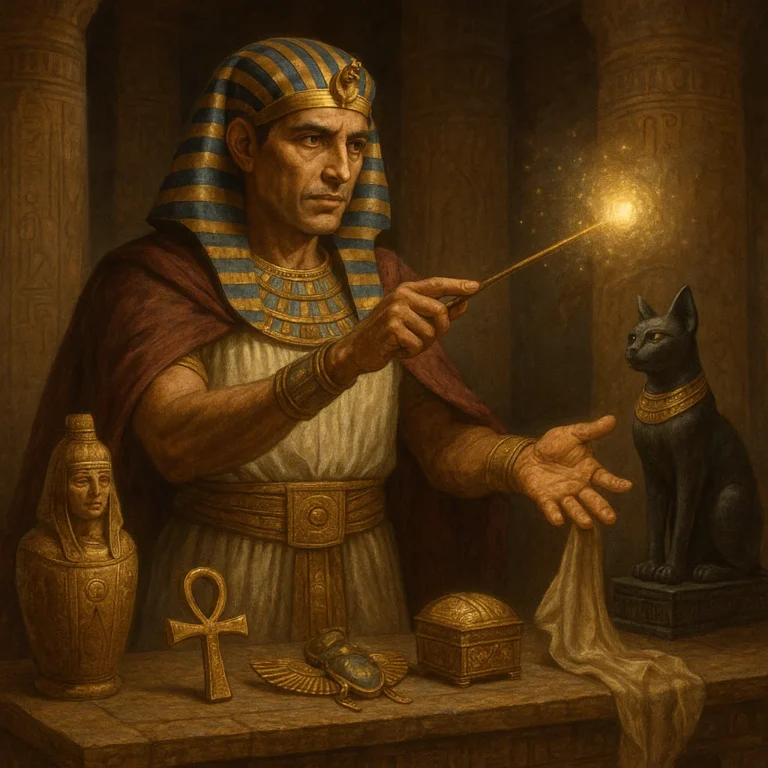
The Legend of Dedi: The Original Illusionist?
According to the Westcar Papyrus, a document written around 160 BC but describing events from 270 BC, there was a magician named Dedi. He was a priest of the goddess Neith, and he was famous for his ability to perform miracles.
The story goes that Pharaoh Khufu asked Dedi if he could perform a miracle. Dedi agreed. He was asked to reattach the head of a goose that had been cut off. Dedi called the goose, the head flew back on, and the goose waddled away, honking happily. He did the same with an ox.
Was this real?
- ✅ The Magic Community: Most magicians accept Dedi as the archetype of the first magician.
- ❌ The Historians: Many argue Dedi is a fictional character created to glorify the Pharaohs.
However, the archaeological evidence is hard to ignore.
The Beni Hasan Murals: Proof in Stone
In 1890, archaeologists discovered the Tomb of Baqet III in Beni Hasan, Egypt. On the walls, there is a vivid painting of a magician performing with three cups and three balls.
This isn’t just a vague drawing. It shows:
- The magician holding a cup.
- A ball appearing under the cup.
- The ball vanishing and reappearing.
This confirms that the Cups and Balls routine was being performed in 250 BC. That makes it the oldest documented magic trick in human history.
Why does this matter to you? Because the principles used by that Egyptian magician are the exact same principles used by David Copperfield and Dynamo today. It’s all about misdirection, sleight of hand, and psychology.
Explore the fascinating timeline of Magic History on our site to see how these ancient roots grew into modern illusions.
🃏 The Davenport Cup: Was This the Very First Card Trick?
Wait, hold on. If the Cups and Balls is the first trick, why do we obsess over card tricks?
Great question. The answer lies in the invention of playing cards.
The Timeline of Cards
- China: Playing cards were invented in the 9th century (Tang Dynasty).
- Europe: Cards didn’t arrive until the late 14th century.
- The First Card Trick: The first recorded card trick was performed by Giovanni Giuseppi Pinetti (also known as Joseph Pinetti) in the 1780s.
Pinetti was an Italian magician who performed in London and Paris. He was a showman, and he realized that playing cards were the perfect prop because everyone understood them. Unlike a mysterious cup and ball, everyone knew what a King of Hearts was.
Why Card Tricks Became King
- Universality: Everyone has seen a deck of cards.
- Portability: You can carry a deck in your pocket.
- Versatility: You can do vanishes, transformations, predictions, and transpositions with just 52 pieces of cardboard.
The “First” Card Trick?
While Pinetti is often credited, the specific trick he performed first is debated. However, the Ambitious Card routine (where a card keeps rising to the top) is considered one of the oldest and most enduring card routines.
Fun Fact: The Davenport Brothers were famous for their “spiritualism” acts in the 19th century, but they didn’t invent the first card trick. They popularized the idea of the “spirit cabinet,” which is a different beast entirely.
If you are looking to start your journey with cards, you need to understand that the first card trick you learn will likely be a variation of the Ambitious Card or the Force.
Master the art of Close-up Magic with our detailed guides on card handling.
🔢 How Many Magic Tricks Exist? Counting the Impossible
If you asked a magician, “How many magic tricks are there?”, they would probably laugh and say, “As many as there are stars in the sky.”
But let’s try to put a number on it, shall we?
The Math of Magic
- Standard Decks: A standard deck of 52 cards has 52! (52 factorial) possible permutations. That is roughly 8 x 10^67 combinations.
- Unique Routines: If you consider every possible variation of a trick (different sleights, different presentations, different props), the number is infinite.
The “10,0” Estimate
Most magic historians estimate that there are tens of thousands of documented magic tricks in existence.
- The Royal Road to Card Magic: This famous book alone contains hundreds of routines.
- The J.K. Hartman Collection: Contains over 10,0 distinct effects.
Why the Number Doesn’t Matter
The number of tricks is irrelevant. What matters is the impact.
- A simple coin vanish can be more powerful than a complex sawing a woman in half illusion if performed with the right patter and emotion.
The Magic Trick™ Insight: Don’t try to learn every trick. Learn one trick perfectly. Master the presentation. That is the secret to being a great magician.
🎩 The 8 Fundamental Types of Magic Every Beginner Must Know
Before you can perform the first magic trick, you need to understand the language of magic. Every trick you will ever see, from the simplest coin vanish to the most complex stage illusion, falls into one of eight fundamental categories.
We call these the 8 Pillars of Magic.
| Type | Definition | Classic Example | Difficulty for Beginners |
|---|---|---|---|
| 1. Vanish | Making an object disappear. | The French Drop (Coin Vanish) | ⭐ |
| 2. Appearance | Making an object appear from nothing. | The Classic Palm (Card Appearance) | ⭐ |
| 3. Transformation | Changing one object into another. | Card Change (Red to Black) | ⭐ |
| 4. Transposition | Swapping two objects. | The Tornado (Cups and Balls) | ⭐ |
| 5. Restoration | Fixing something that was destroyed. | Torn and Restored Newspaper | ⭐ |
| 6. Levitation | Making something float. | The Balducci Levitation | ⭐ |
| 7. Penetration | Passing an object through another. | Coin Through Table | ⭐ |
| 8. Prediction | Foreseeing a future event. | The Force (Card Prediction) | ⭐ |
Deep Dive: The 8 Types
1. Vanish
The Vanish is the bread and butter of magic. It’s the first thing people think of when they hear “magic.”
- Why it works: It plays on the brain’s inability to track objects that leave the visual field.
- Best for: Beginners. The French Drop is the first vanish almost every magician learns.
2. Appearance
The Appearance is the reverse of the vanish. It’s the “ta-da!” moment.
- Why it works: It creates a sense of wonder and impossibility.
- Best for: Building confidence. Seeing a card appear in your hand feels like a real superpower.
3. Transformation
This is where magic gets really cool. Turning a red card into a black card, or a coin into a sponge.
- Why it works: It challenges the laws of physics.
- Best for: Intermediate magicians. It requires precise timing.
4. Transposition
Swapping two objects. This is the core of the Cups and Balls and many card tricks.
- Why it works: It creates a logical impossibility. “How did the ball get there?”
- Best for: Storytelling. It allows for a narrative of “moving” things.
5. Restoration
Fixing the broken. This is often the most emotional trick.
- Why it works: It symbolizes hope and healing.
- Best for: Emotional impact. The Torn and Restored Card is a classic.
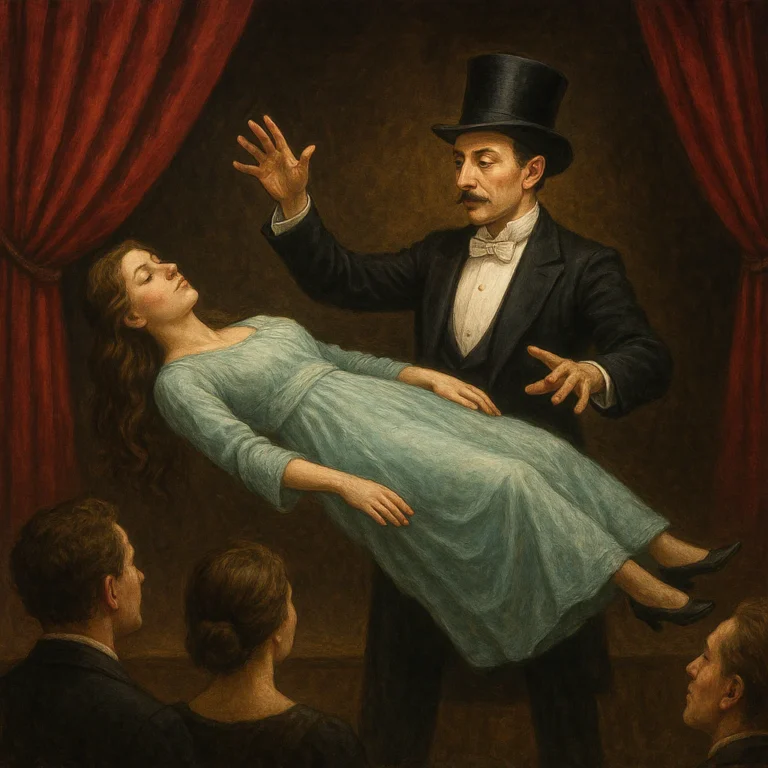
6. Levitation
Making things float. This is the most “magical” looking effect.
- Why it works: It defies gravity.
- Best for: Visual impact. The Balducci Levitation is a great beginner trick.
7. Penetration
Passing through solid objects.
- Why it works: It breaks the rules of matter.
- Best for: Shock value. The Coin Through Table is a staple.
8. Prediction
Knowing the future.
- Why it works: It creates a sense of destiny.
- Best for: Mentalism and card tricks. The Force is the foundation of this.
Discover more about these categories in our Magic Secrets section.
🧩 Mastering the Basics: Your First Steps in Illusion
Okay, you’ve read the history, you know the types. Now, what is the first magic trick you should actually learn?
We at Magic Trick™ have a golden rule: Start with the French Drop.
Why the French Drop?
- It’s a Vanish: It’s the most fundamental effect.
- It requires no props: Just a coin (or a small object).
- It teaches misdirection: It forces you to learn how to look away and guide the audience’s eyes.
Step-by-Step: The French Drop
What you need: A coin (a quarter or a large coin works best).
- The Grip: Hold the coin in your right hand between your thumb and fingers. Show it to the audience.
- The Transfer: Bring your left hand over the right hand. Pretend to take the coin with your left hand.
- The Secret: As your left hand closes, keep the coin in your right hand. Your right hand should relax and drop to your side, hiding the coin in your palm.
- The Misdirection: Look at your left hand (the one that “has” the coin). Tell the audience, “Watch closely.”
- The Vanish: Open your left hand. The coin is gone!
- The Reveal: Show your right hand is empty (or keep the coin hidden for a second longer).
The Secret Sauce: The magic isn’t in the hand that has the coin. It’s in the hand that pretends to have it. If you look at the hand with the coin, the audience will too. Look at the empty hand.
The “First” Card Trick: The Ambitious Card
If you prefer cards, the Ambitious Card is your first step.
- Force a card: Make the spectator pick a card (we’ll teach you how to do this later).
- Place it in the middle: Put their card in the middle of the deck.
- The Magic: Say “Rise!” and the card jumps to the top.
- Repeat: Do it three times.
Get the full tutorial on the Ambitious Card in our Illusions guide.
🛠️ Essential Tools for Aspiring Magicians
You don’t need a million-dollar budget to start. In fact, the best magicians often use the simplest tools.
The Starter Kit
| Item | Purpose | Recommended Brand/Type |
|---|---|---|
| Coin | For vanishes and transpositions | US Quarter or British Pound |
| Deck of Cards | For card tricks | Bicycle Rider Back (Standard) |
| Rope | For penetration and restoration | Magic Ropes (from a magic shop) |
| Silk | For color changes and vanishes | Bicycle Silks |
| Thumb Tip | For loading and unloading objects | Standard Thumb Tip |
Where to Buy?
- Bicycle Cards: The gold standard. They are durable and have the perfect amount of “snap.”
👉 Shop Bicycle Cards on: Amazon | Walmart | Bicycle Official - Magic Shops: Always support local magic shops if you can. They offer advice and community.
Recommended: Penguin Magic, Ellusionist, Vanishing Inc.
Pro Tip: Never buy “gimmicked” tricks from a toy store. They are usually cheaply made and the secrets are obvious. Invest in quality props from a dedicated magic retailer.
🎭 Common Mistakes New Magicians Make (And How to Avoid Them)
We’ve all been there. You perform a trick, and instead of “Wow,” you get a “How did you do that?” followed by a “Let me see it again.”
Mistake #1: The “Look”
The Error: Looking at your hands while performing.
The Fix: Never look at the secret move. Look at the audience. If you look at your hands, the audience will too.
Mistake #2: The “Too Fast”
The Error: Doing the move too quickly.
The Fix: Slow down. Magic is about the illusion of impossibility, not speed. If you move too fast, people see the blur. If you move slowly, they see the “magic.”
Mistake #3: The “No Patter”
The Error: Performing in silence.
The Fix: Talk. Tell a story. “This is the coin of the Pharaohs…” Patter distracts the brain and makes the trick more memorable.
Mistake #4: The “Too Many Tricks”
The Error: Doing 10 tricks in a row.
The Fix: One great trick is better than ten mediocre ones. End on a high note.
Remember: The audience wants to be fooled, but they also want to be entertained. Personality is your most powerful tool.
🌟 The Psychology Behind the First Magic Trick
Why do we love magic? Why does a simple coin vanish make our hearts race?
The Brain on Magic
When you see a magic trick, your brain tries to predict what will happen. When the prediction fails (the coin vanishes), your brain releases dopamine. It’s a reward for being surprised.
The “Magic Circle”
Magicians use a concept called the Magic Circle. This is the invisible boundary between the “real world” and the “magical world.”
- The Setup: You create the circle by saying, “Watch closely.”
- The Effect: You break the laws of physics inside the circle.
- The Reveal: You step out of the circle, leaving the audience in awe.
Misdirection: The King of Magic
Misdirection is not about hiding the secret. It’s about guiding attention.
- Physical Misdirection: Looking at your left hand while the right hand does the move.
- Psychological Misdirection: Asking a question (“Is this your card?”) to make the audience focus on the wrong thing.
The Secret: The best magicians don’t hide the secret; they hide the method in plain sight.
🏆 Legendary Magicians Who Perfected the Early Arts
To understand the first magic trick, we must honor the masters who kept the flame alive.
Houdini: The Master of Escape
While not the first, Harry Houdini (1874–1926) defined the modern era of magic. He specialized in escapology, but his roots were in sleight of hand.
- Legacy: He proved that magic could be a serious art form.
David Copperfield: The Master of Illusion
David Copperfield (born 1956) brought magic to the masses with large-scale illusions.
- Legacy: He made magic a global phenomenon.
Juan Tamariz: The Master of Card Magic
Juan Tamariz (born 192) is considered the greatest card magician of all time.
- Legacy: He revolutionized the way we think about card magic and misdirection.
The Modern Era: Oscar Owen
Oscar Owen is a modern magician who has taken the “first trick” to the digital age. His YouTube channel has millions of views, teaching simple tricks that anyone can learn.
- Legacy: He proves that magic is accessible to everyone.
Read more about these legends in our Magic History archives.
💡 Quick Tips and Facts (Revisited)
Wait, we already did this? Yes, but let’s add a bonus section with advanced tips for when you master the basics.
- The “Double Lift”: This is the most important card move. It allows you to show one card while holding two.
- The “False Shuffle”: Shuffling the deck while keeping the order the same.
- The “Force”: Making the spectator pick the card you want them to pick.
Final Thought: The first magic trick is just the beginning. The journey is endless.
Conclusion

So, what is the first magic trick?
It’s the Cups and Balls, performed by Dedi in 250 BC. It’s the Ambitious Card, performed by Pinetti in the 1780s. It’s the French Drop, performed by you in your living room today.
Magic is not about the trick. It’s about the wonder. It’s about the moment when the impossible becomes possible.
Our Recommendation:
If you are a beginner, start with the French Drop. It’s simple, effective, and teaches you the most important lesson: misdirection.
- Buy a deck of Bicycle cards.
- Practice the French Drop.
- Perform it for a friend.
- Watch their eyes light up.
That is the first magic trick. And it’s the most important one you’ll ever learn.
Did you solve the mystery? The answer wasn’t just a name or a date. The answer is you. The first magic trick is the one you perform.
Recommended Links
Ready to start your journey? Here are the essential tools and resources we recommend.
Essential Props
- Bicycle Rider Back Playing Cards: The industry standard for card magic.
👉 Shop on: Amazon | Walmart | Bicycle Official - Magic Coin Set: High-quality coins for vanishes.
👉 Shop on: Amazon | Etsy - The Royal Road to Card Magic: The bible of card magic.
Buy on: Amazon
Learning Resources
- Penguin Magic: The largest online magic shop.
Visit: Penguin Magic - Ellusionist: Great for modern tricks and tutorials.
Visit: Ellusionist - Vanishing Inc. Magic: High-quality tutorials and props.
Visit: Vanishing Inc.
Books
- “The Expert at the Card Table” by S.W. Erdnase: The classic text on card sleight of hand.
Buy on: Amazon - “Royal Road to Card Magic” by Hugard and Braue: The best book for beginners.
Buy on: Amazon
FAQ
Why is the first magic trick important for learning magic?
The first magic trick is important because it teaches the fundamental principles of magic: misdirection, timing, and presentation. It’s the foundation upon which all other tricks are built. Without mastering the basics, you cannot perform advanced illusions.
Read more about “🪄 15 Mind-Blowing Hand Tricks: How to Do Magic with Your Hands (2026)”
What materials are needed for the first simple magic tricks?
For the first simple magic tricks, you only need a coin (for the French Drop) or a deck of cards (for the Ambitious Card). No expensive props are required.
Read more about “🪄 What Is the Simplest Magic Trick? (Top 10 Revealed for 2026)”
How has magic evolved from ancient times today?
Magic has evolved from religious rituals in ancient Egypt to entertainment in the 19th century, and now to digital content on YouTube. The methods have changed, but the principles remain the same.
Read more about “What Is the Oldest Magic Trick? Unveiling 4,000 Years of Wonder 🪄 (2026)”
What are some classic beginner magic tricks to learn?
- French Drop (Coin Vanish)
- Ambitious Card (Card Trick)
- Balducci Levitation (Levitation)
- Coin Through Table (Penetration)
Read more about “🪙 12 Easy Magic Tricks with Coins to Master in 2026”
How did ancient magicians perform their tricks?
Ancient magicians used simple props like cups, balls, and coins. They relied on sleight of hand and misdirection. They often performed in temples or courts as part of religious or royal ceremonies.
Read more about “🎩 7 Ways to Make Your Magic Performances Unforgettable (2026)”
What was the earliest recorded magic performance?
The earliest recorded magic performance is the Cups and Balls routine, depicted in the Tomb of Baqet III in 250 BC.
Who invented the first magic trick in history?
There is no single “inventor.” The Cups and Balls is attributed to Dedi in 270 BC, but it likely evolved over time.
Read more about “What Was the First Magic Trick? Unveiling 12 Ancient Illusions 🪄”
What are some easy magic tricks for beginners to learn and practice?
- French Drop
- Ambitious Card
- Coin Through Table
- Color Change
Read more about “🪄 15 Advanced Magic Techniques to Master in 2026”
What are the basic principles of magic and how are they used in tricks?
The basic principles are misdirection, sleight of hand, psychology, and presentation. They are used to hide the method and create the illusion.
Read more about “🎩 How Magicians Invent New Tricks: The 7-Step Secret Revealed (2026)”
How did ancient civilizations use magic and illusions in their cultures?
Ancient civilizations used magic for religious rituals, entertainment, and political power. Magicians were often seen as priests or sorcers.
What are some of the most famous magic tricks of all time?
- Cups and Balls
- Ambitious Card
- Sawing a Woman in Half
- Disappearing Elephant
Read more about “🧠 The Science Behind Magic Illusions: How Your Brain Gets Fooled (2026)”
What is the origin of magic and how did it evolve over time?
Magic originated in ancient Egypt and Greece. It evolved through the Middle Ages and the Renaissance to become the modern entertainment we know today.
Read more about “125 Mind-Blowing Magic Tricks You Must Master in 2026 ✨”
Who is considered the first magician to perform a magic trick?
Dedi is considered the first magician to perform a magic trick, according to the Westcar Papyrus.
Read more about “🃏 What Is the Most Common Magic Trick? (2026)”
What was the first magic trick performed?
The Cups and Balls is widely considered the first magic trick performed.
Read more about “What Is the World’s Deadliest Magic Trick? Top 10 Revealed! 🔥 (2026)”
What is the oldest trick?
The Cups and Balls is the oldest trick in magic.
Read more about “What is the oldest trick?”
What are the stages of a magic trick?
- The Pledge: Show the object.
- The Turn: Perform the secret move.
- The Prestige: Reveal the impossible result.
Read more about “🪄 10 Easy Magic Tricks That Impress Everyone (2026)”
What are the easiest magic tricks to learn?
- French Drop
- Ambitious Card
- Coin Through Table
Read more about “15 Easiest Magic Tricks for Beginners to Learn (2026) 🎩✨”
Reference Links
- The Westcar Papyrus: British Library
- Tomb of Baqet III: Egyptian Archaeology
- Bicycle Cards: Bicycle Official
- Penguin Magic: Penguin Magic
- Ellusionist: Ellusionist
- Vanishing Inc. Magic: Vanishing Inc.
- Magic Puzzle Company: Magic Puzzle Company
- Oscar Owen’s YouTube Channel: Oscar Owen
- The Magic Circle: The Magic Circle
- Academy of Magical Arts: The Magic Castle