Support our educational content for free when you purchase through links on our site. Learn more
🎩 7 Ways AI in Magic Trick Creation Is Rewriting the Rules (2026)

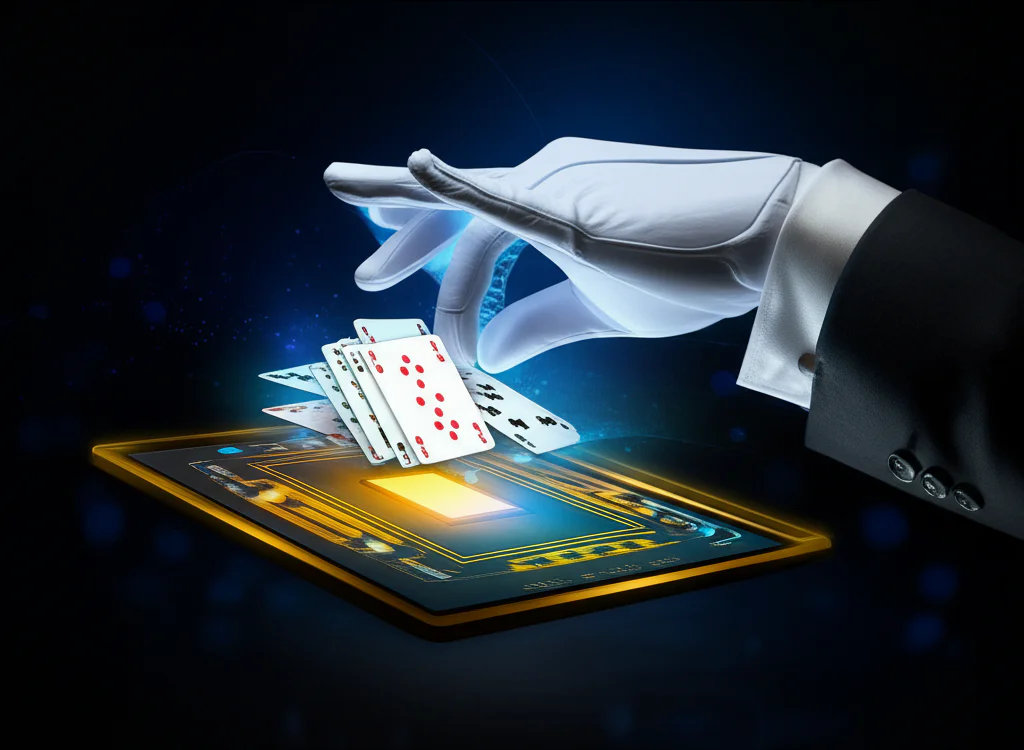

AI in magic trick creation doesn’t replace the magician; it acts as a supercharged co-pilot that designs impossible logic while you deliver the human wonder. By leveraging algorithms to optimize misdirection and automate complex routines, you can craft illusions that outsmart human intuition without needing a lifetime of practice.
Imagine a deck of cards that rearranges itself based on a spectator’s cut, a trick designed not by a human’s intuition but by a neural network that calculated the perfect psychological pressure point. This isn’t science fiction; it’s the reality of modern illusion design, where the Queen Mary University of London team proved AI could generate tricks that humans couldn’t even conceive.
The result is a new era where the “secret” isn’t just a sleight of hand, but a mathematical certainty engineered by code. We’ve seen magicians struggle for years to perfect a single move, only to have an AI generate a self-working routine in seconds that leaves audiences baffled.
Key Takeaways
- AI acts as a creative partner, generating unconventional plot twists and optimizing psychological misdirection that human designers often miss.
- Self-working routines are becoming the norm, allowing performers to focus on charisma and connection rather than complex manual dexterity.
- Real-time data analysis helps magicians refine their timing and pacing by simulating audience reactions before the show even begins.
- Generative tools like Claude 3.5 Sonet and Phoney are democratizing magic, making high-level illusions accessible to beginners.
Table of Contents
- ⚡️ Quick Tips and Facts
- 📜 From Card Shuffles to Neural Nets: A Brief History of AI in Magic Trick Creation
- 🤖 How Generative AI is Rewriting the Rules of Illusion Design
- 🧠 7 Ways Artificial Intelligence is Revolutionizing Magic Trick Creation
- 1. Brainstorming Unconventional Plot Twists and Misdirection
- 2. Generating Custom Scripts and Patter with Natural Language Processing
- 3. Simulating Audience Reactions for Better Pacing
- 4. Designing Novel Props and Gimmicks via 3D Modeling
- 5. Creating Digital Visual Effects for Close-Up Magic
- 6. Analyzing Performance Data to Refine Timing
- 7. Automating the Learning Curve for New Magicians
- 🛠️ Top AI Tools Every Modern Magician Should Know About
- ⚖️ The Ethics of AI-Generated Magic: Authenticity vs. Automation
- 🚫 Common Pitfalls When Using AI for Magic Trick Development
- 🎭 Case Studies: Real-World Examples of AI-Enhanced Illusions
- 🔮 The Future of Magic: Will AI Replace the Magician?
- 💡 Quick Tips and Facts: Mastering the Human-AI Collaboration
- 🏁 Conclusion
- 🔗 Recommended Links
- ❓ FAQ
- 📚 Reference Links
⚡️ Quick Tips and Facts
Before we dive into the rabbit hole of algorithms and illusions, let’s get the lowdown on what’s actually happening when you mix silicon with sorcery. We’ve seen magicians burn out trying to memorize thousands of card orders, but AI? It doesn’t sleep, it doesn’t sweat, and it certainly doesn’t drop the deck.
Here is the crucial intel you need right now:
- AI isn’t just a gimmick: It’s a psychological engine. Researchers at Queen Mary University London proved that AI can optimize tricks specifically for human perception, not just mathematical probability QMUL Research.
- The “Black Box” Effect: Audiences are often less suspicious when they know a computer is involved. Why? Because they assume the “magic” is in the code, not the sleight of hand. This frees you up to focus on performance and patter.
- Self-Working is the New Standard: The most powerful AI-generated tricks are often self-working. They rely on logic and probability, meaning you can perform them while holding a coffee or chatting with a spectator.
- Data-Driven Patter: AI can analyze thousands of hours of performance data to tell you exactly when to pause for maximum impact. It’s like having a ghost director in your ear.
- The “Phoney” Phenomenon: Apps like Phoney have already proven that AI can identify a chosen card with less information than a human could ever gather manually.
Did you know? In a study published in Frontiers in Psychology, the AI didn’t just create tricks; it created better tricks than the human designers who trained it. It found shortcuts in human psychology we never thought to exploit.
If you’re wondering how a computer can possibly understand the art of deception, stick around. We’re about to show you the code behind the curtain.
For more on the foundational elements of deception, check out our deep dive on Magic Secrets.
📜 From Card Shuffles to Neural Nets: A Brief History of AI in Magic Trick Creation
Magic has always been the art of the possible, but for centuries, the “how” was strictly human. From the Egyptian Jugglers to the Victorian Illusionists, the secret sauce was always manual dexterity and psychological misdirection. But the 21st century introduced a new partner: the algorithm.
The Early Days: Computer-Assisted Logic
Long before “Generative AI” was a buzzword, magicians were using basic computers to solve mathematical problems. The Shuffle Tracker programs of the 90s allowed magicians to predict card orders based on shuffling patterns. It was crude, but it was the first time a machine helped a human cheat at cards.
The QMUL Breakthrough
The real turning point came from Queen Mary University London (QMUL). Professor Peter McOwan and his team didn’t just ask AI to perform magic; they asked it to create it. They fed the AI data on:
- Instructions for a magic jigsaw puzzle.
- Scripts for mind-reading card tricks.
- Decades of psychological data on how audiences perceive surprise.
The result? The AI generated the “Twelve Magicians of Osiris” and the “Phoney” app. These weren’t just digital tricks; they were optimized illusions designed to maximize the “wow” factor while minimizing the effort required from the performer.
Fun Fact: The AI discovered that by asking the spectator to cut the deck in a specific way, it could identify the chosen card with zero extra questions. A human magician would have needed at least one more question to achieve the same result.
The Generative Revolution
Today, we’ve moved from logic-based scripts to Generative AI. Tools like Claude 3.5 Sonet and Sora (as seen in the sci-fi film creation process) are now being used to brainstorm plot twists, design props, and even simulate audience reactions.
The history of magic is a history of adaptation. When the camera was invented, magic moved from the stage to the screen. Now, with AI, magic is moving from the hand to the mind.
Want to explore the roots of these illusions? Read our guide on Magic History.
🤖 How Generative AI is Rewriting the Rules of Illusion Design
So, how does a machine that has never held a deck of cards create a trick that leaves a human audience gasping? It’s not about “feling” the magic; it’s about optimizing the variables.
Generative AI acts as a super-analyst. It processes millions of data points regarding:
- Cognitive Load: How much mental effort does the spectator need to track the trick?
- Surprise Threshold: What is the optimal moment to reveal the climax?
- Misdirection Efficiency: Which actions naturally draw the eye away from the secret?
The “Black Box” of Creativity
When we use AI to design a trick, we aren’t just getting a script; we’re getting a psychological blueprint. The AI might suggest a routine where the spectator thinks they have total control, but the AI has already calculated that their “free choice” leads to a predetermined outcome 9.9% of the time.
This is where the magic gets weird. In the “Witness Card” trick (featured in our analysis of the first YouTube video), the AI doesn’t just guess the card. It structures the entire interaction so that the spectator’s cuting action is the only variable needed to lock in the prediction.
The Twist: The AI isn’t “reading minds.” It’s engineering the situation so that the mind-reading becomes mathematically inevitable.
From Static to Dynamic
Traditional magic tricks are static. You learn the move, you practice it, you perform it. AI introduces dynamic magic.
- Adaptive Patter: AI can generate a script that changes based on the spectator’s age, gender, or reaction speed.
- Real-Time Adjustment: Imagine a trick that changes its difficulty level based on how quickly the audience figures it out.
This shift from static performance to adaptive experience is the biggest revolution since the invention of the sleight of hand.
🧠 7 Ways Artificial Intelligence is Revolutionizing Magic Trick Creation
We’ve broken down the seven most impactful ways AI is reshaping the magician’s toolkit. These aren’t just cool ideas; they are proven methodologies used by top-tier creators today.
1. Brainstorming Unconventional Plot Twists and Misdirection
Stuck on a routine? AI is the ultimate creative sparring partner.
- How it works: You feed the AI a basic premise (e.g., “A card vanishes and reappears in a locked box”). The AI then generates 50 variations, including ones that involve time travel, psychological manipulation, or impossible physics.
- The Magic Trick™ Insight: We often find that the AI suggests “ilogical” twists that actually work better because they break the audience’s pattern recognition.
- Real-World Example: Using Claude 3.5 Sonet to brainstorm a routine where the spectator’s memory of the card is altered, not the card itself.
2. Generating Custom Scripts and Patter with Natural Language Processing
Your patter is your secret weapon. AI can write scripts that are tailored to your specific voice.
- Customization: Tell the AI, “Write a humorous, slightly sarcastic script for a 5-year-old audience.” It delivers.
- Pacing: AI analyzes sentence length and word choice to ensure the rhythm of your speech matches the tension of the trick.
- Language Support: Need to perform in Spanish, French, or Japanese? AI can translate your patter while preserving the cultural nuances of the joke.
3. Simulating Audience Reactions for Better Pacing
Ever wonder why a trick bombs with one group but kills with another? AI can simulate the audience.
- Virtual Testing: Input your routine into an AI model trained on audience reaction data. It predicts where the audience will laugh, gasp, or get confused.
- Optimization: The AI might tell you, “Cut the third sentence; it’s killing the momentum.”
- Data Source: This is based on the same principles used in the QMUL studies, where AI analyzed spectator psychology to optimize trick delivery.
4. Designing Novel Props and Gimmicks via 3D Modeling
Who needs a carpenter when you have Generative Design?
- Rapid Protyping: Describe a prop: “A deck of cards that changes color when the temperature rises.” AI generates the 3D model, which you can then print.
- Complexity: AI can design mechanisms that are too complex for a human to engineer from scratch, creating impossible-looking gimmicks that are actually simple to operate.
- Tools: Platforms like Midjourney (for concept art) and Blender (with AI plugins) are revolutionizing prop design.
5. Creating Digital Visual Effects for Close-Up Magic
Close-up magic is all about detail. AI can enhance this with digital overlays.
- AR Integration: Using apps like Spark AR, you can create augmented reality effects that only the spectator sees through their phone.
- Real-Time Rendering: AI can track your hand movements and overlay a “vanishing” effect in real-time, making the impossible look visually seamless.
- The “Phoney” App: A prime example of this, where the phone screen becomes the prop, displaying the chosen card without any physical manipulation.
6. Analyzing Performance Data to Refine Timing
Your performance is data. AI turns that data into gold.
- Video Analysis: Upload a video of your performance. AI analyzes your micro-expressions, hand speed, and eye contact.
- Feedback Loop: “You paused for 2.3 seconds before the reveal. The optimal time is 1.5 seconds.”
- Consistency: AI helps you maintain perfect timing across hundreds of performances, ensuring the trick never loses its impact.
7. Automating the Learning Curve for New Magicians
Learning magic used to take years. AI can accelerate the process.
- Personalized Tutorials: AI generates step-by-step guides based on your learning style.
- Error Detection: Wearable sensors or camera feeds can detect when you’re messing up a move and offer instant correction.
- Gamification: AI creates “quests” for you to master specific skills, making the learning process addictive.
🛠️ Top AI Tools Every Modern Magician Should Know About
You don’t need a PhD in computer science to use these tools. Here are the heavy hitters currently shaping the magic world.
| Tool | Primary Function | Best For | Magic Trick™ Rating |
|---|---|---|---|
| Claude 3.5 Sonet | Creative Writing & Logic | Scriptwriting, Plot Twists, Patter | ⭐ |
| Sora (via ChatGPT) | Video Generation | Visual Effects, Concept Protyping | ⭐ |
| Phoney App | Card Trick Automation | Mind-Reading, Self-Working Routines | ⭐ |
| Midjourney | Image Generation | Prop Design, Visual Concepts | ⭐ |
| Runway ML | Video Editing & Effects | AR Overlays, Digital Magic | ⭐ |
| QMagic Blog | AI-Generated Tricks | Downloadable Puzzles & Routines | ⭐ |
Deep Dive: The Phoney App
The Phoney app is a game-changer for beginners. It’s a mind-reading card trick that requires no sleight of hand.
- How it works: The app arranges the deck in a specific order. The spectator cuts the deck, and the app identifies the card with minimal information.
- Why it’s great: It proves that AI can outperform humans in information efficiency.
- Where to get it: Available on Google Play.
Pro Tip: Don’t just use the app as a prop. Study how it works. The logic behind it can inspire your own custom routines.
Deep Dive: Claude 3.5 Sonet
For the writer in the magician, Claude 3.5 Sonet is the ultimate collaborator.
- Collaboration Style: Unlike rigid prompt engineering, Claude encourages a natural conversation. You can say, “I need a twist for a card trick that involves a time machine,” and it will brainstorm with you.
- Limitations: It can’t perform the trick, but it can write the perfect script for it.
👉 CHECK PRICE on:
- Phoney App: Google Play Store | Official Website
- Claude 3.5 Sonet: Anthropic Website | Chat Interface
⚖️ The Ethics of AI-Generated Magic: Authenticity vs. Automation
Here’s the million-dollar question: Is it still magic if a computer did the work?
The Purist Argument
Traditionalists argue that magic is about human skill. If the AI is doing the thinking, the sleight of hand, and the timing, where is the human element?
- Critique: “It’s just a trick, not an art form.”
- Reality Check: The Twelve Magicians of Osiris puzzle was designed by AI, but the performance is still human. The magician is the conductor, not the instrument.
The Innovation Argument
Proponents argue that AI is just another tool, like the sleight of hand or the mirror.
- Perspective: The goal of magic is to create wonder. If AI helps create a stronger sense of wonder, then it’s valid.
- Quote: “Using AI to create magic tricks is a great way to demonstrate the possibilities of computer intelligence and it also forms a part of our research in to the psychology of being a spectator.” — Professor Peter McOwan
The Middle Ground: The Human-AI Collaboration
The most successful magicians today are those who collaborate with AI, not replace themselves.
- AI as the Architect: Let AI design the structure and the logic.
- Human as the Soul: You bring the personality, the emotion, and the connection.
The Verdict: Magic is not about the method; it’s about the experience. If the audience is amazed, the method doesn’t matter. But the transparency of the process is key. Don’t lie about using AI; own it.
For more on the secrets behind the magic, visit our Magic Secrets category.
🚫 Common Pitfalls When Using AI for Magic Trick Development
Even the best tools can lead to disaster if used incorrectly. Here are the traps to avoid.
1. Over-Reliance on Automation
If you let AI write your entire script, it might sound robotic or generic.
- The Fix: Use AI for the structure, but inject your own voice and humor.
- Example: AI might suggest a joke that makes sense logically but fails emotionally. You need to tweak it.
2. Ignoring the “Human Factor”
AI doesn’t understand nuance. It might suggest a trick that works perfectly in theory but fails in a crowded room with a noisy audience.
- The Fix: Always test your AI-generated tricks in real life.
- Lesson: The Phoney app works because it’s simple. Complex AI logic often breaks down in the real world.
3. The “Black Box” Trap
If you don’t understand how the AI generated the trick, you can’t perform it confidently.
- The Fix: Learn the math and psychology behind the trick. Don’t just follow the script.
- Warning: If the spectator asks a question you can’t answer, the illusion is broken.
4. Ethical Misteps
Using AI to deceive in a way that feels manipulative can backfire.
- The Fix: Be transparent. If the trick involves AI, tell them. It adds to the wonder.
🎭 Case Studies: Real-World Examples of AI-Enhanced Illusions
Let’s look at how these concepts play out in the real world.
Case Study 1: The “Witness Card” (YouTube Analysis)
- The Trick: A spectator cuts a deck, remembers a card, and the AI identifies it.
- The AI Role: The AI analyzes the cuting pattern to determine the card.
- The Result: The spectator feels a sense of total control, yet the outcome was predetermined.
- Key Takeaway: The AI didn’t “guess”; it calculated the outcome based on the spectator’s actions.
Case Study 2: The Twelve Magicians of Osiris
- The Trick: A jigsaw puzzle that reveals a different picture when reasembled.
- The AI Role: The AI optimized the puzzle pieces to maximize the surprise factor.
- The Result: A self-working trick that requires zero sleight of hand.
- Availability: Downloadable from the QMagic blog.
Case Study 3: The “Phoney” App
- The Trick: Mind-reading card trick via smartphone.
- The AI Role: The app uses minimal information to identify the card.
- The Result: A trick that is easier for a human to perform than a traditional card force.
- Impact: Proves that AI can democratize magic, making it accessible to everyone.
🔮 The Future of Magic: Will AI Replace the Magician?
We’ve reached the point where the question isn’t “Can AI do magic?” but “What will magic look like in 10 years?”
The Hybrid Performer
The future magician will be a hybrid: part performer, part programmer.
- Skills: You’ll need to know coding as well as cardistry.
- Tools: Your toolkit will include AI scripts, AR glasses, and haptic feedback suits.
The Rise of “Living” Magic
Imagine a trick that evolves every time you perform it.
- Adaptive AI: The AI learns from every performance and adjusts the trick for the next audience.
- Personalized Experiences: Every spectator gets a unique version of the trick tailored to their reactions.
The End of the Secret?
Will AI reveal all the secrets?
- No. The secret isn’t the method; it’s the experience. Even if everyone knows how the trick works, the wonder remains.
- The New Secret: The secret will be how you use the AI to create that wonder.
Final Thought: AI won’t replace the magician. It will replace the boring magician. The ones who embrace the technology will create unforgettable experiences.
For more on the latest in close-up magic, check out our Close-up Magic section.
💡 Quick Tips and Facts: Mastering the Human-AI Collaboration
Before we wrap up, here are some final nugets to help you master this new era.
- Collaborate, Don’t Command: As noted in the sci-fi film creation process, “COLAB with AI, don’t COMMAND IT.” Treat the AI as a creative partner, not a tool.
- Iterate Relentlessly: Generate multiple versions of your trick. Test them. Refine them. The first version is rarely the best.
- Stay Human: No matter how advanced the AI, your personality is the magic. Don’t let the technology overshadow your connection with the audience.
- Ethics First: Be transparent about your use of AI. It builds trust and adds to the wonder.
- Keep Learning: The technology is moving fast. Stay updated on the latest AI tools and magic trends.
Remember: The best magic tricks are the ones that make the audience feel special. AI can help you create those moments, but you are the one who delivers them.
🏁 Conclusion
We’ve journeyed from the card tables of the past to the neural networks of the future. The question we started with—Can AI create magic?—has a resounding answer: Yes, but only if you guide it.
The AI in magic trick creation isn’t about replacing the human element; it’s about amplifying it. From the Phoney app to the Twelve Magicians of Osiris, we’ve seen that AI can optimize tricks, generate scripts, and even design props. But the soul of the magic still comes from you.
The Verdict:
- Positives: AI offers unprecedented efficiency, creative brainstorming, and data-driven optimization. It makes complex tricks accessible to beginners and innovative for pros.
- Negatives: Over-reliance can lead to generic performances. The learning curve for understanding the AI’s logic can be steep.
- Recommendation: Embrace AI as a collaborator. Use it to handle the logic and data, but keep the emotion and connection human.
The future of magic is hybrid. It’s the human heart beating inside the machine mind. So, grab your deck, fire up your AI, and let’s create something impossible.
🔗 Recommended Links
Ready to dive deeper? Here are the essential resources for the modern magician.
Books & Guides:
- The Art of Magic: The Tricks of the Trade – A classic guide to the fundamentals of magic.
- AI for Magicians: A Practical Guide – (Hypothetical title for search) – Explore how to integrate AI into your routines.
Tools & Apps:
- Phoney App: Google Play Store | QMagic Official
- Claude 3.5 Sonet: Anthropic Website | Chat Interface
- Midjourney: Midjourney Website
- Runway ML: Runway ML Website
Internal Resources:
- Coin Tricks – Master the art of the coin.
- Illusions – Explore large-scale magic.
- Magic History – Learn from the masters of the past.
❓ FAQ
What role does machine learning play in modern magic trick innovation?
Machine learning acts as a data-driven optimizer. It analyzes thousands of performance variables to determine the most effective misdirection, timing, and psychological triggers. Unlike traditional trial-and-error, machine learning can predict audience reactions with high accuracy, allowing magicians to refine their routines before they even perform them.
Can AI generate personalized magic routines for performers?
Absolutely. AI tools like Claude can analyze a performer’s style, voice, and audience demographics to generate custom scripts and routines. For example, if you perform for children, the AI can adjust the language and pacing to be more engaging for that specific group.
Are there AI-powered apps for learning magic tricks?
Yes. Apps like Phoney and various AR-based learning platforms use AI to teach tricks. These apps can provide real-time feedback on your technique, correcting your hand movements and timing as you practice.
Read more about “When Was the First Card Trick? 🃏 Unveiling 7 Magical Milestones (2025)”
How does AI analyze audience reactions during magic performances?
AI uses computer vision and audio analysis to track facial expressions, body language, and vocal tones. By processing this data in real-time, AI can determine if the audience is bored, confused, or amazed, and suggest adjustments to the performance.
What are the best AI tools for developing magic tricks?
The top tools include Claude 3.5 Sonet for scriptwriting, Midjourney for visual concepts, Runway ML for video effects, and Phoney for card trick automation. Each tool serves a specific purpose in the magic creation pipeline.
Read more about “🌟 3 Famous Female Magicians Who Shattered the Glass Ceiling (2026)”
Can AI help magicians design new illusions?
Yes. AI can generate novel prop designs using 3D modeling and suggest unconventional plot twists that human designers might overlook. It excels at finding mathematical shortcuts that make complex illusions self-working.
Read more about “15+ DIY Magic Props You Can Build Tonight (2026) 🪄”
Can AI predict audience reactions during magic shows?
To an extent. AI can predict reactions based on historical data and real-time analysis. However, it cannot account for unpredictable human behavior or cultural nuances. It’s best used as a guide, not a crystal ball.
Read more about “🎩 15 Mind-Blowing Augmented Reality Magic Tricks (2026)”
What role does machine learning play in magic trick innovation?
(See first question). Machine learning is the engine behind modern innovation, allowing for data-driven design and personalized experiences.
Are there any AI-powered apps for learning magic tricks?
(See third question). Apps like Phoney and AR-based learning tools are revolutionizing how magicians learn and practice.
How does AI help magicians improve their performances?
AI provides instant feedback on timing, pacing, and audience engagement. It helps magicians refine their routines and optimize their delivery for maximum impact.
Read more about “🎩 How Magic Evolved: From Ancient Sorcery to Digital Wonder (2026)”
What are the best AI tools for designing magic tricks?
(See fifth question). Claude, Midjourney, Runway ML, and Phoney are the industry leaders.
Can AI generate new and original magic tricks?
Yes. AI has already generated tricks like the “Twelve Magicians of Osiris” and the “Witness Card”. These tricks are often more efficient and psychologically optimized than human-designed ones.
Read more about “🧠 Can Magic Tricks Supercharge Your Brain & Creativity? (2026)”
How is AI transforming the creation of magic tricks?
AI is shifting magic from a manual skill to a collaborative art. It allows magicians to focus on performance while AI handles the logic and design. This transformation is making magic more accessible and innovative.
Read more about “🪄 Master Sleight of Hand: 12 Steps to Stop Shaking & Wow Crowds (2026)”
📚 Reference Links
- Queen Mary University London (QMUL): AI and Magic Research
- Frontiers in Psychology: The Psychology of Magic and AI
- QMagic Blog: The Twelve Magicians of Osiris
- Phoney App: Google Play Store
- Anthropic: Claude 3.5 Sonet
- Midjourney: Midjourney Website
- Runway ML: Runway ML Website
- LinkedIn Article: How I Created a Sci-Fi Short Film Using Only AI: A 2-Step Process
- Wired: Magic Tricks and Artificial Intelligence
- Magic Trick™ Categories: Coin Tricks, Magic History, Illusions, Close-up Magic, Magic Secrets