Support our educational content for free when you purchase through links on our site. Learn more
🧠 12 Influential Magic Theorists Who Redefined Deception (2026)

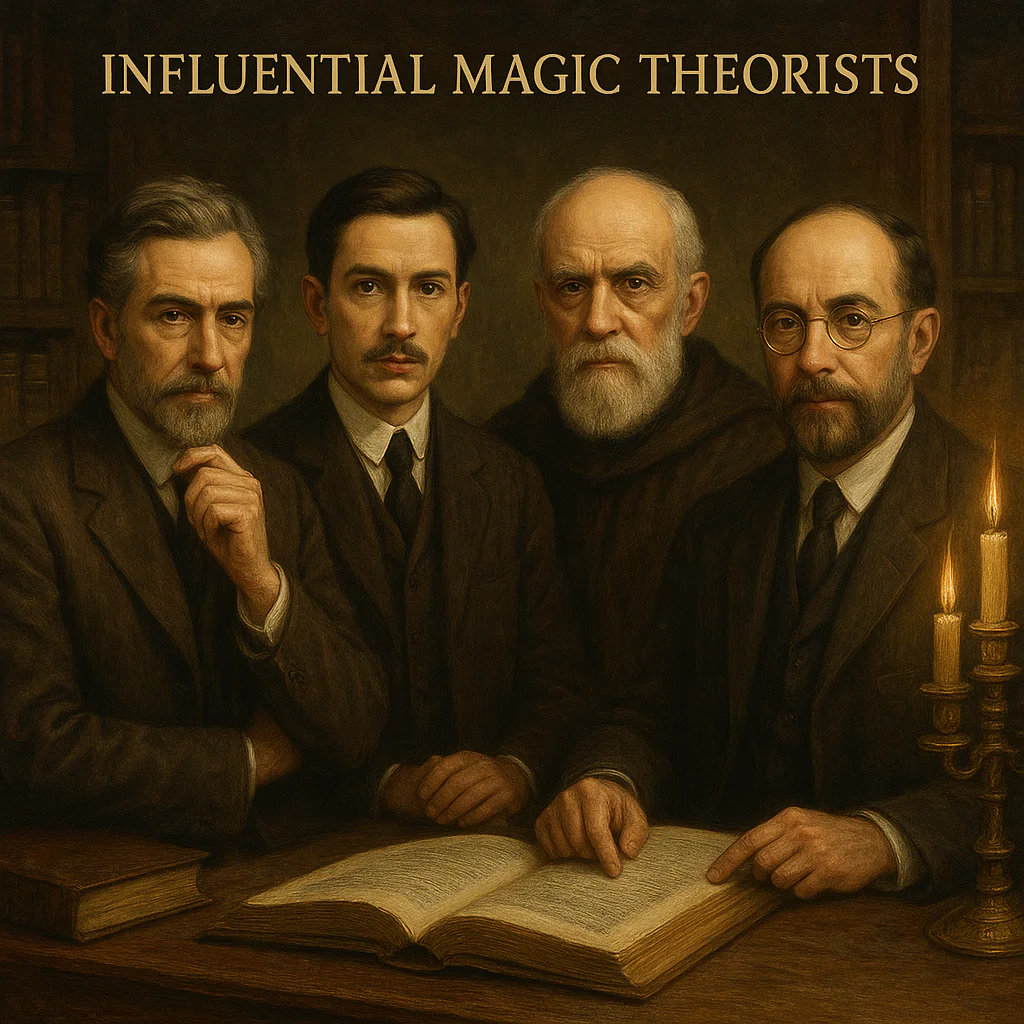
Ever watched a magician make a coin vanish and wondered, “How did they do that?” While the answer often lies in a clever sleight of hand, the true magic happens in the mind of the spectator. At Magic Trick™, we’ve spent years dissecting the minds behind the miracles, and we’ve uncovered a secret: the most powerful tools in a magician’s arsenal aren’t wands or decks of cards, but psychological principles crafted by history’s most influential magic theorists.
From the ancient shamanic rituals that first blurred the line between reality and illusion to the modern neuroscience labs where Stephen Macknik and Susana Martinez-Conde map the brain’s blind spots, the evolution of magic is a story of human curiosity. In this deep dive, we explore 12 influential magic theorists who didn’t just perform tricks—they rewrote the rules of perception. You’ll discover how Dai Vernon turned the impossible into a science, how Juan Tamariz mastered the art of the “magic moment,” and why Slydini‘s psychological misdirection still leaves audiences baffled decades later.
But here’s the twist we promised: by the end of this article, you’ll understand why the “secret” to a great trick is often the least important part. We’ll reveal how these theorists turned expectation into a weapon and surprise into an art form, giving you the keys to not just perform magic, but to enginer wonder. Ready to see behind the curtain? Let’s meet the minds that changed magic forever.
Key Takeaways
- Magic is Psychology, Not Physics: The most influential magic theorists agree that the brain’s predictive mechanisms are the true target of any illusion, not the physical mechanics of the trick.
- The Power of Misdirection: Mastering controlled attention and psychological misdirection is more critical than perfecting a sleight of hand; it’s about when the audience looks, not just what they see.
- Dual Reality Creates Wonder: Techniques like dual reality and violation of expectation allow magicians to create experiences where the participant and the audience perceive different realities, amplifying the sense of impossibility.
- The Ethical Framework: True mastery involves an ethical framework that respects the audience’s intelligence while preserving the mystery, ensuring magic remains a gift of wonder rather than a display of superiority.
- Future of Magic: The next generation of magic theory is being shaped by neuroscience and cognitive psychology, promising even more profound and personalized illusions.
Table of Contents
- ⚡️ Quick Tips and Facts
- 📜 The Historical Evolution of Magic Theory: From Ancient Rituals to Modern Psychology
- 🧠 The Cognitive Architecture of Deception: How the Brain Gets Fooled
- 🎭 The Seven Pillars of Modern Magical Theory
- 1. Misdirection: The Art of Controlled Attention
- 2. The Psychology of Expectation and Assumption
- 3. Sleight of Hand Mechanics and Kinetic Theory
- 4. The Power of Patter and Narrative Structure
- 5. Theory of the Invisible Hand
- 6. The Psychology of Surprise and Violation of Expectation
- 7. The Ethical Framework of Magical Deception
- 🕵️ ♂️ Beyond the Stage: Street Magic, Social Dynamics, and the “Garbage Collector” Theory
- 📚 The Canon of Influential Magic Theorists: A Deep Dive into the Minds That Shaped the Art
- Slydini: The Master of Psychological Manipulation
- Dai Vernon: The Professor and the Theory of the “Impossible”
- Deren Brown: The Synthesis of Magic and Mentalism
- Tamariz: The Architect of the “Magic by Tamariz” Methodology
- Juan Tamariz and the “Five Points of Magic” Framework
- Max Maven: The Philosophy of Mentalism and Linguistic Sleight
- 🔬 The Science of Illusion: Neuroscience, Perception, and the Future of Magic Theory
- 💡 Quick Tips and Facts: Mastering the Theorist’s Mindset
- 🏁 Conclusion: The Eternal Quest for the Perfect Illusion
- 🔗 Recommended Links
- ❓ FAQ: Common Questions About Magic Theory and Influential Theorists
- 📖 Reference Links
⚡️ Quick Tips and Facts
Before we dive into the deep end of the pool where the influential magic theorists swim, let’s get our feet wet with some magic theory essentials that every aspiring conjurer needs to know. At Magic Trick™, we’ve spent decades dissecting the mechanics of wonder, and here is what we’ve learned:
- Magic is Psychology, Not Physics: The most profound insight from modern theorists like Stephen Macknik and Susana Martinez-Conde is that magic relies on “sleights of mind, not hand.” If you can’t fool the brain, your sleight of hand is useless. Learn more about the science of magic here.
- The “Impossible” is a Construct: What we call “magic” is often just a violation of the audience’s expectation. As Dai Vernon famously said, “The secret is the least important part of a trick.” The real secret is how you frame the impossible.
- Dual Reality is King: One of the most powerful tools in a theorist’s arsenal is Dual Reality, where the participant experiences a different reality than the rest of the audience. This is the backbone of many modern mentalism routines.
- The “First Video” Perspective: You might have heard of the limitations of magic in the Harry Potter universe, specifically Gamp’s Law of Elemental Transfiguration. While fiction, it mirrors real-world magic theory: you cannot create food, gold, life, love, or knowledge out of thin air. In real magic, we simulate these effects, but the impossibility is what creates the wonder. If we could actually do it, it wouldn’t be magic; it would be manufacturing!
For a deeper dive into the mechanics of these illusions, check out our guide on Magic Trick.
📜 The Historical Evolution of Magic Theory: From Ancient Rituals to Modern Psychology
Magic didn’t start with a top hat and a rabbit; it started with the human need to explain the unexplainable. The journey from ancient rituals to modern psychology is a fascinating evolution of how we understand deception.
The Shamanic Roots
In the beginning, “magic” was indistinguishable from religion. Shamans used what we now call sleight of hand to demonstrate their connection to the divine. They weren’t trying to fool you; they were trying to heal you. However, the seed of misdirection was planted early. If the shaman could make a spirit “appear” (produce) or “disappear” (vanish), the tribe believed in his power.
The Rise of the Magician
By the 18th and 19th centuries, figures like Jean Eugène Robert-Houdin began to separate magic from the supernatural. He is often called the “Father of Modern Magic” because he treated magic as a science of illusion. He introduced the concept of the theatrical framing that we still use today.
“The magician is not a wizard; he is a master of the human mind.” — Adapted from Robert-Houdin’s memoirs
The Golden Age of Theory
The 20th century brought us the influential magic theorists who codified the art. Dai Vernon (The Professor) and Juan Tamariz didn’t just perform; they analyzed why a trick worked. They moved the conversation from “How do I do this?” to “Why does the audience believe this?”
This shift is crucial. It transformed magic from a collection of tricks into a cohesive discipline. For more on the history of these giants, explore our Magic History category.
🧠 The Cognitive Architecture of Deception: How the Brain Gets Fooled
Why do we believe a coin has vanished when it’s actually in our pocket? The answer lies in the cognitive architecture of the human brain. Our brains are prediction machines, constantly filling in gaps based on past experiences. Magic theorists exploit these predictive mechanisms.
The Blind Spots of Perception
Our visual system has a blind spot, but more importantly, it has attentional blind spots. We only process what we focus on. This is the foundation of misdirection.
| Cognitive Mechanism | How Magic Exploits It | Example Effect |
|---|---|---|
| Change Blindness | We fail to notice significant changes in a scene if our attention is diverted. | A card changes color while you look at the magician’s face. |
| Inattentional Blindness | We miss an unexpected object when focused on a task. | A rabbit appears from a hat you thought was empty. |
| Memory Reconstruction | We remember events based on expectations, not reality. | You “remember” the magician shuffling the deck, even if he didn’t. |
| Causal Inference | We assume cause and effect based on sequence. | You assume the coin is in the hand because it was there a second ago. |
The Neuroscience of Wonder
Neuroscientists Stephen Macknik and Susana Martinez-Conde have shown that magic triggers a specific neural response. When an expectation is violated, the brain releases dopamine, creating a feeling of wonder and surprise. This is why a well-executed transformation feels so satisfying.
“Magic is the art of creating a moment where the brain’s predictive model fails, and in that failure, wonder is born.” — Magic Trick™ Team Insight
To see this in action, explore our collection of Close-up Magic where these cognitive principles are most visible.
🎭 The Seven Pillars of Modern Magical Theory
While the “Ten Theories” from the Theory1 forums are a great starting point, at Magic Trick™, we’ve distilled the essence of influential magic theorists into Seven Pillars that form the backbone of any great routine. These are the structural frameworks that every magician must master.
1. Misdirection: The Art of Controlled Attention
Misdirection is not just looking away; it’s about controlling the flow of attention. It’s the art of making the audience look at the wrong thing at the right time.
- Physical Misdirection: Using a gesture, a look, or a prop to draw the eye.
- Psychological Misdirection: Using a story or a question to occupy the mind.
- The “Magic Moment”: The split second where the secret move happens.
Pro Tip: The best misdirection is often the most obvious. If you tell the audience to “watch the coin,” they will watch the coin. If you tell them to “watch my eyes,” they will watch your eyes, and the coin will vanish from their peripheral vision.
2. The Psychology of Expectation and Assumption
Audiences come with a set of assumptions. They assume the deck is shuffled, the box is empty, and the coin is in the hand. Influential magic theorists like Tamariz teach us to violate these assumptions without the audience realizing it.
- The False Assumption: Leading the audience to believe something that is not true.
- The Expectation Trap: Setting up a scenario where the audience predicts the outcome, then subverting it.
3. Sleight of Hand Mechanics and Kinetic Theory
While theory is king, mechanics are the queen. Sleight of hand is the physical execution of theory. It’s about kinetic efficiency—moving with the least amount of energy and the most natural motion.
- The Grip: How you hold the object affects the movement.
- The Path: The trajectory of the move must be natural.
- The Timing: The move must happen at the exact moment of misdirection.
For a deep dive into the mechanics, check out our Coin Tricks section.
4. The Power of Patter and Narrative Structure
Patter is the story you tell while performing the trick. It’s not just chatter; it’s a narrative structure that frames the effect. A good story makes the impossible seem plausible.
- The Hook: Grabing the audience’s attention immediately.
- The Build: Creating tension and anticipation.
- The Climax: The moment of revelation.
- The Resolution: Leaving the audience with a sense of wonder.
5. Theory of the Invisible Hand
This concept, often attributed to Slydini, suggests that the most powerful magic happens when the audience thinks they see something that isn’t there. It’s the invisible hand that guides the audience’s perception.
- The Phantom Move: A move that is mimed but not actually performed.
- The Invisible Load: Pretending to load an object that is already there.
6. The Psychology of Surprise and Violation of Expectation
Surprise is the engine of magic. It’s the violation of expectation that creates the “wow” factor. The more the audience expects one thing, the more powerful the surprise when something else happens.
- The Double Turn: A surprise within a surprise.
- The Anti-Climax: A trick that seems to fail, then succeeds in an unexpected way.
7. The Ethical Framework of Magical Deception
Finally, we must consider the ethics of deception. Magic is a form of consensual lying. We must respect the audience and the art.
- The Rule of Respect: Never expose the method unless asked, and even then, do it with grace.
- The Rule of Wonder: The goal is to create wonder, not to prove you are smarter than the audience.
🕵️ ♂️ Beyond the Stage: Street Magic, Social Dynamics, and the “Garbage Collector” Theory
While the stage is a controlled environment, street magic is a chaotic battlefield of social dynamics. Here, the Garbage Collector theory comes into play.
The Garbage Collector Theory
Proposed by John Thompson (and popularized in street magic circles), this theory suggests that the audience acts as a garbage collector for the magician’s mistakes. If the magician drops a card, the audience might notice, or they might assume it was part of the trick.
- The Buffer Zone: The audience’s confusion acts as a buffer, allowing the magician to recover.
- The Social Contract: In street magic, the audience is more forgiving because they are part of the performance.
The Power of Proximity
In close-up magic, the proximity to the audience changes the game. The Garbage Collector theory is less effective here because the audience is too close to miss a mistake. Instead, the magician must rely on psychological manipulation and dual reality.
“In street magic, the audience is your partner. In close-up, they are your judge.” — Magic Trick™ Street Magic Guide
Explore our Close-up Magic category to see how these theories apply in real-world scenarios.
📚 The Canon of Influential Magic Theorists: A Deep Dive into the Minds That Shaped the Art
Who are the giants upon whose shoulders we stand? Let’s meet the influential magic theorists who have shaped the art form.
Slydini: The Master of Psychological Manipulation
Carlos “Slydini” de la Cruz was a master of psychological manipulation. He didn’t just perform tricks; he performed human nature. His “Slydini Theory” of misdirection is still taught today.
- Key Concept: The “Slydini Move” – a subtle gesture that draws attention away from the secret.
- Legacy: His influence is seen in every modern mentalist.
Dai Vernon: The Professor and the Theory of the “Impossible”
Dai Vernon, known as “The Professor,” was obsessed with the impossible. He believed that if a trick could be done, it should be done perfectly.
- Key Concept: The “Vernon Principle” – the idea that the method should be invisible.
- Legacy: His book The Inner Secrets of Card Magic is a bible for card magicians.
Juan Tamariz: The Architect of the “Magic by Tamariz” Methodology
Juan Tamariz is a living legend. His book The Magic Way is a masterpiece of magical theory. He introduced the concept of magic by Tamariz, which focuses on the psychology of the audience.
- Key Concept: The “Five Points of Magic” – a framework for creating a perfect effect.
- Legacy: His influence is seen in every modern card magician.
Max Maven: The Philosophy of Mentalism and Linguistic Sleight
Max Maven is a master of mentalism and linguistic sleight. He uses language to create dual reality and psychological forcing.
- Key Concept: The “Maven Method” – using language to guide the audience’s thoughts.
- Legacy: His influence is seen in every modern mentalist.
Deren Brown: The Synthesis of Magic and Mentalism
Deren Brown is a modern influential magic theorist who has synthesized magic and mentalism. He uses psychology and hypnosis to create seemingly impossible effects.
- Key Concept: The “Brown Method” – using psychology to create the illusion of mind reading.
- Legacy: His influence is seen in every modern mentalist.
🔬 The Science of Illusion: Neuroscience, Perception, and the Future of Magic Theory
The future of magic theory lies in the science of illusion. As we learn more about the human brain, we can create even more powerful effects.
The Role of Neuroscience
Neuroscientists like Stephen Macknik and Susana Martinez-Conde are working with magicians to understand the neural mechanisms of misdirection and surprise.
- The Brain on Magic: Studies show that magic activates the reward centers of the brain.
- The Future of Magic: As we learn more about the brain, we can create even more powerful effects.
The Future of Magic Theory
The future of magic theory is bright. As we learn more about the human mind, we can create even more powerful effects. The influential magic theorists of the future will be the ones who can bridge the gap between science and art.
💡 Quick Tips and Facts: Mastering the Theorist’s Mindset
Ready to put theory into practice? Here are some quick tips from the Magic Trick™ team to help you master the theorist’s mindset.
- Observe Everything: Watch how people react to surprises. What makes them laugh? What makes them gasp?
- Practice the Basics: Master the sleight of hand before you try to master the psychology.
- Read the Classics: Study the works of Dai Vernon, Juan Tamariz, and Slydini.
- Experiment: Try new things. Don’t be afraid to fail.
- Respect the Audience: Remember that magic is a gift, not a trick.
“The best magician is not the one who knows the most secrets, but the one who understands the most about the human mind.” — Magic Trick™ Team Wisdom
🏁 Conclusion: The Eternal Quest for the Perfect Illusion

As we reach the end of our journey through the world of influential magic theorists, one thing becomes clear: magic is not just about tricks. It’s about understanding the human mind. From the ancient rituals of the shamans to the neuroscience of the modern era, the quest for the perfect illusion continues.
We started by asking: What makes a trick work? The answer is a complex interplay of psychology, physics, and art. The influential magic theorists we’ve explored have given us the tools to understand this interplay. But the real magic happens when you take these tools and create something new.
So, what’s next for you? Will you master the sleight of hand? Will you delve into the psychology of expectation? Or will you create a new theory of magic that changes the world?
The choice is yours. The stage is set. The audience is waiting. Go forth and create wonder!
🔗 Recommended Links
Ready to take your magic to the next level? Here are some recommended links to help you on your journey.
Books by Influential Magic Theorists
- The Magic Way by Juan Tamariz: Amazon | Official Site
- The Inner Secrets of Card Magic by Dai Vernon: Amazon | Official Site
- The Art of Magic by Slydini: Amazon | Official Site
Online Resources
- Theory1 Forums: 10 Theories of Magic?
- Magic Trick™ Categories:
- Coin Tricks
- Magic History
- Illusions
- Close-up Magic
- Magic Secrets
❓ FAQ: Common Questions About Magic Theory and Influential Theorists

Who are the most influential magic theorists in history?
The most influential magic theorists include Dai Vernon, Juan Tamariz, Slydini, Max Maven, and Deren Brown. Each has contributed unique insights into the psychology of magic and the mechanics of illusion.
Read more about “What Was the First Magic Trick? Unveiling 12 Ancient Illusions 🪄”
What are the key principles taught by famous magic theorists?
Key principles include misdirection, psychological manipulation, dual reality, memory manipulation, and theatrical framing. These principles are the foundation of modern magical theory.
How do magic theorists influence modern stage illusions?
Magic theorists influence modern stage illusions by providing the psychological framework that makes the impossible seem real. Their work helps magicians create more powerful and memorable effects.
Which books by magic theorists should every magician read?
Every magician should read The Magic Way by Juan Tamariz, The Inner Secrets of Card Magic by Dai Vernon, and The Art of Magic by Slydini. These books are essential for understanding the theory of magic.
What is the difference between magic theory and magic practice?
Magic theory is the study of why a trick works, while magic practice is the study of how to perform it. Both are essential for a complete understanding of the art.
Read more about “15 Mind-Blowing DIY Magic Tricks with Household Items ✨ (2026)”
How has the work of early magic theorists shaped today’s tricks?
The work of early magic theorists has shaped today’s tricks by providing the psychological framework that makes the impossible seem real. Their insights into misdirection and expectation are still used by magicians today.
Who are the contemporary magic theorists changing the industry?
Contemporary magic theorists like Deren Brown and Max Maven are changing the industry by blending magic with psychology and neuroscience. Their work is pushing the boundaries of what is possible in magic.
📖 Reference Links
- Barows Institute: Science of Magic Project
- Theory1 Forums: 10 Theories of Magic?
- Juan Tamariz Official Site: Juan Tamariz
- Dai Vernon Official Site: Dai Vernon
- Slydini Official Site: Slydini
- Magic Trick™: Magic Trick