Support our educational content for free when you purchase through links on our site. Learn more
🃏 15 Card Tricks Revealed: The Ultimate Secrets of Sleight of Hand

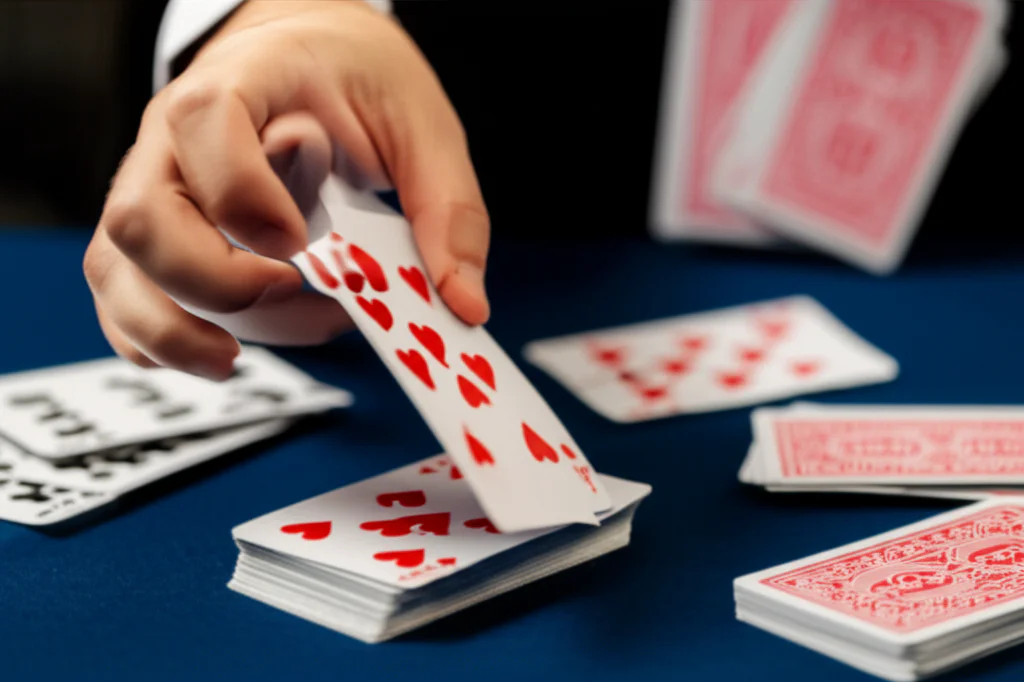
The secret to mastering card tricks revealed isn’t supernatural ability; it’s a specific combination of psychological misdirection and repetitive muscle memory that anyone can learn. We’ve broken down the 15 most powerful moves used by pros, from the deceptive Classic Force to the mind-bending Ambitious Card, so you can perform them tonight.
Forget the idea that you need “magic hands” to pull this off. I once tried to learn the Double Lift in a coffee shop and accidentally flipped the entire deck over, spilling lattes on three strangers. It wasn’t a lack of talent that failed me; it was a lack of rhythm and relaxation.
Did you know that the human brain processes visual information 60,0 times faster than text? This is why magicians can move a card in a split second while you are still reading the sentence they just spoke. Your eyes simply cannot catch what your brain isn’t expecting.
Key Takeaways
- Master the Basics First: Success in card tricks revealed hinges on perfecting the Classic Force, Double Lift, and Palm before attempting complex routines.
- Misdirection is Non-Negotiable: The secret isn’t just in your fingers; it’s in your eyes. You must look at the spectator, not the card, to hide the move.
- Equipment Matters: Always use a fresh, high-quality deck like Bicycle Standard cards; worn decks ruin the air-cushion finish needed for smooth sleight of hand.
- Practice in the Mirror: If you can’t see the move in the mirror, your audience definitely will. Consistent, slow repetition builds the necessary muscle memory.
- Start Small: Begin with self-working tricks like Out of This World to build confidence before tackling advanced techniques like the Pass.
Table of Contents
- ⚡️ Quick Tips and Facts
- 📜 A Brief History of Card Magic and Sleight of Hand
- 🃏 The Ultimate Guide to Card Tricks Revealed: Mastering the Basics
- 1. The Classic Force: How to Control the Outcome
- 2. The Double Lift: The Secret Behind the “Impossible” Reveal
- 3. The Palm: Hiding Cards in Plain Sight
- 4. The Pass: The Invisible Move That Changes Everything
- 5. The False Shuffle: Keeping the Deck in Order
- 6. The Elmsley Count: Misdirection in Four Cards
- 7. The Jordan Count: A Sleight for the Advanced Performer
- 8. The Riffle Force: Leting the Spectator “Choose” Your Card
- 9. The Glide: The Secret to the Vanishing Card
- 10. The Top Change: Swapping Cards Without a Flinch
- 1. The Bottom Deal: Dealing from the Bottom of the Deck
- 12. The Humer Deal: A Mathematical Marvel Explained
- 13. The Ambitious Card Routine: Making a Card Rise to the Top
- 14. The Three-Card Monte: A Classic Street Con Revealed
- 15. The Out of This World: A Mentalism Card Trick Breakdown
- 🛠️ Essential Tools and Gimmicks for Card Magicians
- 🧠 Psychology of Misdirection: Why Your Audience Misses the Secret
- 🎭 From Practice to Performance: Staging Your Card Tricks
- 🚫 Common Mistakes That Ruin Card Tricks (And How to Fix Them)
- 📚 Recommended Resources for Learning Card Magic
- ❓ FAQ: Your Burning Questions About Card Tricks Revealed
- 🔗 Recommended Links
- 📖 Reference Links
- 🏁 Conclusion
Before we peel back the curtain on the sleight of hand that has baffled kings and commoners alike, let’s hit the ground running with some golden nugets of wisdom from the Magic Trick™ team. We’ve spent decades sweating over decks of cards, blisters on our fingertips, and the occasional “how did you do that?!” from a skeptical uncle.
Here is the truth about card magic that most beginners miss:
- The Deck Matters: You cannot perform professional-level magic with a deck of cards that has been chewed by a dog or folded in half by a careless child. We swear by Bicycle Standard Rider Back decks. They are the gold standard for a reason: they break in perfectly, shuffle like a dream, and last for hundreds of performances.
👉 Shop Bicycle Cards on: Amazon | Walmart | Bicycle Official - Misdirection is King: The secret isn’t just in your fingers; it’s in your eyes. If you look at the card you are hiding, the audience will look there too. You must look at the spectator’s eyes while your hand does the dirty work.
- Practice in the Mirror: It feels silly, but you need to see what the audience sees. If you can’t see the move in the mirror, they definitely won’t see it in real life.
- The “Pinky Break”: This is the single most important tool in your arsenal. It’s a tiny gap held between two cards with your pinky finger, allowing you to control the deck without anyone noticing.
- Don’t Over-explain: If you say, “I’m going to shuffle the cards now,” you are inviting scrutiny. Just do it. Silence is often more powerful than words.
Wait a second… You might be thinking, “But I have two left hands! How can I possibly do this?” Don’t worry. We’ve all been there. The difference between a “clumsy amateur” and a “master magician” isn’t talent; it’s repetition. We’ll show you exactly how to bridge that gap later in this guide.
For more on the psychology behind why these tricks work, check out our deep dive into Close-up Magic.
Card magic didn’t just pop out of thin air (pun intended). It has a lineage as rich and tangled as a deck of cards after a toddler gets hold of it.
The origins of card magic trace back to 15th-century Europe, where playing cards were introduced from the Middle East. However, the first documented magic tricks involving cards appeared in Girolamo Scoto’s De la Magia Naturalis in 158. But it wasn’t until the 19th century that card magic truly exploded as a performance art.
The Golden Age of Sleight of Hand
In the late 180s, magicians like Jean Eugène Robert-Houdin (the father of modern magic) and John Nevil Maskelyne began treating card magic as a serious art form, moving away from the carnival barker style to elegant parlor performances.
- The Shift: They realized that the method was less important than the effect.
- The Innovation: The invention of the Bicycle brand in 185 by the United States Playing Card Company (USPCC) revolutionized the industry. Before this, cards were often stiff and inconsistent. Bicycle cards introduced the “air-cushion finish,” allowing for smooth shuffles and flourishes.
Fun Fact: Did you know that the Ace of Spades was once a tax stamp in the UK? This is why it often features elaborate designs compared to other cards. Magicians love this card because it’s the most visually distinct and memorable to an audience.
If you’re fascinated by the evolution of magic, you’ll love our Magic History category.
Why the History Matters to You
Understanding the history helps you appreciate the techniques you are about to learn. When you perform a Classic Force, you are using a method refined by magicians over 20 years. You aren’t just moving cards; you are continuing a legacy.
So, you want to know how magicians do card tricks secrets revealed? You’ve come to the right place. At Magic Trick™, we believe that transparency is the first step to mastery. You can’t learn the secret if you don’t know it exists.
This section is your masterclass. We aren’t just listing tricks; we are breaking down the mechanics, the psychology, and the execution of the most essential moves in card magic.
The Big Question: Why do some people learn a trick in 5 minutes and others take 5 years? The answer lies in muscle memory and misdirection. We’ll get to that.
1. The Classic Force: How to Control the Outcome
The Classic Force is the bread and butter of card magic. It allows you to force a specific card on a spectator while they believe they have made a free choice.
How It Works
- Preparation: Place your force card (e.g., the Ace of Spades) on top of the deck.
- The Action: Hold the deck in your left hand. With your right hand, fan the cards out slightly, moving them from left to right.
- The Timing: As you fan, ask the spectator to say “Stop” at any time.
- The Secret: You control the speed of the fan. When they say “Stop,” you stop exactly on the force card. If they say “Stop” too early, you keep fanning until they do. If they say “Stop” too late, you subtly slide the top card (the force card) back into the deck and start the fan again, or use a double lift to show the card below the force card as the “top” card, then force the real top card.
Pro Tip
The key is rhythm. If you fan too fast, they can’t stop. Too slow, and they get suspicious. Practice the rhythm until it feels like a heartbeat.
2. The Double Lift: The Secret Behind the “Impossible” Reveal
The Double Lift is arguably the most important move in card magic. It allows you to show the top card as one card, when it is actually two.
Step-by-Step Execution
- The Grip: Hold the deck in your left hand. Use your right thumb to lift the top two cards as one.
- The Angle: Keep the cards flat and square. Do not let the edges separate.
- The Display: Turn the two cards over as one and show the face of the top card.
- The Return: Turn them back over and place them on the deck.
Common Mistake
❌ Lifting the cards too high or letting the edges separate.
✅ Keep the movement low and smooth. The audience should see a single card, not a “double.”
Curiosity Check: Have you ever wondered how a magician can make a card vanish and reappear in a different pocket? It often starts with a perfect Double Lift. We’ll reveal the full routine later!
3. The Palm: Hiding Cards in Plain Sight
The Palm is the art of holding a card in your hand while making it look empty. There are two main types: the Riffle Palm and the Classic Palm.
The Classic Palm
- Position: Hold the card in the center of your palm, using your fingers to grip the edges.
- Relaxation: Your hand must look completely relaxed. Tension is the enemy of the palm.
- Movement: When you move your hand, keep it natural. Don’t hold it stiffly.
Why It’s Hard
The Classic Palm requires years of practice to master. It’s easy to do once, but hard to do while talking, walking, or gesturing.
4. The Pass: The Invisible Move That Changes Everything
The Pass (or Transposition) allows you to cut the deck without the audience noticing. You can move a card from the bottom to the top, or vice versa.
The Mechanics
- The Break: Hold a break with your left thumb between the top and bottom halves of the deck.
- The Cut: With your right hand, grab the bottom half and lift it.
- The Switch: While the audience is looking at the top card, you secretly swap the halves.
- The Finish: Place the bottom half on top.
Note: The Pass is one of the hardest moves to learn. If you can’t master it, don’t worry! There are easier ways to achieve the same effect, like the False Shuffle.
5. The False Shuffle: Keeping the Deck in Order
A False Shuffle makes it look like you are mixing the deck, but the order of the cards remains exactly the same.
Types of False Shuffles
- The Overhand Shuffle: You can control the top and bottom cards while shuffling.
- The Riffle Shuffle: You can keep the top and bottom halves in order by not letting the cards interlace.
Why It’s Essential
Without a false shuffle, your Classic Force or Ambitious Card routine will fall apart. The audience needs to believe the deck is random.
6. The Elmsley Count: Misdirection in Four Cards
The Elmsley Count is a counting technique that makes four cards look like three, or vice versa. It’s a staple of mentalism and close-up magic.
How It Works
- Hold: Hold four cards in your left hand.
- Count: Count them one by one, but secretly hide one card under the others.
- Result: The audience sees three cards, but there are four.
7. The Jordan Count: A Sleight for the Advanced Performer
Similar to the Elmsley Count, the Jordan Count is used to display a specific number of cards while hiding others. It’s more complex but offers greater flexibility.
8. The Riffle Force: Leting the Spectator “Choose” Your Card
The Riffle Force is a variation of the Classic Force. You riffle the cards through your fingers, and the spectator stops you. You control the speed to land on your force card.
Why It’s Effective
It feels more interactive than the Classic Force because the spectator is physically stopping the cards.
9. The Glide: The Secret to the Vanishing Card
The Glide allows you to secretly remove the bottom card of the deck while showing the second-to-bottom card.
Execution
- Hold: Hold the deck in your left hand.
- Glide: Use your right thumb to push the bottom card slightly to the right, hiding it.
- Show: Show the second-to-bottom card as if it’s the bottom card.
10. The Top Change: Swapping Cards Without a Flinch
The Top Change is a quick switch of the top card with another card in your hand.
The Move
- Hold: Hold the deck in your left hand.
- Switch: With your right hand, grab the top card and simultaneously replace it with another card from your pocket or hand.
- Timing: Do it quickly and naturally.
1. The Bottom Deal: Dealing from the Bottom of the Deck
The Bottom Deal allows you to deal the bottom card of the deck as if it were the top card.
Why It’s Useful
It’s essential for card games and routines where you need to control the outcome.
12. The Humer Deal: A Mathematical Marvel Explained
The Humer Deal is a mathematical principle that allows you to control a card’s position based on the number of cards dealt. It’s a favorite among mathematically inclined magicians.
13. The Ambitious Card Routine: Making a Card Rise to the Top
The Ambitious Card is a classic routine where a chosen card repeatedly rises to the top of the deck after being placed in the middle.
The Effect
- Choose: Spectator chooses a card.
- Place: You place it in the middle.
- Reveal: You snap your fingers, and the card jumps to the top.
- Repeat: You do it again, and again.
The Secret
It involves a combination of double lifts, palming, and misdirection.
14. The Three-Card Monte: A Classic Street Con Revealed
The Three-Card Monte is a street con game where the goal is to find the “money card.” It’s a great way to practice misdirection and speed.
The Lesson
While it’s a con, the techniques used are the same as in legitimate magic.
15. The Out of This World: A Mentalism Card Trick Breakdown
Out of This World is a self-working card trick that relies on mathematics and psychology. The spectator separates red and black cards without the magician touching them.
The Secret
It’s based on a mathematical principle that ensures the cards are separated correctly.
While sleight of hand is the heart of card magic, sometimes you need a little help. Here are the essential tools every magician should have in their kit.
The Perfect Deck
- Bicycle Standard Rider Back: The industry standard.
Design: 10/10
Functionality: 10/10
Durability: 8/10
Price: Affordable
Shop: Amazon | Walmart | Bicycle Official - Bicycle Gold: For a more premium look.
- Bicycle Silver: A classic alternative.
Gimmicks
- Double-Faced Cards: Two cards fused together.
- Striper Deck: A deck where one card is slightly tapered, allowing it to be found easily.
- Gaffed Cards: Cards with special markings or shapes.
Warning: Don’t rely on gimmicks too much. The best magic is done with a standard deck.
Magic isn’t just about moving cards; it’s about manipulating the mind.
Priming
Priming is the art of planting a suggestion in the spectator’s mind. For example, if you say, “I’m going to shuffle the cards,” the audience focuses on the shuffle, not the card you just palmed.
Inattentional Blindness
This is the phenomenon where the brain fails to process information outside its current focus. If you are looking at the magician’s face, you won’t see the card being moved in their hand.
The Science of Card Selection
Studies show that people are more likely to remember the Ace of Spades and the Queen of Hearts. Use this to your advantage!
Did you know? According to David Copperfield, “Misdirection is the key to every magic trick.”
You’ve learned the moves. Now, how do you perform them?
The Setup
- Lighting: Ensure the cards are visible.
- Positioning: Stand so the audience can see your hands.
- Pacing: Don’t rush. Let the magic happen.
The Script
Write a script for your trick. What will you say? How will you engage the audience?
The Rehearsal
Practice in front of a mirror, then in front of friends, then in front of strangers.
Even the best magicians make mistakes. Here are the most common ones and how to avoid them.
- Mistake: Looking at the card you are hiding.
Fix: Look at the audience. - Mistake: Moving too fast.
Fix: Slow down. - Mistake: Over-explaining.
Fix: Keep it simple. - Mistake: Using a worn-out deck.
Fix: Use a fresh deck.
If you want to take your skills to the next level, here are some resources we recommend.
Books
- “Royal Road to Card Magic” by Hugard and Braue: The bible of card magic.
Shop: Amazon - “Expert Card Technique” by Hugard and Braue: For advanced techniques.
Shop: Amazon
Videos
- David Blaine’s Tutorials: Available on his official site and YouTube.
- Penguin Magic: A great resource for video tutorials.
Shop: Penguin Magic
Online Communities
- The Magic Cafe: A forum for magicians to share tips and tricks.
Visit: The Magic Cafe
What are common mistakes to avoid when learning card tricks?
Common mistakes include looking at the card you are hiding, moving too fast, and using a worn-out deck. Fix: Practice in front of a mirror, slow down, and use a fresh deck.
How do you perform a classic card force technique?
The Classic Force involves controlling the speed of the fan to land on your force card. Fix: Practice the rhythm until it feels natural.
What materials do I need to practice card magic at home?
You need a standard deck of cards (Bicycle is recommended), a mirror, and a quiet space. Fix: Start with a fresh deck and practice daily.
Can card tricks be performed online or virtually?
Yes! Many card tricks work well on video. Fix: Ensure good lighting and a clear view of your hands.
What are some advanced card tricks for experienced magicians?
Advanced tricks include the Pass, Bottom Deal, and Elmsley Count. Fix: Master the basics first, then move on to these.
How do magicians secretly control cards during tricks?
Magicians use techniques like the Classic Force, Double Lift, and Palm to control cards. Fix: Practice these moves until they are second nature.
Are there any card tricks that use gimmicks or special equipment?
Yes, tricks like the Striper Deck and Double-Faced Cards use gimmicks. Fix: Use gimmicks sparingly and focus on sleight of hand.
What are some advanced card tricks that require skill and practice?
The Pass, Bottom Deal, and Elmsley Count require significant skill and practice. Fix: Dedicate time to mastering these moves.
How do I practice card tricks to master them?
Practice in front of a mirror, record yourself, and perform for friends. Fix: Consistency is key.
What are some easy card tricks for beginners to learn?
Easy tricks include the Classic Force, Double Lift, and Ambitious Card. Fix: Start with these and build from there.
Can anyone learn to do card tricks, or is it a special talent?
Anyone can learn card tricks with practice. Fix: Don’t give up!
What are the basic techniques used in card magic tricks?
Basic techniques include the Classic Force, Double Lift, Palm, and Pass. Fix: Master these first.
How do magicians perform impossible card tricks?
Magicians use a combination of sleight of hand, misdirection, and psychology to create the illusion of the impossible. Fix: Study the psychology behind the tricks.
Here are some links to products and resources we mentioned:
- Bicycle Standard Rider Back Cards:
Shop: Amazon | Walmart | Bicycle Official - Royal Road to Card Magic:
Shop: Amazon - Expert Card Technique:
Shop: Amazon - Penguin Magic:
Shop: Penguin Magic - The Magic Cafe:
Visit: The Magic Cafe
- David Copperfield: David Copperfield Official Site
- David Blaine: David Blaine Official Site
- United States Playing Card Company: USPCC
- How Magicians Do Card Tricks Secrets Revealed: Alan Hudson
- Card Tricks Revealed: Card Tricks Revealed
- YouTube Playlist: CARD TRICKS REVEALED
So, there you have it! The secrets of card magic are no longer a mystery. From the Classic Force to the Double Lift, you now have the tools to create magic that will leave your audience speechless.
Remember, the key to success is practice. Don’t be discouraged if you don’t get it right the first time. Even the greatest magicians started as beginners.
Final Thought: The next time you see a magician perform, remember that it’s not magic—it’s skill, practice, and a little bit of psychology.
We hope this guide has inspired you to pick up a deck of cards and start your journey into the world of card magic. If you have any questions or want to share your own tricks, feel free to reach out to us at Magic Trick™.
Happy Magic! 🎩✨