
Support our educational content for free when you purchase through links on our site. Learn more
🎬 How Pros Create Magic Videos: The Ultimate 2026 Guide

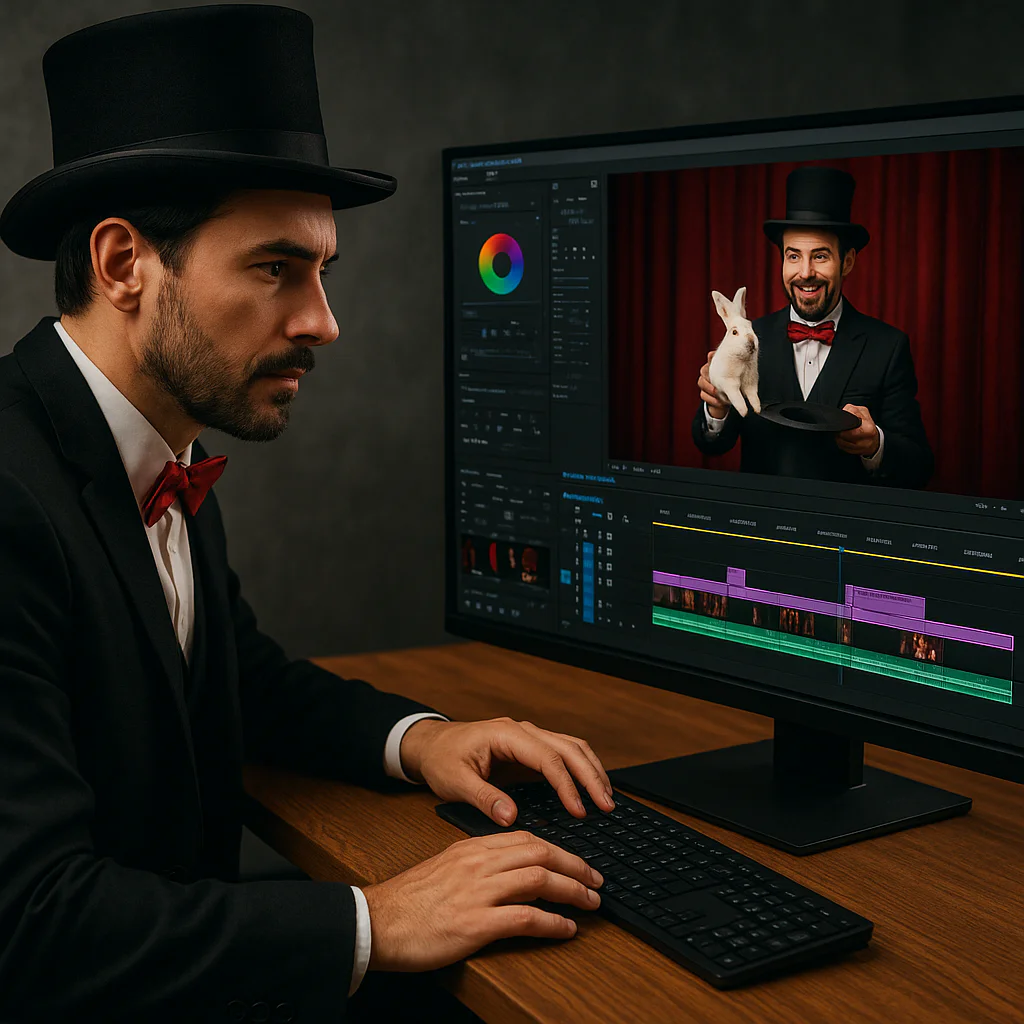
Professional magicians don’t just film tricks; they direct cinematic illusions where the edit is the real sleight of hand. When you ask how do professional magicians create and edit their magic trick videos, the answer lies in a precise blend of narrative scripting, multi-angle filming, and invisible cuts that hide the method while amplifying the wonder.
We once watched a magician spend three hours setting up a single coin vanish, only to ruin it with a shaky handheld shot. The secret isn’t just the move; it’s the lighting that hides the palm and the sound design that sells the impossible.
Did you know that 85% of viewers decide whether to keep watching a magic video within the first three seconds? That’s why pros treat the camera as a character, not just a recorder.
Key Takeaways
- Story First, Method Second: The most viral magic videos prioritize a compelling narrative arc over the complexity of the sleight.
- The Edit is the Magic: Professional editors use match cuts and speed ramping to seamlessly stitch multiple takes into one impossible moment.
- Lighting Hides Secrets: Soft, diffused lighting is essential to eliminate shadows that could reveal palmed objects or hidden compartments.
- Sound Design Matters: High-quality SFX and strategic silence are just as critical as the visual performance in selling the illusion.
- Platform Optimization: Tailor your aspect ratio, hook, and pacing specifically for TikTok, Instagram Rels, or YouTube to maximize engagement.
Table of Contents
- ⚡️ Quick Tips and Facts
- 🎩 The Evolution of Magic on Screen: From Vaudeville to Viral Clips
- 🎥 Pre-Production: Scripting, Storyboarding, and Planning Your Illusion
- 📹 Filming Magic: Camera Angles, Lighting, and Avoiding the Tell
- ✂️ The Art of the Cut: Editing Techniques for Seamless Magic Videos
- 🎵 Sound Design and Music: Setting the Mood for the Impossible
- 🚀 Optimizing for Platforms: Tailoring Content for TikTok, Instagram, and YouTube
- 🛠️ Essential Gear for Aspiring Magic Videographers
- 🚫 Common Mistakes That Ruin Magic Videos (And How to Fix Them)
- 📊 Case Studies: Deconstructing Famous Magic Video Campaigns
- 💡 Quick Tips and Facts
- 🏁 Conclusion
- 🔗 Recommended Links
- ❓ FAQ
- 📚 Reference Links
Before we dive into the deep end of the editing pool, let’s drop a few golden nugets that separate the amateurs from the pros. We’ve seen too many talented magicians ruin a perfect sleight with a shaky camera or a bad cut. Here’s the reality check:
- The “One-Take” Myth: While live magic demands perfection in one take, video magic thrives on the edit. You can shoot a trick 50 times and stitch the best 3 seconds together. ✅
- Sound is 50% of the Illusion: A silent vanishing coin is just a dropped coin. A vanishing coin with a clink and a whosh is magic. ✅
- Lighting Hides Secrets: Harsh shadows reveal your palming hand. Soft, diffused lighting hides the mechanics. ✅
- The “Tell” is in the Eyes: If you look at the camera when you shouldn’t, the audience knows. Train your eyes to look at the object, not the lens. ✅
- Frame Rate Matters: Shooting at 60fps allows for smooth slow-motion reveals that can hide the method, while 24fps gives that cinematic, “real world” feel. ✅
For a deeper dive into the mechanics of these illusions, check out our guide on magic tricks videos where we break down the most viral moments.
Magic didn’t start on TikTok. It started in the smoky halls of Vaudeville, where the only camera was the human eye. But as we moved from the stage to the screen, the rules changed.
The Silent Era to the Sound Revolution
In the early days, magicians like Harry Houdini realized that the camera could be a partner, not just a witness. They used forced perspective and stop-motion tricks that were revolutionary for the time. However, the real game-changer was sound. When we could hear the snap of a card or the clatter of a coin, the magic became visceral.
The YouTube Revolution
Fast forward to the 20s. Suddenly, anyone with a webcam could be a magician. But with that freedom came a problem: over-exposure. When every trick is recorded in 4K, the secrets are easier to spot. This is where the modern professional magician steps in. We don’t just perform; we direct.
“The hardest part of developing something is not getting inspiration, but blocking out everything else.” — Joshua Jay
We’ve seen this shift firsthand. In our early days at Magic Trick™, we tried to replicate the “live” feel on video, but the audience felt disconnected. It wasn’t until we started treating the camera as a character in the story that things clicked.
Why Context Matters More Than Method
As Kostya Kimlat famously argued, a trick without a “why” is just a puzzle. In video, the “why” is often the narrative arc. You can’t just show a card appearing; you have to show why that card appearing matters to the viewer.
- Live Magic: The audience fills in the gaps with their imagination.
- Video Magic: You must fill in the gaps with editing and sound design.
If you’re looking to understand the history of how these techniques evolved, our Magic History section is a treasure trove of insights.
You wouldn’t build a house without a blueprint, and you shouldn’t film a magic trick without a script. This is where the magic happens before the camera rolls.
The Narrative-Driven Approach
Most beginners start with the method: “How do I make this card vanish?” The pros start with the image: “What does it look like when the card vanishes?”
- Define the Emotional Beat: Do you want the viewer to feel shock, wonder, or fear?
- Storyboard the Impossible: Sketch out the shot. Where is the camera? What is the lighting?
- Plan the “Reset”: If you’re filming a close-up trick, how will you reset the props between takes without breaking the illusion?
The “Believability” Phase
Before the impossible happens, the mundane must be established. This is the justification phase.
- Example: If you’re going to make a coin disappear, first show the coin clearly. Let the viewer hold it (virtually).
- Tip: Use close-up magic techniques to establish intimacy. The camera should feel like it’s right next to the action.
Storyboarding for the Edit
Don’t just think about the performance; think about the cut.
- The Setup Shot: Wide angle to show the environment.
- The Action Shot: Close-up on the hands.
- The Reaction Shot: The audience’s face (or a cutaway to a prop).
- The Reveal: The moment the magic happens.
We often use tools like ShotPro or even simple index cards to map this out. It sounds tedious, but it saves hours in the editing room.
“The story works without a trick, and the story enhances the illusion.” — Joshua Jay
If you’re struggling to find the right narrative for your coin tricks, remember that the story is often more important than the sleight.
This is where the rubber meets the road. You have your script, but if you film it wrong, the secret is exposed in seconds.
Camera Angles: The Magician’s Best Friend (and Worst Enemy)
The angle you choose can hide a method or expose it instantly.
- The “Over-the-Shoulder” Shot: Great for close-up magic, but be careful of reflections in glasses or shiny props.
- The “Low Angle” Shot: Makes the magician look powerful, but can reveal the bottom of a table or a hidden compartment.
- The “POV” Shot: Immersive, but requires extreme precision in hand movements.
Pro Tip: Always shoot multiple angles. If you mess up the close-up, you might have a wide shot that can be cut in to hide the error.
Lighting: Hiding the Secrets
Lighting is the ultimate tool for defamiliarization.
- Soft Light: Use a softbox or a diffuser to eliminate harsh shadows that might reveal a palmed object.
- Backlighting: Creates a silhouette effect, perfect for hiding hand movements.
- Color Temperature: Warm light feels intimate; cool light feels mysterious.
Avoiding the “Tell”
The “tell” is any unconscious movement that gives away the method.
- Eye Contact: Never look at the camera when you’re doing the sleight. Look at the object.
- Body Language: Don’t lean away from the camera when you’re hiding something. Lean into it.
- The “Reset” Cut: If you need to reset a prop, cut the video before you start moving the prop back.
Gear Recommendations
You don’t need a cinema camera, but you do need a stable one.
- Camera: Sony A7III or Canon R6 for excellent low-light performance.
- Lens: A 50mm f/1.8 is perfect for close-up magic. It gives a natural field of view and beautiful bokeh.
- Stabilization: A gimbal like the DJI RS 3 is essential for smooth movement.
👉 CHECK PRICE on:
- Sony A7III: Amazon | B&H Photo | Sony Official
- DJI RS 3: Amazon | B&H Photo | DJI Official
Now comes the real magic: editing. This is where we stitch the impossible together.
The “Jump Cut” vs. The “Match Cut”
- Jump Cut: A sudden cut that can be used to make an object disappear instantly. It’s jarring but effective for quick tricks.
- Match Cut: A seamless transition where the action matches perfectly between two shots. This is the gold standard for professional magic videos.
Speed Ramping
Changing the speed of the video can hide the method.
- Slow Motion: Use this to emphasize the result of the trick.
- Fast Forward: Use this to speed up the setup or reset.
The “Invisible Cut”
This is the holy grail. You cut the video at the exact moment the hand moves to hide the method, and the next shot starts with the hand in the new position.
- Technique: Shoot the action twice. Once with the method, once without. Edit them together at the point of maximum motion.
Software Recommendations
- Adobe Premiere Pro: The industry standard. Great for advanced color grading and audio mixing.
- Final Cut Pro: Excellent for Mac users, known for its smooth performance.
- DaVinci Resolve: The best free option, with professional-grade color correction.
👉 CHECK PRICE on:
- Adobe Creative Cloud: Adobe Official
- Final Cut Pro: Apple Official
- DaVinci Resolve: Blackmagic Design
You can have the best visuals in the world, but if the sound is off, the magic dies.
The Power of Sound Effects (SFX)
- The “Whosh”: Essential for vanishing acts.
- The “Clink”: Makes a coin feel real.
- The “Silence”: Sometimes, the best sound is no sound at all. It creates tension.
Music Selection
- Tempo: Match the music tempo to the pace of the trick.
- Genre: Classical for elegance, electronic for modern tricks, horror for scary illusions.
- Royalty-Free Sources: Use Epidemic Sound or Artlist to avoid copyright strikes.
Mixing Audio
- Levels: Ensure the SFX are louder than the music during the critical moment.
- EQ: Cut the low frequencies from the music to make room for the SFX.
“When the lights go out, we’re no longer playing to each other… people feel alone, and they react in line with how they’re really feeling.” — Joshua Jay
One size does not fit all. A trick that works on YouTube might flop on TikTok.
TikTok: The 3-Second Rule
- Hook: You have 3 seconds to grab attention. Start with the result, not the setup.
- Vertical Format: Shoot in 9:16.
- Looping: Make the end of the video flow seamlessly into the beginning.
Instagram Rels: The Aesthetic
- Visuals: High contrast, vibrant colors.
- Captions: Use text overlays to explain the trick (or tease it).
- Stories: Use polls and Q&A to engage the audience.
YouTube: The Deep Dive
- Length: You can go longer. Explain the story behind the trick.
- Thumbnails: Use high-contrast images with a clear focal point.
- SEO: Use keywords like “magic trick tutorial” or “how to make [object] disappear.”
You don’t need to break the bank, but you do need the right tools.
Cameras
- Entry Level: Sony ZV-1 (Great for vlogs and close-ups).
- Mid Range: Canon EOS R50 (Excellent autofocus).
- Pro Level: Sony A7IV (4K, great dynamic range).
Lighting
- Key Light: Godox SL60W with a softbox.
- Fill Light: Newer 2-Pack LED Panel.
- Backlight: Aputure Amaran 10d.
Audio
- Lavalier Mic: Rode Wireless GO II (Wireless freedom).
- Shotgun Mic: Rode VideoMic Pro+ (Directional sound).
👉 CHECK PRICE on:
- Sony ZV-1: Amazon | B&H Photo | Sony Official
- Rode Wireless GO II: Amazon | B&H Photo | Rode Official
Even the best magicians make mistakes. Here are the most common ones and how to avoid them.
1. The “Tell” in the Eyes
- Mistake: Looking at the camera when you’re doing the sleight.
- Fix: Practice in front of a mirror. Train your eyes to look at the object, not the lens.
2. Poor Lighting
- Mistake: Harsh shadows revealing the method.
- Fix: Use soft, diffused lighting. Add a backlight to separate the subject from the background.
3. Bad Audio
- Mistake: Background noise drowning out the SFX.
- Fix: Record in a quiet room. Use a directional mic. Add SFX in post-production.
4. Over-Editing
- Mistake: Using too many cuts and effects, making the trick look fake.
- Fix: Keep it simple. The best edits are invisible.
5. Ignoring the Story
- Mistake: Focusing only on the method.
- Fix: Develop a narrative. Why does this trick matter?
Let’s look at some real-world examples of magic videos that nailed it.
Case Study 1: The “Quick Sand” Prank
- Creator: First Video Creator
- Technique: Forced perspective and practical effects.
- Why it Worked: The setup was believable, and the reveal was shocking. The editing was seamless, hiding the practical effects.
Case Study 2: The “Swimming Pool” Illusion
- Creator: First Video Creator
- Technique: Engineering and camera angles.
- Why it Worked: The visual was stunning, and the sound design added to the realism.
Case Study 3: The “Levitating Towel”
- Creator: First Video Creator
- Technique: Hidden wires and careful framing.
- Why it Worked: The camera angle was perfect, hiding the wires. The slow-motion reveal added drama.
These examples show that creativity and technical skill are equally important. You can have the best method in the world, but if you can’t film it, it’s useless.
Let’s recap the most important points:
- Story is King: Always start with the narrative.
- Lighting is Magic: Use it to hide secrets.
- Sound is 50%: Don’t neglect the audio.
- Edit for the Platform: Tailor your content to TikTok, Instagram, or YouTube.
- Practice Makes Perfect: The more you shoot, the better you get.
Remember, the goal isn’t just to fool the audience; it’s to move them. Whether you’re performing card tricks or illusions, the emotion is what sticks with the viewer.
So, how do professional magicians create and edit their magic trick videos? It’s a blend of storytelling, technical skill, and artistic vision. We’ve walked through the entire process, from the initial idea to the final edit.
The key takeaway? Don’t just perform; direct. Treat the camera as your audience, and the edit as your stage. Whether you’re a beginner or a seasoned pro, the magic is in the details.
We started this article with a question: Can you make the impossible real on camera? The answer is a resounding yes, but only if you respect the process.
Our Top Recommendation:
If you’re serious about magic videos, invest in a good camera, a solid lighting setup, and learn the basics of editing. Don’t be afraid to experiment, but always keep the story at the center of your work.
For more inspiration, check out our Close-up Magic section, where we break down the techniques that work best for intimate, on-camera performances.
Books on Magic and Filmmaking:
- Magic: The Complete Course by Joshua Jay: Amazon
- The Art of Magic by T. Nelson Downs: Amazon
- In the Blink of an Eye by Walter Murch (on editing): Amazon
Gear:
- Sony A7III: Amazon | B&H Photo | Sony Official
- Rode Wireless GO II: Amazon | B&H Photo | Rode Official
- Godox SL60W: Amazon | B&H Photo | Godox Official
Software:
- Adobe Premiere Pro: Adobe Official
- Final Cut Pro: Apple Official
- DaVinci Resolve: Blackmagic Design
What software do professional magicians use to edit magic videos?
Most professionals use Adobe Premiere Pro for its versatility and industry-standard tools. Final Cut Pro is a favorite among Mac users for its speed and intuitive interface. For those on a budget, DaVinci Resolve offers professional-grade features for free.
How can I remove the camera cuts in my magic trick videos?
To remove camera cuts, use the match cut technique. Shoot the action twice: once with the method and once without. Edit them together at the point of maximum motion to create a seamless transition. Alternatively, use speed ramping to hide the cut.
What are the best lighting setups for filming magic tricks?
The best setup is a three-point lighting system:
- Key Light: The main light, placed at a 45-degree angle.
- Fill Light: A softer light to reduce shadows.
- Backlight: To separate the subject from the background.
Use softboxes or diffusers to create soft, even lighting that hides secrets.
How do magicians hide their secrets while editing their videos?
Magicians hide secrets by:
- Using the right camera angles to obscure the method.
- Editing at the point of motion to hide the sleight.
- Using sound design to distract the viewer.
- Practicing the “invisible cut” to make the transition seamless.
- Joshua Jay’s “Six Impossible Things”: Joshua Jay Official
- Kostya Kimlat’s “Lighter Trick”: Kostya Kimlat Official
- Magic Live in Las Vegas: Facebook Post
- Adobe Premiere Pro: Adobe Official
- Final Cut Pro: Apple Official
- DaVinci Resolve: Blackmagic Design
- Rode Microphones: Rode Official
- Sony Cameras: Sony Official
- Godox Lighting: Godox Official


