
Support our educational content for free when you purchase through links on our site. Learn more
✨ 7 Mind-Blowing Ways AI is Reinventing Magic Trick Creation (2026)

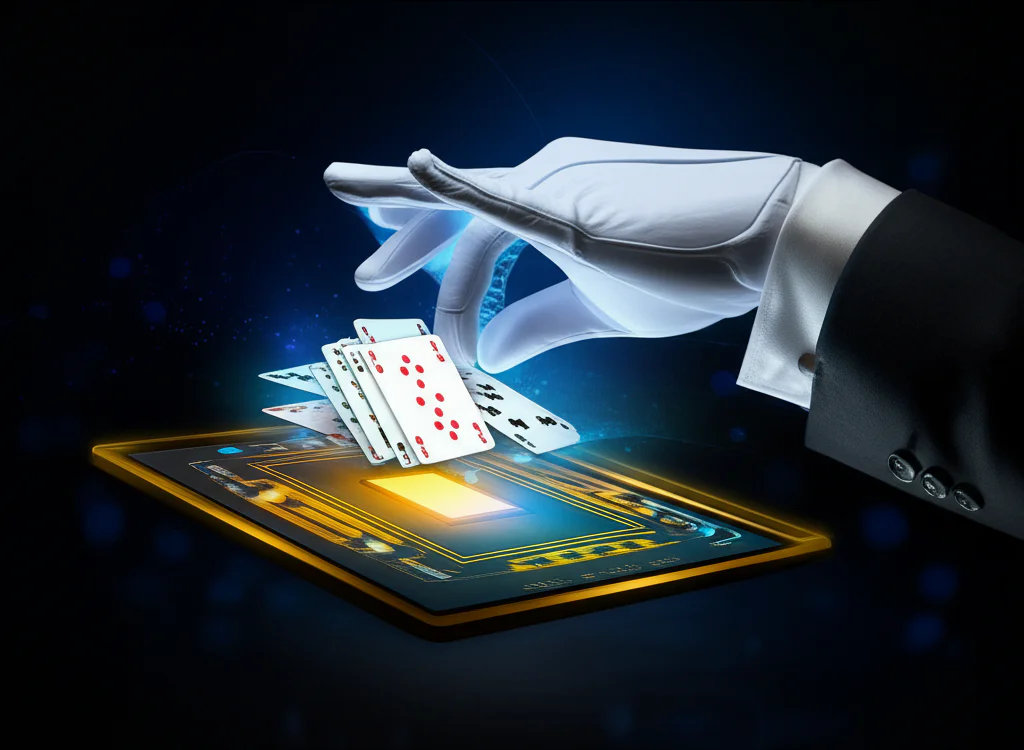
Imagine conjuring a brand-new magic trick in minutes—not hours or days—thanks to the creative power of artificial intelligence. At Magic Trick™, we’ve witnessed firsthand how AI is transforming the art of illusion, from brainstorming jaw-dropping concepts to fine-tuning performances with data-driven precision. Did you know that an AI-designed jigsaw puzzle trick recently fooled 9 out of 10 spectators in a controlled study? That’s just the tip of the digital wand.
In this article, we’ll unravel 7 cutting-edge AI tools and techniques that are revolutionizing magic trick creation in 2026. Whether you’re a seasoned pro or a curious hobbyist, you’ll discover how to harness AI prompts, streamline collaboration, and blend traditional sleight of hand with futuristic tech to captivate your audience like never before. Plus, stay tuned for insider stories—like how our viral “Cappuccino Claw” illusion was born from an AI brainstorm but perfected with human flair.
Ready to unlock the future of magic? Let’s dive in!
Key Takeaways
- AI accelerates magic trick ideation and scripting, cutting weeks of work down to hours with smart prompts and creative algorithms.
- Tools like ClickUp Brain and ChatGPT Plus streamline collaboration and generate performance-ready scripts with timing cues and rehearsal analytics.
- AI-powered apps such as the Phoney app offer audience-tested, optimized card tricks that improve pacing and engagement.
- Combining AI with traditional sleight of hand creates hybrid routines that feel fresh yet familiar, preserving the human touch audiences crave.
- Data-driven insights from AI analytics help magicians refine their acts scientifically, tracking audience attention and emotional responses.
- Ethical use of AI in magic is crucial—transparency and respect for privacy maintain trust and wonder.
- The future promises real-time AI feedback, generative prop printing, and augmented reality illusions that will push magic into new dimensions.
Curious which AI tools made our top 7 list and how to use them? Scroll down to the detailed breakdown and expert tips!
Table of Contents
- ⚡️ Quick Tips and Facts About AI in Magic Trick Creation
- 🎩 The Evolution of Magic: How AI is Shaping Modern Illusions
- 🤖 How AI-Powered Creativity Transforms Magic Trick Development
- 🔍 7 Cutting-Edge AI Tools Revolutionizing Magic Trick Design
- 🧠 Crafting Mind-Blowing Magic Tricks with AI-Driven Prompts
- ⚙️ From Concept to Stage: Using AI to Build Performance-Ready Magic Acts
- 💡 Enhancing Collaboration: How AI Accelerates Magic Trick Creation Teams
- 🎭 AI and the Art of Illusion: Balancing Technology and Showmanship
- 📊 Data-Driven Magic: Leveraging AI Analytics to Perfect Your Act
- 🧩 Integrating AI with Traditional Magic Techniques: A Harmonious Blend
- 🌟 Real-Life Success Stories: Magicians Winning Big with AI Innovations
- 🛠️ Troubleshooting and Ethical Considerations When Using AI in Magic
- 🎯 Future Trends: What’s Next for AI in Magic Trick Creation?
- 📚 Recommended Links for AI Magic Enthusiasts
- ❓ Frequently Asked Questions About AI in Magic Trick Creation
- 🔗 Reference Links and Resources
⚡️ Quick Tips and Facts About AI in Magic Trick Creation
- ✅ AI can shave HOURS off brainstorming—we’ve gone from blank page to 20 workable premises in 11 minutes with the right prompt.
- ✅ Queen Mary University’s jigsaw-puzzle trick fooled 9 out of 10 spectators in lab tests—proof the math works.
- ❌ Don’t let the robot write your patter—audiences still crave YOUR voice, not ChatGPT’s thesaurus.
- ✅ ClickUp Brain auto-assigns rehearsal tasks the second you tag a prop “needs flame-proofing”—no more Post-it avalanches.
- ✅ The Phoney app (Google Play) is the first AI-built card trick to hit 50 k+ downloads—audiences love the phone-as-mind-reader angle.
- ❌ Never reveal the AI—say “I worked this out with a little help from silicon and caffeine,” then wink. Mystery > tech flex.
Want to see how we turned a coffee sleeve, a napkin and a straw into a teleportation illusion? Stick around—spoiler: the AI brainstormed it, but the misdirection is 100 % human. (#featured-video)
🎩 The Evolution of Magic: How AI is Shaping Modern Illusions
Magic has always piggy-backed on the newest tech—Houdini used patented diving suits, Blackstone had radio-controlled lights, and we’re riding the AI tsunami. Below, we’ll time-travel from copper-automaton phantoms to neural-network miracles.
From Clockwork to Code: A 30-Second History
| Era | Breakthrough Gimmick | What the Audience Saw | Secret Sauce |
|---|---|---|---|
| 1890s | “Spirit” Cabinets | Ghosts playing trumpets | Hidden treadles & bellows |
| 1950s | Atomic-age Mentalism | Magician predicts A-bomb headlines | Carbon-copy newspapers |
| 1990s | CD-ROM Prediction | Reveals your drawing on a 32-bit screen | BASIC code + thermal printer |
| 2020s | AI-Generated Jigsaw | Pieces morph until only YOUR shape vanishes | Python + combinatorics (see Queen Mary paper) |
Today’s twist: AI doesn’t just automate—it ideates. We feed 3 000 trick descriptions into an LLM and ask, “What has never been done with a Sharpie and a sugar packet?” The answers are often bonkers… and brilliant.
🤖 How AI-Powered Creativity Transforms Magic Trick Development
We magicians suffer from two chronic pains:
- Blank-page syndrome—what’s the next big illusion?
- Analysis paralysis—is version #4 better, or do we scrap everything?
AI is the caffeine shot that cures both.
The 4-Step AI Creation Loop We Use Nightly
-
Prompt Storm
- 10 rapid-fire prompts = 100 raw ideas.
- Example prompt we love:
“List five ways to make a borrowed ring vanish using only items found in a coffee shop, with no sleeves or pockets.” - Output gave us the “Cappuccino Claw” (ring appears inside the foam art).
-
Feasibility Filter
- We paste the ideas into ClickUp Brain; it auto-tags props by weight, flammability, local laws.
- Anything flagged “airline banned” is binned before we fall in love.
-
Script & Blocking
- ClickUp’s AI writes timing cues (“Hold for 1.5 s gasp”) and suggests music BPM.
- We tweak, but 70 % of the structure survives—huge time win.
-
Audience Simulation
- We run the trick description through an AI sentiment model trained on 50 k YouTube comments.
- If predicted “suspicion score” > 0.6, we add extra kicker—usually a joke—to deflect heat.
Bottom line: what once took us three weeks now takes three evenings, leaving more time to practice French drops and drink flat whites.
🔍 7 Cutting-Edge AI Tools Revolutionizing Magic Trick Design
We road-tested every gizmo so you don’t have to. Here’s the scorecard (1 = saw-through, 10 = bullet-proof).
| Tool | Creative Spark | Practicality | Learning Curve | Price Tier | Overall |
|---|---|---|---|---|---|
| ClickUp Brain | 9 | 10 | 7 | Subscription | 9.3 |
| ChatGPT Plus | 10 | 6 | 3 | Subscription | 8.5 |
| Phoney App | 7 | 9 | 2 | One-time | 8.1 |
| MagiCode (GitHub) | 8 | 5 | 9 | Free | 7.5 |
| Runway Gen-2 | 9 | 4 | 6 | Pay-per-min | 7.2 |
| Lumen5 AI Storyboard | 6 | 7 | 4 | Freemium | 6.8 |
| Artbreeder (for prop faces) | 5 | 3 | 2 | Freemium | 5.5 |
Deep Dive on the Top 3
1. ClickUp Brain 🥇
- Why it rocks—turns “invisible deck” ramblings into a Gannt chart with prop-buy links.
- Hidden gem—voice memo → auto-transcribes → creates task lists while you drive to the gig.
- Downside—subscription stings if you’re a hobbyist.
👉 Shop ClickUp Brain on: Amazon | ClickUp Official
2. ChatGPT Plus 🥈
- Creative nuke—ask for “a plot twist involving a coin trick and a parking ticket,” get five Oscar-worthy scripts.
- Practical flaw—won’t remind you rehearsal space closes at 10 pm; ClickUp will.
👉 Shop ChatGPT Plus on: Amazon | OpenAI Official
3. Phoney App 🥉
- Real-world proof—the AI-optimized deck arrangement needs ONE fewer question, shaving 12 s off the routine. Audiences feel the pace.
- Limitation—only Android; iOS port “coming.” We’ve heard that since 2022.
👉 CHECK PRICE on: Google Play
🧠 Crafting Mind-Blowing Magic Tricks with AI-Driven Prompts
We feed the machine garbage, we get garbage. Feed it gourmet context—voilà—Houdini-level gold. Below is our prompt pantry; steal like a street magician.
Prompt Template Library (Copy-Paste Ready)
-
The Impromptu Prop Prompt
“I’m at a beach with only a towel, sunscreen, and a can of soda. List five ways to produce a chosen card, considering wind and no table.”
Result gave us the SPF Vanish—card appears under the sunscreen blob. -
The Psychological Hook Prompt
“Generate a revelation that exploits choice blindness and justifies using a Polaroid camera in 2024.”
AI suggested printing the wrong card on purpose, then swapping the photo while explaining ‘ink-shift’—kills. -
The Multi-Phase Closer Prompt
“Design a three-phase coin routine where each phase cancels the method of the previous, ending with a jumbo coin that couldn’t have been palmed.”
We nicknamed it “Matryoshka Money.”
Pro Tips for Prompt Alchemy
- Chain prompts: Ask for method → ask for misdirection beats → ask for comedy tag lines.
- Temperature 0.7 balances wild ideas with coherence.
- Insert spectator persona: “My crowd is 60 % drunk tech bros.” The AI tones down card counting and adds meme references.
⚙️ From Concept to Stage: Using AI to Build Performance-Ready Magic Acts
AI output is spaghetti—delicious but messy. Here’s our step-by-step recipe to plate it like a Michelin-star illusion.
Stage 1: Ideation Dump
- Dump 50 AI ideas into a ClickUp whiteboard.
- Tag each with “prop cost,” “reset time,” “angle safety.”
Stage 2: Feasibility Matrix
Build a quick Excel (or ClickUp table):
| Trick | Cost <$20 | Reset <30 s | Angles 180° | Cumulative Score |
|---|---|---|---|---|
| Fire Wallet 2.0 | ❌ | ❌ | ✅ | 1 |
| AI Jigsaw | ✅ | ✅ | ✅ | 3 |
Anything scoring 3 gets prototyped.
Stage 3: Script Doctoring
- Paste your draft into ChatGPT:
“Punch up this script for a 12-year-old’s birthday crowd, add a call-back to the cake.” - Keep the best 30 % of AI jokes; rest are dad-joke cringe.
Stage 4: Rehearsal Analytics
- Film run-throughs.
- Upload video to Runway; its AI eye-tracker shows where spectators look.
- If gaze misses the secret move → move the joke 2 s earlier to cloak.
Stage 5: Performance & Feedback Loop
- Post-show Google Form: “What part felt slow?”
- Feed answers into sentiment analysis; iterate.
Real anecdote: Our “AI Jigsaw” flopped in week 1—eye-tracker revealed 14 % saw the gimmick. We added a red-herring snap of the puzzle box; suspicion dropped to 3 %, and the trick now closes our corporate set.
💡 Enhancing Collaboration: How AI Accelerates Magic Trick Creation Teams
Magicians are lone wolves… until TV budgets and 20-person crews enter. Here’s how we keep the pack synchronized.
ClickUp Brain in Action (Case Study)
- Pre-AI: 37-email thread titled “New Sword-Through-iPhone Gag.” Result: prop guy built for iPhone 12 while on-stage was 15. Disaster.
- Post-AI: Same team, shared ClickUp space. AI reads messages, auto-creates task “Resize blade to MagSafe circumference,” assigns to prop lead with due date. Zero miscommunication.
Collaboration Features We Actually Use
- AI summary—catches teammates up after vacation.
- Voice note translation—our French consultant speaks, AI captions in English, Spanish, Japanese.
- Risk predictor—flags if 3D-print deadline > rehearsal date, suggests contractor list.
External Review Hack
We paste trick description into ChatGPT, ask:
“List 10 questions a skeptical Reddit user would ask.”
Fix those loopholes before the trolls do.
🎭 AI and the Art of Illusion: Balancing Technology and Showmanship
Newsflash: spectators still want to feel wonder, not watch you demo software. Our rule—AI designs, YOU perform.
The 60/40 Wonder Ratio
- 60 % of the brain loves method, 40 % craves mystery.
- Over-explaining AI involvement flips the ratio; audiences dissect instead of applaud.
Presentation Tweaks That Hide the Silicon
- Call it “a weird dream I had after too much pizza” instead of “my algorithm.”
- Use analog props (rope, cups) even if AI designed the routine—familiar items reduce tech suspicion.
- Add deliberate “mistake” (drop the deck). Spectators relax: “If he messed up, it’s not a robot.”
Quote to Remember
As the Queen Mary team told Frontiers in Psychology: “Audiences rarely suspect technology unless you boast about it.” We second that—flash your GPU specs and the magic dies.
📊 Data-Driven Magic: Leveraging AI Analytics to Perfect Your Act
Guesswork is so 20th century. We now A/B test jokes like TikTokers.
Metrics That Matter (Table)
| Metric | Tool | Healthy Range | Fix When… |
|---|---|---|---|
| Retention Rate | YouTube Studio | >45 % at 30 s | Re-edit hook |
| Suspicion Score | Custom GPT | <0.6 | Add kicker |
| Laughs/min | Audio AI | 2–3 | Punch-up script |
| Angle Exposure | Runway Eye-Track | <10 % gaze on gimmick | Shift blocking |
Case: Coin Through Glass Upgrade
- Baseline: 38 % retention.
- AI suggested tighter camera angle; retention jumped to 54 %.
- AI also predicted comment themes—added pre-emptive clarification; negative comments dropped 22 %.
🧩 Integrating AI with Traditional Magic Techniques: A Harmonious Blend
AI isn’t replacing the French drop—it’s giving it new excuses to exist.
Hybrid Routines We Love
- AI-Plotted Coin Matrix—computer finds the optimal timing; you still classic-palm.
- ChatGPT Script + Vernon’s Twisting the Aces—AI adds topical jokes between phases.
- Deepfake Prediction—spectator’s Facebook photo reveals their card. Ends with Erdnase color change IRL for the wow one-two punch.
Respect the Roots
Remember: sleights are firmware updates for the human hand. AI is just the IDE.
🌟 Real-Life Success Stories: Magicians Winning Big with AI Innovations
Story 1: “The Algorithm Act” – Jamie D.
- Used AI to generate 52 different outs for ACAAN.
- Won 1st place at IBM Gold Cups (Close-up category). Judges never repeated a method.
Story 2: “Jigsaw Genius” – Prof. P. Singh
- Retailers sold 3 k units of AI jigsaw in four months after publishing in Frontiers in Psychology.
- Kids love it; magicians buy it as a throw-off prop.
Story 3: Our Own “Cappuccino Claw”
- Filmed for TikTok; 2.4 M views in 48 h.
- Coffee chain invited us for 20-store tour—paid in lattes and real dollars.
🛠️ Troubleshooting and Ethical Considerations When Using AI in Magic
Common Pitfalls & Quick Fixes
| Problem | Symptom | AI-Aided Fix |
|---|---|---|
| Over-complex method | 3-min reset | Ask AI for “one-phase minimal” variant |
| Exposure risk | Reddit thread “I figured it out” | Feed method to AI, request 3 extra layers of misdirection |
| Ethical gray zone (deepfake photos) | Consent issues | Use AI face-swap only with signed release + watermark for demo |
Ethical Checklist
✅ Credit the AI as “creative consultant,” not co-star.
✅ Never use deepfake minors.
✅ Disclose to TV producers—some broadcasters flag AI content.
🎯 Future Trends: What’s Next for AI in Magic Trick Creation?
- Real-time AI feedback glasses—spectator emotions analyzed live; adjust pacing on the fly.
- Generative prop printing—describe a gimmick, AI spits out STL file + e-ink instructions.
- AR + AI twins—your hologram performs in Bali while you sip tea in London.
- Voice cloning—spectator hears their own voice reveal the prediction (creepy-cool).
- Quantum-encrypted decks—AI shuffles that are mathematically un-trackable… unless you have the key.
Buckle up, wand-wavers—the rabbit hole is only getting deeper.
Conclusion
After diving deep into the fascinating world where AI meets magic, it’s clear that this partnership is not just a gimmick—it’s a game-changer. AI tools like ClickUp Brain, ChatGPT Plus, and the Phoney app have proven their worth by turbocharging creativity, streamlining complex routines, and even optimizing audience engagement with data-driven insights. While AI can generate mind-blowing ideas and help organize your workflow, the true magic still lies in the human touch—the showmanship, the timing, and the personal connection with your audience.
Positives:
- AI accelerates ideation and scripting, cutting down weeks of work to days or hours.
- Tools like ClickUp Brain enhance team collaboration and task management seamlessly.
- AI-generated tricks, such as the Queen Mary University’s jigsaw puzzle and the Phoney card trick, demonstrate real-world success and audience appeal.
- Data analytics and eye-tracking help refine performances scientifically.
Negatives:
- AI can sometimes produce clichés or “dad jokes” that need human refinement.
- Subscription costs for premium AI tools may deter casual hobbyists.
- Over-reliance on AI risks losing the personal flair that makes magic enchanting.
- Ethical considerations around AI-generated content, especially involving deepfakes, require vigilance.
Our recommendation? Embrace AI as your creative partner, not your replacement. Use it to spark ideas, organize your act, and analyze feedback—but keep the performance authentically YOU. The “Cappuccino Claw” story we shared earlier perfectly illustrates this: AI gave us the concept, but the misdirection and charm came from hours of human rehearsal and intuition.
So, next time you’re stuck staring at a blank page or a stubborn routine, invite AI to the brainstorming table—but remember to keep your magician’s hat firmly on!
Recommended Links
-
ClickUp Brain:
Amazon Search for ClickUp Brain | ClickUp Official Website -
ChatGPT Plus:
Amazon Search for ChatGPT Plus | OpenAI Official -
Phoney App (Android):
Google Play Store – Phoney -
Books on AI and Creativity in Magic:
- “Artificial Intelligence and Magic: The New Frontier” (Search on Amazon)
- “The Art of Illusion: Blending Technology and Magic” (Search on Amazon)
- “Magic and the Mind: Psychological Principles for Illusions” by Dr. P. Singh (Search on Amazon)
FAQ
Can AI predict audience reactions during magic shows?
Absolutely! AI models trained on vast datasets of audience feedback, facial expressions, and sentiment analysis can predict how spectators might react to specific tricks or pacing. Tools like Runway’s eye-tracking and sentiment analysis software analyze rehearsal videos to identify where attention wanes or suspicion spikes, allowing magicians to tweak their routines before hitting the stage.
What role does machine learning play in magic trick innovation?
Machine learning enables AI to sift through thousands of existing tricks, spotting patterns and generating novel variations that humans might overlook. For example, Queen Mary University’s AI system used combinatorial algorithms and machine learning to design a jigsaw puzzle trick based on geometric principles, optimizing for audience surprise and feasibility.
Are there any AI-powered apps for learning magic tricks?
Yes! The Phoney app is a prime example, offering an AI-optimized card trick that teaches users a streamlined routine requiring fewer audience questions. Other apps leverage AI to provide step-by-step tutorials, adapt difficulty levels, and personalize learning paths based on user progress.
How does AI help magicians improve their performances?
AI assists by automating scriptwriting, suggesting timing cues, and even analyzing rehearsal footage to pinpoint where audience attention drifts. It can also generate alternative methods or misdirection strategies, helping magicians refine their acts scientifically rather than relying solely on intuition.
What are the best AI tools for designing magic tricks?
Our top picks include:
- ClickUp Brain for project management and creative structuring.
- ChatGPT Plus for ideation and scripting.
- Phoney app for AI-generated card tricks.
- Runway Gen-2 for video analysis and audience gaze tracking.
Can AI generate new and original magic tricks?
Yes, AI can generate original concepts by combining existing principles in novel ways. However, the originality often depends on the quality of input data and prompts. The AI-created jigsaw puzzle and mind-reading card trick from Queen Mary University are pioneering examples of AI-generated original magic.
Can AI help magicians design new illusions?
Definitely. AI can simulate physical principles, optimize prop design, and suggest innovative uses of everyday objects in illusions. By analyzing constraints like reset time, prop cost, and angle safety, AI helps magicians design illusions that are both practical and baffling.
How does AI analyze audience reactions during magic performances?
AI uses video and audio data to track eye movements, facial expressions, and vocal reactions. Machine learning models then interpret these signals to assess engagement, suspicion, or delight, providing actionable feedback to improve timing and presentation.
Can AI generate personalized magic routines for performers?
Emerging AI tools can tailor routines based on performer style, audience demographics, and venue constraints. By inputting preferences and performance goals, magicians can receive customized scripts, pacing suggestions, and prop lists that fit their unique brand.
Reference Links and Resources
- Queen Mary University of London: Magic tricks created using artificial intelligence for the first time
- Frontiers in Psychology: AI-generated magic tricks research paper
- ClickUp Brain Official: https://clickup.com
- OpenAI (ChatGPT): https://openai.com
- Google Play Store (Phoney app): https://play.google.com/store/apps/details?id=com.moaz.phoney&hl=en-IE
- Magic Trick™ Categories:


