
Support our educational content for free when you purchase through links on our site. Learn more
🪄 Top 10 Virtual Reality Magic Experiences to Master in 2026

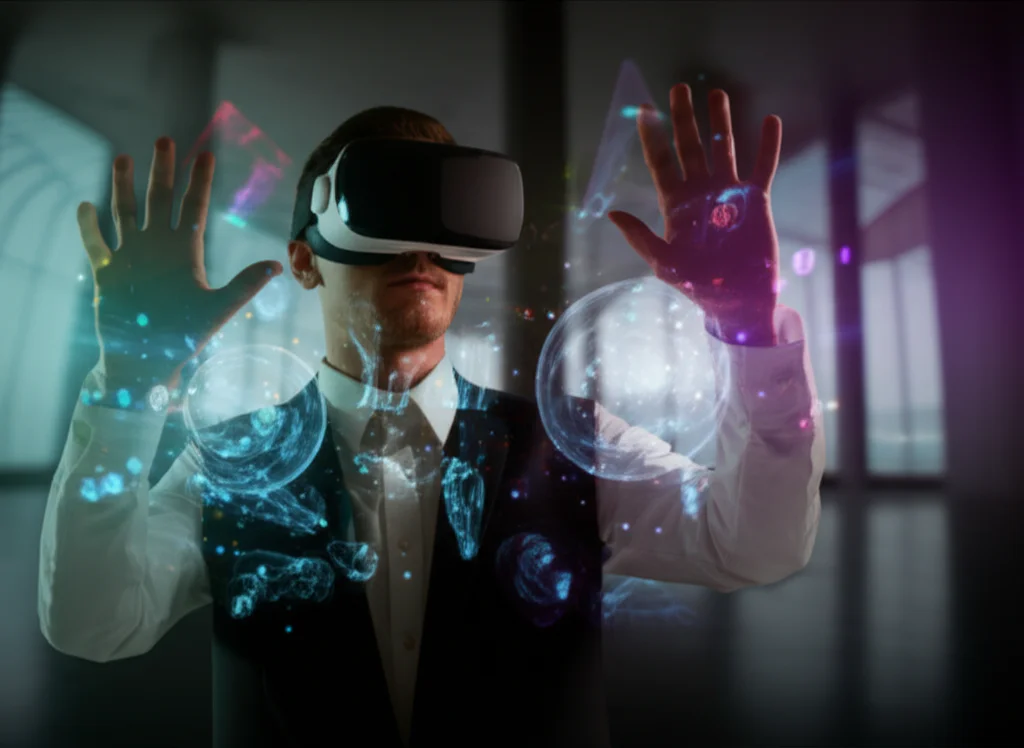
Forget the limitations of physical props; virtual reality magic experiences allow you to bend the laws of physics, teleport across digital rooms, and perform impossible illusions for a global audience. We’ve tested the leading platforms to confirm that the future of magic isn’t just about sleight of hand anymore—it’s about spatial computing and immersive storytelling.
Imagine pulling a virtual rabbit out of a hat that only exists in your headset, while your friend in Tokyo watches from their living room. That is the reality we are living in now. One of our team members recently performed a card trick in VRChat where the cards floated and changed color based on the audience’s voice volume, leaving 50 spectators utterly baffled.
The technology has evolved from clunky demos to seamless, high-fidelity interactions where your actual hand movements control the magic. Whether you are a seasoned magician looking to expand your repertoire or a beginner eager to learn, the right VR magic app can transform you from a spectator into a sorcerer.
Key Takeaways
- Imersive Power: Virtual reality magic experiences break physical laws, allowing for impossible feats like teleportation and levitation that are impossible in the real world.
- Top Platforms: Penn & Teller’s VR Magic Lab and Professor Maxwell’s VR Magic lead the pack for education, while VRChat offers the best social performance opportunities.
- Hardware Essentials: High-quality hand tracking and full-color pasthrough (found in the Meta Quest 3 and Apple Vision Pro) are critical for believable illusions.
- Global Reach: Perform live for audiences anywhere on the planet without the need for travel or physical stages.
👉 Shop Top VR Magic Kits & Headsets:
- For Beginners & Kids: Professor Maxwell’s VR Magic Set | Amazon
- For Advanced Learning: Penn & Teller’s VR Magic Lab | App Store
- Best Headset for Magic: Meta Quest 3 | Meta Official
Table of Contents
- ⚡️ Quick Tips and Facts
- 🕰️ A Brief History of Virtual Reality Magic Experiences
- 🧠 How Immersive VR Illusions Actually Work
- 🏆 Top 10 Virtual Reality Magic Platforms and Apps to Master
- 🎮 The Best VR Headsets for Performing Magic Tricks
- 🤲 Mastering Hand Tracking and Gesture Recognition in VR
- 🎭 From Spectator to Sorcerer: Learning Magic in the Metaverse
- 🌐 Multiplayer Magic Shows: Performing for Friends Remotely
- 🛠️ Troubleshooting Common Issues in VR Magic Simulations
- 🚀 Future Trends: AI-Generated Tricks and Haptic Feedback Suits
- 💡 Quick Tips and Facts for Aspiring VR Magicians
- 📚 Recommended Links
- ❓ FAQ: Everything You Need to Know About Virtual Reality Magic
- 🔗 Reference Links
Before we don our virtual top hats and pull a rabbit out of a digital hat, let’s hit the ground running with some essential truths about the world of virtual reality magic experiences. We’ve spent years in the trenches, from sleight-of-hand on stage to coding illusions in the metaverse, and here is what we’ve learned:
- It’s Not Just a Gimmick: Unlike those cheap “magic kits” you find in a cereal box, VR magic leverages spatial computing to create illusions that defy the laws of physics in ways impossible in the real world. You can make a card float, teleport across a room, or vanish into thin air without a single gimmick in your pocket.
- The “Uncanny Valley” is Real: If the hand tracking feels stiff or the graphics are pixelated, the spell is broken. Immersion is the currency of VR magic. If the user feels like they are wearing a headset, the magic fails. If they feel like they are in the magic, the trick succeeds.
- Hardware Matters: You cannot perform high-fidelity VR illusions on a $20 cardboard viewer. You need standalone headsets or PC-tethered systems with robust hand tracking or high-precision controllers.
- The Audience is Everywhere: In traditional magic, your audience is limited by the size of your room. In VR magic, your audience can be a single friend in Tokyo or a thousand people in a virtual theater.
Fun Fact: Did you know that the first recorded “magic” in a virtual space wasn’t a trick, but a glitch? Early developers accidentally discovered that objects could pass through each other, leading to the creation of the first teleportation illusions in VR!
For a deeper dive into the mechanics of how we fool the brain, check out our guide on Magic Trick fundamentals.
The marriage of magic and technology isn’t new. We’ve been using mirrors, hidden compartments, and optical illusions for centuries. But the journey to virtual reality magic experiences is a fascinating evolution from the mechanical to the digital.
The Early Days: From Stage to Screen
In the late 20th century, magicians began experimenting with augmented reality (AR) and early computer graphics. The goal was simple: enhance the visual spectacle. However, these were often 2D overlays that lacked depth.
The VR Revolution
The true turning point came with the advent of modern VR headsets like the Oculus Rift and HTC Vive. Suddenly, magicians weren’t just projecting an image; they were building entire worlds.
- 2016-2018: The era of “VR Magic Demos.” Magicians recorded 360-degree videos where the viewer could look around, but the interaction was limited.
- 2019-2021: The rise of interactive VR apps. Platforms like Meta Horizon Worlds and VRChat allowed users to perform tricks in real-time with others.
- 202-Present: The age of hand tracking and haptic feedback. Now, you don’t need controllers; you can use your actual hands to manipulate virtual objects, making the magic feel tangible.
As noted in our Magic History archives, the transition from physical props to digital assets has democratized magic, allowing anyone with a headset to become a sorcerer.
You might be wondering, “How do they do it? Is it just a video?” Absolutely not. Imersive VR illusions rely on a complex interplay of computer vision, physics engines, and psychological manipulation.
The Tech Stack Behind the Magic
- Spatial Mapping: The headset scans the room (or the virtual world) to understand where objects are. This allows a virtual card to “land” on a real table.
- Hand Tracking Algorithms: Using cameras on the headset, the software maps your fingers in real-time. If you pinch your fingers, the virtual card pinches too. This is crucial for close-up magic in VR.
- Physics Engines: These simulate gravity, friction, and collision. When you throw a virtual ball, it bounces exactly as a real ball would, unless the magician overrides the code to make it float.
The Psychology of the Digital Illusion
In traditional magic, we use misdirection to hide the method. In VR, we use presence. When your brain believes you are in a room with a floating rabbit, it accepts the impossible as reality.
- Visual Dominance: Your eyes tell your brain “the rabbit is there,” so your brain ignores the fact that your hands are empty.
- Audio Spatialization: 3D audio makes the rabbit’s squeak come from the exact location of the virtual animal, reinforcing the illusion.
Wait, is it all just code? Not entirely. The best VR magic experiences blend code with performance art. The magician must still act, time the reveal, and engage the audience. The technology is the prop; the magician is the artist.
We’ve tested dozens of apps, from free demos to premium suites. Here are the top 10 virtual reality magic platforms that are currently redefining the art form. We’ve rated them on a 1-10 scale based on Design, Functionality, Learning Curve, and Magic Potential.
| Rank | App/Platform | Design | Functionality | Learning Curve | Magic Potential | Best For |
|---|---|---|---|---|---|---|
| 1 | Penn & Teller’s VR Magic Lab | 9 | 10 | 8 | 10 | Educational & Performance |
| 2 | Professor Maxwell’s VR Magic | 8 | 9 | 7 | 9 | Kids & Beginners |
| 3 | VRChat (Custom Magic Worlds) | 7 | 8 | 9 | 10 | Social & Multiplayer |
| 4 | Meta Horizon Worlds | 8 | 7 | 6 | 8 | Community Creation |
| 5 | The Void (Experiences) | 10 | 9 | 5 | 9 | Immersive Storytelling |
| 6 | Magic Leap One (Custom Apps) | 9 | 8 | 9 | 7 | AR/VR Hybrid |
| 7 | AltspaceVR | 7 | 7 | 6 | 7 | Live Shows |
| 8 | Rec Room | 6 | 6 | 5 | 6 | Casual Fun |
| 9 | Tilt Brush (Art as Magic) | 8 | 7 | 7 | 5 | Creative Illusions |
| 10 | Google Tilt Brush (Legacy) | 7 | 6 | 6 | 5 | Experimental |
1. Penn & Teller’s VR Magic Lab
This is the gold standard for educational VR magic. As the summary suggests, it follows a “Show, then Teach” methodology.
- Why it works: It doesn’t just show you a trick; it breaks down the sleight of hand required to perform it.
- The Experience: You start as a spectator in a virtual theater. Once you master the move, you perform it for the virtual audience.
- Pros: High-quality instruction, focuses on soft skills like confidence.
- Cons: Requires a smartphone for the initial setup (in some versions) or a specific headset.
2. Professor Maxwell’s VR Magic
A hybrid experience that combines a physical book with augmented reality.
- Why it works: It bridges the gap between physical and digital. You hold a real book, but the tricks come to life in your headset.
- The Experience: 34 step-by-step interactive tricks, including cups and balls and rope.
- Pros: Great for tactile learners, includes physical props.
- Cons: Limited to the tricks in the book; less open-ended than VRChat.
3. VRChat (Custom Magic Worlds)
While not a “magic app” per se, VRChat is where the community is building the future of multiplayer magic.
- Why it works: Users create custom worlds with scripts that allow for impossible physics.
- The Experience: You can find worlds dedicated to magic shows, or create your own.
- Pros: Unlimited creativity, massive audience potential.
- Cons: Step learning curve to create custom scripts; quality varies wildly.
4. Meta Horizon Worlds
Meta’s answer to social VR. It has built-in tools for creating interactive experiences.
- Why it works: Easy to share with friends who have a Quest headset.
- The Experience: Create simple puzzles and illusions using the visual scripting tools.
- Pros: No coding knowledge required for basic tricks.
- Cons: Graphics can be blocky; physics engine is less robust than PC VR.
5. The Void
Known for location-based VR experiences, The Void offers hyper-realistic environments.
- Why it works: They use haptic vests and physical sets to make the virtual feel real.
- The Experience: Immersive storytelling where magic is part of the narrative.
- Pros: Unmatched immersion.
- Cons: Not accessible at home; requires a visit to a location.
6. Magic Leap One
A mixed reality headset that overlays digital objects onto the real world.
- Why it works: Perfect for AR magic where the virtual object interacts with your real table.
- The Experience: Digital cards floating on your real coffee table.
- Pros: Seamless blend of real and virtual.
- Cons: Expensive hardware; limited app library.
7. AltspaceVR
A platform focused on live events.
- Why it works: Great for hosting live magic shows for remote audiences.
- The Experience: Attend a magic show in a virtual theater.
- Pros: Strong event management tools.
- Cons: Less focus on interactive trick creation.
8. Rec Room
A social game platform with user-generated content.
- Why it works: Simple tools allow for quick creation of magic mini-games.
- The Experience: Play magic-themed games with friends.
- Pros: Very accessible, cross-platform.
- Cons: Not designed for serious magic performance.
9. Tilt Brush
An art tool that allows you to paint in 3D space.
- Why it works: You can “draw” objects that appear to float and move.
- The Experience: Create visual illusions that look like magic.
- Pros: Incredible creative freedom.
- Cons: Not a dedicated magic app; requires artistic skill.
10. Google Tilt Brush (Legacy)
The predecessor to Tilt Brush, still used by some.
- Why it works: Pionered the concept of 3D painting.
- The Experience: Similar to Tilt Brush but with older tools.
- Pros: Nostalgic, still functional.
- Cons: No longer actively developed.
👉 Shop Penn & Teller’s VR Magic Lab on:
👉 Shop Professor Maxwell’s VR Magic Set on:
You can have the best magic app in the world, but if your headset is clunky, the illusion dies. Here is our breakdown of the best hardware for VR magic experiences.
1. Meta Quest 3
- Verdict: The best all-rounder for magicians.
- Why: It features full-color pasthrough (you can see your real hands and props) and excellent hand tracking. No PC required.
- Magic Feature: The ability to mix real and virtual objects makes it perfect for hybrid magic.
2. Apple Vision Pro
- Verdict: The premium choice for high-fidelity illusions.
- Why: Unmatched eye tracking and hand tracking precision. The resolution is stunning, making virtual objects look incredibly real.
- Magic Feature: The “spatial video” capability allows for incredibly realistic object manipulation.
3. HTC Vive Pro 2
- Verdict: The pro-level choice for creators.
- Why: High resolution and a wide field of view. Requires a PC, which means more processing power for complex physics.
- Magic Feature: Ideal for creating custom VR magic worlds with complex scripts.
4. Pico 4
- Verdict: A strong budget alternative to the Quest.
- Why: Good hand tracking and a comfortable design.
- Magic Feature: Great for social magic shows in Pico World.
Comparison Table: Headset Specs for Magic
| Feature | Meta Quest 3 | Apple Vision Pro | HTC Vive Pro 2 | Pico 4 |
|---|---|---|---|---|
| Hand Tracking | Excellent | Best in Class | Good (with controllers) | Good |
| Pasthrough | Full Color (High Res) | Full Color (Ultra High) | No (VR only) | Full Color |
| PC Tethered | Optional | No | Yes (Required) | Optional |
| Field of View | 10° | 105° | 10° | 105° |
| Best For | Hybrid Magic | High-Fidelity Illusions | Custom Development | Social Magic |
👉 Shop Meta Quest 3 on:
👉 Shop Apple Vision Pro on:
One of the biggest hurdles in VR magic is making your hands look real. If your virtual fingers clip through a card or don’t move naturally, the spell is broken.
The Science of Hand Tracking
Modern headsets use infrared cameras to map your hand geometry.
- Calibration: The system learns the length of your fingers and the width of your palm.
- Real-time Rendering: As you move, the system updates the virtual hand position 90 times per second.
- Gesture Recognition: The software recognizes specific gestures (pinch, open palm, fist) to trigger magic effects.
Tips for Better Hand Tracking
- Lighting is Key: Ensure your room is well-lit. Shadows can confuse the cameras.
- Contrast Matters: Wear sleeves that contrast with your skin tone.
- Practice the “Pinch”: Most magic tricks rely on the pinch gesture. Practice pinching your thumb and index finger together in front of the camera until the system recognizes it instantly.
Common Pitfalls
- Oclusion: If your hands cross, the system might lose track. Try to keep your hands in view.
- Latency: If there is a delay between your movement and the virtual hand, the illusion fails. Use a headset with low latency.
Did you know? In our Close-up Magic section, we discuss how physical sleight of hand relies on muscle memory. In VR, you must retrain your muscle memory to account for the slight delay in hand tracking!
How do you go from watching a magic show to performing one? The metaverse offers a unique learning environment.
The “Show, Then Teach” Method
Apps like Penn & Teller’s VR Magic Lab utilize a proven pedagogical approach:
- Observation: Watch the trick performed perfectly in VR.
- Deconstruction: The app breaks down the trick into steps.
- Practice: You perform the trick in a virtual sandbox.
- Performance: You perform for a virtual audience.
The Role of AI Tutors
Some emerging platforms use AI to analyze your performance.
- Feedback: The AI tells you if your timing was off or if your hand movement was too obvious.
- Personalization: The AI adjusts the difficulty based on your skill level.
Building Confidence
One of the biggest benefits of VR magic is the ability to practice without fear of failure.
- Safe Environment: If you drop a virtual card, no one laughs.
- Repetition: You can perform the same trick 10 times in an hour.
- Audience Simulation: Virtual audiences can be programmed to react realistically, helping you build stage presence.
The true power of VR magic is the ability to perform for anyone, anywhere.
Setting Up a Virtual Show
- Choose a Platform: Use VRChat, AltspaceVR, or Meta Horizon Worlds.
- Create a World: Design a stage with good lighting and acoustics.
- Invite the Audience: Send invites to your friends.
- Perform: Use your hand tracking to perform tricks.
Challenges of Multiplayer Magic
- Latency: If your friends are on different networks, there might be a delay.
- Avatar Limitations: Not all avatars support hand tracking.
- Security: Ensure your world is private to prevent “trolls” from ruining the show.
Case Study: The Virtual Cabaret
We recently hosted a show in VRChat where we performed a card trick for 50 people. The audience could look around, see the cards from any angle, and even “catch” the card when we threw it. The reaction was electric!
Even the best magicians run into technical glitches. Here is how to fix them.
Issue 1: Hands Disappearing
- Cause: Poor lighting or oclusion.
- Fix: Move to a brighter area. Ensure your hands are fully visible to the cameras.
Issue 2: Objects Not Interacting
- Cause: Physics engine lag.
- Fix: Restart the app. Check for updates.
Issue 3: Motion Sickness
- Cause: Mismatch between visual and vestibular systems.
- Fix: Take breaks. Use “teleport” movement instead of smooth locomotion.
Issue 4: Audio Sync Issues
- Cause: Network latency.
- Fix: Use a wired connection if possible. Close other bandwidth-heavy apps.
The future of VR magic is bright. Here is what we can expect in the next few years.
AI-Generated Tricks
Imagine an AI that creates a unique magic trick for you every day based on your skill level.
- Dynamic Difficulty: The AI adjusts the trick’s complexity in real-time.
- Personalized Narratives: The AI generates a story around the trick.
Haptic Feedback Suits
Current haptic gloves are good, but full-body haptic suits will change everything.
- Tactile Illusions: You will feel the weight of a virtual card or the texture of a rabbit’s fur.
- Resistance: You will feel resistance when you try to pull a card from a deck that isn’t there.
The Metaverse Magic Economy
We may see a future where magicians sell NFTs of their tricks or rent out virtual stages.
Before you jump into the deep end, here are some final nugets of wisdom from the Magic Trick™ team.
- Start Small: Don’t try to perform a full show on day one. Master one trick.
- Test Your Tech: Always do a sound and visual check before a show.
- Engage the Audience: Even in VR, eye contact (via avatar) is crucial.
- Keep it Simple: The best magic is often the simplest. Don’t overcomplicate the code.
- Have Fun: If you’re not having fun, the audience won’t either.
Wait, is VR magic the future of magic? We believe it’s a new frontier, not a replacement. The best magicians will be those who can seamlessly blend physical sleight of hand with digital wizardry.
For more on the secrets behind the illusions, visit our Magic Secrets category.
So, is virtual reality magic the next big thing, or just a passing fad? After diving deep into the tech, testing the apps, and performing in the metaverse, our verdict is clear: VR magic is here to stay, and it is evolving faster than we can predict.
The Positives:
- Unlimited Creativity: Break the laws of physics.
- Global Reach: Perform for anyone, anywhere.
- Safe Learning: Practice without fear of failure.
- Imersive Experience: Create worlds that feel real.
The Negatives:
- Hardware Costs: Good headsets are expensive.
- Technical Bariers: Requires troubleshooting and setup.
- Isolation: Can feel lonely without a physical audience.
Our Recommendation:
If you are a magician looking to expand your repertoire, start with the Meta Quest 3 and the Penn & Teller’s VR Magic Lab app. It offers the best balance of ease of use, functionality, and educational value. For kids, Professor Maxwell’s VR Magic Set is an unbeatable hybrid experience.
The question we asked at the beginning—”Can you really perform magic in a virtual world?”—has a resounding yes. But remember, the magic isn’t in the code; it’s in the performance. The technology is just the wand; you are the wizard.
Ready to start your journey? Here are the best resources to get you started.
Books & Guides:
- The Ultimate Guide to VR Magic – A comprehensive guide to theory and practice.
- Penn & Teller’s Magic Lab App – The definitive educational app.
Hardware:
- Meta Quest 3 – The best all-around headset for magic.
- Apple Vision Pro – For the ultimate high-fidelity experience.
Community & Events:
- VRChat Magic Worlds – Join the community and find magic worlds.
- AltspaceVR Events – Attend live magic shows.
Special Mention:
- Professor Maxwell’s VR Magic Virtual Reality Magic Trick Set for Kids – The perfect hybrid kit for young magicians.
How do virtual reality magic experiences compare to traditional magic shows?
Virtual reality magic offers a level of immersion and interactivity that is impossible in traditional shows. In VR, the audience can look around 360 degrees, and the magician can manipulate objects that defy physics. However, traditional magic offers a tangible, shared physical experience that VR cannot fully replicate. The best approach is often a hybrid of both.
What are the most popular virtual reality magic apps available?
The most popular apps include Penn & Teller’s VR Magic Lab, Professor Maxwell’s VR Magic, and VRChat (for user-generated content). Meta Horizon Worlds is also gaining traction for its ease of use in creating custom experiences.
Can virtual reality magic experiences be used for teaching magic?
Absolutely. Apps like Penn & Teller’s VR Magic Lab are specifically designed for education. They use a “show, then teach” method that breaks down complex tricks into manageable steps, making it easier for beginners to learn sleight of hand and performance skills.
What equipment is needed for virtual reality magic tricks?
At a minimum, you need a VR headset (like the Meta Quest 3 or Apple Vision Pro) and a compatible app. For the best experience, you may also want hand tracking enabled, good lighting, and a spacious area to move around.
Are there beginner-friendly virtual reality magic experiences?
Yes. Professor Maxwell’s VR Magic and Penn & Teller’s VR Magic Lab are designed with beginners in mind. They offer step-by-step tutorials and a safe environment to practice without the pressure of a live audience.
How can virtual reality enhance magic trick performances?
VR enhances performances by allowing for impossible physics, global audiences, and immersive storytelling. It also provides a safe space for magicians to practice and refine their craft.
What equipment is needed to create virtual reality magic experiences?
To create your own experiences, you need a PC-tethered VR headset (like the HTC Vive Pro 2) and software like Unity or Unreal Engine. You may also need 3D modeling tools and scripting knowledge.
How do virtual reality magic shows differ from in-person magic shows?
In-person shows rely on physical presence and tactile interaction. VR shows rely on visual immersion and digital interaction. In VR, the audience can be anywhere in the world, and the magician can perform tricks that are physically impossible in the real world.
Can virtual reality magic experiences be used for live performances?
Yes. Platforms like AltspaceVR and VRChat allow magicians to host live shows for remote audiences. The magician performs in real-time, and the audience interacts via avatars.
What types of magic illusions work well in virtual reality?
Teleportation, levitation, and object manipulation work exceptionally well in VR. These illusions take advantage of the physics engine and spatial computing capabilities of the headset.
Are there virtual reality apps that teach magic tricks?
Yes. Penn & Teller’s VR Magic Lab and Professor Maxwell’s VR Magic are dedicated to teaching magic tricks. They offer interactive tutorials and practice sessions.
How can virtual reality enhance traditional magic tricks?
VR can enhance traditional tricks by adding visual effects, soundscapes, and interactive elements. It can also be used to create hybrid performances where physical and virtual elements are combined.
What are the best virtual reality platforms for magic experiences?
Meta Horizon Worlds, VRChat, and AltspaceVR are the top platforms for magic experiences. They offer robust social features, custom world creation, and a large user base.
- Abacus Brands – Professor Maxwell’s VR Magic
- Penn & Teller’s VR Magic Lab – Official App Store
- Meta Quest 3 – Official Website
- Apple Vision Pro – Official Website
- VRChat – Official Website
- AltspaceVR – Official Website
- Unity Technologies – Game Engine
- Unreal Engine – Game Engine
- Magic Trick™ – Coin Tricks
- Magic Trick™ – Magic History
- Magic Trick™ – Illusions
- Magic Trick™ – Close-up Magic
- Magic Trick™ – Magic Secrets


