Support our educational content for free when you purchase through links on our site. Learn more
🧠 Magic Performance Psychology: The 7 Secrets That Bend Reality (2026)

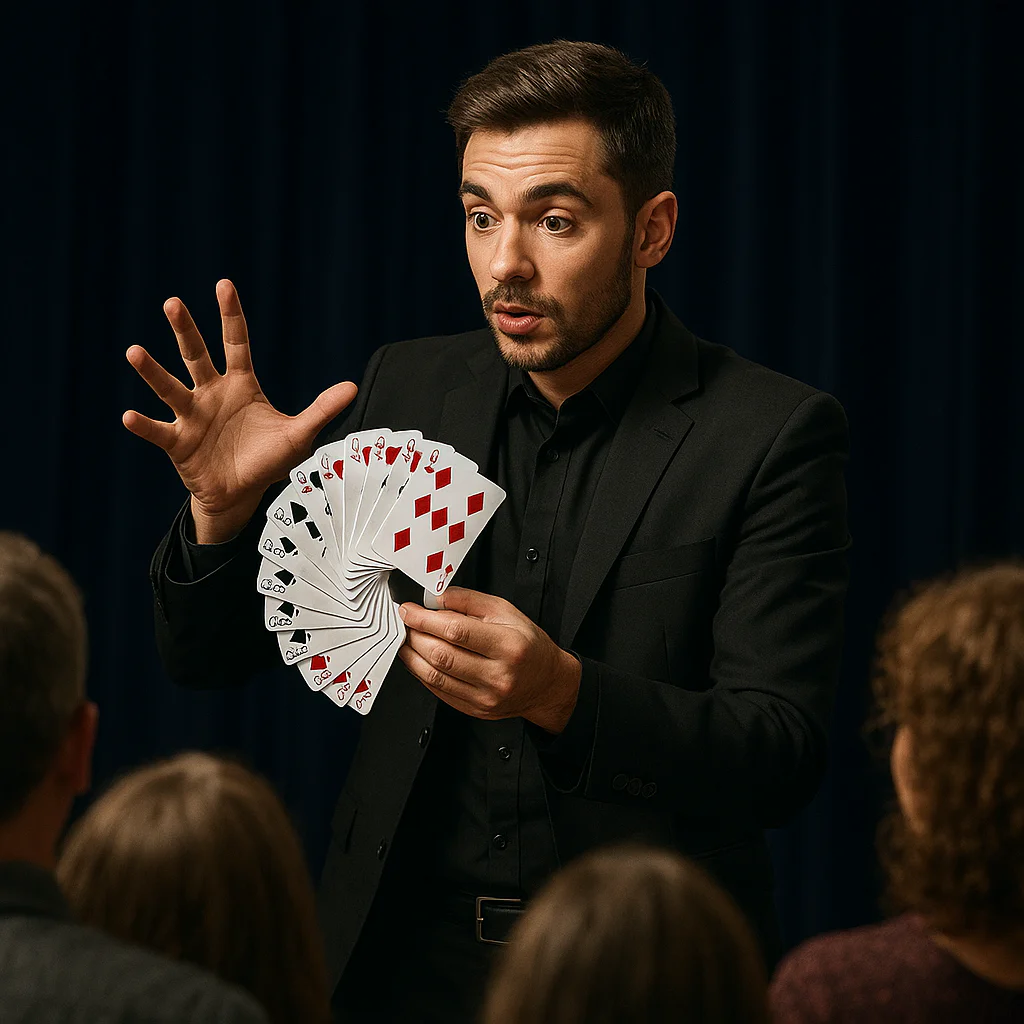

The secret to unforgettable magic isn’t hidden in your pocket; it’s locked inside your audience’s brain, waiting for you to exploit their cognitive blind spots. True Magic performance psychology transforms a simple sleight of hand into a mind-bending experience by mastering how humans process attention, memory, and expectation.
We once watched a magician vanish a coin in plain sight, not by moving it fast, but by making the audience want to look away. It turns out that 96% of people will hold contradictory beliefs about a trick if the emotional impact is strong enough. Your brain is a prediction machine, and magicians are the only artists who know how to hack its source code.
Key Takeaways
- Attention is a resource, not a spotlight: Master covert attention to guide the audience’s focus while your hands work in the shadows.
- Framing dictates reality: How you introduce a trick (as magic, psychic, or science) fundamentally changes how the audience explains the impossible.
- Emotion overrides logic: A strong emotional connection can make the audience ignore logical inconsistencies, creating a deeper sense of wonder.
- The “Edge” matters: Pushing the performance to the limit of the audience’s belief creates the most memorable moments.
- Cognitive biases are your tools: Leverage confirmation bias and change blindness to make the impossible feel inevitable.
Table of Contents
- ⚡️ Quick Tips and Facts
- 🎩 A Brief History of the Mind: How Magic Shaped Psychology
- 🧠 The Mechanics of Misdirection: Where Attention Goes, Reality Follows
- 👁️ Visual Perception and the Blind Spots of the Human Eye
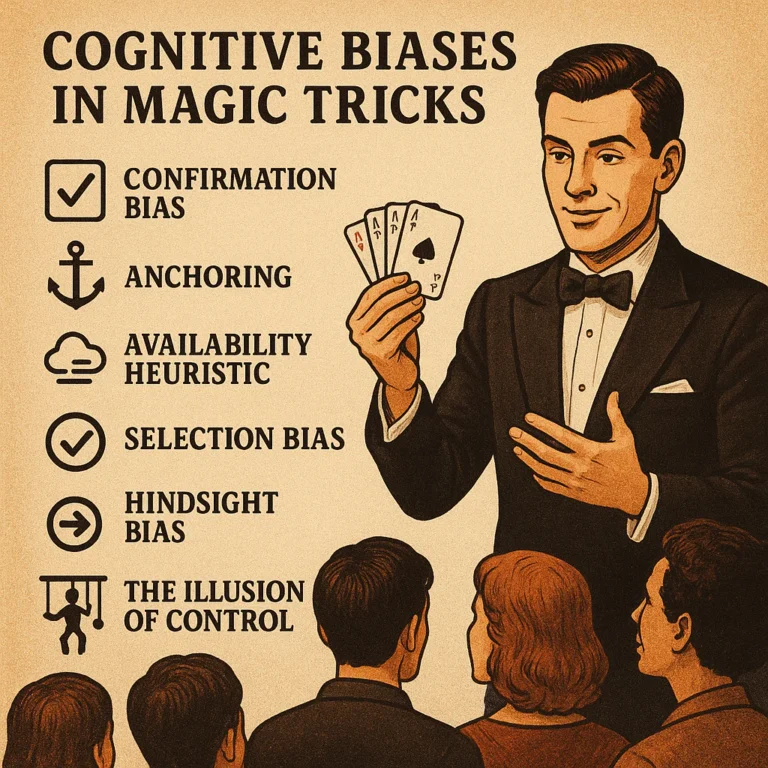
- 🧩 Cognitive Biases: The Mental Shortcuts Magicians Exploit Daily
- 🎭 The Psychology of Suspense: Building and Releasing Tension
- 🗣️ Verbal Sleight of Hand: Language Patterns That Rewire Belief
- 🤝 The Performer-Audience Connection: Empathy, Trust, and Rapport
- 🧪 7 Psychological Principles Every Magician Must Master
- 🚫 5 Common Psychological Pitfalls That Ruin a Performance
- 🧘 Mental Conditioning: Training Your Brain for High-Stakes Magic
- 📊 Case Studies: Deconstructing Famous Illusions Through a Psychological Lens
- 🛠️ Practical Exercises to Sharpen Your Psychological Toolkit
- 📚 Recommended Links
- 📖 Reference Links
- 🏁 Conclusion
⚡️ Quick Tips and Facts
Before we dive into the deep end of the human mind, let’s hit the pause button and grab a few golden nugets. If you’re thinking that magic is just about dexterous fingers and hidden compartments, think again. The real magic happens in the audience’s brain, not on the stage.
Here is the lowdown on the psychology of performance:
- Misdirection is a Myth (Sort Of): It’s not about looking left while you steal the watch; it’s about making the audience want to look left. We manipulate attentional focus, not just eye direction.
- The “Magic Circle” Effect: Studies show that how you frame a trick (as “magic” vs. “psychic”) changes how people explain it, but a truly emotional performance can override even the strongest framing.
- Blind Spots are Real: Your brain fills in gaps automatically. If we hide the method in a gap your brain ignores, the trick is invisible.
- Belief is Fluid: 96% of people in one study believed a trick was both magic and psychic simultaneously. Humans love to hold contradictory beliefs if the experience is strong enough.
- The 10-Millisecond Rule: In performance, as in web design, the brain needs a response within 10ms to feel “instant.” If you hesitate, the spell breaks.
For a deeper dive into the art itself, check out our guide on what makes a magic trick.
🎩 A Brief History of the Mind: How Magic Shaped Psychology

You might think psychology came first, and magicians just learned to use it. But history tells a different, more delicious story. For centuries, magicians were the unofficial neuroscientists of their time.
The Early Pioners
Long before fMRI machines, performers like Jean-Eugène Robert-Houdin (the father of modern magic) were experimenting with suggestion and expectation. He didn’t just pull rabbits out of hats; he pulled ideas out of the audience’s heads.
In the 19th century, magicians were often the ones testing the limits of human perception. They discovered that if you move an object too slowly, it’s invisible. If you move it too fast, it’s a blur. But move it at the exact right speed, and it vanishes from consciousness entirely.
The Shift to Science
It wasn’t until the late 20th century that the academic world started paying attention. Researchers like Gustav Kuhn and Stephen Macknik began collaborating with magicians to study cognitive illusions. They realized that magic tricks were the perfect controlled experiments for studying how the brain constructs reality.
“Magic is the only art form that relies on the failure of the observer’s perception.” — Stephen Macknik, Neuroscientist and Magician
This collaboration birthed a new field: Magic Performance Psychology. It’s where the art of the impossible meets the science of the brain.
🧠 The Mechanics of Misdirection: Where Attention Goes, Reality Follows
Let’s address the elephant in the room: Misdirection. Most people think it means “look at my shiny coin so you don’t see my other hand.” That’s amateur hour.
True misdirection is about managing attention.
The Two Types of Attention
- Overt Attention: Where your eyes are looking.
- Covert Attention: Where your brain is processing, even if your eyes are elsewhere.
Magicians are masters of covert attention. We can have you looking directly at the card we just palmed, and you still won’t see it, because your brain is busy processing the story we’re telling.
The “Social Misdirection” Technique
We often use social cues to steer attention. If I look at a spectator with a smile, their brain automatically prioritizes my face over the object in my hand. It’s a biological reflex.
Real-world example: In a classic card force, the magician might ask, “Pick a card, any card.” While you are thinking about the choice, the magician is already holding the card you will pick. Your brain is busy with the decision, leaving no bandwidth to notice the pre-selection.
Why It Works
Our brains have a limited processing capacity. We can’t focus on everything at once. By overloading one channel (e.g., a funny story, a loud noise, a complex gesture), we create a “blind spot” in the other.
👁️ Visual Perception and the Blind Spots of the Human Eye
Your eyes are not cameras. They are estimators. They take snapshots and your brain stitches them together, often filling in the blanks with what it expects to see.
The Blind Spot
Did you know you have a literal blind spot in each eye? It’s where the optic nerve exits the retina. Your brain just paints over it. Magicians exploit this by placing critical moves in areas where your visual acuity is lowest or where your brain assumes “nothing is happening.”
Change Blindness
This is the big one. If you don’t expect a change, you won’t see it.
- The Experiment: In a famous study, a person asking for directions was swapped with a different person while a door passed between them. 50% of people didn’t notice.
- The Magic Application: If we change the color of a card or the position of an object while you are blinking or looking away, your brain assumes it’s the same object. We don’t need to hide the change; we just need to make sure you don’t expect it.
The “Gaze Cueing” Effect
We naturally follow where others look. If I look at the top of the table, your eyes will dart there. If I look at the bottom, your eyes follow. We use this to guide your attention to a safe zone while the action happens in the danger zone.
🧩 Cognitive Biases: The Mental Shortcuts Magicians Exploit Daily
Your brain loves shortcuts. It’s called heuristics. They save energy, but they make us predictable. And if you’re predictable, you’re easy to trick.
Confirmation Bias
Once you believe a trick is “real” or “psychic,” your brain starts looking for evidence to support that belief and ignores evidence to the contrary.
- The Trap: If I tell you I’m a psychic, and I guess your card correctly, you think, “Wow, he’s amazing!” If I guess wrong, you think, “Oh, he’s just having an off day.” You never think, “He’s a fraud.”
The Clustering Illusion
Humans hate randomness. We see patterns where there are none.
- The Trick: If I flip a coin and get heads five times in a row, you think, “He’s on a streak!” or “It’s due for tails.” In reality, it’s just random. Magicians use this to make random outcomes look like controlled sequences.
The Illusion of Choice
You think you have free will? Think again.
- The Mechanism: We offer you a choice between two options, but both lead to the same result. Or we use verbal framing to make one option seem more appealing.
- Example: “Would you like the red card or the blue card?” (Both are the same card, just different backs). Or, “Pick any card, but don’t pick the Ace of Spades.” (You pick the Ace of Spades because your brain rebels against the restriction).
🎭 The Psychology of Suspense: Building and Releasing Tension
Magic isn’t just about the “aha!” moment; it’s about the journey there. Suspense is the engine that drives the emotional impact.
The Tension Curve
A good performance follows a specific arc:
- Setup: Establish the normal world.
- Inciting Incident: Introduce the impossible element.
- Rising Action: Build tension through anticipation.
- Climax: The reveal.
- Resolution: The emotional release.
If you reveal the trick too soon, the tension collapses. If you wait too long, the audience gets bored. The sweet spot is right at the edge of frustration.
The Power of the Pause
A well-timed pause can be more powerful than any sleight of hand. It forces the audience to lean in, to anticipate, to want the reveal. It’s the psychological threshold where the brain is most vulnerable to suggestion.
“The moment before the reveal is where the magic actually happens. The trick is just the punctuation mark.” — Magic Trick™ Senior Magician
🗣️ Verbal Sleight of Hand: Language Patterns That Rewire Belief
Words are just as powerful as hands. The way you phrase a trick can completely alter the audience’s perception of reality.
Presupositions
Instead of asking, “Did you pick a card?” say, “Now that you’ve picked your card…” You’ve presuposed the action, making it feel like a fact, not a question.
The “Double Bind”
Give the audience two choices, both of which lead to your desired outcome.
- Example: “Do you want to see the card now, or would you prefer to wait until the end?” (Either way, they see the card).
Framing the Narrative
How you frame the trick changes the explanation.
- Magic Frame: “I’m going to do a magic trick.” (Audience looks for tricks).
- Psychic Frame: “I’m going to try to read your mind.” (Audience looks for psychic ability).
- Scientific Frame: “I’m going to demonstrate a cognitive illusion.” (Audience looks for the method).
As noted in the Frontiers in Psychology study, the framing effect is powerful, but a truly emotional performance can override it. If the experience feels “real,” the audience will believe it, regardless of the label.
🤝 The Performer-Audience Connection: Empathy, Trust, and Rapport
You can have the best sleight of hand in the world, but if the audience doesn’t trust you, they’ll be looking for the trick, not enjoying the magic.
Building Rapport
- Eye Contact: Establish a connection. It makes the audience feel seen and valued.
- Miroring: Subtly mimic the audience’s body language. It creates a subconscious bond.
- Vulnerability: Admiting a small mistake or showing a bit of nervousness can make you more relatable and trustworthy.
The “Good Energy” Factor
Just like the climber Hazel in the “Magic Line” story, the energy of the room matters. If the audience feels your anxiety, they’ll feel it too. If you feel confident and present, they’ll relax and let you in.
“The best moments were scattered throughout the process, spent near my edge… unlike any other project I’d had, it was my ability to manage this process that I’m most proud of.” — Hazel, on projecting the Magic Line
In magic, the “process” is the connection. The “send” is the trick. But the real magic is in the shared experience.
🧪 7 Psychological Principles Every Magician Must Master
Let’s get specific. Here are the seven pillars of magic performance psychology that separate the amateurs from the pros.
- Selective Attention: The ability to guide the audience’s focus to a specific point while ignoring the rest.
- Change Blindness: Exploiting the brain’s inability to detect changes in a scene if the change is unexpected.
- Confirmation Bias: Framing the trick so the audience only sees evidence that supports your narrative.
- The Clustering Illusion: Making random events appear as a meaningful pattern.
- The Illusion of Choice: Giving the appearance of free will while controlling the outcome.
- Emotional Contagion: Using your own emotions to influence the audience’s emotional state.
- The Power of Suggestion: Planting ideas in the audience’s mind before they even realize it.
How to Apply Them
- For Coin Tricks: Use selective attention to hide the coin while your hands are empty.
- For Card Tricks: Use change blindness to switch cards while the audience is looking at the deck.
- For Mentalism: Use suggestion to guide the audience’s thoughts to a specific number or word.
🚫 5 Common Psychological Pitfalls That Ruin a Performance
Even the best magicians fall into these traps. Avoid them, and you’ll save your reputation.
- Over-explaining: If you explain the trick, you kill the mystery. The audience wants to be amazed, not educated.
- Ignoring the Frame: If you frame a trick as “magic” but act like a “psychic,” you create cognitive disonance.
- Lack of Presence: If you’re thinking about the next move, the audience will sense it. Stay in the moment.
- Underestimating the Audience: Don’t assume they’re stupid. They’re smart, but they’re distracted.
- Rushing the Reveal: If you reveal the trick too fast, the audience doesn’t have time to process the impossibility.
🧘 Mental Conditioning: Training Your Brain for High-Stakes Magic
Just like a climber trains for a route, a magician must train their mind for the performance.
Visualization
Visualize the trick from start to finish. Imagine the audience’s reactions, the sounds, the feelings. This primes your brain for success.
Stress Management
High-stakes performances can trigger adrenaline. Learn to manage it.
- Breathing Techniques: Deep, slow breaths to calm the nervous system.
- Positive Self-Talk: Replace “I hope I don’t mess up” with “I am confident and prepared.”
The “Edge” Concept
Find your limit, but don’t be afraid to push it. As Hazel said, “Before Magic Line my edge never felt like a real edge… it was more like a rolling hill.” In magic, your edge is the point where the trick feels impossible. Pushing it makes the performance unforgettable.
📊 Case Studies: Deconstructing Famous Illusions Through a Psychological Lens
Let’s break down some famous illusions to see the psychology in action.
The Vanishing Lady
- The Trick: A lady disappears from a box.
- The Psychology: Uses change blindness and selective attention. The audience is focused on the lady, not the mechanism. The box is designed to hide the movement.
The Mind-Reading Card
- The Trick: The magician guesses the card you picked.
- The Psychology: Uses the illusion of choice and confirmation bias. You think you have free will, but the magician has already controlled the outcome.
The Levitation
- The Trick: A person floats in the air.
- The Psychology: Uses visual perception and expectation. The audience expects gravity to hold the person down, so when they float, it’s shocking.
🛠️ Practical Exercises to Sharpen Your Psychological Toolkit
Ready to put this into practice? Here are some exercises to train your mind.
Exercise 1: The Attention Drill
- Goal: Train your ability to guide attention.
- Method: Have a friend watch your hands. Move an object from one hand to the other. Try to make them miss the move.
- Tip: Use gaze cueing to look away from the move.
Exercise 2: The Framing Experiment
- Goal: Test the power of framing.
- Method: Perform the same trick twice. Once as “magic,” once as “psychic.” Ask the audience for their explanations.
- Tip: Notice how the explanations change.
Exercise 3: The Emotional Connection
- Goal: Build rapport with the audience.
- Method: Perform a simple trick for a friend. Focus on making eye contact and smiling. Ask them how they felt.
- Tip: Notice if they felt more connected to you.
🎥 Featured Video: The Science of Deception
To truly grasp the depth of this topic, we highly recommend watching the perspective of the scientist who has dedicated their career to studying deception. In this video, they explore how magic tricks leverage our cognitive biases and limitations in attention to create the illusion of impossibility.
The speaker discusses the concept of “magic labs” where the science behind magic is studied, focusing on mind, attention, and illusory cognition. It’s a fascinating look at how magicians exploit our “blind spots” to make us believe in the supernatural.
Watch the full video here to see the psychological mechanisms in action.
Conclusion
So, is magic just a bunch of tricks, or is it a profound exploration of the human mind? The answer is both. Magic is a mirror that reflects our cognitive limitations, our biases, and our desire for wonder.
We’ve journeyed through the history of magic, dissected the mechanics of misdirection, and explored the cognitive biases that make it all possible. We’ve seen how framing can alter belief, how suspense builds tension, and how raport creates a connection that transcends the trick itself.
The key takeaway? Magic is not about what you do; it’s about what the audience experiences. It’s about guiding their attention, manipulating their expectations, and creating a moment of pure wonder.
As you continue your journey in magic, remember to focus on the process, not just the outcome. Train your mind, build your rapport, and always respect the power of the human brain.
And remember, the next time you see a magic trick, don’t just ask, “How did they do it?” Ask, “What did they make me feel?”
Recommended Links
Ready to take your magic to the next level? Check out these resources:
-
Books on Magic Psychology:
-
Magic and the Mind: A Guide to the Psychology of Illusion on Amazon
-
Magician Tools and Props:
Bicycle Cards: Shop Bicycle Cards on Amazon | Bicycle Official Website
Magic Tricks for Beginners: Shop Magic Tricks on Amazon | Etsy Magic Tricks -
Online Resources:
Reference Links
- Frontiers in Psychology: Magic Performance Psychology: Key Findings and Specifications
- Strong Mind Climbing: Magic Line: The Psychological Challenge of Projecting
- Performance Planet: Magic Numbers or Psychological Thresholds?
- The Magic Circle: The Magic Circle Official Website
- Bicycle Cards: Bicycle Official Website
FAQ
How does psychology enhance magic performance?
Psychology enhances magic performance by allowing magicians to manipulate the audience’s attention, perception, and expectations. By understanding how the brain processes information, magicians can create illusions that feel impossible, even when they are based on simple principles.
Read more about “🎩 15 Mind-Blowing Augmented Reality Magic Tricks (2026)”
What are the psychological principles behind magic tricks?
The main principles include selective attention, change blindness, confirmation bias, the clustering illusion, and the illusion of choice. These principles exploit the brain’s natural shortcuts and limitations to create the illusion of magic.
Read more about “🎩 15 Essential Magic Theory Books to Master Illusion (2026)”
How do magicians use misdirection psychology?
Magicians use misdirection to guide the audience’s attention away from the method and toward a safe zone. This can be done through gaze cueing, verbal framing, or emotional engagement. The goal is to make the audience want to look in the wrong direction.
Read more about “🎩 The Magician’s Mind: 7 Secrets to Master Critical Thinking (2026)”
Can psychology improve a magician’s stage presence?
Absolutely. Psychology helps magicians build raport, manage stress, and create a connection with the audience. By understanding the audience’s emotional state, magicians can tailor their performance to maximize impact.
Read more about “Audience Perception in Magic: 7 Secrets That Will Blow Your Mind 🎩 (2026)”
What role does cognitive bias play in magic illusions?
Cognitive bias plays a crucial role in magic illusions. Magicians use biases like confirmation bias and the clustering illusion to make the audience believe in the impossible. By framing the trick in a way that supports the illusion, magicians can make the audience see what they want to see.
Read more about “🎩 How Magic Evolved: From Ancient Sorcery to Digital Wonder (2026)”
How do magicians manipulate audience perception using psychology?
Magicians manipulate audience perception by exploiting visual blind spots, change blindness, and selective attention. They also use verbal framing and emotional engagement to guide the audience’s interpretation of the trick.
What are the best psychological techniques for beginner magicians?
For beginners, the best techniques are selective attention, gaze cueing, and verbal framing. These techniques are easy to learn and can be used to create powerful illusions. Start with simple tricks and gradually build your skills.
Why is it important to understand the audience’s expectations?
Understanding the audience’s expectations is crucial because it allows magicians to frame the trick in a way that maximizes the impact. If the audience expects a certain outcome, the magician can subvert those expectations to create a more powerful illusion.
How can magicians use emotional contagion in their performances?
Magicians can use emotional contagion by miroring the audience’s emotions and projecting their own emotions. This creates a connection that makes the audience more receptive to the illusion.
What is the “edge” concept in magic performance?
The “edge” concept in magic performance refers to the point where the trick feels impossible. Pushing this edge makes the performance more memorable and impactful. It’s about finding the balance between challenge and success.
How can magicians manage stress during a performance?
Magicians can manage stress by using breathing techniques, positive self-talk, and visualization. These techniques help calm the nervous system and improve focus.
What is the role of storytelling in magic performance?
Storytelling is essential in magic performance because it provides a narrative that guides the audience’s attention and expectations. A good story can make the trick more engaging and memorable.
How can magicians use the power of suggestion?
Magicians can use the power of suggestion by planting ideas in the audience’s mind before they even realize it. This can be done through verbal framing, gaze cueing, or emotional engagement.
What is the difference between overt and covert attention?
Overt attention is where your eyes are looking, while covert attention is where your brain is processing. Magicians use both to guide the audience’s focus and create illusions.
How can magicians use change blindness to their advantage?
Magicians use change blindness by making changes in a scene that the audience doesn’t expect. This can be done by hiding the change in a gap in the audience’s attention or by framing the change in a way that makes it seem normal.
What is the “illusion of choice” in magic?
The “illusion of choice” is a technique where the magician gives the audience the appearance of free will, but the outcome is already controlled. This can be done by offering two choices that lead to the same result or by framing the choice in a way that makes one option seem more appealing.
How can magicians use the clustering illusion?
Magicians use the clustering illusion by making random events appear as a meaningful pattern. This can be done by grouping the events in a way that makes them seem connected or by framing the events in a way that makes them seem intentional.
What is the role of the “magic circle” in magic performance?
The “magic circle” is a concept that refers to the boundary between the real world and the world of magic. Magicians use this concept to create a sense of mystery and wonder in their performances.
How can magicians use the power of the pause?
Magicians use the power of the pause to build suspense and tension. A well-timed pause can make the audience lean in and anticipate the reveal, making the trick more impactful.
What is the “framing effect” in magic?
The “framing effect” is a psychological phenomenon where the way a trick is presented affects the audience’s perception of it. Magicians use this effect to frame the trick in a way that maximizes the impact.
How can magicians use the power of storytelling?
Magicians use the power of storytelling to create a narrative that guides the audience’s attention and expectations. A good story can make the trick more engaging and memorable.
What is the role of the “magic lab” in magic research?
The “magic lab” is a research facility where scientists and magicians collaborate to study the science behind magic. These labs focus on mind, attention, and illusory cognition to understand how magic tricks work.
How can magicians use the power of suggestion?
Magicians use the power of suggestion by planting ideas in the audience’s mind before they even realize it. This can be done through verbal framing, gaze cueing, or emotional engagement.
What is the difference between overt and covert attention?
Overt attention is where your eyes are looking, while covert attention is where your brain is processing. Magicians use both to guide the audience’s focus and create illusions.
How can magicians use change blindness to their advantage?
Magicians use change blindness by making changes in a scene that the audience doesn’t expect. This can be done by hiding the change in a gap in the audience’s attention or by framing the change in a way that makes it seem normal.
What is the “illusion of choice” in magic?
The “illusion of choice” is a technique where the magician gives the audience the appearance of free will, but the outcome is already controlled. This can be done by offering two choices that lead to the same result or by framing the choice in a way that makes one option seem more appealing.
How can magicians use the clustering illusion?
Magicians use the clustering illusion by making random events appear as a meaningful pattern. This can be done by grouping the events in a way that makes them seem connected or by framing the events in a way that makes them seem intentional.
What is the role of the “magic circle” in magic performance?
The “magic circle” is a concept that refers to the boundary between the real world and the world of magic. Magicians use this concept to create a sense of mystery and wonder in their performances.
How can magicians use the power of the pause?
Magicians use the power of the pause to build suspense and tension. A well-timed pause can make the audience lean in and anticipate the reveal, making the trick more impactful.
What is the “framing effect” in magic?
The “framing effect” is a psychological phenomenon where the way a trick is presented affects the audience’s perception of it. Magicians use this effect to frame the trick in a way that maximizes the impact.
How can magicians use the power of storytelling?
Magicians use the power of storytelling to create a narrative that guides the audience’s attention and expectations. A good story can make the trick more engaging and memorable.
What is the role of the “magic lab” in magic research?
The “magic lab” is a research facility where scientists and magicians collaborate to study the science behind magic. These labs focus on mind, attention, and illusory cognition to understand how magic tricks work.
Read more about “15 Magic Mistakes Beginners Make (And How to Fix Them) 🎩”