
Support our educational content for free when you purchase through links on our site. Learn more
Advanced Magic Techniques: 10 Ways to Create Wonder 🎩


Advanced magic techniques work best when strong sleight of hand serves a clear, convincing effect. Master the timing, natural handling, and audience connection around each move, and even a simple card control or coin vanish can feel impossible.
At Magic Trick™, we’ve seen a move fool a mirror and still fall flat at the table. The difference often appears in one tiny moment: the performer’s fingers tense, their eyes dart to the deck, and—abracadabra—the audience senses something is up.
This guide explores advanced card and coin techniques, mentalism, stagecraft, practice methods, and performance ethics. You’ll also learn why the secret move may not be the part spectators remember.
Key Takeaways
- Technique serves the effect: Choose moves that make the magic clearer and more astonishing, not merely harder.
- Naturalness beats speed: Relaxed, motivated actions are less suspicious than rushed sleight of hand.
- Practice the full performance: Rehearse timing, gaze, speech, angles, and recovery—not just finger mechanics.
- Adapt to the setting: Close-up tables, stages, and cameras create different sightlines and demands.
- Respect your audience: Treat volunteers as partners, protect their dignity, and frame mentalism responsibly.
- Build wonder with structure: A strong routine gives spectators clear conditions, rising interest, and a memorable ending.
Table of Contents
- ⚡ Quick Tips and Facts
- 🎩 What Counts as an Advanced Magic Technique?
- Skill, Deception, and Audience Experience
- Advanced Techniques vs. Beginner Sleights
- 📜 A Brief History of Advanced Magic and Sleight of Hand
- From Close-Up Conjuring to Modern Stage Magic
- How Technology Is Changing Performance
- 🧠 The Core Principles Behind Powerful Magic
- Misdirection, Attention, and Timing
- Patter, Framing, and Audience Psychology
- The Rule of Conviction: Making the Impossible Feel Fair
- 🃏 Advanced Card Magic Techniques
- False Shuffles, False Cuts, and Deck Control
- Advanced Controls, Forces, and Palming
- Card Switching, Stacking, and Multiple-Phase Routines
- 🪙 Advanced Coin Magic and Small-Object Sleights
- Classic Palm, Finger Palm, and Concealment
- Vanishes, Productions, and Coin Transfers
- Routining Coin Magic for Maximum Impact
- 🧩 Mentalism, Prediction, and Psychological Illusions
- Equivoque, Dual Reality, and Audience Choices
- Memory Systems, Cold Reading, and Information Gathering
- Ethical Boundaries in Mentalism
- 🎭 Stagecraft, Escapes, and Larger-Scale Illusions
- Blocking, Sightlines, and Managing Angles
- Illusion Design, Props, and Practical Constraints
- Safety Practices for Escapes and Dangerous Effects
- 🎤 Building a Strong Magic Performance
- Constructing an Opening, Climax, and Finale
- Audience Management and Volunteer Handling
- Comedy, Storytelling, and Character
- 🏋️ How to Practice Advanced Magic Effectively
- Slow Practice, Repetition, and Muscle Memory
- Mirror Work, Video Review, and Angle Testing
- Turning Sleights into Natural Actions
- 🔍 Troubleshooting Common Advanced-Magic Problems
- Flashes, Tells, and Suspicious Timing
- What to Do When a Trick Goes Wrong
- Adapting Techniques to Different Audiences and Venues
- ⚖️ Magic Ethics, Secrets, and Professionalism
- Respecting Creators and Protecting Methods
- Performing Responsibly for Children and Vulnerable Audiences
- 📚 Books, Props, and Resources for Advanced Magicians
- Choosing Reputable Magic Books and Instruction
- Essential Practice Props and Performance Tools
- ✅ Conclusion
- 🔗 Recommended Links
- ❓ FAQ
- What advanced magic techniques should I learn first?
- How long does it take to master a difficult sleight?
- Can I learn advanced magic without a teacher?
- How do professional magicians practice misdirection?
- Is it ethical to reveal magic methods online?
- 📖 Reference Links
⚡ Quick Tips and Facts
Advanced magic isn’t a contest to see who can make their fingers move fastest. It’s the craft of making difficult actions feel ordinary, motivated, and memorable. At Magic Trick™, we’ve found that audiences remember the impossible moment, not the knuckle gymnastics that made it happen.
For related fundamentals, start with our guide to magic tricks and explore card tricks and close-up magic.
| Quick fact | What it means for you |
|---|---|
| Technique serves the effect | Choose a sleight because it improves the audience’s experience, not because it looks impressive to magicians. |
| Relaxed beats rushed | Secret actions should fit naturally into the rhythm of the performance. Tension is a spotlight, and not the kind you want. |
| Practice the whole moment | Rehearse what you say, where you look, and what your hands do before and after the secret move. |
| Angles are part of the method | A move that works face-on may fail for a standing spectator or a camera positioned to the side. |
| A spectator’s shuffle changes the conditions | It can strengthen fairness, but only if your method genuinely allows for it. |
| Progress takes time | Eagle Magic Store cautions that advanced effects “take practice to master.” That’s sound advice, though practical experience shows that method, choreography, and presentation must be trained together. |
A practical starting rule: master one reliable technique, build one strong routine around it, and test that routine for real people before adding three more secret moves.
🎩 What Counts as an Advanced Magic Technique?
An advanced technique is not simply a move with a difficult name. It is a tool that lets a magician create a clear, convincing effect under real performance conditions: close-up, onstage, surrounded, or even under the unblinking eye of a phone camera.
A classic card control may be technically demanding. But it becomes advanced magic in practice when it must happen without disturbing the spectator’s sense that the deck is being handled fairly.
Skill, Deception, and Audience Experience
A strong technique brings together several kinds of skill:
- Technical control: Keeping a card, coin, or object where you need it.
- Natural handling: Making the secret action resemble an ordinary action.
- Attention management: Giving the audience a meaningful reason to look, listen, or think elsewhere.
- Structure: Placing the method within a routine that makes the effect understandable.
- Performance judgment: Knowing when to pause, when to move, and when to leave the moment alone.
This distinction matters. A move can be technically perfect and still look suspicious if it happens at the wrong time. Conversely, a modest sleight can feel astonishing when the audience understands exactly what is at stake.
Aaron Fisher’s card-magic teaching makes this point sharply: “Surrender the Idea of Invisible Sleight of Hand. It’s an Illusion.” The useful goal is not to make hands literally invisible; it is to make their actions seem justified and unremarkable within the presentation.
Advanced Techniques vs. Beginner Sleights
The difference is usually reliability under pressure, not a mysterious badge of difficulty.
| Area | Beginner-level focus | Advanced-level focus |
|---|---|---|
| Card handling | Basic grips, dealing, simple controls | Passes, culls, palms, changes, and timing |
| Coin handling | Basic vanishes and transfers | Natural concealment, clean displays, and audience management |
| Presentation | Remembering the sequence | Giving each action a reason and shaping audience attention |
| Practice | Repeating the move | Testing it from angles, in context, and under performance conditions |
| Routine design | Making a method work | Making the effect clear, fair-seming, and emotionally satisfying |
There is no shame in beginning with simple methods. Advanced performers often return to basic techniques because clarity and conviction beat complication.
📜 A Brief History of Advanced Magic and Sleight of Hand
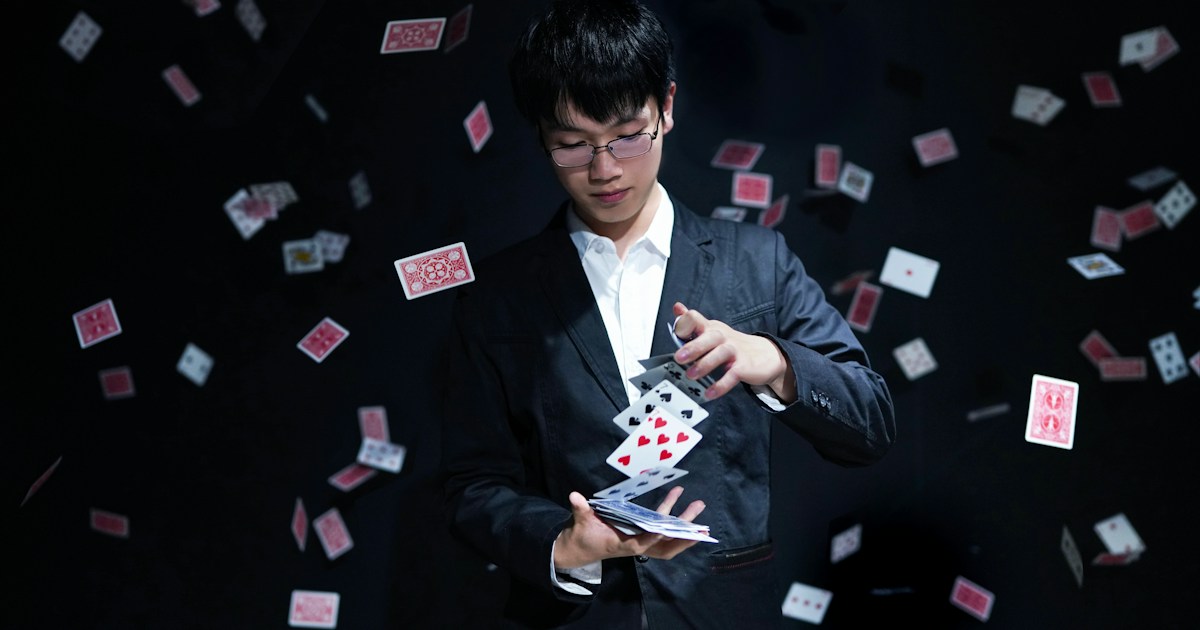
Magic’s history is a long conversation between secret methods and public wonder. Conjuring has appeared in many forms, from close-up demonstrations to large theatrical illusions. For context, browse our Magic History collection and the Victoria and Albert Museum’s performing arts collection.
From Close-Up Conjuring to Modern Stage Magic
Card and coin sleights developed alongside performance traditions that prize control, timing, and audience connection. In card magic, S. W. Erdnase’s The Expert at the Card Table remains a widely discussed classic; its material includes the Two-Handed Shift, a foundational approach to the move commonly called the Classic Pass.
The techniques themselves have changed as performers have adapted them to new venues. A move designed for a seated audience may need adjustment for a standing crowd. A method that plays beautifully at a table might be exposed when someone watches from behind.
That’s why historical knowledge helps, but copying an old handling without adapting its conditions does not guarantee a modern miracle.
How Technology Is Changing Performance
Phones, livestreams, and video platforms have created new ways to perform—and new ways to get caught. A move that looks natural at arm’s length may look suspicious in a close crop or a replay.
Use video as a training tool, not as proof that a routine is ready:
- Record the routine from the audience’s expected viewpoint.
- Review it at normal speed before scrutinizing individual frames.
- Check whether your gaze, shoulders, and hands give away a moment.
- Test a second angle, especially if the performance may be filmed.
- Rehearse for people in person; a camera cannot replace live audience feedback.
For digital literacy and media context, the Library of Congress offers extensive public collections on performance and culture. The practical lesson is simpler: design for the audience that will actually see you.
🧠 The Core Principles Behind Powerful Magic
A method may be secret, but the audience’s experience is visible. The following principles help turn a concealed action into a coherent effect.
Misdirection, Attention, and Timing
Misdirection is not merely “make them look over there.” It is the art of shaping what spectators consider important. A question, a gesture, a pause, or a change of focus can all direct attention—but only when they make sense in the performance.
A useful sequence for practicing a secret action:
- Establish a reason for the action. Why are you touching the deck, turning the card, or moving the coin?
- Give attention a natural destination. Look at the spectator, invite a response, or make a meaningful gesture.
- Perform the action without rushing. Speed can look like fear.
- Let the moment breathe. Don’t immediately announce the outcome or over-explain what happened.
- Check whether spectators can describe the effect. If they can’t, the presentation may be obscuring the magic.
The Smithsonian’s National Museum of American History holds objects and materials that reflect performance history, while the Society of American Magicians provides community and educational context for magicians.
Patter, Framing, and Audience Psychology
Patter should do more than fill silence. It can establish stakes, explain what the audience is watching for, and give an action a plausible reason.
Compare these two approaches:
- “I’m going to shuffle the cards now.”
- “Keep your eyes on the red card; I want you to notice whether it stays near the top.”
The second creates a specific focus. It also raises a question the effect can answer.
At Magic Trick™, we avoid treating spectators as puzzles to defeat. They are collaborators in the experience. Clear instructions, respectful humor, and genuine listening build stronger reactions than trying to overpower someone’s attention.
The Rule of Conviction: Making the Impossible Feel Fair
Fairness is not the same as showing every action from every angle. It means the audience understands the conditions and believes the outcome could not have happened in the way they suspect.
To strengthen conviction:
- Keep instructions short and specific.
- Avoid repeating a “fairness” claim until it sounds defensive.
- Let spectators handle objects when the method and routine allow it.
- Make the effect easy to summarize.
- Don’t use a complicated method when a simpler one creates the same impact.
This principle also applies to fictional magic systems. In “Building Sufficiently Advanced Magic in Your World,” the author argues that magic works best when it has consistent rules and meaningful limits. That is worldbuilding advice, not a manual for performing sleights, but the shared lesson is powerful: constraints create drama. A trick’s restrictions can make its outcome more compelling, just as rules can make fictional magic feel credible.
🃏 Advanced Card Magic Techniques
Advanced card magic combines control, concealment, and structure. Explore more effects in our card tricks collection.
The first video in the article offers a useful example of a simple control sequence: a spectator shuffles, selects a card, and remembers it; the magician uses a thumb break and swing cut to control the selection to the top. Its stated aim is direct: “The goal of this trick is to get their selection to the top of the deck.” Watch the demonstration at #featured-video. The routine is a reminder that a clean, motivated control can matter more than a flashy flourish.
False Shuffles, False Cuts, and Deck Control
A false shuffle or cut appears to mix the deck while preserving a known order or position. These techniques can be effective, but they are also easy to overuse. If the audience has no reason to care about the shuffle, a long display of fancy mixing may make them more suspicious, not less.
| Technique | General purpose | Practice concern |
|---|---|---|
| Swing cut | A natural-looking cut; can help control a card in a routine | Keep the break and handling consistent |
| False cut | Suggests cutting while retaining a useful order | Avoid repeating it conspicuously |
| False shuffle | Preserves some or all of a deck’s arrangement | Match the shuffle to the context and audience |
| Classic Pass | Secretly shifts a portion of the deck | Prioritize relaxed timing and angle management |
| Spread Cull | Secretly moves selected cards to a useful position | Requires a natural spread and confident handling |
Step-by-step practice for a control:
- Learn the grip and mechanics slowly, without performing.
- Rehearse the action while speaking a neutral sentence.
- Record from the front and from an oblique angle.
- Practice with a spectator’s attention on the card, not just on your hands.
- Add the control to a complete effect only when it remains relaxed.
A practical caution from Aaron Fisher’s teaching: using a loud riffle as cover for a Classic Pass can draw attention directly to the deck. If a cover action is louder or more dramatic than the secret move, it may work against you.
Advanced Controls, Forces, and Palming
A control places a selected card in a known position. A force guides a spectator toward a predetermined card while preserving the experience of choice. A palm conceals a card in the hand.
These methods have different strengths:
- Controls are useful when you want to locate or reveal a genuine selection.
- Forces can create a tightly structured prediction or reveal, but must be handled fairly and confidently.
- Palms allow a card to be secretly removed, retained, or introduced, but demand careful hand posture and a clear plan for when the card becomes safe to manage.
Fisher recommends learning a Bottom Palm before a Top Palm. That advice is useful for some learners because the deck can help conceal the card’s position during part of the handling. But no single progression is right for every hand, routine, or teacher. Focus on the method that fits your intended effect, then practice the moment before and after the palm as carefully as the palm itself.
Card Switching, Stacking, and Multiple-Phase Routines
A card switch secretly replaces one card with another. A stack arranges cards in a known order for a particular routine. Both can create powerful effects, but both can become overcomplicated.
Aaron Fisher describes the Top Change as less a test of finger strength than a test of nerves: it depends heavily on timing, structure, and relaxed execution. He also recommends becoming comfortable with the Double Turnover first. That is one expert’s training path, not a universal law, but it points to a sound principle: build the supporting skills before adding pressure.
For a multi-phase routine:
- Make the first effect easy to follow.
- Ensure the next phase changes the conditions or raises the stakes.
- Avoid repeating the same reveal with a different card.
- End on a clear climax rather than an extra flourish.
🪙 Advanced Coin Magic and Small-Object Sleights
Coin magic has a special advantage: the object is familiar, compact, and easy for spectators to inspect. It also has a special challenge: hands are naturally scrutinized. Find more ideas in our coin tricks collection.
Classic Palm, Finger Palm, and Concealment
A palm is not merely hiding a coin. The hand must continue to look like a hand that is doing something ordinary.
| Concealment | General use | Common issue |
|---|---|---|
| Classic Palm | Holding a coin against the palm | Tension or an unnaturally flat hand |
| Finger Palm | Retaining a coin near the base of the fingers | Fingers may curl or move suspiciously |
| Edge Grip | Concealing a coin along the fingers’ edges | Often angle-sensitive and demanding |
| Fingertip Retention | Keeping a coin hidden during a transfer | Requires consistent, natural finger position |
Practice progression:
- Hold the coin briefly, then release it; do not begin by trying to conceal it for a long time.
- Relax the hand and check whether the thumb and fingers move normally.
- Perform an ordinary action, such as pointing or picking up another object.
- Review the hand from several audience angles.
- Build a routine in which the concealed coin has a reason to be there.
Vanishes, Productions, and Coin Transfers
A convincing vanish depends on more than a secret transfer. The audience must understand where the coin was, where it appears to go, and why the action looks natural.
When practicing a vanish:
- Establish the coin’s position clearly.
- Make the apparent transfer look like a transfer you would make in everyday life.
- Keep the receiving hand’s posture believable.
- Avoid immediately opening both hands in a hurried “proof.”
- Reveal the coin at a moment that gives the audience time to register the disappearance.
A production works best when it answers a question the routine has created. “Where did the coin go?” is stronger than a random appearance with no context. For more close-up handling ideas, browse close-up magic.
Routining Coin Magic for Maximum Impact
Coins reward repetition with variation. A simple structure might be:
- One clear vanish.
- A return that changes the apparent location.
- A final production that feels impossible but easy to remember.
Keep the routine short enough that each phase strengthens the next. If every coin disappears in exactly the same way, spectators may assume they have seen the same method repeated. Vary the conditions, not merely the hand flourish.
🧩 Mentalism, Prediction, and Psychological Illusions
Mentalism creates the impression of reading thoughts, predicting choices, or revealing hidden information. It can be compelling without claiming genuine supernatural ability. In performance, honest framing and consent matter.
Equivoque, Dual Reality, and Audience Choices
Equivoque, sometimes called a magician’s choice, uses carefully structured language so different responses lead toward a desired outcome. It is a performance technique, not proof that a spectator’s free choice was predetermined.
To make a choice-based routine feel fair:
- Use clear, ordinary language.
- Avoid making the spectator feel blamed for a result.
- Be consistent about what the choices mean.
- Do not claim a psychological experiment has proven something it has not.
- Consider explaining theatrical nature of the demonstration when the setting calls for it.
Dual reality creates different impressions for the participant and the wider audience. It can be effective in a scripted stage routine, but it can also leave a volunteer feeling confused or embarrassed. The volunteer’s experience is part of the show, not a disposable prop.
Memory Systems, Cold Reading, and Information Gathering
Memory demonstrations may use rehearsed systems, associations, or structured practice. Cold-reading performances can rely on observation, broad statements, and feedback from the participant. These methods should not be presented as clinical diagnosis, verified psychic ability, or reliable ways to identify private facts.
The Committee for Skeptical Inquiry provides critical context for claims involving paranormal abilities. For performers, the practical boundary is straightforward: make the entertainment clear, avoid exploiting grief or vulnerability, and never encourage major life decisions based on a show.
Ethical Boundaries in Mentalism
✅ Good practice: Invite participation, respect a refusal, avoid sensitive topics without consent, and keep the effect in an entertainment frame.
❌ Avoid: Pressuring spectators to reveal secrets, claiming medical or financial insight, or implying that a trick can verify personal accusations.
A powerful performance does not need to make someone feel exposed. The strongest reaction is often amazement mixed with laughter, not anxiety.
🎭 Stagecraft, Escapes, and Larger-Scale Illusions
Stage magic and escapes depend on sightlines, sound, timing, and equipment as much as sleight of hand. Explore related ideas in our illusions collection.
Blocking, Sightlines, and Managing Angles
Before performing, check the venue from the audience’s perspective:
- Can people see behind or beside the performance area?
- Are there reflective surfaces?
- Will a raised stage expose a tabletop method?
- Do side seats have a clear view of your hands?
- Can a camera reveal something the live audience cannot see?
Practice at the height and distance of the real venue whenever possible. A method that looks clean from your own eye line can fail when viewed from a seated spectator’s position.
Illusion Design, Props, and Practical Constraints
Large illusions require more than a clever secret. They involve construction, transport, setup time, lighting, staffing, venue restrictions, and safe operation.
| Design factor | Question to ask |
|---|---|
| Visibility | Can spectators understand the effect from the back row? |
| Angles | Which seats need protection, and how will the blocking handle them? |
| Reliability | Can the apparatus work consistently through repeated performances? |
| Transport | Can the equipment fit the route, vehicle, and stage access? |
| Setup | How much rehearsal and technical support are needed? |
| Safety | What are the failure modes, and who is responsible for checking them? |
Don’t treat a stage illusion as a drawing-board puzzle alone. It is a live system involving performers, crew, audience, and venue.
Safety Practices for Escapes and Dangerous Effects
Escapes, fire effects, restraints, and other dangerous stunts carry real risk. We recommend learning only through qualified, experienced professionals and following relevant venue rules and safety standards. Do not improvise restraints, locks, fire methods, or underwater stunts from a video.
The U.S. Consumer Product Safety Commission provides public safety information about consumer products; it is not a substitute for specialist training. For a real escape or hazardous effect, work with a qualified consultant, use appropriate safety personnel, and maintain a rehearsed emergency plan.
🎤 Building a Strong Magic Performance
A trick is one effect. A performance is a sequence of attention, expectation, surprise, and release. Strong routines make the audience feel that each action belongs.
Constructing an Opening, Climax, and Finale
A practical routine often has three jobs:
- Opening: Establish your character and earn attention quickly.
- Build: Give the audience a reason to care about what happens next.
- Finale: Deliver a clear, memorable outcome and stop before the moment gets diluted.
An ending can be quiet. It does not need a louder flourish or another surprise after the strongest effect. Let the audience react.
Audience Management and Volunteer Handling
When inviting someone to help:
- Give one instruction at a time.
- Use objects that are safe and appropriate for them to handle.
- Thank them genuinely.
- Avoid teasing them for a choice or mistake.
- Make it easy to decline or return to their seat.
A volunteer is not a target. They are your partner for the next few minutes.
Comedy, Storytelling, and Character
A story can turn a move into a meaningful action. It can also slow the routine if every secret requires an elaborate explanation.
Use story when it helps spectators understand:
- Why the objects matter.
- What is at stake.
- What changes between phases.
- Why the ending is surprising.
The story does not need to be grand. A small, specific premise—such as trying to find the one card that “refuses to stay lost”—can be more engaging than a speech about ancient mysteries.
🏋️ How to Practice Advanced Magic Effectively
Professional-looking technique comes from deliberate practice, not endless repetition at full speed. The American Psychological Association publishes research and resources on learning and performance; for magicians, the everyday application is to set a specific practice goal and seek useful feedback.
Slow Practice, Repetition, and Muscle Memory
Use this practice cycle:
- Isolate: Learn the mechanics slowly.
- Stabilize: Repeat at a comfortable speed without tension.
- Contextualize: Add speech, gaze, and ordinary handling.
- Test: Practice in front of people who do not know the method.
- Refine: Adjust the weakest moment and repeat.
Avoid mindless repetition. If a move repeatedly flashes, repeating it badly only makes the mistake familiar.
Mirror Work, Video Review, and Angle Testing
A mirror can reveal obvious problems, but it may encourage you to perform for your own viewpoint. Video offers replay, but a single camera angle can create false confidence.
Try this review grid:
| Check | What to look for |
|---|---|
| Front view | Visible flashes, stiff hands, or suspicious pauses |
| Side view | Exposed angles and unnatural wrist positions |
| Normal speed | Whether the routine feels conversational |
| Silent playback | Whether body language reveals the secret moment |
| Audience test | Whether spectators remember the intended effect |
Turning Sleights into Natural Actions
Naturalness comes from matching a secret action to its context. If you need a break, for example, your hands should appear to be doing something that makes sense for the routine.
Practice the whole beat, not just the hidden move:
- What happens immediately before it?
- What are you saying?
- Where are you looking?
- What happens immediately after?
- Would you make the same movement if no secret were involved?
If the answer to the last question is no, the action may need a better motivation.
🔍 Troubleshooting Common Advanced-Magic Problems
Even experienced magicians have flashes, awkward pauses, and routines that land flat. The solution is usually diagnosis, not adding another flourish.
Flashes, Tells, and Suspicious Timing
Common tells include:
- A sudden change in hand tension.
- Looking at the secret hand at the crucial moment.
- A movement that is faster than the rest of the routine.
- An unnecessary gesture that appears only during the method.
- A suspicious pause before the reveal.
Fix: Record the routine, identify the exact moment that feels different, then redesign the surrounding action. Sometimes the best solution is to change the method or remove the move altogether.
What to Do When a Trick Goes Wrong
Stay calm. Do not blame the spectator or launch into a frantic explanation.
- If the routine can continue, move forward naturally.
- If the method is compromised, acknowledge a small mishap without exposing the secret.
- Keep the spectator’s dignity intact.
- Afterward, note what failed and rehearse a recovery plan.
A professional recovery is often more impressive than a flawless trick delivered with panic.
Adapting Techniques to Different Audiences and Venues
A family audience, a restaurant table, and a theater crowd do not have the same needs. Consider distance, lighting, noise, attention span, and whether spectators can gather around you.
| Setting | Helpful adjustment |
|---|---|
| Close-up table | Keep the effect visible and the instructions concise |
| Standing group | Manage side angles and avoid relying on a low tabletop |
| Stage | Make the visual effect large and the plot easy to follow |
| Filmed performance | Check framing, reflections, and camera-side exposure |
| Children’s audience | Use simple premises, safe props, and clear volunteer instructions |
⚖️ Magic Ethics, Secrets, and Professionalism
Magic relies on a shared agreement: the performer creates wonder, and the audience enjoys the mystery. That agreement does not justify harming, humiliating, or exploiting spectators.
Respecting Creators and Protecting Methods
Learn from reputable creators, credit material appropriately, and follow the terms attached to instructional content. Do not pass off another magician’s work as your own or publish methods that were shared for private study.
The International Brotherhood of Magicians and the Society of American Magicians offer professional communities and resources for performers.
Performing Responsibly for Children and Vulnerable Audiences
Use age-appropriate material, avoid dangerous props, and treat every volunteer respectfully. For vulnerable audiences, avoid suggesting that a performance can diagnose a condition, reveal a hidden trauma, or predict a serious personal outcome.
A good rule: If the effect depends on making someone feel unsafe or ashamed, choose a different effect.
📚 Books, Props, and Resources for Advanced Magicians
Good learning resources explain not just what a move does, but how to practice it and where it fits in a routine. A magic shop’s “advanced” label is a useful shopping category, not a guarantee that a product suits your current skill level.
Choosing Reputable Magic Books and Instruction
Useful references include:
- S. W. Erdnase, The Expert at the Card Table — a historic card-magic text that includes foundational sleights such as the Two-Handed Shift.
- Aaron Fisher, The Paper Engine — a card-magic book associated with the Gravity Half Pass.
- David Williamson, Williamson’s Wonders — a collection of routines and methods, including material Fisher points to for a Top Change approach.
- Aaron Fisher’s Pathways Training System — a video-training program focused on card sleights and practice methods.
These resources differ in format, teaching style, and suitability. Older books may be historically important but can assume familiarity with technical language. Video instruction can clarify motion, but it cannot provide hands-on correction.
Essential Practice Props and Performance Tools
Start with ordinary, reliable materials. A standard deck of playing cards and a few coins are enough to practice many fundamentals. Add specialized props only when they solve a clear performance problem.
Examples of established brands and resources include:
- Bicycle Playing Cards for familiar playing-card decks.
- Theory11 for playing cards and magic-learning products.
- Penguin Magic for instructional downloads and magic supplies.
- Vanishing Inc. Magic for books, courses, and performance materials.
Before buying a specialized prop, ask: Can you explain what effect it enables, how it fits your routine, and what practice or angle restrictions it brings? If not, save the shopping cart and practice the basics first.


