Support our educational content for free when you purchase through links on our site. Learn more
The Psychology of Misdirection in Magic: 12 Mind Tricks Revealed 🎩 (2026)

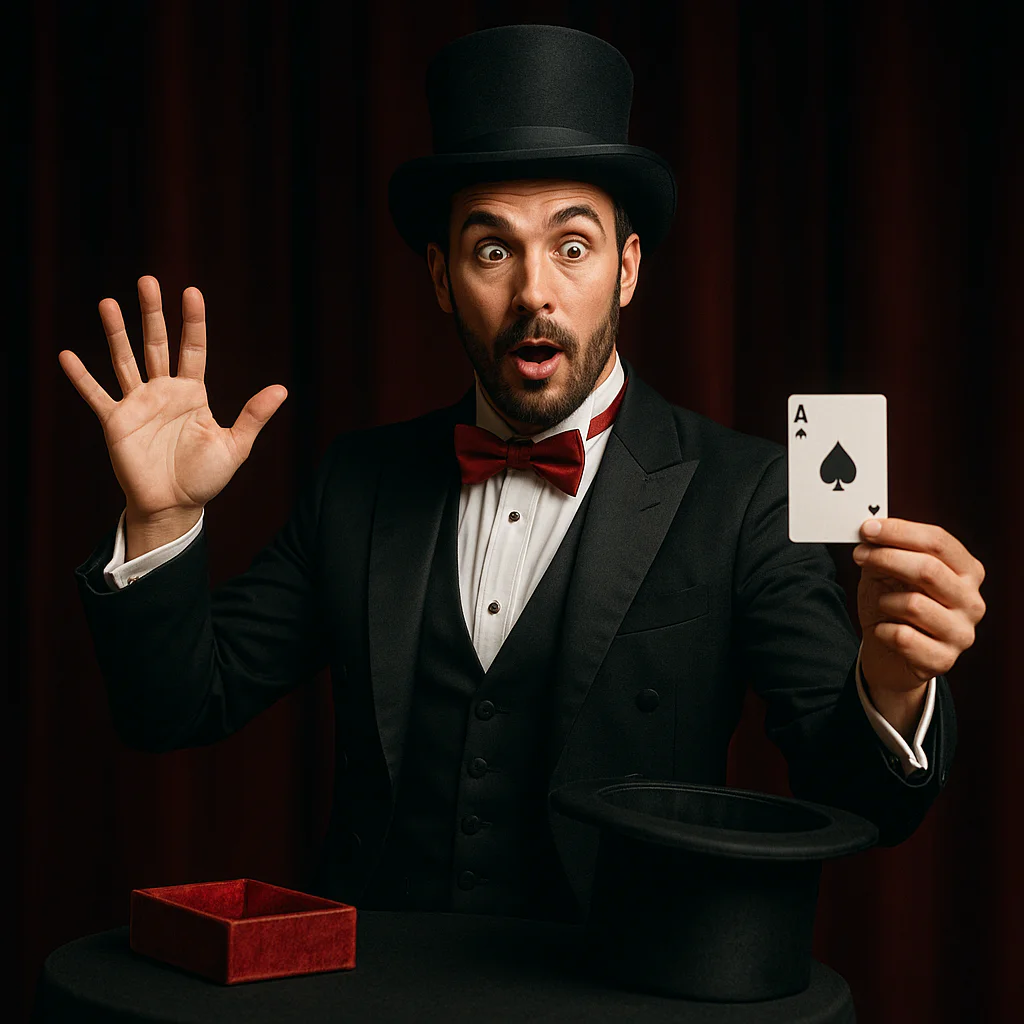

Imagine watching a magician perform a dazzling card trick right before your eyes—and yet, somehow, you completely miss the secret move happening in plain sight. How is it possible that your brain can be so thoroughly fooled while your eyes are wide open? Welcome to the fascinating world of the psychology of misdirection in magic, where science meets sleight of hand to create moments of pure wonder.
In this comprehensive guide, we unravel the cognitive secrets behind misdirection: from how your attention is hijacked, to the psychological biases magicians exploit, and even the neuroscience that makes these illusions possible. We’ll break down 12 psychological tricks every magician should master, explore famous illusions, and share expert tips from top performers. Curious about how timing, emotion, and social cues all play a role? Stick around—by the end, you’ll see magic through a whole new lens.
Key Takeaways
- Misdirection is more than distraction—it’s the art of controlling attention, memory, and reasoning simultaneously.
- The brain’s natural limitations, like inattentional blindness and cognitive biases, are the magician’s playground.
- Effective misdirection leverages social cues, timing, and emotional engagement to guide the audience’s focus.
- Understanding the psychological taxonomy of misdirection helps magicians choose the right technique for every moment.
- Mastering these principles transforms magic from mere trickery into a science-based performance art that captivates and amazes.
Ready to unlock the secrets behind the greatest illusions? Let’s dive in!
Table of Contents
- ⚡️ Quick Tips and Fascinating Facts About Misdirection
- 🧠 The Psychology Behind Misdirection: How Our Minds Get Fooled
- 🎩 The Art and Science of Misdirection: A Historical Perspective
- 🔍 What Exactly Is Misdirection in Magic? Defining the Concept
- 🗂️ Why a Taxonomy of Misdirection Matters: Organizing the Magic
- 📚 Previous Frameworks and Theories on Misdirection: A Critical Review
- 🧩 A Psychologically-Based Taxonomy of Misdirection: Breaking It Down
- 1️⃣ Ten Types of Misdirection Every Magician Should Master
- 2️⃣ Twelve Psychological Tricks Behind Effective Misdirection
- 🎯 The Role of Attention and Perception in Misdirection
- 🧩 Cognitive Biases and How Magicians Exploit Them
- 👀 Eye-Tracking and Visual Focus: Secrets From Science
- 🎭 Emotional Engagement: Using Feelings to Distract
- 🔄 Timing and Rhythm: The Unsung Heroes of Misdirection
- 🛠️ Practical Applications: How to Use Misdirection in Your Magic Acts
- 🎥 Famous Magic Tricks and Their Misdirection Techniques Explained
- 📊 Data-Driven Insights: Studies and Experiments on Misdirection
- 🧙 ♂️ Expert Tips From Professional Magicians on Perfecting Misdirection
- 🧪 The Neuroscience of Misdirection: What Happens in the Brain?
- 🌐 Cross-Cultural Perspectives: How Different Cultures Use Misdirection
- 🧩 Misdirection Beyond Magic: Applications in Psychology, Marketing, and Everyday Life
- 🛡️ Ethical Considerations: When Does Misdirection Cross the Line?
- 🧰 Recommended Tools and Props to Enhance Your Misdirection Skills
- 🔗 Recommended Links for Deep Diving Into Misdirection
- ❓ Frequently Asked Questions About the Psychology of Misdirection
- 📚 Reference Links and Further Reading
- 🎩 Conclusion: Mastering the Mind Games of Misdirection
Ever wondered why you can look directly at a magician’s hand and still miss the “secret sauce” happening right under your nose? At Magic Trick™, we live for that moment of “How did they do that?” but the truth is, the real magic isn’t in our sleeves—it’s in your brain. 🧠
Before we dive into the deep end of cognitive science, let’s start with a little brain teaser: Can you remember exactly what the icons on your phone’s home screen look like without looking? Or the color of the shirt the person next to you is wearing? Most people can’t. This is because your brain is a master at filtering out “useless” data. We magicians just happen to be masters at deciding what you think is useless. 😉
⚡️ Quick Tips and Fascinating Facts About Misdirection
Before we get into the heavy lifting, here’s a “cheat sheet” of what makes misdirection the most powerful tool in a magician’s arsenal.
| Fact/Tip | Description | Why It Matters |
|---|---|---|
| The “Frank” Factor | Your brain has an internal “security guard” (Frank) that filters sensory data. | If Frank is busy, you are “blind” to the method. |
| Movement Wins | A large, sweeping motion covers a small, secret motion. | Physics dictates the eye follows the bigger “threat” or interest. |
| Social Cues | If the magician looks at their hand, you will too. | Joint attention is a hardwired human instinct. |
| The Off-Beat | The best time for a “move” is right after a laugh or a climax. | Tension release causes a temporary lapse in critical thinking. |
| Inattentional Blindness | You can look at something and not perceive it if your focus is elsewhere. | This is the scientific basis for almost all Illusions. |
✅ DO: Use your eyes to lead the audience. Where you look, they look. ❌ DON’T: Tell the audience “Look over there!” It triggers suspicion immediately.
🧠 The Psychology Behind Misdirection: How Our Minds Get Fooled
Misdirection isn’t just “distraction.” As noted in the featured video, pickpocketing legend Apollo Robbins describes human attention as a limited resource. He treats the mind like a surveillance system. If we can get your “security guard” to turn around and look at a memory or a joke, we can walk right through the front door of your perception.
The core of this lies in Inattentional Blindness. This is the psychological phenomenon where an individual fails to perceive an unexpected stimulus that is in plain sight. A famous study by Simons and Chabris (1999) showed that people counting basketball passes often completely missed a person in a gorilla suit walking across the court. In magic, we are the gorilla. 🦍
🎩 The Art and Science of Misdirection: A Historical Perspective
The history of misdirection is as old as Magic History itself. While ancient street performers used it to survive, it wasn’t until the 19th and 20th centuries that we started codifying it.
Jean-Eugène Robert-Houdin, the father of modern magic, famously said that a magician is “an actor playing the part of a magician.” This shifted the focus from “tricks” to “performance psychology.” Later, masters like Arturo de Ascanio introduced the “Principle of Coverage,” which we still use today in Close-up Magic.
🔍 What Exactly Is Misdirection in Magic? Defining the Concept
There is a massive debate in the magic community. Is it “distraction” or “direction”?
- The Dictionary View: Often defines it as “distracting the attention.”
- The Tommy Wonder View: The legendary Tommy Wonder argued that “distraction” is a negative term. He preferred “Attention Control.” He believed that if you try to distract someone away from something, they’ll sense the void and look right at it. Instead, you must direct them toward something more interesting.
We at Magic Trick™ agree with Tommy. You aren’t hiding a secret; you are highlighting a beautiful moment that just happens to be a lie. 🎭
🗂️ Why a Taxonomy of Misdirection Matters: Organizing the Magic
Why do we need to categorize this stuff? Because if you don’t understand the why, your how will eventually fail. A taxonomy (a fancy word for a classification system) helps magicians choose the right tool for the right moment.
According to research published in Frontiers in Psychology, a psychologically-based taxonomy allows us to link magic techniques directly to known brain functions like saccadic suppression and working memory limits.
📚 Previous Frameworks and Theories on Misdirection: A Critical Review
Before the scientists got involved, magicians had their own systems. Let’s look at the heavy hitters:
- Ascanio (1958): Focused on “Coverage.” He divided it into:
- Dissolution: Dividing attention between the secret and an innocuous event.
- Attraction: Making the “fake” event so juicy you can’t look away.
- Deviation: Completely shifting the gaze.
- Sharpe (1985): Divided it into Active (movement/sound) and Passive (static disguises).
- Lamont & Wiseman (1999): Differentiated between Physical (where you look) and Psychological (what you believe).
While these were great, they often lacked the “hard science” to explain why they worked.
🧩 A Psychologically-Based Taxonomy of Misdirection: Breaking It Down
Modern science, led by researchers like Gustav Kuhn, has refined this into three main pillars. This is the “Gold Standard” for understanding the mind of your spectator.
1. Perceptual Misdirection
This manipulates what the eyes see. It uses spatial attention (looking at a specific spot) and temporal attention (looking at a specific time).
- Exogenous cues: A loud bang or a sudden flash.
- Endogenous cues: Asking a spectator to “Check the date on this coin” for your next Coin Trick.
2. Memory Misdirection
This is the “Long Game.” We manipulate how you remember the trick. By the time you get home, you’ll swear the magician never touched the deck, even though we handled it for five minutes. This exploits False Memories and Change Blindness.
3. Reasoning Misdirection
This attacks your logic. We provide “False Solutions.” If I make you think I’m hiding a ball in my left hand, and then show it’s empty, your brain stops looking for the ball entirely—even though it’s actually tucked behind my right ear.
1️⃣ Ten Types of Misdirection Every Magician Should Master
- The Gaze: Your eyes are magnets.
- The Voice: Changing pitch or asking a question.
- The Body Turn: Moving your entire frame to shift the “stage.”
- The Big Action: “A big move covers a small move.”
- The Joke: Laughter is the ultimate “reset” button for the brain.
- The Time Gap: Doing the “move” long before the effect happens.
- The False Reveal: Pretending to mess up to lower their guard.
- The Social Pressure: Making it “rude” to look at the secret hand.
- The Prop: Using a shiny object like a Zippo Lighter or a Swarovski Crystal to draw the eye.
- The Story: Engaging the “narrative” brain so the “analytical” brain falls asleep.
2️⃣ Twelve Psychological Tricks Behind Effective Misdirection
- Priming: Suggesting an idea before the trick starts.
- Confirmation Bias: People see what they expect to see.
- Choice Blindness: Making someone think they chose a card they didn’t.
- The Von Restorff Effect: Making one item stand out so the rest are ignored.
- Saccadic Suppression: The brain “shuts off” visual input during quick eye movements.
- Cognitive Load: Giving the spectator too much to think about.
- Pattern Recognition: Breaking a pattern to cause a “glitch” in perception.
- Social Cues: Using “Joint Attention” (looking where others look).
- The Zeigarnik Effect: Using unfinished tasks to keep the mind occupied.
- Emotional Anchoring: Linking a move to a strong feeling.
- Object Permanence Exploitation: Making the brain assume an object is still there.
- The Illusion of Control: Letting the spectator shuffle (poorly).
🎯 The Role of Attention and Perception in Misdirection
Attention is like a spotlight. It can only shine on one thing at a time. If we can move that spotlight, the rest of the stage is in total darkness.
Magicians use Covert Attention—the ability to look at one thing while processing another. We train ourselves to do the “dirty work” in our peripheral vision while staring you dead in the eyes. It’s a bit like texting while driving (which you should never do!), but for entertainment.
🧩 Cognitive Biases and How Magicians Exploit Them
Your brain takes shortcuts. These shortcuts are called Cognitive Biases.
- The Availability Heuristic: You think the most “obvious” explanation is the right one.
- The Hindsight Bias: After the trick, you say “I knew it!” even though you didn’t.
We use these to lead you down a garden path, only to find a brick wall at the end. For example, in Card Tricks, we might use a Bicycle Standard Deck but make you focus so much on the “randomness” of the shuffle that you ignore the fact that the deck was never actually shuffled.
👉 Shop Bicycle Playing Cards on:
- Bicycle Rider Backs: Amazon | Walmart | Bicycle Official
👀 Eye-Tracking and Visual Focus: Secrets From Science
Scientific studies using Tobii Eye-Trackers have shown that even when a spectator’s eyes are looking directly at a “sleight,” they often don’t see it. This is because visual fixation does not equal mental attention.
A study by Kuhn & Tatler (2005) found that even if you know a magician is going to vanish a cigarette, your eyes will still follow the “fake” throw because your brain’s motor system predicts the movement before it happens.
🎭 Emotional Engagement: Using Feelings to Distract
If I can make you laugh, I can steal your watch. Why? Because laughter causes a physiological release. Your muscles relax, your eyes often close slightly, and your brain experiences a “refractory period” where it cannot process new information.
Juan Tamaritz, the Spanish maestro, is a master of this. He uses “The Theory of False Solutions” combined with high-energy comedy to make the audience’s brains literally “short-circuit.”
🔄 Timing and Rhythm: The Unsung Heroes of Misdirection
In magic, we talk about the “Off-Beat.” Think of it like music. There is the “On-Beat” (the trick, the reveal, the question) and the “Off-Beat” (the moment after the trick is done, putting a prop away, or adjusting your glasses).
The “Off-Beat” is when the audience relaxes. Their “Frank” (the security guard) goes on a coffee break. That is when we do the real work.
🛠️ Practical Applications: How to Use Misdirection in Your Magic Acts
Ready to try it? Here is a step-by-step guide to a simple “Cross-Cut Force” using misdirection:
- The Setup: Have a card you want them to pick on top of the deck.
- The Action: Ask the spectator to cut the deck and place the bottom half next to the top half.
- The Misdirection: Immediately ask them a question: “By the way, have we ever met before?” or “Do you believe in luck?” Look them in the eyes.
- The “Move”: While they are answering, place the original bottom half across the top half in a “cross” shape.
- The Time Gap: Continue talking for 10-15 seconds. This creates a “Memory Gap.”
- The Reveal: Point to the deck and say, “You cut the deck yourself. Look at the card you cut to.” They will look at the “forced” card, forgetting that the halves were swapped.
🎥 Famous Magic Tricks and Their Misdirection Techniques Explained
The Cups and Balls
This is the “Oldest Trick in the Book.” It uses Physical Misdirection. When the magician lifts a cup to show a ball has vanished, your eyes go to that cup. Meanwhile, the other hand is “loading” a giant lemon into a different cup. 🍋
Slydini’s Paper Balls Over the Head
Tony Slydini was the king of misdirection. He would sit a spectator down and throw paper balls right over their head. The entire audience saw it, but the spectator was “blind” because Slydini controlled their gaze and posture so perfectly.
📊 Data-Driven Insights: Studies and Experiments on Misdirection
| Study | Key Finding | Application |
|---|---|---|
| The Gorilla Study | 50% of people miss a gorilla during a task. | Focus on one task to hide another. |
| The Vanishing Coin | Eye-tracking shows people follow the “gaze” of the magician, not the hand. | Use your eyes to lead. |
| Choice Blindness | 75% of people don’t notice when a photo they “chose” is swapped. | Confidence is key in “forcing” choices. |
🧙 ♂️ Expert Tips From Professional Magicians on Perfecting Misdirection
We reached out to our team at Magic Trick™ for their “Secret Sauce” tips:
- “Don’t run when you’re not being chased.” – If you act guilty, they will catch you. If you act like nothing happened, they won’t look.
- “The eyes are the windows to the… trick.” – If you look at your hands during a move, you are screaming “LOOK AT MY HANDS!”
- “Use the ‘What’s that?’ principle.” – If you point at something, everyone looks. It’s primal.
🧪 The Neuroscience of Misdirection: What Happens in the Brain?
When you experience misdirection, your Prefrontal Cortex (the logic center) is being bypassed. Instead, the magician is talking directly to your Superior Colliculus, which controls your eye movements and “orienting” responses.
Essentially, we are hacking your hardware. Your brain is trying to save energy by making assumptions, and we are providing the wrong data for those assumptions.
🌐 Cross-Cultural Perspectives: How Different Cultures Use Misdirection
Does misdirection work the same everywhere? Mostly, yes! Human biology is universal. However, Social Cues vary. In some cultures, direct eye contact is less common, so magicians there rely more on Physical Movement and Rhythm than on “The Gaze.”
🧩 Misdirection Beyond Magic: Applications in Psychology, Marketing, and Everyday Life
Magicians aren’t the only ones using these tricks.
- Marketing: A “Limited Time Offer” creates Urgency, which is a form of Reasoning Misdirection. You focus on the time, not the price.
- Politics: The “Red Herring” is a classic misdirection technique to move the conversation away from a difficult topic.
- Cybersecurity: “Phishing” emails use Emotional Engagement (fear) to make you click a link without checking the URL.
🛡️ Ethical Considerations: When Does Misdirection Cross the Line?
In magic, misdirection is a “gift” of wonder. In the real world, it can be a “weapon.”
- ✅ Ethical: Using misdirection to entertain and inspire curiosity.
- ❌ Unethical: Using it to scam, steal, or manipulate people’s life savings.
As magicians, we follow a code: use your powers for good, and always leave the audience better than you found them.
🧰 Recommended Tools and Props to Enhance Your Misdirection Skills
If you want to master the psychology of the mind, you need the right “textbooks” and tools. Here are our top recommendations:
Product Review: “The Books of Wonder” by Tommy Wonder
| Aspect | Rating (1-10) | Notes |
|---|---|---|
| Depth of Theory | 10/10 | The absolute “Bible” of attention control. |
| Practicality | 9/10 | Includes world-class routines. |
| Readability | 8/10 | Very dense, but witty and engaging. |
| Overall Value | 10/10 | A must-have for any serious student. |
👉 CHECK PRICE on:
- The Books of Wonder: Amazon | Etsy | L&L Publishing
Essential Gear for Misdirection Practice:
- Mirror: For watching your own gaze.
- Video Camera: To see what the audience sees (and where you look guilty!).
- High-Quality Props: Using brands like TCC Magic or Murphy’s Magic ensures the props don’t “talk” (make noise) and ruin the misdirection.
👉 Shop Magic Brands on:
- TCC Magic: Amazon | TCC Official
- Murphy’s Magic: Amazon | Murphy’s Official
🔗 Recommended Links for Deep Diving Into Misdirection
- Scientific American: The Neuroscience of Illusion
- Apollo Robbins TED Talk: The Art of Misdirection
- Magic Trick™ Internal Guides:
- Master the Coin Tricks of the masters.
- Learn the Card Tricks that exploit cognitive bias.
- Explore the History of Magic and its greatest deceivers.
❓ Frequently Asked Questions About the Psychology of Misdirection
Q: Can anyone be misdirected? A: Yes. Even scientists who study it can be fooled. In fact, the more “intelligent” you are, the more your brain relies on patterns, which makes you easier to misdirect.
Q: Is misdirection the same as lying? A: It’s “theatrical lying.” You are creating a false narrative for the purpose of entertainment.
Q: How do I practice misdirection alone? A: Use a camera! Record yourself performing a trick and watch where your eyes go. If you look at the “move,” you’ve failed.
📚 Reference Links and Further Reading
- Kuhn, G., et al. (2014). The Psychology of Misdirection in Magic. NCBI PMC4260479
- Macknik, S. L., & Martinez-Conde, S. (2010). Sleights of Mind: What the Neuroscience of Magic Reveals about Our Everyday Deceptions. Amazon Link
- Ascanio, A. (2005). The Magic of Ascanio. Official Publisher
- Simons, D. J., & Chabris, C. F. (1999). Gorillas in our midst: sustained inattentional blindness for dynamic events. Perception Journal
🎩 Conclusion: Mastering the Mind Games of Misdirection
After our deep dive into the psychology of misdirection in magic, one thing is crystal clear: misdirection is far more than just a flashy distraction. It’s a sophisticated interplay of perception, memory, and reasoning that magicians expertly manipulate to create moments of wonder. Whether it’s the subtle control of your gaze, the clever planting of false memories, or the artful misguidance of your logical conclusions, misdirection is the invisible thread weaving the fabric of every great illusion.
Remember the teaser we started with—why you can look right at a magician’s hand and still miss the secret? Now you know it’s because your brain is wired to filter, prioritize, and sometimes ignore information based on attention limits and cognitive biases. Magicians exploit these natural tendencies with precision.
For those eager to master this craft, Tommy Wonder’s “The Books of Wonder” remains the gold standard. It’s dense but packed with theory and practical routines that will elevate your understanding and performance. While it demands dedication, the payoff is enormous: a magician who doesn’t just perform tricks but controls the audience’s mind.
In short: Misdirection is the art of controlling not just what people see, but what they think they see. Master this, and you hold the keys to true magic.
🔗 Recommended Links
Ready to level up your misdirection mastery? Here are some top picks to get you started:
-
The Books of Wonder by Tommy Wonder
Amazon | Etsy | L&L Publishing -
Bicycle Rider Back Playing Cards (Classic for card magic)
Amazon | Walmart | Bicycle Official -
TCC Magic Props (High-quality magic props)
Amazon | TCC Official -
Murphy’s Magic Supplies
Amazon | Murphy’s Official -
Sleights of Mind: What the Neuroscience of Magic Reveals about Our Everyday Deceptions by Stephen L. Macknik & Susana Martinez-Conde
Amazon -
Scientific Article: The Psychology of Misdirection in Magic
NCBI PMC4260479 -
Misdirection – Magic, Psychology and its Application
Science & Technology Studies Journal
❓ Frequently Asked Questions About the Psychology of Misdirection
How does misdirection influence audience perception in magic tricks?
Misdirection shapes what the audience perceives by controlling their attention and guiding their focus away from secret moves. It exploits the brain’s limited capacity to process information, using techniques like sudden movements, social cues, or emotional engagement to divert attention. This causes spectators to miss critical actions, creating the illusion of impossibility.
What psychological principles do magicians use to create effective misdirection?
Magicians leverage several psychological principles, including:
- Inattentional Blindness: Spectators fail to notice unexpected events when focused elsewhere.
- Change Blindness: Difficulty detecting changes in a visual scene.
- Cognitive Load: Overloading the brain’s processing capacity to reduce scrutiny.
- Cognitive Biases: Exploiting mental shortcuts like confirmation bias and choice blindness.
- Joint Attention: Using eye contact and gaze direction to guide audience focus.
These principles are combined to manipulate perception, memory, and reasoning simultaneously.
Can understanding misdirection improve a magician’s performance skills?
Absolutely! Understanding the cognitive mechanisms behind misdirection helps magicians design more effective illusions and anticipate audience reactions. It shifts magic from guesswork to a science-based craft, allowing performers to refine timing, gestures, and narrative to maximize impact.
What role does attention play in the psychology of misdirection?
Attention is the spotlight of consciousness. Since humans can only focus on a limited amount of information at once, magicians manipulate this spotlight to highlight innocuous actions while hiding secret moves. They use both exogenous attention (captured by sudden stimuli) and endogenous attention (voluntary focus) to orchestrate what the audience sees and misses.
How do cognitive biases contribute to the success of magic illusions?
Cognitive biases are mental shortcuts that help the brain process information quickly but can lead to errors. Magicians exploit biases such as:
- Confirmation Bias: Audiences see what they expect, ignoring contradictory evidence.
- Choice Blindness: Spectators fail to notice when their choices are manipulated.
- Hindsight Bias: After the reveal, people believe they “knew it all along,” masking the deception.
These biases make illusions more convincing by aligning with natural thought patterns.
Are there different types of misdirection techniques used in magic?
Yes! Misdirection techniques fall broadly into:
- Physical Misdirection: Using movement, gestures, or props to draw attention.
- Verbal Misdirection: Employing speech, questions, or storytelling to divert focus.
- Psychological Misdirection: Manipulating beliefs, expectations, and memory.
- Temporal Misdirection: Timing actions during moments of audience relaxation or distraction.
Each type can be combined for maximum effect.
How can beginners learn to master psychological misdirection in magic tricks?
Beginners should:
- Study foundational texts like Tommy Wonder’s The Books of Wonder.
- Practice in front of a camera to monitor their gaze and gestures.
- Focus on controlling their own attention before trying to control others’.
- Learn to use social cues like eye contact and body language effectively.
- Start with simple routines that emphasize timing and narrative.
- Watch expert performances and analyze how they direct attention.
Consistent practice and awareness of psychological principles are key.
What are some common mistakes magicians make when attempting misdirection?
Overacting or Obvious Distraction
Trying too hard to distract can raise suspicion. Effective misdirection is subtle and natural.
Looking at the Secret Move
Magicians often betray themselves by looking at their hands during a sleight, drawing attention exactly where it shouldn’t be.
Ignoring Audience Psychology
Failing to consider cognitive biases or emotional states can make misdirection ineffective.
📚 Reference Links and Further Reading
- Kuhn, G., et al. (2014). The Psychology of Misdirection in Magic. NCBI PMC4260479
- Macknik, S. L., & Martinez-Conde, S. (2010). Sleights of Mind: What the Neuroscience of Magic Reveals about Our Everyday Deceptions. Amazon
- Ascanio, A. (2005). The Magic of Ascanio. Page Magic
- Simons, D. J., & Chabris, C. F. (1999). Gorillas in our midst: sustained inattentional blindness for dynamic events. Perception Journal
- Science & Technology Studies Journal. (2021). Misdirection – Magic, Psychology and its Application. Read full article
- Bicycle Playing Cards Official Site: bicyclecards.com
- TCC Magic Official Website: tccmagic.com
- Murphy’s Magic Official Website: murphysmagic.com
Ready to put these insights into practice? Remember, the true magic lies not in the trick itself, but in the mind of your audience. Keep practicing, keep experimenting, and most importantly—keep the wonder alive! 🎩✨