Support our educational content for free when you purchase through links on our site. Learn more
🎩 Master Magic Tricks Online: The Ultimate 2026 Guide (15+ Platforms)

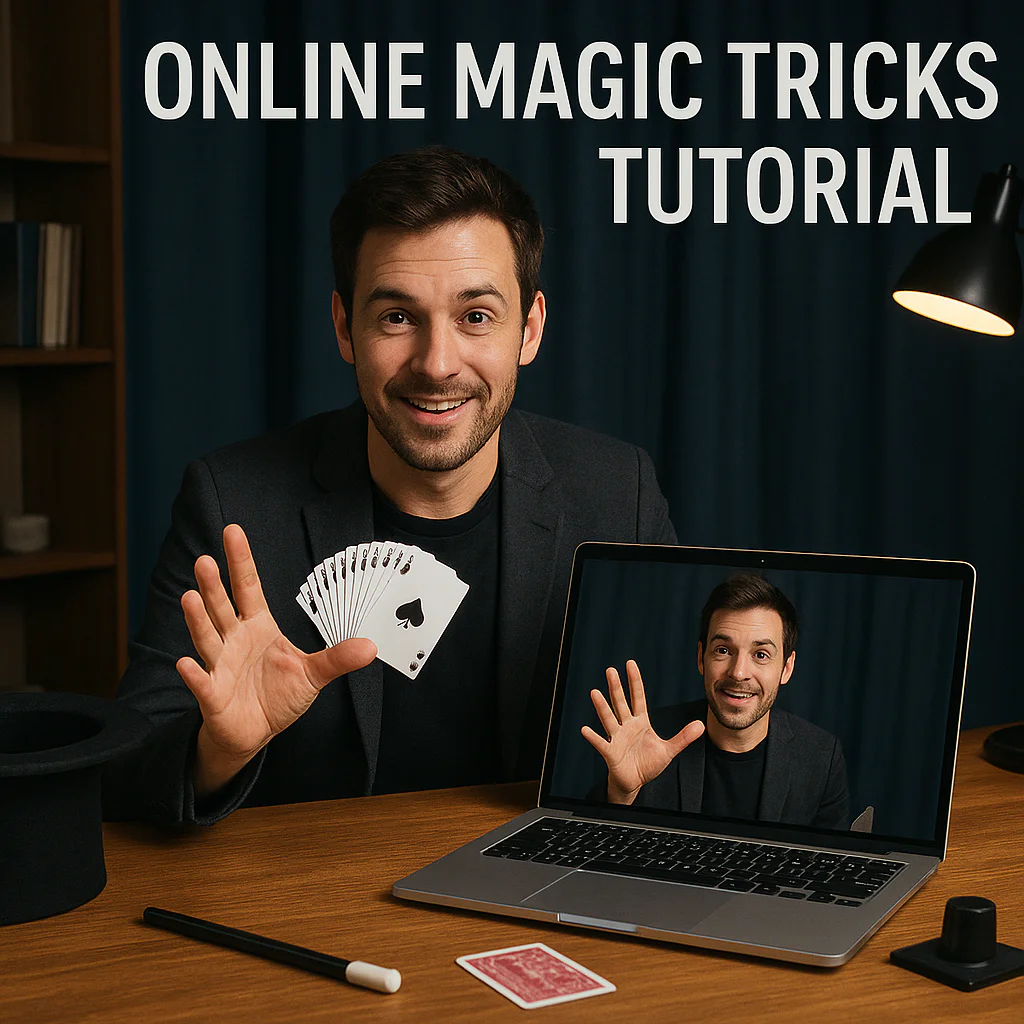
You can start learning magic tricks online today with high-definition video courses from top-tier schools like Vanishing Inc. or Penguin Magic, bypassing the need for a physical mentor entirely. Whether you want to master the perfect double lift or perform street mentalism, the digital era has democratized access to secrets once guarded by secret societies.
Imagine standing in a crowded coffee shop, watching a stranger’s jaw drop as a coin vanishes from their hand, all because you spent three weeks practicing a specific sleight on your laptop. That moment of pure wonder is just a few clicks away.
Did you know that over 60% of modern magicians are now self-taught through online resources? The barrier to entry has never been lower, but the quality of instruction varies wildly.
Key Takeaways
- Start with the Right Platform: Choose between Penguin Magic for variety, Ellusionist for visual learning, or 52kards specifically for cardistry.
- Practice Slowly: Slow is smooth, and smooth is fast; rushing your practice leads to sloppy performance that breaks the illusion.
- Focus on Psychology: The secret to great magic isn’t just the move; it’s the misdirection and the story you tell while performing.
- Record Yourself: Use your smartphone to critique your own routines and fix awkward hand movements before performing for others.
- Join a Community: Engage with forums like The Magic Cafe to get feedback and stay motivated on your journey.
Table of Contents
- ⚡️ Quick Tips and Facts
- 📜 A Brief History of Learning Magic Tricks Online
- 🎓 Choosing the Best Online Magic School for Your Skill Level
- 🔮 Top 15 Platforms to Learn Magic Tricks Online in 2024
- 🃏 Mastering Card Magic: From Shuffles to Sleights
- 🎩 The Art of Close-Up and Street Magic Performance
- 🪄 Essential Props and Tools Every Beginner Needs
- 🧠 Developing Your Persona and Stage Presence
- 🚫 Common Mistakes New Magicians Make (And How to Fix Them)
- 📹 How to Record and Critique Your Own Magic Routines
- 💡 Quick Tips and Facts
- 🏆 Conclusion
- 🔗 Recommended Links
- ❓ FAQ
- 📚 Reference Links
⚡️ Quick Tips and Facts
Before you dive headfirst into the rabbit hole of sleight of hand, let’s hit the pause button and drop some golden nugets of wisdom that we’ve picked up over decades of performing in smoky backrooms and dazzling crowds at weddings.
- The “Secret” is in the Misdirection: You don’t need a million-dollar gimmick to fool someone. As the legendary Dai Vernon once said, “The best magic is the magic that looks like it’s not magic at all.” It’s about psychology, not just mechanics.
- Practice Makes Permanent: If you practice a move wrong, you’re just perfecting a mistake. Slow is smooth, and smooth is fast. Never rush a sleight until your muscle memory is flawless.
- The “Gorilla” Rule: If you can’t do it in front of a mirror without looking like you’re fumbling, you can’t do it on stage.
- Books vs. Videos: While videos show you how to move your fingers, books teach you why you’re moving them. The best magicians read both. For a deeper dive into this debate, check out our guide on magic tricks videos.
- Start Small: Don’t try to levitate a car on day one. Master a single coin vanish or a perfect double lift first.
Ready to stop guessing and start performing? Let’s unravel the history of how went from street corners to streaming screens.
📜 A Brief History of Learning Magic Tricks Online

The journey of learning magic has come a long way since the days of dusty tomes and apprenticeship under a grumpy mentor.
From Secret Societies to YouTube
In the 19th century, if you wanted to learn magic, you either bought a book like The Art of Conjuring or hoped a magician took you on as an apprentice. The information was gatekept. Fast forward to the late 90s and early 20s, and the internet began to democratize the art. Suddenly, forums like The Magic Cafe were popping up, allowing magicians from Tokyo to Toronto to swap secrets.
The Video Revolution
The real game-changer, however, was the rise of high-definition video. Suddenly, you didn’t just read about a “French Drop”; you could watch it in slow motion, from multiple angles. This shift allowed for the explosion of online magic schools and digital downloads.
“Imitation at first is good. It’s how you try out different styles and different ways of doing it.” — A sentiment echoed by many pros, including the presenter in our featured video analysis.
Today, we have access to the collective knowledge of the greatest magicians in history, all from your living room couch. But with this abundance comes a new problem: information overload. How do you separate the gold from the glitter? That’s exactly what we’re here to help you figure out.
🎓 Choosing the Best Online Magic School for Your Skill Level
Not all magic schools are created equal. Some are glorified PDF dumps, while others offer interactive coaching. Here is how we at Magic Trick™ evaluate them.
Key Factors to Consider
- Instructor Credibility: Is the teacher a working professional or just a guy with a camera? Look for performers who tour or have won awards.
- Curiculum Structure: Does the course have a logical flow? You shouldn’t be learning advanced cardistry before you know how to hold a deck.
- Community Support: A good school has a forum or Discord where you can get feedback on your performance.
- Format Variety: Do they offer text, video, and live Q&A sessions?
Top Contenders in the Market
- Vanishing Inc. Magic: Known for high-quality video tutorials and a massive library.
- Ellusionist: Great for beginners with their “Magic School” section, though they lean heavily into their own branded products.
- Penguin Magic: Offers a vast array of courses from various creators, making it a great “marketplace” style school.
🔮 Top 15 Platforms to Learn Magic Tricks Online in 2024
We’ve scoured the web, tested the courses, and performed the tricks (and failed a few times) to bring you this definitive list. Whether you want to learn card tricks, coin magic, or mentalism, these platforms have you covered.
- Penguin Magic – The Amazon of magic. Huge variety, user reviews, and everything from $5 PDFs to $50 masterclasses.
- Ellusionist – Famous for their “Magic School” and high-production video content. Great for visual learners.
- Vanishing Inc. – Premium content with a focus on modern, street-ready magic.
- 52kards – The go-to for cardistry and card magic. They offer free eBooks and paid video courses.
- The Magic Cafe – Not a school per se, but the largest forum on the internet. Free, but requires sifting through noise.
- Art of Magic – Specialized in close-up and mentalism with a strong focus on presentation.
- Mentalism Academy – Dedicated entirely to the art of mentalism and psychological forces.
- Card College Online – Based on the legendary book series by Roberto Giobi. The gold standard for card technique.
- iMagic – A subscription-based service offering a rotating library of tricks.
- Trickster – Focuses on quick, self-working tricks for absolute beginners.
- Close-Up Magic Academy – Specialized training for performing intimate settings.
- Street Magic University – As the name suggests, focuses on performing for crowds and handling hecklers.
- Magic Tricks 101 – A beginner-friendly site with step-by-step video guides.
- The Royal Road to Card Magic (Digital Edition) – The classic text, now available with supplementary video content.
- Dai Vernon’s Inner Secrets (Archival Footage) – For the purists who want to study the master himself.
Comparison of Top Platforms
| Platform | Best For | Format | Price Range | Community |
|---|---|---|---|---|
| Penguin Magic | Variety & Reviews | Video, PDF, Live | $ – $$$ | High |
| Ellusionist | Visual Learning | High-Def Video | $$ | Medium |
| Vanishing Inc. | Modern Street Magic | Video | $$$ | High |
| 52kards | Cardistry & Cards | Video, eBooks | $ – $$ | Medium |
| The Magic Cafe | Free Advice | Forum | Free | Massive |
Pro Tip: Don’t buy everything at once. Pick one platform, master one routine, and then move on.
🃏 Mastering Card Magic: From Shuffles to Sleights
Card magic is the bread and butter of the modern magician. But where do you start?
The Foundation: The Shuffle
Before you can force a card, you must be able to shuffle without looking like a fisherman trying to untangle a net.
- The Overhand Shuffle: The easiest to learn, but hardest to make look natural.
- The Riffle Shuffle: The classic “magician’s shuffle.” Requires two hands and a bit of dexterity.
- The Hindu Shuffle: A favorite for close-up work, often used to hide a force.
Essential Sleights
- The Double Lift: The cornerstone of card magic. It allows you to show the “top” card while actually holding two.
- The Palm: Hiding a card in your hand while appearing empty.
- The Force: Making a spectator “frely choose” a card you already know.
For a deep dive into specific routines, check out our dedicated section on Card Tricks.
Step-by-Step: The Classic Force
- Hold the deck in your left hand.
- Fan the cards face down.
- Ask the spectator to stop you at any card.
- The Secret: You control the fan so they always stop at the pre-determined card (usually the 10th card from the top).
- Reveal the card with confidence.
🎩 The Art of Close-Up and Street Magic Performance
Performing for one person is different from performing for a crowd. In close-up magic, the audience is inches away. There is no place to hide.
The Psychology of Close-Up
- Eye Contact: You must maintain it. If you look at your hands, the audience will too.
- Pacing: Slow down. The magic happens in the silence between the moves.
- The “Patter”: Your words are just as important as your hands. A good story distracts the eye.
Street Magic Tips
Street magic is high-risk, high-reward. You need to be able to perform for a crowd of 20 or 20.
- The Hook: Start with a strong effect to grab attention immediately.
- The Loop: Have a routine that can be repeated or extended if the crowd is engaged.
- Handling Hecklers: Never get angry. Turn their skepticism into part of the show.
Explore more on Close-up Magic to see how the pros handle the pressure.
🪄 Essential Props and Tools Every Beginner Needs
You don’t need a wand to start, but you do need the right tools.
The Must-Haves
- A Quality Deck of Cards: Avoid the cheap gas station decks. Get a Bicycle Rider Back deck. They are durable, have the perfect finish, and are the industry standard.
- A Mirror: For practice.
- A Notebook: To write down your routines and ideas.
- A Smartphone: To record yourself and watch tutorials.
Optional but Helpful
- Gaffed Cards: Special cards with tricks built-in (use sparingly!).
- Coin Vanish: A simple gimmick for coin magic.
- Thumb Tip: A classic tool for vanish and appearance effects.
👉 CHECK PRICE on:
- Bicycle Rider Back Deck: Amazon | Walmart | Penguin Magic
- Thumb Tip: Amazon | Ellusionist | Vanishing Inc
🧠 Developing Your Persona and Stage Presence
You can do the perfect double lift, but if you look like you’re terrified, the magic won’t land.
Finding Your Style
Are you the mysterious wizard? The funny friend? The sophisticated gentleman? Your persona should match your personality.
- Authenticity: Don’t try to be David Copperfield if you’re a 12-year-old kid. Be the best version of you.
- Confidence: Fake it until you make it. If you believe the magic is real, the audience will too.
The Power of Storytelling
Every trick needs a story. Instead of “Watch this card,” try “This card represents a lost memory…”
🚫 Common Mistakes New Magicians Make (And How to Fix Them)
We’ve all been there. Here are the pitfalls to avoid.
1. The “Patter” Problem
Mistake: Saying “Now I will make the card disappear” while doing it.
Fix: Talk about something else. “Did you know that this card was lost in a storm?”
2. Looking at the Hands
Mistake: Watching your hands like a hawk.
Fix: Look at the audience. Trust your muscle memory.
3. Over-Performing
Mistake: Doing 10 tricks in a row.
Fix: Do one great trick and leave them wanting more.
4. Ignoring the “Reveal”
Mistake: Showing the trick is done and then fumbling to reset.
Fix: Have a clean ending. The magic ends when the audience is amazed, not when you reset.
📹 How to Record and Critique Your Own Magic Routines
You think you’re doing great until you watch the video.
The Process
- Set Up: Use a tripod or prop your phone against a book.
- Record: Perform your routine as if an audience is there.
- Watch: Watch it with the sound off first. Do your hands look natural?
- Listen: Watch with sound. Is your patter clear?
- Adjust: Make changes and record again.
This is the fastest way to improve. It’s painful, but it works.
💡 Quick Tips and Facts (Revisited)
Wait, didn’t we already do this? Yes, but here’s a bonus fact you missed:
- The “Magician’s Choice”: This is a psychological force where you give the spectator two choices, but both lead to the same outcome. It’s a powerful tool for controlling the narrative.
- Practice in Front of a Mirror: It’s the oldest trick in the book, but it’s the most effective.
- Join a Local Club: The International Brotherhood of Magicians has chapters worldwide.
Question: Why do some magicians refuse to teach their best tricks? Is it fear of exposure, or is there a deeper reason? We’ll touch on this in the FAQ.
🏆 Conclusion

Learning magic tricks online is a journey that never truly ends. From the humble beginnings of dusty books to the high-definition tutorials of today, the art has evolved, but the core remains the same: wonder.
We’ve covered everything from choosing the right school to mastering the double lift, and even how to handle a heckler on the street. Remember, the secret isn’t in the trick; it’s in the performance.
Our Top Recommendation:
If you are a beginner, start with 52kards for cardistry and Penguin Magic for a wide variety of tricks. If you want to go deep into card magic, get the Card College series. Don’t be afraid to fail. The best magicians are the ones who have messed up the most times.
“Imitation at first is good. It’s how you try out different styles and different ways of doing it.” — The video we mentioned earlier was right. Start by copying the masters, then find your own voice.
So, what are you waiting for? Grab a deck of cards, find a mirror, and start your journey. The world is waiting to be amazed.
🔗 Recommended Links
Here are the essential resources we mentioned, ready for you to explore:
- Bicycle Rider Back Deck: Amazon | Walmart | Penguin Magic
- Card College Series by Roberto Giobi: Amazon
- The Royal Road to Card Magic: Amazon
- Ellusionist Magic School: Ellusionist Official
- 52kards Learning Resources: 52kards Official
- Vanishing Inc. Magic: Vanishing Inc Official
- Penguin Magic: Penguin Magic Official
- The Magic Cafe Forum: The Magic Cafe
❓ FAQ
What are the best free websites to learn magic tricks online?
While many high-quality courses are paid, there are excellent free resources. The Magic Cafe forums offer free advice from pros. 52kards provides free eBooks and video tutorials. YouTube is also a goldmine, but be wary of channels that reveal secrets without teaching the performance. For a curated list of free resources, check out MagicTricks.com, though be prepared for their bot protection page.
Read more about “🎩 Can Magic Tricks Be Learned Online for Free? (2026)”
How long does it take to learn basic magic tricks online?
It depends on your dedication. A simple self-working trick can be learned in 15 minutes. A solid sleight of hand routine might take weeks of daily practice. Consistency is key. As the saying goes, “Practice makes perfect, but perfect practice makes perfect.”
Read more about “🎩 Can You Master Advanced Magic on YouTube? (2026 Guide)”
Can I learn card magic tricks online without a mentor?
Absolutely. In fact, many modern magicians are self-taught. The quality of online video tutorials is so high that you can see the moves from multiple angles, which is often better than a live mentor who might be far away. However, joining a community like The Magic Cafe can provide the mentorship you need through peer feedback.
Are there online magic courses with certificates for beginners?
Most reputable magic schools do not offer “certificates” in the academic sense, as magic is an art, not a regulated profession. However, some platforms like Mentalism Academy or Art of Magic offer completion badges or certificates of participation that can be added to a portfolio. The real “certificate” is the ability to perform a flawless routine.
Why do some magicians refuse to teach their best tricks?
This is a common question. Some magicians believe that the mystery is part of the art and that revealing the method diminishes the experience. Others worry about their secrets being used by unskilled performers. However, the general consensus in the community is that sharing knowledge elevates the art form. The best magicians are often the most generous teachers.
📚 Reference Links
- The Magic Cafe: The Magic Cafe Forum
- Ellusionist: Ellusionist Official Site
- 52kards: 52kards Official Site
- Penguin Magic: Penguin Magic Official Site
- Vanishing Inc. Magic: Vanishing Inc Official Site
- International Brotherhood of Magicians: IBM Official Site
- Learn Free Magic Tricks – Online Magic Library and Museum: MagicTricks.com
- Roberto Giobi: Roberto Giobi Official Site
- Dai Vernon: Dai Vernon Archives (Historical reference)