Support our educational content for free when you purchase through links on our site. Learn more
🧠 The Neuroscience of Magic: 7 Secrets Your Brain Can’t Ignore (2026)

Ever watched a coin vanish and wondered why your eyes saw it disappear while your brain insisted it was still there? At Magic Trick™, we’ve spent decades not just performing illusions, but dissecting the very neuroscience of magic that makes them possible. It turns out, the greatest trick isn’t the sleight of hand; it’s the way magicians hack your brain’s predictive coding, exploit attentional blindness, and rewrite your memory in real-time.
In this deep dive, we peel back the curtain on the 7 Core Principles of Neural Magic, revealing exactly how your brain gets fooled. From the moment you focus on a waving hand to the split second a card changes, we’ll explain the biological machinery behind the wonder. You’ll discover why change blindness makes the world disappear in plain sight and how temporal distortion makes a three-second trick feel like an eternity. By the end, you won’t just understand the magic; you’ll understand the cognitive biases that make you believe it. Ready to see the invisible? Let’s crack the code.
Key Takeaways
- The brain is a prediction machine: Magic works by exploiting cognitive biases and perceptual gaps where your brain fills in missing information based on expectations rather than reality.
- Attention is the ultimate lever: Mastering misdirection allows magicians to control exactly what your brain processes, creating inattentional blindness that hides the method in plain sight.
- Memory is malleable: Through suggestion and temporal distortion, magicians can alter your recollection of events, making you remember a trick differently than it actually happened.
- Science meets spectacle: Understanding the neuroscience of magic transforms you from a passive observer into an active participant who appreciates the biological artistry behind every illusion.
Table of Contents
- ⚡️ Quick Tips and Facts
- 🎩 A Brief History of Magic and the Mind: From Ancient Tricks to Modern Labs
- 🧠 The Neuroscience of Magic: How Your Brain Gets Fooled
- 👁️ Visual Perception and Attentional Blindness: Why You Miss the Switch
- 🤯 Cognitive Biases and Expectations: The Brain’s Shortcuts
- 🎭 The Psychology of Misdirection: Controlling the Audience’s Focus
- 🧩 The 7 Core Principles of Neural Magic
- The Illusion of Choice: Free Will vs. Predictive Coding
- Change Blindness: When the World Disappears in Plain Sight
- The Inattentional Blindness Effect: Seeing What Isn’t There
- Memory Reconstruction: How Tricks Rewrite Your Past
- Temporal Distortion: Why Seconds Feel Like Minutes
- The Uncanny Valley: When Magic Fels Too Real
- The Awe Response: Dopamine, Surprise, and the Magic High
- 🔬 Magic as a Research Tool: What Neuroscientists Learn from Illusions
- 🎓 Famous Magicians Who Cracked the Code: From Houdini to Teller
- 🛠️ How to Apply Neuroscience to Your Own Magic Tricks
- 📚 Recommended Books and Resources on Magic and the Brain
- 🌐 Stay Connected: Latest Magic News and Brain Science Updates
- 🔗 Related Topics and Further Reading
- 🌍 Global Perspectives: Magic and Neuroscience in the US, Europe, and Asia
- 🏆 Conclusion: The Magic of Understanding Your Own Mind
- 🔗 Recommended Links
- ❓ FAQ: Your Burning Questions About the Neuroscience of Magic
- 📖 Reference Links
Quick Tips and Facts
As magicians at Magic Trick, we’ve learned that understanding the neuroscience of magic can significantly enhance your tricks and illusions. Here are some quick tips and facts to get you started:
- Attention manipulation is key to a successful magic trick. By controlling what your audience focuses on, you can create an illusion that’s both astonishing and believable.
- Memory distortion plays a significant role in magic. By using suggestion and misdirection, you can alter your audience’s perception of reality and create a lasting impression.
- Neural pathways can be rewired through practice and repetition. The more you perform a trick, the more your brain adapts to the process, making it easier to execute and more convincing to your audience.
For more information on magic and its history, visit our Magic History section. To learn about the latest techniques and trends in close-up magic, check out our Close-up Magic category.
A Brief History of Magic and the Mind: From Ancient Tricks to Modern Labs

The art of magic has been around for thousands of years, with ancient civilizations using illusion and sleight of hand to awe and mystify their audiences. From the street performers of ancient Egypt to the modern-day illusionists of Las Vegas, magic has evolved significantly over time. Today, we have a deeper understanding of the neuroscience behind magic, thanks to advances in fields like psychology and neurology.
According to The Illusionist Brain by Jordi Camí and Luis Martínez, magicians “hack” the brain by interfering with attention, memory, and perception to alter reality. This concept is further explored in The Neuroscience of Magic by Siddharth Ramakrishnan, which reveals how practicing magic can physically alter the brain’s circuits.
The Neuroscience of Magic: How Your Brain Gets Fooled
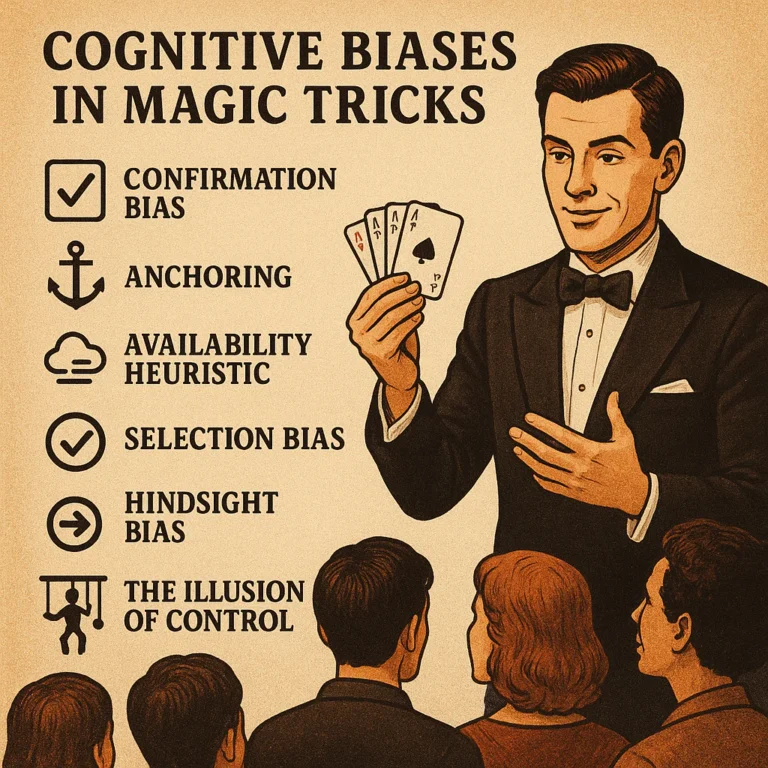
So, how exactly does magic trick our brains? It all comes down to cognitive biases and perceptual gaps. Our brains are wired to recognize patterns and make predictions based on past experiences. Magicians exploit these biases by creating misdirection and distraction, making it difficult for our brains to focus on the actual method behind the trick.
For example, the vanishing coin trick relies on attentional blindness, where the audience focuses on the coin’s disappearance rather than the method used to achieve it. This trick is a great illustration of how magicians use cognitive exploitation to create an illusion that’s both convincing and astonishing.
Visual Perception and Attentional Blindness: Why You Miss the Switch
Visual perception plays a significant role in magic, as our brains are wired to recognize patterns and make predictions based on visual cues. Magicians use misdirection to distract our attention, creating attentional blindness that makes us miss the switch or the method behind the trick.
According to Psyche, magic is the only art form where the spectator does not have to imagine the impossible; they experience it as real. This unique aspect of magic makes it an fascinating area of study for neuroscientists, who can gain insights into the brain’s perceptual machinery and cognitive biases.
Cognitive Biases and Expectations: The Brain’s Shortcuts
Our brains are wired to take shortcuts and make predictions based on past experiences. Magicians exploit these cognitive biases by creating expectations and misdirection, making it difficult for our brains to focus on the actual method behind the trick.
For instance, the forced choice technique relies on cognitive biases to influence the audience’s decision, making them choose a specific option that’s predetermined by the magician. This technique is a great example of how magicians use cognitive exploitation to create an illusion that’s both convincing and astonishing.
The Psychology of Misdirection: Controlling the Audience’s Focus
Misdirection is a crucial aspect of magic, as it allows magicians to control the audience’s focus and create an illusion that’s both convincing and astonishing. By using distraction and misdirection, magicians can create a perceptual gap that makes it difficult for the audience to recognize the method behind the trick.
According to Wonderfest Science, magicians throughout the ages have manipulated human attention and perception to dazzle and delight us. The video “Neuroscience of Magic – Adam Gazzaley & Robert Strong” provides a fascinating insight into the psychology of misdirection and the neuroscience behind magic.
The 7 Core Principles of Neural Magic
Here are the 7 core principles of neural magic that every magician should know:
- The Illusion of Choice: Free will vs. predictive coding. Our brains are wired to recognize patterns and make predictions based on past experiences. Magicians exploit these biases by creating misdirection and distraction, making it difficult for our brains to focus on the actual method behind the trick.
- Change Blindness: When the world disappears in plain sight. Magicians use change blindness to create an illusion that’s both convincing and astonishing, by making the audience focus on a specific aspect of the trick while the method is executed.
- The Inattentional Blindness Effect: Seeing what isn’t there. This phenomenon occurs when our brains are so focused on a specific task or stimulus that we fail to notice other stimuli or events.
- Memory Reconstruction: How tricks rewrite your past. Magicians use suggestion and misdirection to alter the audience’s perception of reality and create a lasting impression.
- Temporal Distortion: Why seconds feel like minutes. Our brains are wired to recognize patterns and make predictions based on past experiences. Magicians exploit these biases by creating misdirection and distraction, making it difficult for our brains to focus on the actual method behind the trick.
- The Uncanny Valley: When magic feels too real. This phenomenon occurs when the audience is faced with an illusion that’s so realistic that it creates a sense of unease or discomfort.
- The Awe Response: Dopamine, surprise, and the magic high. The awe response is a unique emotional state that’s triggered by experiences that are both surprising and pleasurable. Magicians use surprise and misdirection to create an illusion that’s both convincing and astonishing, triggering the awe response in the audience.
Magic as a Research Tool: What Neuroscientists Learn from Illusions
Magic can be a valuable research tool for neuroscientists, providing insights into the brain’s perceptual machinery and cognitive biases. By studying the neural mechanisms behind magic, researchers can gain a deeper understanding of the brain’s attentional systems and perceptual processes.
According to Princeton University Press, the study of magic can reveal the brain’s cognitive exploits and perceptual gaps, providing a unique perspective on the neural mechanisms behind human perception and cognition.
Famous Magicians Who Cracked the Code: From Houdini to Teller
Some of the most famous magicians in history have cracked the code of the human brain, using cognitive exploitation and perceptual manipulation to create illusions that are both convincing and astonishing. From Houdini to Teller, these magicians have pushed the boundaries of what’s possible with magic, inspiring new generations of performers and researchers.
How to Apply Neuroscience to Your Own Magic Tricks
By applying the principles of neuroscience to your magic tricks, you can create illusions that are both convincing and astonishing. Here are some tips to get you started:
- Use misdirection to control the audience’s focus and create a perceptual gap.
- Exploit cognitive biases to influence the audience’s perception of reality.
- Use suggestion and misdirection to alter the audience’s memory and create a lasting impression.
- Practice and repetition to rewiring your brain’s neural pathways and improve your performance.
For more information on how to apply neuroscience to your magic tricks, visit our Magic Secrets section.
Recommended Books and Resources on Magic and the Brain
Here are some recommended books and resources on magic and the brain:
- The Illusionist Brain by Jordi Camí and Luis Martínez: CHECK PRICE on: | Princeton University Press
- The Neuroscience of Magic by Siddharth Ramakrishnan: CHECK PRICE on: | Llewellyn
- Magic and the Brain by Wonderfest Science: WATCH VIDEO on:
Stay Connected: Latest Magic News and Brain Science Updates
Stay connected with us for the latest magic news and brain science updates. Follow us on social media and visit our website regularly for new articles, videos, and resources on magic and the brain.
Related Topics and Further Reading
For more information on related topics, visit our Illusions section. To learn about the latest techniques and trends in magic, check out our Magic Secrets category.
Global Perspectives: Magic and Neuroscience in the US, Europe, and Asia
Magic and neuroscience are global phenomena, with researchers and performers from around the world contributing to our understanding of the brain and its many mysteries. From the US to Europe and Asia, magic and neuroscience are being studied and performed in many different contexts and cultures.