Support our educational content for free when you purchase through links on our site. Learn more
🎩 The Magician’s Mind: 7 Secrets to Master Critical Thinking (2026)

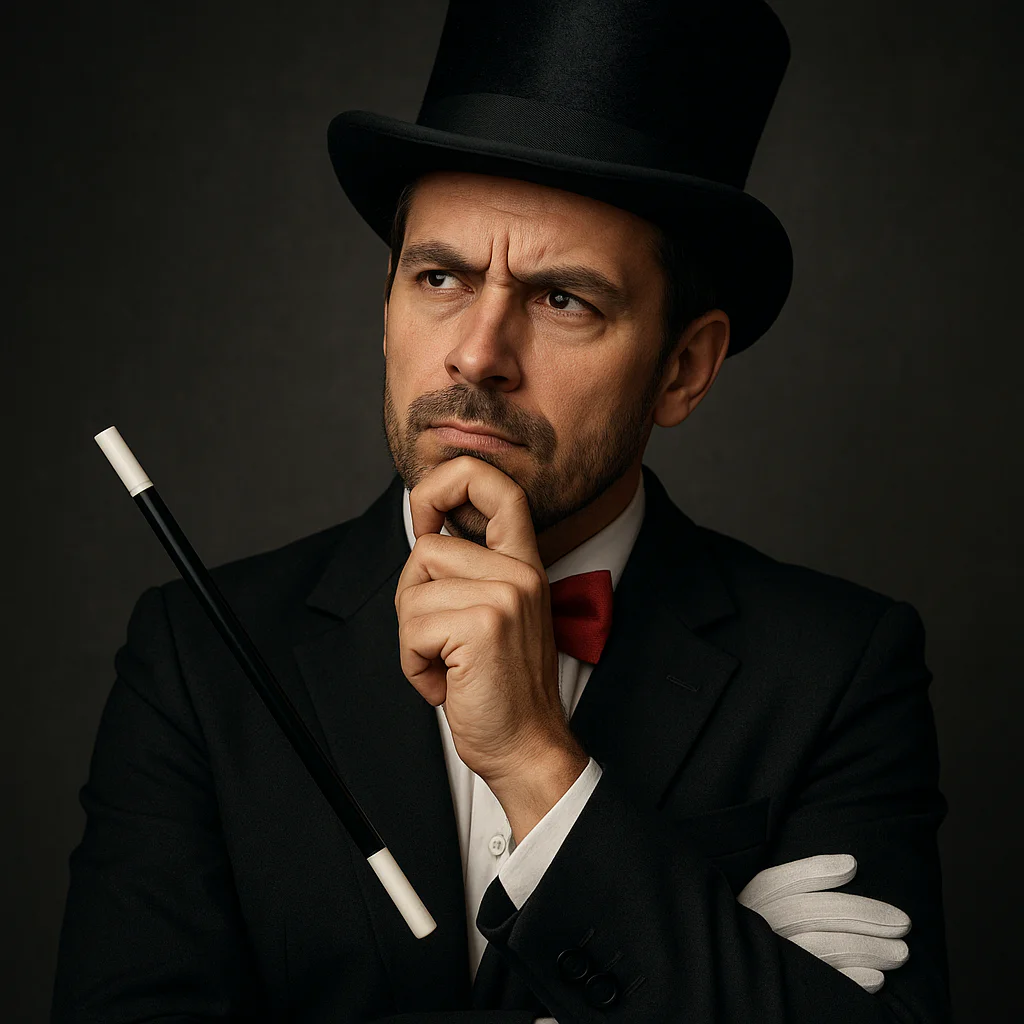
Ever watched a magician make a coin vanish and felt that split-second confusion before the “aha!” moment? That tiny gap between what you saw and what actually happened is where critical thinking lives. While many believe magic is purely about deception, the greatest illusionists are actually masters of suspended judgment, forcing their audiences to question their own assumptions. In this comprehensive guide, we reveal 7 proven techniques drawn from the world of magic to help you spot the “misdirection” in your daily life, from boardroom decisions to social media feeds. We’ll explore how embracing “good mistakes” can fuel your growth and why the ability to see the signal in the noise is the ultimate superpower for the modern mind.
Key Takeaways
- Shift from System 1 to System 2: Learn to override your brain’s automatic “12-second thoughts” and engage in deliberate, analytical thinking to uncover hidden truths.
- Embrace the Magic of Mistakes: Discover why fear of being wrong is the biggest barrier to growth and how analyzing errors can lead to breakthrough insights.
- Master the Art of Misdirection: Apply the magician’s toolkit of questioning assumptions and pattern recognition to filter out noise and make smarter decisions.
- Develop Cognitive Flexibility: Train your brain to adapt instantly when the “script changes,” turning unexpected failures into strategic opportunities.
Table of Contents
- ⚡️ Quick Tips and Facts
- 🎩 The Illusionist’s History: How Magic Shaped Critical Thought
- 🧠 Decoding the Trick: What Is Critical Thinking in the Age of Illusion?
- 🚀 The Mental Gym: 7 Proven Ways to Boost Your Critical Thinking Skills with Magic
- 🏢 Beyond the Stage: Critical Thinking in Business and Daily Life
- 💼 Case Study: The Consultant’s Secret Weapon
- 📉 Navigating the Noise: Filtering Signal from Distraction
- 🛡️ The Cost of Complacency: Why Critical Thinking is Your Best Defense
- 🧘 The Magician’s Mindset: Training Your Brain for Awareness
- 🧠 Deliberate vs. Automatic: Understanding Your Thought Processes
- 🧱 Leveraging Mental Models for Better Decisions
- 👁️ Cultivating Deep Awareness in a Distracted World
- 🌟 The Compounding Magic: Long-Term Benefits of a Critical Mind
- 🚀 Seeing What Others Miss: The Competitive Edge
- 🛠️ Autonomy: Making Your Own Decisions with Confidence
- 💎 The Snowball Effect: How Small Insights Lead to Big Wins
- 🎭 The Magic of Mistakes: 5 Ways Errors Fuel Critical Growth
- 🎉 Making Life More Fun: The Joy of Intellectual Discovery
- 🏁 Conclusion: The Ultimate Trick is Your Own Mind
- 🔗 Recommended Links
- ❓ FAQ: Your Burning Questions About Magic and Critical Thinking
- 📚 Reference Links
⚡️ Quick Tips and Facts
Before we pull the rabbit out of the hat, let’s get the magic of critical thinking straight. Did you know that the very same cognitive shortcuts magicians exploit to make a coin disappear are the ones that cause us to miss the forest for the trees in our daily lives? 🌲🪙
Here is the magic trick in a nutshell: Critical thinking isn’t just about being smart; it’s about suspending judgment long enough to see the mechanism behind the illusion.
| Fact | The Magic Insight |
|---|---|
| System 1 vs. System 2 | Our brains love “System 1” (fast, automatic) thinking. It’s the “law of least effort.” Critical thinking forces a switch to “System 2” (slow, deliberate), which is where the real magic happens. 🧠✨ |
| The 12-Second Rule | Without critical thought, we operate on “12-second thoughts”—instant reactions. Pausing just a few seconds longer can reveal the entire trick. ⏱️ |
| Misdirection is Everywhere | Just as a magician looks left to hide a move right, advertisers and news outlets use emotional triggers to distract you from the facts. 🎭 |
| Mistakes are Magic | Fear of being wrong kills critical thinking. Embracing “good mistakes” is the secret sauce to unlocking deeper analysis. 🚫❌✅ |
| The “Magic Glasses” | Wearing “magic glasses” means viewing the world from the perspective of the marginalized to see the systemic truths others ignore. 👓 |
Why does this matter to you? Because in a world of “alternative facts” and deepfakes, your ability to see the signal from the noise is your superpower. But how do we train our brains to spot the sleight of hand in real life? Keep reading, because the answer lies in the history of the greatest illusionists of all time. 🎩
🎩 The Illusionist’s History: How Magic Shaped Critical Thought

You might think magic is just about wands and rabbits, but historically, it has been the crucible of critical thinking. Long before we had psychology textbooks, magicians were the first to map the human mind’s vulnerabilities.
The Ancient Roots of Skepticism
The origins of magic trace back to ancient Egypt and Greece, where “magicians” were often priests manipulating the masses. However, the Greek philosophers were the first to turn the lens inward. Socrates, the grandfather of critical inquiry, famously said, “I cannot teach anybody anything. I can only make them think.” This is the essence of the magician’s art: not to give you the answer, but to make you question the premise. 🏛️🤔
The Golden Age of Skepticism
Fast forward to the 19th and early 20th centuries. As spiritualism swept the globe, claiming to contact the dead, Harry Houdini stepped onto the stage. He wasn’t just an escape artist; he was a devote of critical thinking. Houdini spent his life exposing “psychic” frauds, proving that what looked like a miracle was often a cleverly concealed trick.
Did you know? In a famous demonstration, Houdini would invite a medium to perform a séance, only to reveal that the “ghostly” hand was actually his own, hidden behind a table. He taught the world that extraordinary claims require extraordinary evidence.
The Modern Connection
Today, magicians like Penn & Teller continue this legacy. They don’t just perform tricks; they deconstruct them, teaching audiences how the trick works to prove that reality is often stranger than fiction, but never supernatural. This tradition of debunking is the direct ancestor of modern scientific skepticism.
If you want to dive deeper into the history of these greats, check out our guide on Magic History.
🧠 Decoding the Trick: What Is Critical Thinking in the Age of Illusion?
So, what exactly is critical thinking when viewed through the lens of a magician? It’s not just “thinking hard.” It’s the deliberate act of pausing the automatic narrative your brain constructs.
The “12-Second Thought” Trap
According to research cited by StrategyU, human thought often defaults to “12-second thoughts”—instant, intuitive reactions designed for survival, not accuracy. This is System 1 thinking. It’s fast, emotional, and prone to error.
Critical thinking is the conscious shift to System 2 thinking. It’s the mental equivalent of a magician slowing down a video frame-by-frame to see where the card was palmed. It requires effort, which is why our brains try to avoid it. But as the saying goes, “The magic happens when we shift to System 2.”
The Definition of Suspended Judgment
John Dewey, the father of modern critical thinking, defined it as “suspended judgment.” It’s the ability to hold a question in your mind without rushing to answer. In magic, this is the moment the audience holds their breath, waiting to see if the coin is truly gone. In life, it’s the moment you pause before clicking “Share” on a sensational headline.
Key Insight: Critical thinking is the space for thinking. It is the gap between stimulus and response where you choose your path rather than following the script.
For a deeper dive into how these mental models work, explore our article on Magic Secrets, where we break down the psychology behind the illusions.
🚀 The Mental Gym: 7 Proven Ways to Boost Your Critical Thinking Skills with Magic
Ready to train your brain? Just as a magician practices sleight of hand for thousands of hours, you can practice critical thinking using these seven specific techniques derived from the art of magic.
1. 🔍 Spoting the Sleight: Enhancing Observation and Attention to Detail
Magicians don’t just look; they observe. They notice the twitch of a finger, the shift in weight, the subtle change in breathing.
- The Trick: In a magic performance, the magician might ask you to “watch the card closely” while their other hand does the work.
- The Critical Thinking Skill: Active Observation. Train yourself to notice details that others miss.
- How to Practice: Next time you are in a meeting or a social gathering, try to identify three non-verbal cues (a crossed arm, a specific glance, a change in tone) that contradict the spoken words.
- Real-World Application: This skill is vital for Close-up Magic, where the smallest detail can make or break the illusion.
2. 🧩 The Misdirection Trap: Learning to Question Assumptions
Misdirection is the magician’s bread and butter. It relies on the audience’s assumption that “what I see is what is happening.”
- The Trick: A magician waves a handkerchief (distraction) while palming a coin. The audience assumes the handkerchief is the focus, missing the coin.
- The Critical Thinking Skill: Challenging Assumptions. Ask: “What am I being distracted from?”
- How to Practice: When reading a news article, identify the emotional hook (the misdirection). Then, ask: “What facts are being omitted?”
- Insight: As StrategyU notes, “The signal is the truth. The noise is what distracts us from the truth.”
3. 🎲 Probability vs. Possibility: Mastering Logical Deduction
Magicians love probability. They know that if they ask a spectator to pick a card, the odds are 1 in 52. But if they force a card, the odds become 10%.
- The Trick: The “Force” technique makes a random choice feel free, but it’s actually predetermined.
- The Critical Thinking Skill: Probabilistic Thinking. Distinguish between what is possible and what is probable.
- How to Practice: When evaluating a business proposal or a life decision, list the probabilities of different outcomes. Don’t just rely on the “feel” of the situation.
- Example: Nate Silver, the famous statistician, used this to predict elections, separating the “signal” from the “noise” of punditry.
4. 🕵️ ♂️ The Detective’s Mindset: Analyzing Cause and Effect
In magic, every effect has a cause. There are no miracles, only methods.
- The Trick: A cup and ball routine seems impossible until you see the hidden mechanism.
- The Critical Thinking Skill: Causal Analysis. Reject the idea of “coincidence” without evidence.
- How to Practice: Use the “Five Whys” technique. If a problem occurs, ask “Why?” five times to get to the root cause.
- Analogy: Just as a magician traces a trick back to its method, a critical thinker traces a problem back to its root.
5. 🧠 Pattern Recognition: Seeing the Structure Behind the Chaos
Magicians recognize patterns in human behavior. They know that people look where they are told to look.
- The Trick: Predicting a spectator’s choice based on common psychological biases.
- The Critical Thinking Skill: Pattern Recognition. Identify recurring themes in data or behavior.
- How to Practice: Look for patterns in your own decision-making. Do you always make the same mistake when you are tired? When you are stressed?
- Benefit: Recognizing these patterns allows you to break the cycle and make better choices.
6. 🗣️ The Art of Inquiry: Asking the Right Questions to Reveal Truth
A good magician asks questions that lead the audience to a specific conclusion. A critical thinker asks questions that reveal the truth.
- The Trick: “Do you want the red card or the blue card?” (Both are red).
- The Critical Thinking Skill: Socratic Questioning. Ask open-ended questions that challenge the status quo.
- How to Practice: Instead of asking “Is this true?”, ask “What evidence supports this?” and “What evidence contradicts this?”
- Source: Ralph Nader used this approach to challenge the automotive industry, asking, “What might save the most lives?” instead of accepting “human error” as the cause of crashes.
7. 🔄 Cognitive Flexibility: Adapting When the Script Changes
No magic routine goes perfectly every time. A card might stick, a prop might break. The great magician adapts instantly.
- The Trick: The “Out”—a pre-planned way to recover from a mistake.
- The Critical Thinking Skill: Cognitive Flexibility. The ability to pivot when new information arises.
- How to Practice: When your plan fails, don’t panic. Ask: “What is the new reality?” and “How do I adjust?”
- Insight: As Dr. Gregory House (fictional but brilliant) said, “Everyone lies.” But a critical thinker knows that when the script changes, the truth is often in the deviation.
🏢 Beyond the Stage: Critical Thinking in Business and Daily Life
You might be thinking, “This is great for magic, but how does it help me in my 9-to-5?” The answer is: Everything.
💼 Case Study: The Consultant’s Secret Weapon
Consulting firms like McKinsey, GE, and Toyota embed critical thinking into their DNA. They don’t just accept the client’s problem statement; they deconstruct it.
- The McKinsey Approach: They use a structured problem-solving method that forces them to question the “official story.”
- The “Obligation to Dissent”: At McKinsey, the youngest, most junior person is expected to disagree with the most senior person. This prevents groupthink and ensures that the best idea wins, not the loudest voice.
- Real-World Win: Michael Bury (inspired by The Big Short) used critical thinking to see the systemic risk in the US housing market when everyone else was blind to it. He bet against the market and made almost a billion dollars. Why? Because he suspended judgment and looked at the data, not the hype.
📉 Navigating the Noise: Filtering Signal from Distraction
In the digital age, we are bombarded with information. Critical thinking is your filter.
- The Problem: We are wired to pay attention to emotional triggers (fear, anger, excitement). This is the “noise.”
- The Solution: Use the Socratic method to separate signal from noise.
Is this claim falsifiable?
Who benefits from me believing this?
What is the source of this information? - Example: When Oatly claimed their product was “like milk but for humans,” a critical thinker didn’t just accept it. They questioned the evidence for milk’s benefits and the validity of the comparison.
🛡️ The Cost of Complacency: Why Critical Thinking is Your Best Defense
Without critical thinking, we are vulnerable to manipulation.
- The Risk: Advertisers, politicians, and scammers use misdirection to sell us things we don’t need or believe things that aren’t true.
- The Defense: As Charlie Munger said, “You can’t really know anything if you just remember isolated facts.” You need a latticework of mental models to protect yourself.
- The Outcome: Critical thinking shields you from “alternative facts” and helps you make decisions that align with your true values.
🧘 The Magician’s Mindset: Training Your Brain for Awareness
How do you become a critical thinker? It’s not a one-time fix; it’s a lifestyle. It’s about training your brain to be aware, just like a magician trains their hands.
🧠 Deliberate vs. Automatic: Understanding Your Thought Processes
Your brain has two modes:
- Automatic (System 1): Fast, intuitive, energy-efficient. Great for tying your shoes, terrible for solving complex problems.
- Deliberate (System 2): Slow, analytical, energy-intensive. This is where critical thinking lives.
- The Challenge: Humans have a “law of least effort.” We prefer System 1.
- The Fix: Practice mindfulness. Research shows that mindfulness enhances executive function (updating, inhibiting, shifting), which are the core skills of critical thinking.
🧱 Leveraging Mental Models for Better Decisions
Magicians use mental models (like the “force” or the “pass”) to predict outcomes. You can do the same.
- Charlie Munger’s Latticework: Build a mental model of the world. Don’t just memorize facts; understand the principles behind them.
- Common Models:
Inversion: Instead of asking “How do I succeed?”, ask “How do I fail?” and avoid those things.
Second-Order Thinking: Ask “And then what?” to see the long-term consequences of your actions.
Hanlon’s Razor: Never attribute to malice that which can be adequately explained by stupidity.
👁️ Cultivating Deep Awareness in a Distracted World
In a world of constant notifications, awareness is a superpower.
- The Practice: Set aside time for deep work. Turn off distractions. Focus one thing at a time.
- The Benefit: This allows you to enter a state of flow, where your critical thinking skills are at their peak.
- Insight: As the video summary suggests, magicians are “devotes of critical thinking” because they understand that reality is often hidden in plain sight.
🌟 The Compounding Magic: Long-Term Benefits of a Critical Mind
Why bother? Why put in the effort to be a critical thinker? Because the benefits compound over time.
🚀 Seeing What Others Miss: The Competitive Edge
When everyone else is reacting to the “noise,” you are seeing the signal.
- The Edge: You spot opportunities others miss. You avoid pitfalls others fall into.
- Example: Nate Silver correctly predicted 49 of 50 states in the 208 election and all 50 in 2012, while the media was stuck in binary thinking.
- Result: You become a problem solver in a world of problem avoiders.
🛠️ Autonomy: Making Your Own Decisions with Confidence
Critical thinking gives you autonomy. You don’t need to follow the herd.
- The Freedom: You can make decisions based on your own analysis, not on fear or peer pressure.
- The Confidence: When you know why you made a decision, you can defend it and learn from it.
- Quote: “The blessing is that eyesight through their lenses is fuller, and more evolved.” (D. Michael Rivage-Seul).
💎 The Snowball Effect: How Small Insights Lead to Big Wins
Small insights lead to better decisions, which lead to better outcomes, which lead to more insights.
- The Compounding: Just like interest in a bank account, critical thinking grows over time.
- The Result: A life that is more fun, more constructive, and more helpful to others. As Charlie Munger noted, this approach “made life more fun… and made me enormously rich.”
🎭 The Magic of Mistakes: 5 Ways Errors Fuel Critical Growth
Here is a secret the best magicians know: Mistakes are magic. If you never make a mistake, you’re not pushing the boundaries.
1. Anticipate “Good” Mistakes
Don’t wait for errors to happen. Predict them.
- Strategy: Before starting a project, ask: “What are the most likely things to go wrong?”
- Benefit: This prepares you to handle them gracefully, turning a potential disaster into a learning opportunity.
2. Use Probing Questions in Real Time
When someone makes a mistake, don’t just correct them. Ask why.
- Strategy: Instead of saying “That’s wrong,” ask “What makes you say that?” or “Help me understand your logic.”
- Benefit: This reveals the root cause of the error and deepens understanding for everyone.
3. Create Your Own “Good” Mistakes
Challenge yourself to make mistakes on purpose.
- Strategy: Try to solve a problem in a way you know is wrong. See where it breaks.
- Benefit: This builds resilience and helps you understand the boundaries of your knowledge.
4. Determine “Which Wrong is More ‘Right’?”
Compare two incorrect answers.
- Strategy: Ask: “Which of these errors is more logical?”
- Benefit: This shifts the focus from “right vs. wrong” to “better vs. worse,” fostering nuanced thinking.
5. Embrace the “Magic” of Failure
Failure is not the end; it’s the data point.
- Strategy: Treat every failure as an experiment. What did you learn?
- Benefit: This creates a culture of innovation where people are not afraid to take risks.
Key Takeaway: As Colin Seale of thinkLaw says, “Critical thinking should not be a luxury good.” It is for everyone, and it starts with embracing the magic of mistakes.
🎉 Making Life More Fun: The Joy of Intellectual Discovery
Finally, let’s not forget the most important benefit: Fun.
- The Joy: There is a thrill in solving a puzzle, in seeing through an illusion, in understanding how the world works.
- The Magic: Life becomes more interesting when you stop accepting things at face value.
- The Result: You become a lifelong learner, always curious, always exploring.
As the video summary reminds us, magicians are “devotes of critical thinking” because they know that the truth is often more amazing than the lie. And that is the greatest magic of all.
🔗 Recommended Links
Ready to start your journey? Here are some resources to help you sharpen your critical thinking skills:
- Books:
Thinking Like a Lawyer: A Practical Framework to Teach Critical Thinking to All Students by Colin Seale – A fantastic guide to implementing mistake analysis.
The Magic Glasses of Critical Thinking by D. Michael Rivage-Seul – A deep dive into seeing through “alternative facts.” - Organizations:
thinkLaw (thinklaw.us) – Dedicated to making critical thinking accessible to all students.
The Skeptics Society – A great resource for learning about scientific skepticism and debunking pseudoscience. - Products:
Magic Decks: Practice your observation skills with a high-quality deck of cards.
Bicycle Rider Back Cards: Amazon | Walmart | Bicycle Official
Sleight of Hand Practice Tools:
Mark Wilson’s Complete Course in Magic: Amazon | Barnes & Noble
❓ FAQ: Your Burning Questions About Magic and Critical Thinking

Q: Can anyone learn to be a critical thinker?
A: Absolutely! Critical thinking is a skill, not a talent. Like learning a magic trick, it takes practice, but anyone can master it.
Q: How long does it take to see results?
A: You can start seeing results immediately by simply pausing before reacting. However, deep mastery takes years of consistent practice, just like becoming a master magician.
Q: Is critical thinking the same as being negative?
A: No! Critical thinking is about seeking the truth, not just finding fault. It’s about asking questions to understand, not to criticize.
Q: How does magic help with critical thinking?
A: Magic teaches you to question assumptions, observe details, and understand cause and effect. It’s a practical laboratory for the mind.
Q: What is the biggest mistake people make when trying to think critically?
A: The biggest mistake is rushing to a conclusion. Critical thinking requires suspended judgment and the willingness to sit with uncertainty.
Q: Where can I learn more about the history of magic and its connection to psychology?
A: Check out our Magic History category for in-depth articles on the evolution of magic and its psychological roots.
📚 Reference Links
- StrategyU: Critical Thinking and the “Magic” of Deliberate Thought
- Peter Lang: The Magic Glasses of Critical Thinking
- Cult of Pedagogy: The Magic of Mistakes
- John Dewey: How We Think (Original work on critical thinking)
- Daniel Kahneman: Thinking, Fast and Slow (System 1 vs. System 2)
- Charlie Munger: Poor Charlie’s Almanack (Mental Models)
- Nate Silver: The Signal and the Noise (Probabilistic Thinking)
🏁 Conclusion: The Ultimate Trick is Your Own Mind

We started this journey by asking a simple question: Is magic just about making things disappear, or is it about making you see what was always there?
The answer, as we’ve discovered through the lens of history, psychology, and the art of the impossible, is the latter. The greatest trick a magician ever pulls isn’t the vanishing coin or the floating lady; it’s the illusion of certainty that they plant in your mind. By learning to deconstruct that illusion, you unlock the true superpower of critical thinking.
The Final Reveal
Throughout this article, we’ve explored how the 12-second thought trap keeps us in a state of reactive autopilot (System 1) and how shifting to deliberate thought (System 2) allows us to see the “signal” amidst the “noise.” We’ve seen how misdirection works not just on stage, but in boardrooms, news feeds, and our own decision-making processes.
We also resolved the mystery of mistakes. Far from being failures, errors are the “magic” that fuels growth. As Colin Seale and the team at thinkLaw demonstrated, embracing “good mistakes” transforms the classroom—and the workplace—into a laboratory for innovation. Whether you are a consultant spotting a systemic risk like Michael Bury, or a student realizing a lowercase ‘l’ looks like an ‘I’, the process is the same: question the assumption, analyze the evidence, and adapt.
Who Should Use This “Magic”?
- Students: To move from rote memorization to deep understanding.
- Professionals: To avoid groupthink and make data-driven decisions.
- Parents & Educators: To foster a culture where curiosity trumps the fear of being wrong.
- Anyone: To navigate a world of “alternative facts” with confidence and clarity.
Final Recommendation
If you take only one thing from this guide, let it be this: Slow down. The next time you feel an instant reaction, a surge of anger, or a rush to judgment, pause. Put on your Magic Glasses. Ask, “What am I missing? What is the misdirection here?”
This isn’t just a skill; it’s a lifestyle. As Charlie Munger wisely noted, this multidisciplinary approach to thinking “made life more fun.” So, go forth, question the impossible, and remember: The ultimate trick is your own mind.
🔗 Recommended Links
Ready to deepen your practice? Here are the essential tools and resources we mentioned, curated for the aspiring critical thinker and magic enthusiast.
📚 Essential Reading
- “Thinking Like a Lawyer: A Practical Framework to Teach Critical Thinking to All Students” by Colin Seale
Why read it? A practical guide to “mistake analysis” and fostering critical thought in all learners.
👉 Shop on: Amazon | Bookshop.org - “The Magic Glasses of Critical Thinking: Seeing Through Alternative Fact & Fake News” by D. Michael Rivage-Seul
Why read it? Explores the “Magic Glasses” metaphor to help readers see through cultural blinders and systemic bias.
👉 Shop on: Amazon | Peter Lang - “Thinking, Fast and Slow” by Daniel Kahneman
Why read it? The definitive text on System 1 vs. System 2 thinking, the foundation of our “12-second thought” discussion.
👉 Shop on: Amazon | Barnes & Noble - “Poor Charlie’s Almanack” by Charlie Munger
Why read it? A masterclass in mental models and the “latticework” of critical thinking.
👉 Shop on: Amazon | Walmart
🎩 Magic & Practice Tools
- Bicycle Rider Back Cards (The gold standard for practice)
Why buy? Essential for learning sleight of hand and understanding the mechanics of close-up magic.
👉 Shop on: Amazon | Walmart | Bicycle Official - Mark Wilson’s Complete Course in Magic
Why buy? A comprehensive guide that teaches the “how” and “why” of magic, perfect for understanding the logic behind the illusion.
👉 Shop on: Amazon | Barnes & Noble
🏢 Organizations & Resources
- thinkLaw (thinklaw.us)
Focus: Making critical thinking accessible to all students, not just the advanced.
Visit: thinkLaw Official Website - The Skeptics Society
Focus: Promoting scientific skepticism and critical inquiry.
Visit: Skeptics Society
❓ FAQ: Your Burning Questions About Magic and Critical Thinking
How does magic improve critical thinking skills?
Magic improves critical thinking by forcing the observer to confront the gap between perception and reality. When a magician performs a trick, the audience’s brain automatically fills in the gaps with assumptions (System 1 thinking). To understand the trick, the observer must engage System 2 thinking: slowing down, questioning the assumption, and looking for the hidden mechanism. This practice trains the brain to suspend judgment and actively seek evidence rather than accepting the first narrative presented.
Can learning magic tricks boost problem-solving abilities?
Yes, absolutely. Learning magic is essentially a crash course in reverse engineering. To perform a trick, you must understand the cause-and-effect relationship of every move. If a trick fails, you must diagnose the error (Was it the grip? The timing? The misdirection?). This mirrors the scientific method and troubleshooting in business. As noted in the “Magic of Mistakes” framework, analyzing why a trick failed is often more valuable than the success itself, fostering a growth mindset essential for complex problem-solving.
What is the connection between illusion and logical reasoning?
The connection lies in exploiting cognitive biases. Logical reasoning relies on valid premises and sound conclusions. Illusions work by introducing false premises (e.g., “The coin is in my left hand”) that the brain accepts as true due to misdirection. By studying how illusions bypass logic, critical thinkers learn to identify logical fallacies in arguments, advertising, and political rhetoric. It teaches you to ask: “Is this conclusion based on the evidence, or on a distraction?”
How do magicians use critical thinking to create effects?
Magicians are master critical thinkers in the design phase. They don’t just guess what will work; they analyze human psychology to predict behavior.
- Pattern Recognition: They know people look where they are told to look.
- Probability: They calculate the odds of a spectator making a specific choice.
- Cognitive Flexibility: They have “outs” (backup plans) for every possible failure.
They use these skills to construct an experience that feels impossible, yet is entirely logical and controlled.
Does studying magic enhance analytical thinking?
Yes. Studying magic requires breaking down complex sequences into small, manageable components. This is the essence of analytical thinking. You must analyze the mechanics of a move, the timing, the psychology of the audience, and the physical constraints of the props. This granular analysis translates directly to other fields, such as coding, engineering, and strategic planning, where breaking a large problem into smaller, solvable parts is crucial.
What critical thinking techniques are used in magic performances?
Several key techniques from critical thinking are central to magic:
- Socratic Questioning: Magicians often ask rhetorical questions to lead the audience to a false conclusion.
- Inversion: Thinking about how to fail a trick to ensure it succeeds (e.g., “What if the card sticks?”).
- Second-Order Thinking: Anticipating the audience’s reaction to the trick and preparing for the next step.
- Differential Diagnosis: Just like Dr. House, magicians test multiple theories to find the one that explains the effect, ruling out the impossible.
How can magic tricks teach critical thinking to students?
Magic provides a safe, engaging environment to practice mistake analysis. As Colin Seale suggests, when a student (or magician) makes a mistake, it’s not a failure; it’s data.
- Anticipating Errors: Teachers can predict where students will get confused (e.g., a math concept) and use a magic trick to illustrate the error.
- Probing Questions: Instead of correcting a wrong answer immediately, teachers can ask, “What logic led you there?” to uncover the root cause.
- Creating “Good” Mistakes: Students can be asked to design a trick that almost works but has a flaw, forcing them to think like the “trickster” and understand the mechanics deeply.
Why is “fear of being wrong” the biggest barrier to critical thinking?
Fear of being wrong triggers System 1 defensive reactions, causing us to shut down inquiry. In a classroom or boardroom, if people are afraid of making mistakes, they will stick to the “safe” answer rather than exploring new ideas. Magic teaches that mistakes are part of the process. By normalizing error, we create a space where curiosity can thrive, allowing for the deep, critical analysis that leads to breakthroughs.
📚 Reference Links
- StrategyU: Critical Thinking and the “Magic” of Deliberate Thought – Deep dive into System 1 vs. System 2 and the “12-second thought” concept.
- Cult of Pedagogy: The Magic of Mistakes: 4 Ways to Boost Critical Thinking with … – Essential reading on mistake analysis and equity in critical thinking.
- Peter Lang: The Magic Glasses of Critical Thinking – Source for the “Magic Glasses” framework and systemic analysis.
- thinkLaw: thinkLaw.us – Organization dedicated to teaching critical thinking to all students.
- Skeptics Society: Skeptics Society – Resources on scientific skepticism and debunking pseudoscience.
- Bicycle Cards: Bicycle Official Website – The official source for the world’s most popular playing cards.
- Daniel Kahneman: Thinking, Fast and Slow – The foundational text on cognitive psychology and decision-making.
- Charlie Munger: Poor Charlie’s Almanack – The definitive guide to mental models and multidisciplinary thinking.
- John Dewey: How We Think – The original work defining critical thinking as “suspended judgment.”