Support our educational content for free when you purchase through links on our site. Learn more
How Has the Art of Magic Tricks Evolved Over Time? 🎩 (2026)


Magic has always been a dance between mystery and mastery, but have you ever wondered how this ancient craft transformed from sacred rituals to dazzling digital spectacles? From the dusty marketplaces of medieval Europe to viral TikTok illusions that captivate millions in seconds, the story of magic is as spellbinding as the tricks themselves.
At Magic Trick™, we’ve traced this enchanting journey through ten pivotal eras—each redefining what it means to astonish an audience. Did you know the oldest recorded trick, the Cups and Balls, dates back over 4,500 years? Or that modern magicians now blend psychology, technology, and storytelling in ways that would make Houdini’s head spin? Stick around, because later we’ll reveal how AI and virtual reality are shaping the future of illusion—and how you can harness these secrets to elevate your own magic.
Key Takeaways
- Magic evolved from sacred rites to sophisticated entertainment, reflecting shifts in society, technology, and psychology.
- The Golden Age of Magic introduced the gentleman illusionist, transforming magic into a theatrical art form.
- The television era and street magic renaissance revolutionized presentation, focusing on audience reactions and intimacy.
- Today’s magicians blend digital effects, social media, and neuroscience to create new forms of wonder.
- Understanding the science of misdirection and human perception remains key to mastering magic’s timeless appeal.
Ready to unlock the secrets behind these transformations? Let’s dive into the captivating evolution of magic tricks through the ages!
Table of Contents
- ⚡️ Quick Tips and Facts
- 📜 From Ancient Shamanism to Modern Spectacle: The Chronology of Deception
- 1. The Ancient Roots: When Magic Was “Real”
- 2. The Medieval Marketplace: Jugglers and Street Buskers
- 3. The Enlightenment Shift: From Witchcraft to Entertainment
- 4. The Golden Age of Magic: The Rise of the Gentleman Illusionist
- 5. The Vaudeville Era and the Great Escapologists
- 6. The Television Revolution: Bringing the Impossible into the Living Room
- 7. The Street Magic Renaissance: Gritty, Raw, and In Your Face
- 8. The Digital Frontier: Magic in the Age of Social Media and CGI
- 9. The Psychological Turn: Mentalism and Modern Mind Games
- 10. The Future of Illusion: AI, VR, and Beyond
- 🧠 The Science of Misdirection: How Our Brains Evolved with the Art
- 🛠 Essential Gear: How Tools of the Trade Have Changed
- ✨ You May Also Like: Expanding Your Magical Horizons
- 🎬 Conclusion
- 🔗 Recommended Links
- ❓ FAQ
- 📚 Reference Links
⚡️ Quick Tips and Facts
Before we pull the curtain back on the centuries of secrets, here’s a “cheat sheet” of what you need to know about the evolution of our craft.
| Fact Category | Insight |
|---|---|
| Oldest Trick | The Cups and Balls is widely considered the oldest magic trick, dating back to Ancient Egypt (circa 2500 BCE). |
| The Father of Modern Magic | Jean-Eugène Robert-Houdin moved magic from the streets to the stage, trading wizard robes for evening tuxedos. |
| The “Blaine” Effect | David Blaine shifted the camera’s focus from the magician to the audience’s reaction, changing TV magic forever. |
| Psychology vs. Skill | Modern magic relies as much on cognitive neuroscience as it does on sleight of hand. |
| Social Media Impact | Platforms like TikTok and Instagram have birthed “Visual Magic,” where tricks are designed for a 15-second loop. |
Quick Tips for Aspiring Illusionists:
- ✅ Master the Basics: Don’t skip the “Royal Road to Card Magic.”
- ✅ Record Yourself: Your phone is the best practice tool ever invented.
- ❌ Don’t Reveal Secrets: The mystery is the gift you give the audience!
- ✅ Focus on Presentation: A mediocre trick with a great story beats a great trick with no soul.
📜 From Ancient Shamanism to Modern Spectacle: The Chronology of Deception
Ever wondered how we went from “burning at the stake” to “headlining in Vegas”? It’s been a wild ride, friends! At Magic Trick™, we’ve spent decades obsessing over how our ancestors fooled their peers. The evolution of magic isn’t just about better gadgets; it’s a mirror of human history, technology, and our understanding of the human brain.
In the beginning, magic wasn’t “entertainment”—it was power. If you could make a seed sprout in seconds or “predict” an eclipse, you weren’t just a performer; you were a bridge to the gods. Today, we use the same psychological loopholes, but we do it with a wink and a smile. Let’s dive into the rabbit hole! 🐇🕳️
1. The Ancient Roots: When Magic Was “Real”
Long before the bright lights of the Las Vegas Strip, magic was deeply intertwined with religion and survival. The Westcar Papyrus (c. 1700 BCE) details the exploits of a magician named Dedi, who allegedly performed a “decapitation and reattachment” of a bird’s head for Pharaoh Khufu.
While we can’t be sure if Dedi was using a clever mechanical gimmick or just a very cooperative goose, this marks the first recorded instance of performance magic. In these times, the “shaman” or “priest” used sleight of hand to reinforce spiritual authority.
2. The Medieval Marketplace: Jugglers and Street Buskers
During the Middle Ages, magic took a bit of a hit. If you were too good at it, you might find yourself facing an Inquisition. To stay safe, magicians rebranded themselves as “jugglers” or “hocus-pocus” men.
The term “Hocus Pocus” itself is believed by some to be a parody of the Latin “Hoc est corpus meum” from the Catholic Mass. These performers were the ultimate survivalists, performing in muddy marketplaces with nothing but a table and a few wooden cups. This era perfected the Cups and Balls, a routine that remains a rite of passage for every member of our team at Magic Trick™.
3. The Enlightenment Shift: From Witchcraft to Entertainment
As the world moved toward reason and science, magic evolved into a legitimate form of theater. In 1584, Reginald Scot published The Discoverie of Witchcraft.
- The Goal: To prove that “witches” were actually just using clever tricks, saving innocent lives from the gallows.
- The Result: It became the first “how-to” book for magicians!
Suddenly, the “occult” was replaced by prestidigitation. Magicians began performing in “Physic Gardens” and small theaters, using the latest scientific discoveries—like magnetism and optics—to baffle the public.
4. The Golden Age of Magic: The Rise of the Gentleman Illusionist
This is where things get really classy. In the mid-1800s, Jean-Eugène Robert-Houdin (the man Harry Houdini named himself after) revolutionized the art. He moved magic out of the fairgrounds and into elegant Parisian salons.
What changed?
- Attire: No more wizard hats. Robert-Houdin wore a tuxedo, making him look like an invited guest rather than a charlatan.
- Technology: He used hidden electromagnets and complex clockwork mechanisms.
- The “Light and Heavy Chest”: He famously used electromagnetism to make a small box impossible for strong men to lift, claiming he could “sap their strength.”
5. The Vaudeville Era and the Great Escapologists
Enter the 20th century, and the name on everyone’s lips was Harry Houdini. Magic became about spectacle and danger. Houdini realized that people didn’t just want to be fooled; they wanted to be thrilled.
He moved away from traditional card tricks and into Escapology. Whether it was the Chinese Water Torture Cell or being buried alive, Houdini’s magic was a battle of “Man vs. Death.” This era also saw the rise of massive stage illusions, like Howard Thurston making girls disappear in mid-air and Harry Kellar‘s “Levitation of Princess Karnac.”
6. The Television Revolution: Bringing the Impossible into the Living Room
When TV arrived, the game changed. You weren’t performing for 500 people in a theater; you were performing for 50 million in their pajamas.
- Mark Wilson: The first to produce a weekly magic series (The Magic Land of Allakazam), proving magic could work on screen.
- Doug Henning: Brought a “hippie” vibe to magic in the 70s, ditching the tux for tie-dye and focusing on “wonder.”
- David Copperfield: The king of the TV special. He didn’t just do tricks; he told stories. From walking through the Great Wall of China to making the Statue of Liberty vanish, Copperfield used cinematic techniques to elevate the art.
7. The Street Magic Renaissance: Gritty, Raw, and In Your Face
By the late 90s, stage magic felt a bit… cheesy. The sequins and big boxes were getting old. Then came a guy in a t-shirt and jeans named David Blaine.
His 1997 special, Street Magic, flipped the script.
- The Setting: No stage, no lights—just a sidewalk in New York.
- The Focus: The camera spent more time on the spectators’ reactions than on the magician.
- The Vibe: It felt real. It felt dangerous.
This era gave birth to Criss Angel and the “Mindfreak” movement, blending goth aesthetics with “guerrilla” style performances.
8. The Digital Frontier: Magic in the Age of Social Media and CGI
Today, we are in the era of Visual Magic. Platforms like Instagram, TikTok, and YouTube have created a new breed of “Social Media Magicians” like Zach King and Julius Dein.
- The Challenge: You have 3 seconds to grab attention before someone swipes.
- The Evolution: Tricks are now designed to be “angle-proof” for a single camera lens. Some use “video edits” (which we purists debate!), while others, like Shin Lim, use incredible sleight of hand that looks like CGI in real life.
9. The Psychological Turn: Mentalism and Modern Mind Games
While some went “big,” others went “inside the head.” Modern magic has seen a massive surge in Mentalism. Performers like Derren Brown have moved away from “magic” and toward “psychological manipulation.”
They use a mix of:
- NLP (Neuro-Linguistic Programming)
- Cold Reading
- Suggestion
- Subliminal Messaging
It’s less about “how did he move that card?” and more about “how did he know what I was thinking?” 🧠✨
10. The Future of Illusion: AI, VR, and Beyond
What’s next? We’re already seeing magicians use Augmented Reality (AR) and Artificial Intelligence to create illusions. Imagine a card trick where the “reveal” happens inside your own VR headset, or an AI that can predict your chosen word before you even think it.
The tools change, but the goal remains the same: to create a moment of pure, childlike wonder.
🧠 The Science of Misdirection: How Our Brains Evolved with the Art
Why does magic still work in 2024? Because while our technology has evolved, our brains haven’t. We still have the same “blind spots” our ancestors had.
- Inattentional Blindness: If you are focusing on one thing (the “dirty” hand), you literally cannot see the other hand moving.
- Change Blindness: Our brains are bad at noticing small changes in our environment if we aren’t looking for them.
- The “Ooh Shiny” Factor: Humans are biologically wired to follow movement. If we move a hand quickly, your eyes will follow it, leaving the other hand free to do the “secret work.”
🛠 Essential Gear: How Tools of the Trade Have Changed
We’ve come a long way from wooden cups! If you’re looking to start your own journey through the history of magic, here are some modern classics we recommend:
- The Classic Deck: You can’t go wrong with Bicycle Standard Rider Back Playing Cards. They’ve been the industry standard since 1885!
- The Bible of Magic: For those who want to learn the evolution of sleight of hand, The Royal Road to Card Magic is a must-read.
- Modern Tech: Check out Ellusionist for high-end, modern props that look like everyday objects.
✨ You May Also Like: Expanding Your Magical Horizons
If you enjoyed this trip down memory lane, you’ll love these other deep dives:
- The Secret Life of Houdini: Why he was actually a spy!
- Cardistry vs. Magic: Is flipping cards a sport or an art?
- The Ethics of Exposure: Should we be teaching magic on YouTube?
🎬 Conclusion
The art of magic has evolved from ancient rituals to digital spectacles, but the core remains unchanged: the human desire to be amazed. Whether it’s a shaman in a cave or a teenager on TikTok, we are all just trying to touch the impossible.
As we’ve seen, magic adapts to the technology of its time. When steam power was new, we had “mechanical” magic. When TV was new, we had “broadcast” magic. Now, in the age of information, we have “psychological” and “digital” magic.
So, next time you see a trick, don’t just ask “How did they do that?” Ask “Why does this still fool me?” The answer lies in the beautiful, flawed, and wonder-filled evolution of the human mind. 🎩✨
🔗 Recommended Links
- The International Brotherhood of Magicians – The world’s largest organization for magicians.
- The Magic Castle – The legendary private club for magicians in Hollywood.
- Theory11 – The best place for high-end magic and designer playing cards.
❓ FAQ
Q: Is magic a dying art because of the internet?
A: Absolutely not! While “secrets” are easier to find, the performance of magic is more popular than ever. The internet has just raised the bar for what counts as “impressive.”
Q: Who is the most famous magician alive today?
A: David Copperfield remains the most commercially successful, but names like David Blaine, Penn & Teller, and Shin Lim are arguably more “viral” in the current culture.
Q: Can anyone learn magic?
A: Yes! It takes practice, patience, and a lot of dropped cards, but anyone can learn the basics of sleight of hand.
📚 Reference Links
- Britannica: History of Magic
- The Met: The Art of Deception
- Science Friday: The Neuroscience of Magic
⚡️ Quick Tips and Facts
Before we pull the curtain back on the centuries of secrets, here’s a “cheat sheet” of what you need to know about the evolution of our craft. At Magic Trick™, we believe understanding the past is the first step to mastering the future of illusion.
| Fact Category | Insight |
|---|---|
| Oldest Trick | The Cups and Balls is widely considered the oldest magic trick, dating back to Ancient Egypt (circa 2500 BCE). |
| The Father of Modern Magic | Jean-Eugène Robert-Houdin moved magic from the streets to the stage, trading wizard robes for evening tuxedos. |
| The “Blaine” Effect | David Blaine shifted the camera’s focus from the magician to the audience’s reaction, changing TV magic forever. |
| Psychology vs. Skill | Modern magic relies as much on cognitive neuroscience as it does on sleight of hand. |
| Social Media Impact | Platforms like TikTok and Instagram have birthed “Visual Magic,” where tricks are designed for a 15-second loop. |
Quick Tips for Aspiring Illusionists:
- ✅ Master the Basics: Don’t skip the “Royal Road to Card Magic.”
- ✅ Record Yourself: Your phone is the best practice tool ever invented.
- ❌ Don’t Reveal Secrets: The mystery is the gift you give the audience!
- ✅ Focus on Presentation: A mediocre trick with a great story beats a great trick with no soul.
📜 From Ancient Shamanism to Modern Spectacle: The Chronology of Deception
Ever wondered how we went from “burning at the stake” to “headlining in Vegas”? It’s been a wild ride, friends! At Magic Trick™, we’ve spent decades obsessing over how our ancestors fooled their peers. The evolution of magic isn’t just about better gadgets; it’s a mirror of human history, technology, and our understanding of the human brain.
In the beginning, magic wasn’t “entertainment”—it was power. If you could make a seed sprout in seconds or “predict” an eclipse, you weren’t just a performer; you were a bridge to the gods. Today, we use the same psychological loopholes, but we do it with a wink and a smile. Let’s dive into the rabbit hole! 🐇🕳️
1. The Ancient Roots: When Magic Was “Real”
In the cradle of civilization, magic was far from a hobby. As noted by Magician Masterclass, the Ancient Egyptians (3100–30 BCE) viewed magic as a divine gift from the gods, specifically the deity Heka. Priests used “magic” for healing, protection, and divination.
The famous Westcar Papyrus recounts the tales of Dedi of Dedsnefu, who allegedly performed a decapitation and reattachment of a bird’s head. Was it a miracle? Or was it the first recorded Close-up Magic gimmick?
Meanwhile, in Ancient China, magic was tied to the concepts of qi, yin-yang, and feng shui. In Ancient Rome, magic was initially widespread but later criminalized as a threat to social order. This conflict between magic as a “sacred rite” and magic as a “deceptive threat” would define the art for the next thousand years.
2. The Medieval Marketplace: Jugglers and Street Buskers
During the Medieval Period, the “Golden Age of the Shaman” ended. Magic was viewed as heretical. If you were too good at it, you weren’t a priest; you were a target for the Inquisition.
To survive, magicians became nomadic buskers. They rebranded themselves as “jugglers” or “hocus-pocus” men. This era perfected the Cups and Balls, a routine that remains a rite of passage for every member of our team. They used simple wooden cups and small balls (often made of cork or fabric) to perform under the constant threat of being accused of witchcraft.
3. The Enlightenment Shift: From Witchcraft to Entertainment
As the world moved toward rationalism in the 18th century, the “supernatural” explanation for magic began to crumble. Reginald Scot’s The Discoverie of Witchcraft (1584) was a turning point, intended to prove that “witches” were just clever performers.
However, the era wasn’t without its charlatans. Figures like Cagliostro sold “youth elixirs” and performed fraudulent healings. But the tide was turning. Magic was becoming a science of the senses. During the Renaissance, figures like John Dee (court astrologer to Elizabeth I) and Giordano Bruno blended natural magic with early scientific inquiry, paving the way for the “Gentleman Magicians” of the next century.
4. The Golden Age of Magic: The Rise of the Gentleman Illusionist
If there is one name you must know, it’s Jean-Eugène Robert-Houdin. He is widely considered the “Father of Modern Magic.” Before him, magicians performed in robes covered in occult symbols. Robert-Houdin changed everything by:
- Wearing Evening Dress: He looked like a sophisticated guest, not a wizard.
- Using Technology: He integrated mechanical devices, clockwork, and early electromagnetism into his Illusions.
- The Stage Setting: He moved magic from the muddy streets into elegant Parisian theaters.
As Jeff Black Magic points out, this era marked the formalization of magic as high-end entertainment. It was the birth of the “Stage Illusionist” who used mirrors, trapdoors, and complex machinery to defy the laws of physics.
5. The Vaudeville Era and the Great Escapologists
By the early 20th century, magic was the king of the Vaudeville circuit. This era was defined by Harry Houdini, who realized that the public didn’t just want to be fooled—they wanted to be scared.
Houdini shifted the focus from “How did he do that?” to “Will he survive?” His escapes from the Chinese Water Torture Cell and straightjackets while hanging from skyscrapers turned magic into a death-defying stunt. Other greats like Howard Thurston and Harry Kellar continued the tradition of massive stage shows, transporting audiences to exotic lands through elaborate sets and storytelling.
6. The Television Revolution: Bringing the Impossible into the Living Room
Television changed the “angles” of magic forever. You couldn’t just hide behind a curtain; the camera could be anywhere.
- Mark Wilson proved magic could work on the small screen with The Magic Land of Allakazam.
- Doug Henning brought a sense of “wonder” and color back to the art in the 1970s.
- David Copperfield took it to a cinematic level. When Copperfield made the Statue of Liberty vanish, he wasn’t just doing a trick; he was using the medium of television to create a shared global experience.
7. The Street Magic Renaissance: Gritty, Raw, and In Your Face
In 1997, David Blaine released Street Magic, and the industry felt a seismic shift. He ditched the stage, the lights, and the sequins. He walked up to strangers on the street with a deck of Card Tricks and performed miracles inches from their faces.
The genius of Blaine wasn’t just the magic; it was the camera work. By focusing on the audience’s visceral reactions—screaming, running away, or falling to their knees—he made the viewer at home feel the magic’s impact. This “guerrilla” style paved the way for Criss Angel and the modern “strolling magic” popularized by performers like Jeff Black.
8. The Digital Frontier: Magic in the Age of Social Media and CGI
Today, we live in the era of the “Viral Illusion.” Magicians like Zach King use “digital sleight of hand” (video editing) to create impossible moments, while others like Shin Lim use pure, unadulterated skill that looks like CGI.
One of the most popular moves in the modern digital repertoire is the “Rub-a-dub vanish.” As seen in our featured video, this move is a masterclass in muscle memory.
🃏 Step-by-Step: The Rub-a-dub Vanish
If you want to perform like a modern pro, you need to master this vanish. Here is the breakdown:
- The Mechanics Grip: Hold the deck in your non-dominant hand. Your thumb should be along one edge, and your first three fingers along the side.
- The Slide: Use your thumb to slide the top card slightly.
- The Illusion: As your other hand comes over to “take” the card, your thumb pulls it back flush with the deck.
- The Reveal: Rub your hand on the table or your leg, then open it to show the card has vanished!
Pro Tip: As the presenter in the video says, “The biggest mistake you can make when learning it is trying to learn the whole thing in one big go.” Break it down!
9. The Psychological Turn: Mentalism and Modern Mind Games
While some magicians were getting faster with their hands, others were getting deeper into your head. Mentalism has seen a massive resurgence thanks to performers like Derren Brown.
Modern magic has evolved to include:
- Neuro-Linguistic Programming (NLP): Using language to influence choices.
- Cold Reading: Making high-probability guesses about a person’s life.
- Immersive Theatre: Shows like Sleep No More at the McKittrick Hotel have pushed magic into the realm of “experiential art.” As one attendee noted, “Nothing can ever replicate the feeling of being pushed down a darkened hallway… and suddenly seeing an illuminated Manderley on the ceiling.” This is the new magic: creating a world where the audience is inside the illusion.
10. The Future of Illusion: AI, VR, and Beyond
We are currently standing on the edge of the next great evolution. Magicians are already experimenting with Augmented Reality (AR), where a spectator can see a dragon fly out of a deck of cards through their phone screen.
Will AI replace the magician? We don’t think so. While an AI can calculate a card’s position, it cannot replicate the human connection and the “theatre of the mind” that a live performer provides. The future of magic will likely be a hybrid of high-tech gadgets and ancient psychological principles.
🧠 The Science of Misdirection: How Our Brains Evolved with the Art
Why are we still fooled by the same tricks used in Ancient Egypt? Because the human brain has “hard-wired” flaws. According to Science Friday, magicians are essentially “amateur neuroscientists.”
The Three Pillars of Misdirection:
- Inattentional Blindness: When you are focused on a specific task (like counting cards), you fail to notice an unexpected object in plain sight.
- Spatial Attention: Magicians use their eyes to lead yours. If we look at our right hand, you will look at our right hand, leaving our left hand free to do the “dirty work.”
- The Narrative Arc: By telling a story, we engage your “System 2” thinking (logical), which actually makes it easier to slip things past your “System 1” (intuitive) filters.
🛠 Essential Gear: How Tools of the Trade Have Changed
While the ancients used stones and wooden cups, modern magicians have access to precision-engineered tools. If you’re looking to start your journey, here is our expert rating on the most essential tool in any magician’s kit: The Playing Card.
Product Review: Bicycle Standard Rider Back Playing Cards
These are the “gold standard” for Card Tricks.
| Feature | Rating (1-10) | Analysis |
|---|---|---|
| Design | 9/10 | The classic “Rider Back” is recognized worldwide, which builds trust with the audience. |
| Durability | 8/10 | The “Air-Cushion Finish” allows for smooth fans and spreads, though they do lose their “snap” after heavy use. |
| Handling | 10/10 | Perfect for sleights like the “Double Lift” or the “Pass.” |
| Value | 10/10 | Inexpensive enough to destroy for “Signed Card” effects. |
Our Verdict: Every magician, from beginner to pro, should have a brick of these. They are the most reliable tool in the history of the art.
- Bicycle Standard Cards: Amazon | Walmart | Bicycle Official
- Theory11 Luxury Decks: Amazon | Theory11 Official
- Ellusionist Custom Decks: Amazon | Ellusionist Official
👉 Shop Magic Gear on: Amazon | Etsy
✨ You May Also Like: Expanding Your Magical Horizons
If you’ve caught the “magic bug,” don’t stop here! Check out these deep dives into specific niches of our craft:
- The Secret History of Coin Tricks: How silver dollars became the magician’s best friend.
- The Psychology of the “Force”: How to make someone pick a card while they think they have a free choice.
- Building Your First Stage Illusion: A guide to the “Black Art” and mirrors.
- The Rise of Cardistry: When card manipulation becomes a visual sport.
🎬 Conclusion
What a journey! From the sacred rites of Ancient Egypt to the viral illusions lighting up TikTok feeds today, the art of magic has evolved in ways both profound and surprising. At Magic Trick™, we’ve seen firsthand how magic’s core—the human desire to be amazed and to believe in the impossible—remains unchanged, even as the tools, techniques, and stages transform.
We started with the Cups and Balls, the oldest known trick, and ended with AI-enhanced illusions and immersive theatre experiences like Sleep No More. Along the way, we met legendary figures like Robert-Houdin, who brought elegance and technology to the stage, and David Blaine, who redefined magic for the digital age by focusing on raw, emotional reactions.
If you’re an aspiring magician, remember: mastering the basics is your foundation. Whether you’re wielding a classic Bicycle deck or experimenting with augmented reality, it’s your storytelling and connection with the audience that will make your magic unforgettable.
So, what’s the secret? It’s simple: magic evolves, but wonder is eternal. Keep practicing, keep innovating, and most importantly, keep the mystery alive.
🔗 Recommended Links
Ready to dive deeper or upgrade your magic toolkit? Here are some of our top picks:
-
Bicycle Standard Rider Back Playing Cards
Amazon | Walmart | Bicycle Official Website -
The Royal Road to Card Magic by Jean Hugard & Frederick Braué
Amazon -
Theory11 Monarch Playing Cards
Amazon | Theory11 Official Website -
Ellusionist Custom Decks and Magic Gear
Amazon | Ellusionist Official Website -
Sleep No More at McKittrick Hotel (Immersive Theatre Experience)
Official Website -
The History and Evolution of Magic Tricks — Jeff Black Magic
Read More
❓ FAQ
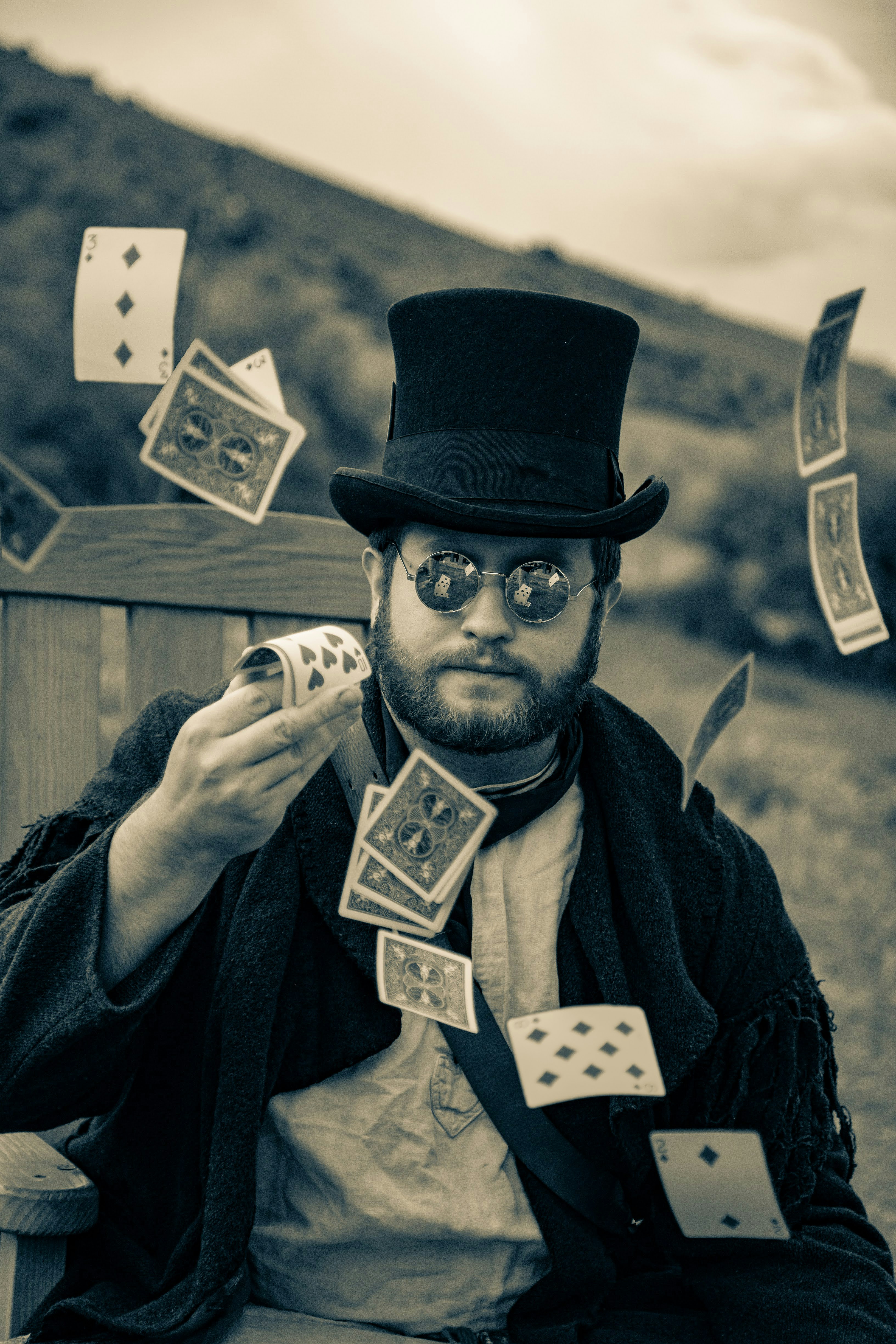
What impact has social media had on the popularity and innovation of magic tricks?
Social media platforms like TikTok, Instagram, and YouTube have revolutionized magic by enabling magicians to reach millions instantly. The short-form video format encourages visual, fast-paced tricks designed to grab attention within seconds. This has led to the rise of “Visual Magic,” where sleight of hand is combined with clever editing or camera angles. While some purists debate the use of digital effects, social media has undeniably expanded magic’s audience and inspired new generations to learn and innovate.
How has the presentation style of magic tricks evolved through time?
Presentation has shifted from ritualistic and mysterious in ancient times to elegant and theatrical in the 19th century, and then to raw and intimate in the late 20th century. Early magicians like Robert-Houdin wore tuxedos to elevate the art, while David Blaine’s street magic brought a gritty, personal feel. Today, magicians blend storytelling, psychology, and multimedia to create immersive experiences, sometimes even involving the audience directly in the narrative.
What are the differences between traditional and contemporary magic tricks?
Traditional magic often relies on mechanical devices, classic sleight of hand, and stage illusions designed for large audiences. Contemporary magic incorporates psychological techniques, digital technology, and social media-friendly formats. Modern magicians may use AI, augmented reality, or mentalism to create effects that were impossible a century ago. However, the principles of misdirection and storytelling remain timeless.
How have audience expectations changed in magic shows over the decades?
Audiences today expect more than just tricks; they want experiences. While early spectators were amazed by mechanical wonders or escapology feats, modern viewers seek emotional engagement, authenticity, and innovation. The rise of instant information means audiences are more skeptical, so magicians must work harder to create moments of genuine wonder. This has pushed magicians to blend magic with theatre, psychology, and technology.
What role did famous magicians play in shaping the art of magic tricks?
Figures like Jean-Eugène Robert-Houdin professionalized magic, moving it from street fairs to theaters. Harry Houdini popularized escapology and spectacle, while David Copperfield used television to bring magic to millions worldwide. David Blaine and Criss Angel reinvented magic for the street and TV audiences, focusing on raw reactions and psychological impact. Each innovator expanded the boundaries of what magic could be, influencing generations to come.
How have technology and digital effects influenced modern magic performances?
Technology has introduced new tools like electromagnets, mirrors, video editing, and augmented reality to magic. Digital effects allow magicians to create illusions that defy physical laws, but also raise questions about authenticity. The best performers use technology to enhance storytelling and misdirection, not replace skill. For example, Shin Lim’s sleight of hand looks like CGI but is performed live, while Zach King’s viral videos blend magic with digital editing.
What are the key historical milestones in the evolution of magic tricks?
- Ancient Egypt: The Cups and Balls trick and divine magic.
- Medieval Period: Street performers and survival under persecution.
- 18th Century: Enlightenment skepticism and the rise of prestidigitation.
- 19th Century: Robert-Houdin’s modernization and stage magic.
- Early 20th Century: Houdini’s escapology and Vaudeville spectacles.
- Mid-Late 20th Century: Television magic and cinematic illusions.
- Late 20th Century: Street magic renaissance with David Blaine.
- 21st Century: Digital magic, social media, and psychological illusions.
Who are some of the most influential magicians in the history of magic tricks?
- Jean-Eugène Robert-Houdin: Father of modern magic.
- Harry Houdini: Master escapologist and showman.
- Dai Vernon: Pioneer of close-up magic.
- David Copperfield: Television and stage illusion innovator.
- David Blaine: Street magic and psychological focus.
- Derren Brown: Modern mentalism and psychological manipulation.
What role has psychology played in the development of magic tricks over time?
Psychology is the secret weapon behind magic’s enduring power. Magicians exploit cognitive biases such as inattentional blindness, change blindness, and suggestion to misdirect and manipulate perception. Modern mentalists use neuro-linguistic programming (NLP) and cold reading to create the illusion of mind-reading. Understanding how the brain processes information allows magicians to craft effects that feel impossible yet natural.
How can beginners learn about the evolution of magic to improve their own performances?
Studying the history of magic helps beginners appreciate the foundations of the craft and avoid reinventing the wheel. Books like The Royal Road to Card Magic and resources from Magic Trick™ provide essential knowledge. Watching performances across eras—from Robert-Houdin’s mechanical marvels to Blaine’s street magic—can inspire new ideas and improve presentation skills. Remember, knowing the past sharpens your future.
📚 Reference Links
- Britannica: History of Magic
- The Met: The Art of Deception
- Science Friday: The Neuroscience of Magic
- Bicycle Cards Official Website
- Theory11 Official Website
- Ellusionist Official Website
- Sleep No More – McKittrick Hotel
- The History and Evolution of Magic Tricks — Jeff Black Magic