Support our educational content for free when you purchase through links on our site. Learn more
15 Easiest Magic Tricks for Beginners to Learn (2026) 🎩✨

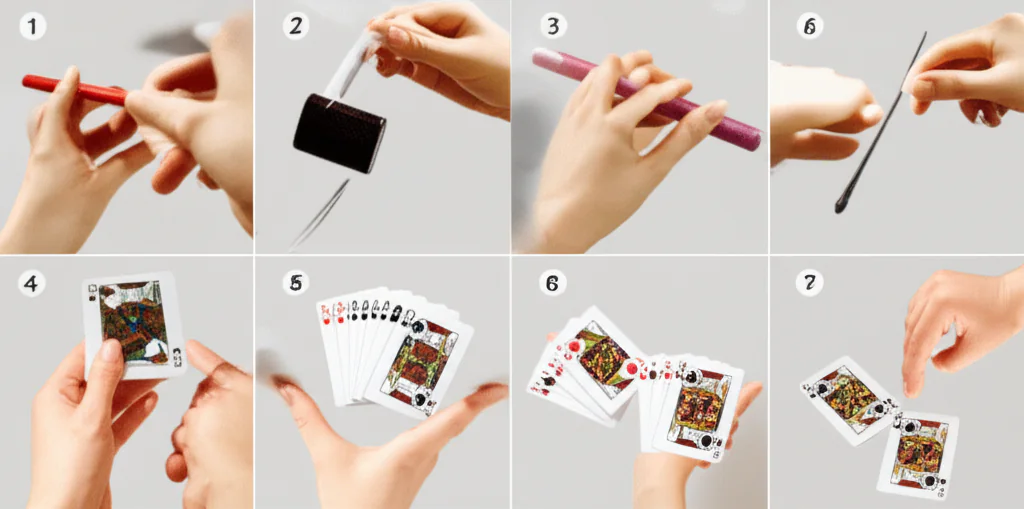
Ever watched a magician make a coin vanish and wondered, “Could I do that?” The answer is a resounding yes. At Magic Trick™, we’ve taught thousands of beginners that magic isn’t about supernatural powers; it’s about psychology, practice, and a little bit of misdirection. Whether you’re a 5-year-old looking to impress the family or an adult wanting to spark some wonder, this guide covers the 15 easiest magic tricks you can master today with items you likely already have in your kitchen drawer.
From the classic French Drop that makes coins disappear to the mind-bending Ruber Pencil illusion, we’ve curated a list that skips the expensive gimmicks and focuses on pure skill. But here’s a secret most guides won’t tell you: the trick isn’t just in the move, it’s in the story you tell. Later in this article, we’ll reveal exactly how to sell the illusion so your audience is left asking, “How on earth did you do that?” Ready to become the life of the party? Let’s dive in.
Key Takeaways
- Start Simple: Master the French Drop and Double Lift first; these foundational moves unlock hundreds of advanced tricks.
- Everyday Magic: You don’t need a $50 kit; a Bicycle deck, a coin, and a ruber band are all you need to start.
- Practice Makes Perfect: The #1 rule for success is practicing in front of a mirror to perfect your angles and timing.
- The Power of Patter: A trick without a story is just a puzzle; always add a narrative to create genuine wonder.
- Avoid Common Pitfalls: Never look at your hands during the secret move—your eyes lead the audience’s eyes.
Table of Contents
⚡️ Quick Tips and Facts
Before you even pick up a deck of cards or a coin, let’s drop some magic truth bombs that will save you hours of frustration. At Magic Trick™, we’ve seen thousands of beginners try to learn the “impossible” only to give up because they missed the one golden rule: Practice in front of a mirror.
Here is the reality check you need:
- The “First Time” Myth: You will not look like David Copperfield on your first try. In fact, your first attempt might look like a toddler trying to juggle bowling balls. That’s okay! Even the greats started with dropped coins and tangled ropes.
- Misdirection is King: It’s not about how fast your hands move; it’s about where your eyes are looking. If you look at the coin, the audience looks at the coin. If you look at the audience, they look at the audience. Your eyes lead the audience’s eyes.
- The “One Trick” Rule: Never perform the same trick twice for the same person. If you do, you’re not a magician; you’re a glitch in the matrix.
- Household Heroes: You don’t need a $50 kit. A ruber band, a pencil, and a paperclip can create more wonder than a $1,0 prop if you know the secret mechanics.
“When I perform for kids, I try to help them feel like adults, and when I perform for adults, I try to make them feel like kids.” — Gary Ferrar, “Gary The Great”
Ready to stop guessing and start creating wonder? Let’s dive into the history of how we got here, because understanding the roots of magic makes the branches grow stronger.
📜 The History and Evolution of Beginner Magic Tricks
Magic isn’t just a party trick; it’s a 2,50-year-old art form that has evolved from ancient Egyptian priests to modern-day street performers. Did you know the earliest recorded magic trick dates back to 270 BCE in Egypt? It involved a magician named Djedi who reportedly decapitated a goose and restored it to life! 🦢✨
While we don’t recommend trying the goose trick at home (unless you want to explain it to your landlord), the evolution of beginer magic tricks has shifted from “religious miracles” to “psychological puzzles.”
From Mysticism to Method
In the Middle Ages, magic was often associated with the supernatural. But by the 19th century, magicians like Jean Eugène Robert-Houdin (the father of modern magic) began treating it as a science of illusion. He introduced the concept of the patter—the story you tell while performing—which is still the backbone of every beginner trick today.
| Era | Focus of Magic | Typical Beginner Trick |
|---|---|---|
| Ancient Egypt | Religious Miracles | Restoring severed animals |
| Middle Ages | Supernatural Powers | Levitation, Fire Breathing |
| 19th Century | Mechanical Illusions | Card Forces, Vanishing Acts |
| Modern Day | Psychological & Sleight of Hand | Coin Vanishes, Mentalism |
Today, the barrier to entry has never been lower. You don’t need a secret society or a hidden lair. You just need curiosity and a willingness to fail. As we explore in our deep dive into Magic History, the best tricks are often the ones that look the most impossible but rely on the simplest physics.
🎩 Why Magic is the Ultimate Confidence Booster for Beginners
Why do we learn magic? Is it just to impress your date or confuse your uncle? Absolutely not.
Learning a magic trick is a confidence supercharger. When you successfully fool someone, you experience a rush of dopamine that few other hobbies can match. It teaches you:
- Resilience: You will fail. A lot. But you’ll learn to get back up and try again.
- Public Speaking: You have to talk while doing something with your hands. It’s the ultimate multitasking workout.
- Observation: You start noticing how people look, where they focus, and how to guide their attention.
“Performing tricks at a young age can help children—especially those who tend to be a little shy—to build confidence and develop their social skills.” — Nicholas “Magical Nick” Pugh
Imagine walking into a room and being the person who can make a coin disappear. Suddenly, you aren’t the quiet kid in the corner; you’re the star of the show. And the best part? You don’t need to be a “natural.” Magic is a learned skill, not a genetic gift.
🛠️ Essential Magic Supplies Every Novice Needs
You might be thinking, “Do I need to buy a magic kit?” The answer is a resounding maybe. While kits are great for inspiration, they are often filled with cheap gimmicks that break after two uses.
At Magic Trick™, we recommend building your own “starter kit” from high-quality, durable items. Here is what you actually need to master the basics:
The “No-Brainer” Starter List
- A Deck of Cards: Do not use a deck from a board game. You need a Bicycle Rider Back deck. They are the gold standard for a reason: they shuffle well, they slide easily, and they are durable.
Why Bicycle? They have a specific texture (air-cushion finish) that makes sleight of hand significantly easier.
Where to get them: Bicycle Playing Cards on Amazon | Bicycle Official Website - Coins: You need a mix of sizes. A Quarter (US) or a 50p (UK) is perfect for vanishes because they are large enough to hide but small enough to palm.
- Ruber Bands: Get a pack of standard #32 rubber bands. They are essential for the “Jumping Rubber Band” trick and many others.
Pro Tip: Buy a pack of thick, high-quality bands. Cheap ones snap and ruin the illusion.
👉 Shop Rubber Bands: Ruber Bands on Amazon - A Pencil: Any standard #2 pencil works for the “Ruber Pencil” trick.
- A Spoon: A standard metal teaspoon. Avoid plastic; it doesn’t bend the way you need it to for the illusion.
What to Avoid ❌
- Cheap “Magic Kits” from Gas Stations: These often contain gimmicks that are impossible to perform smoothly.
- Pre-made “Trick” Decks: Unless you are learning a specific card force, stick to a standard deck. You need to learn how to handle a normal deck first.
👉 CHECK PRICE on:
- Bicycle Rider Back Deck: Amazon | Walmart | Bicycle Official
- High-Quality Rubber Bands: Amazon | Etsy
🧠 Mastering the Fundamentals: Misdirection and Patter
Before we get to the tricks, we must address the two pillars of magic: Misdirection and Patter.
Misdirection: The Art of Looking Away
Misdirection isn’t about making people look away; it’s about making them look somewhere else.
- Visual Misdirection: You look at your left hand, so the audience looks at your left hand. Meanwhile, your right hand is doing the secret move.
- Verbal Misdirection: You ask a question (“Did you see that?”) to distract them from the method.
Patter: The Story That Sells the Trick
A trick without a story is just a puzzle. A trick with a story is magic.
- Bad Patter: “I’m going to make this coin disappear.” (Boring. They are waiting for the method.)
- Good Patter: “This coin has been in my family for three generations. Legend says it can vanish if you believe hard enough. Watch closely…” (Now they are invested in the story, not the method.)
“A magician never reveals their secrets!” — The Golden Rule
If you want to dive deeper into the psychology behind these techniques, check out our guide on Magic Secrets.
🃏 15 Easy Magic Tricks for Absolute Beginners
Ready to perform? Here are 15 easy magic tricks that require minimal setup but deliver maximum impact. We’ve broken them down by difficulty and required props.
1. The Classic Card Force
Difficulty: ⭐
Props: Bicycle Deck
The Effect: You ask a spectator to pick a card, remember it, and put it back. You then reveal that you knew exactly which card they picked all along.
The Secret: This relies on a Force. You use a technique (like the Hindu Shuffle Force) to make them “choose” a specific card you already know.
- Step 1: Hold the deck in your left hand.
- Step 2: Ask the spectator to say “Stop” while you riffle through the cards.
- Step 3: Use your thumb to stop at the forced card (the one you want them to pick) regardless of when they say “stop.”
- Step 4: Have them look at it, memorize it, and return it to the deck.
- Step 5: Perform a false shuffle (keep the forced card on top or bottom) and reveal it.
2. The Invisible String Illusion
Difficulty: ⭐
Props: None (or a piece of thread)
The Effect: You pretend to pull an invisible string from your ear and make a small object (like a paperclip) move.
The Secret: This is pure pantomime. You don’t need a string!
- Step 1: Pretend to pull a string from your ear.
- Step 2: Hold your hand out as if holding a taut string.
- Step 3: Move your hand in a way that suggests the string is pulling the object.
- Step 4: The audience’s brain fills in the gap.
3. The Sympathetic Coins
Difficulty: ⭐
Props: Two coins
The Effect: You hold a coin in each hand. You make a “magic gesture,” and the coin in your left hand jumps to your right hand.
The Secret: The French Drop (see trick #13) combined with a palming technique.
- Step 1: Hold a coin in your left hand.
- Step 2: Pretend to transfer it to your right hand, but actually keep it in your left.
- Step 3: Secretly drop the coin from your right hand into your lap (or pocket) while pretending to hold it.
- Step 4: Reveal the coin in your left hand, then “make it jump” by revealing the coin you palmed in your right hand.
4. The Rising Card Effect
Difficulty: ⭐
Props: Deck of cards, a rubber band
The Effect: A selected card rises out of the deck on its own.
The Secret: A ruber band hidden around the deck creates friction that lifts the card.
- Step 1: Place a rubber band around the deck, but stretch it so it only touches the back of the selected card.
- Step 2: Hold the deck vertically.
- Step 3: The tension in the rubber band slowly pushes the card up.
- Step 4: Control the speed with your thumb to make it look magical.
5. The Vanishing Handkerchief
Difficulty: ⭐
Props: Handkerchief, a small ball (or the “Thumb Tip” method)
The Effect: You crumple a handkerchief into a ball, and it vanishes.
The Secret: The Thumb Tip (a small plastic shell that fits over your thumb).
- Step 1: Hide the thumb tip in your hand.
- Step 2: Crumple the handkerchief and stuff it into the thumb tip.
- Step 3: Drop the thumb tip (with the handkerchief inside) into your pocket or lap while pretending to hold the “vanishing” ball.
6. The Penetration Illusion
Difficulty: ⭐
Props: Two rings (or paper rings)
The Effect: Two solid rings link together and unlink without breaking.
The Secret: One ring is cut and has a hidden mechanism to open and close.
- Step 1: Use a “linking ring” set (available at magic shops) or make your own with paper.
- Step 2: The “secret” ring has a small gap that you can open with your fingers.
- Step 3: Link the rings by opening the gap, passing the other ring through, and closing it.
7. The Color Changing Chameleon
Difficulty: ⭐
Props: Two colored pieces of paper, a frame
The Effect: A card changes color instantly.
The Secret: A gimmicked card with a sliding mechanism.
- Step 1: Create a card with a sliding window.
- Step 2: Behind the window, place a different colored paper.
- Step 3: Slide the window to reveal the new color.
8. The Floating Coin
Difficulty: ⭐
Props: Coin, clear thread (or fishing line)
The Effect: A coin floats in mid-air.
The Secret: Fishing line attached to the coin and your finger.
- Step 1: Tie a tiny piece of fishing line to the coin.
- Step 2: Hold the other end of the line with your finger.
- Step 3: Move your hand in a way that hides the line.
9. The Ziper Card Trick
Difficulty: ⭐
Props: Deck of cards
The Effect: You “zip” through the deck, and a card appears at the top.
The Secret: A false shuffle that keeps the top card on top.
- Step 1: Perform a false shuffle (keep the top card on top).
- Step 2: “Zip” your fingers through the deck.
- Step 3: Reveal the top card.
10. The Double Lift Reveal
Difficulty: ⭐
Props: Deck of cards
The Effect: You show the top card, flip it over, and it’s a different card.
The Secret: The Double Lift. You pick up two cards as if they were one.
- Step 1: Pick up the top two cards as one.
- Step 2: Show the face of the second card.
- Step 3: Flip the two cards over as one.
- Step 4: Show the face of the first card (which is now on top).
1. The Elastic Band Jump
Difficulty: ⭐
Props: Two rubber bands
The Effect: One rubber band jumps from your fingers to your wrist.
The Secret: The Rubber Band Jump (a classic move).
- Step 1: Loop one band around your index and middle fingers.
- Step 2: Loop the second band around your thumb and pinky.
- Step 3: With a quick flick, the bands switch positions.
12. The Magnetic Pencil Illusion
Difficulty: ⭐
Props: Pencil, watch/bracelet
The Effect: A pencil sticks to your hand as if by magnetism.
The Secret: Friction and angle.
- Step 1: Hold the pencil against your hand.
- Step 2: Use your thumb to press the pencil against your hand.
- Step 3: Move your hand in a way that hides the pressure.
13. The Disappearing Coin via French Drop
Difficulty: ⭐
Props: Coin
The Effect: You transfer a coin from one hand to the other, and it vanishes.
The Secret: The French Drop.
- Step 1: Hold the coin in your left hand.
- Step 2: Pretend to take it with your right hand, but actually keep it in your left.
- Step 3: Close your right hand as if holding the coin.
- Step 4: Open your right hand to reveal it’s empty.
14. The Rubber Pencil Bend
Difficulty: ⭐
Props: Pencil
The Effect: A pencil looks like it’s made of rubber.
The Secret: Shaking the pencil at the right speed.
- Step 1: Hold the pencil by the eraser.
- Step 2: Shake it up and down rapidly.
- Step 3: The vibration creates the illusion of bending.
15. The Levitating Card
Difficulty: ⭐
Props: Card, clear thread
The Effect: A card floats in the air.
The Secret: Fishing line attached to the card.
- Step 1: Tie a tiny piece of fishing line to the card.
- Step 2: Hold the other end of the line with your finger.
- Step 3: Move your hand to hide the line.
👉 CHECK PRICE on:
👶 Easy Magic Tricks for Kindergarteners (Ages 5 and Up)
For the little ones, magic should be simple, visual, and safe. No complex sleight of hand here!
1. ‘Invisible Water’ Trick
Goal: Make a dry cup appear to fill with water.
Materials: Two disposable cups, a soda bottle, a bit of water.
How it Works:
- Fill one cup with water and hide it under the table.
- Show the empty cup to the audience.
- Pour the “invisible” water from the hidden cup into the empty one.
- Safety: Always ask for adult permission before handling water.
2. Rubber Pencil Trick
Goal: Make a pencil look like rubber.
Technique: Hold the pencil by the eraser and shake it at the precise speed.
Requirement: No special skills needed, but requires practice to master the speed.
3. Spoon Bending Illusion
Goal: Create an optical illusion that a spoon is bending.
Technique: Press down on the spoon while sliding the hand along the handle.
Difficulty: One of the easiest tricks to master with practice.
4. Disappearing Coin Trick
Goal: Make a coin vanish from the hand.
Technique: Requires perfecting “sleight of hand” so the audience doesn’t notice the coin remains in the hand.
👉 CHECK PRICE on:
🧒 Beginner Magic Tricks for Older Kids and Teens
For older kids, we can introduce science-based tricks and more complex sleight of hand.
1. ‘Betcha Can’t Crack This Egg’ Trick
Goal: Squeeze an egg in the palm without breaking it.
Science: The egg’s shape allows it to withstand great pressure when evenly applied.
Method: Squeeze the egg in one palm or between both hands.
2. Magnetic Pencil Trick
Goal: Fool friends into thinking a pencil is magnetically attached to the hand.
Materials: A pencil (or pen) and hands.
Distraction: A watch or bracelet on the wrist can help distract the audience but is not required.
3. Pluck a Coin from Thin Air
Goal: Make a coin appear out of nowhere.
Materials: Basic tape, a twig or safety pin, and books for misdirection.
Requirement: Requires setup and practice to master.
4. Walking Through Paper Trick
Goal: Cut a hole in a standard piece of paper large enough to walk through.
Method: Specific cutting technique turns the paper into a large loop.
Resources: A printable template is available for download from kidzone.ws.
5. Cup Through the Table Trick
Goal: Illusion of pushing a cup through a solid table.
Materials: A cup, paper large enough to cover the cup, a small object (ball or coin), and a table.
6. Levitating Card Trick
Goal: Make a card appear to levitate off the palm.
Materials: Plastic and super glue to create a “trick” card.
Recommendation: Best performed over Skype for distant relatives due to the audience’s desire touch the card.
👉 CHECK PRICE on:
🎭 Performance Tips: How to Sell the Illusion
You’ve learned the trick. Now, how do you make it magic?
1. The Power of the Pause
Don’t rush. After you do the secret move, pause. Let the audience wonder. “Where did it go?” is a better question than “Look at this.”
2. Eye Contact
Look at your audience, not your hands. If you look at your hands, they will look at your hands. If you look at them, they will look at you.
3. The “Impossible” Statement
Always frame the trick as impossible. “This is a trick that has never been done before.” It sets the stage for the wonder.
4. Practice in Front of a Mirror
This is the most important tip. You need to see what the audience sees. If you can’t see the secret move in the mirror, the audience won’t either.
❌ Common Mistakes Beginners Make (And How to Avoid Them)
Even the best magicians make mistakes. Here are the most common ones and how to fix them.
1. Looking at the Secret Move
Mistake: You look at the coin you’re palming.
Fix: Look at the audience. Your eyes lead the audience’s eyes.
2. Rushing the Trick
Mistake: You do the trick too fast.
Fix: Slow down. Let the magic happen.
3. Over-explaining
Mistake: You explain how the trick works.
Fix: Never explain. The mystery is the magic.
4. Using Cheap Props
Mistake: You use a deck of cards that sticks together.
Fix: Invest in a good deck. It makes a huge difference.
📚 Recommended Magic Books and Online Resources
Want to take your skills to the next level? Here are the best resources for beginners.
Books
- “The Royal Road to Card Magic” by Jean Hugard and Frederick Braue: The bible of card magic.
- “Mark Wilson’s Complete Course in Magic”: A comprehensive guide to all types of magic.
- “101 Card Tricks” by John Scarne: A great collection of easy tricks.
Online Resources
- Magic Trick™ YouTube Channel: Watch our tutorials on Magic Secrets.
- Penguin Magic: A great place to buy props and watch tutorials.
- Vanishing Inc. Magic: Another excellent resource for magic supplies and tutorials.
👉 CHECK PRICE on:
- The Royal Road to Card Magic: Amazon | Barnes & Noble
- Mark Wilson’s Complete Course in Magic: Amazon | Barnes & Noble
🔗 Reference Links and Further Reading
For more in-depth guides, check out these resources:
💡 Conclusion
Magic is a journey, not a destination. Whether you’re a 5-year-old making a pencil bend or a 50-year-old mastering the double lift, the joy of magic is in the wonder you create. Remember, the best trick is the one that makes someone say, “How did you do that?”
So, grab a deck of cards, a coin, or a pencil, and start practicing. The world is waiting for your magic! ✨
❓ FAQ

Q: How long does it take to learn a magic trick?
A: It depends on the trick. Some can be learned in 5 minutes, while others take weeks of practice. The key is consistency.
Q: Do I need to buy expensive props?
A: No! Many of the best tricks use everyday items like coins, cards, and rubber bands.
Q: Can I learn magic online?
A: Absolutely! There are thousands of free tutorials on YouTube and paid courses on sites like Penguin Magic.
Q: What is the hardest trick to learn?
A: It varies, but many beginners find card manipulations like the double lift or the pass to be challenging at first.
Q: Is it okay to reveal the secret?
A: Generally, no. The magic is in the mystery. However, if you’re teaching someone, you can reveal the secret after they’ve learned the trick.
🔗 Reference Links and Further Reading