Support our educational content for free when you purchase through links on our site. Learn more
🪄 12 Basic Principles Behind How Magic Tricks Work (2026)


Ever watched a coin vanish into thin air and wondered if you’re losing your mind? You aren’t. At Magic Trick™, we’ve spent decades dissecting the basic principles behind how magic tricks work, and the answer is far more fascinating than any supernatural force. It turns out, your brain is the real magician, constantly filling in gaps and making assumptions that skilled performers exploit with surgical precision. From the ancient art of misdirection to the modern science of cognitive bias, we’re about to pull back the curtain on the mechanics of wonder.
In this comprehensive guide, we won’t just tell you that it works; we’ll show you how it works. We’ll dive into the psychology of inattentional blindness, decode the physics of sleight of hand, and reveal why your eyes can be so easily fooled. Whether you’re a skeptic looking for answers or an aspiring performer ready to master the craft, you’ll discover that the most powerful tool in a magician’s arsenal isn’t a wand or a deck of cards—it’s your own perception. Ready to see the strings? Let’s begin.
💡 Key Takeaways
- Misdirection is King: The core of magic isn’t hiding the move; it’s controlling where the audience looks and what they think about.
- Your Brain is the Secret: Magicians exploit cognitive biases and inattentional blindness, making your brain fill in the blanks for them.
- Sleight of Hand Requires Patience: Mastering manual dexterity takes thousands of hours of practice, but the principles of natural movement are learnable by anyone.
- Psychology Over Physics: While gadgets help, the most powerful illusions rely on audience perception, timing, and the illusion of choice.
- Ethics Matter: Understanding the secrets is for education; revealing them to an audience destroys the sense of wonder and violates the Magician’s Oath.
Table of Contents
- ⚡️ Quick Tips and Facts
- 📜 A Brief History of Magic: From Ancient Egypt to Modern Stages
- 🧠 The Psychology of Magic: How Your Brain Gets Fooled
- 1. The Art of Misdirection: Controlling Where You Look
- 2. The Science of Inattentional Blindness: Missing the Obvious
- 3. The Power of Assumption: Why Your Brain Fills in the Gaps
- 4. Memory Reconstruction: How Magicians Rewrite Your Past
- 5. The Illusion of Choice: Free Will vs. Forced Decisions
- 👐 The Mechanics of Deception: Sleight of Hand and Dexterity
- 1. Palming: The Art of Hiding Objects in Plain Sight
- 2. False Transfers: Making Things Move When They Don’t
- 3. The Double Lift: Seeing Two Cards as One
- 4. The French Drop: Vanishing Coins with Style
- 5. The Palm and the Pass: Moving Cards Undetected
- 🔍 The Science Behind Illusions: Optical and Cognitive Tricks
- 1. Optical Illusions: Playing with Light and Perspective
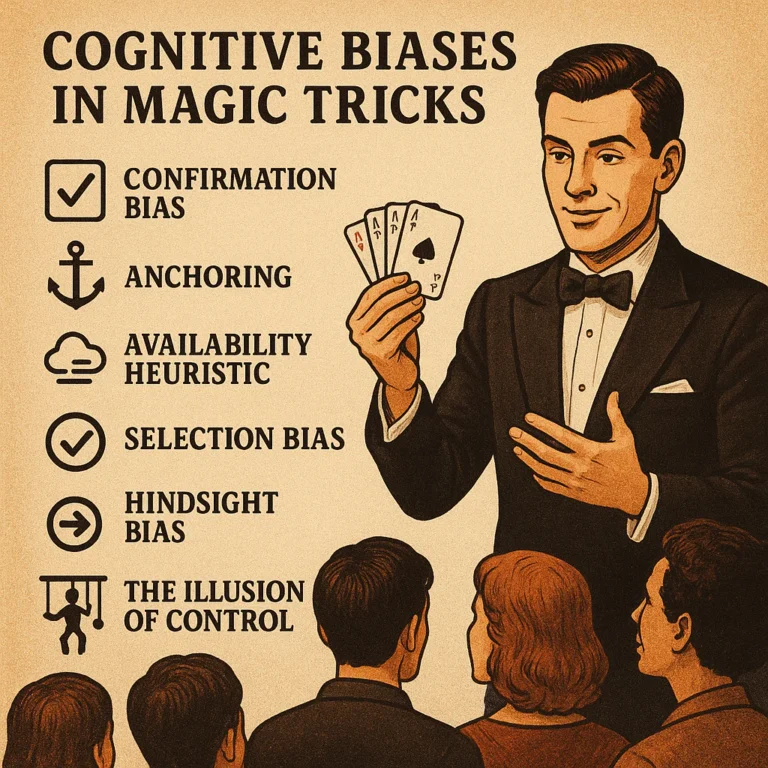
- 2. Cognitive Biases: Exploiting Mental Shortcuts
- 3. Change Blindness: When the World Changes Right Before Your Eyes
- 4. The Phi Phenomenon: Creating Motion from Stillness
- 🎩 The Role of Props and Gadgets: Tools of the Trade
- 1. Gimmicked Cards and Decks: The Secret Weapons
- 2. Magnetic and Mechanical Devices: The Invisible Helpers
- 3. Mirors and Reflections: The Classic Optical Deception
- 4. Thread and Wire: The Invisible Support Systems
- 5. Digital Magic: How Technology is Revolutionizing Illusions
- 🎭 The Art of Misbelief: Creating Suspense and Wonder
- 1. Building Tension: The Narrative Arc of a Trick
- 2. The Patter: Using Words to Distract and Engage
- 3. Timing and Rhythm: The Heartbeat of a Performance
- 4. The Reveal: Maximizing the Impact of the Climax
- 🚀 Evolving Techniques: Modern Magic Phenomena
- 1. Close-Up Magic: Intimacy and Interaction
- 2. Mentalism: Reading Minds and Predicting Thoughts
- 3. Stage Magic: Grand Illusions and Spectacle
- 4. Social Media Magic: Short-Form Content and Viral Tricks
- 🎤 Beyond the Tricks: The Showmanship of Magic
- 1. Character Development: Creating a Magical Persona
- 2. Audience Engagement: Turning Spectators into Participants
- 3. Stage Presence: Commanding the Room with Confidence
- ⚖️ Secrets Exposed: The Ethics of Magic Revealed
- 1. The Magician’s Oath: Protecting the Mystery
- 2. When to Reveal: Educational vs. Spoiling
- 3. The Impact of Exposure on the Magic Community
- 📚 Learning the Craft: Becoming a Magician
- 1. Essential Skills for Aspiring Magicians
- 2. Recommended Resources and Books for Beginners
- 3. Finding a Mentor and Joing Magic Communities
- 4. Practicing Effectively: From Repetition to Mastery
- ❓ Frequently Asked Questions About Magic Principles
- How does magic work?
- What is misdirection in magic?
- What is sleight of hand?
- How do optical illusions and cognitive tricks work in magic?
- What role do props and gadgets play in magic tricks?
- How do magicians take advantage of audience perception?
- How do magicians create suspense and wonder in their shows?
- What are the latest trends in magic?
- What skills and qualities make a great magician?
- Is it ethical to reveal the secrets behind magic tricks?
- How can I become a magician?
- 🌟 Interactive Magic Shows: Experiencing the Magic Live
- 🚫 Breaking Stereotypes in Magic: Diversity and Innovation
- ✨ New Magic Tricks: Innovations in the Field
- 💡 Key Takeaways: The Essence of Magic
- Conclusion
- Recommended Links
- Reference Links
Here at Magic Trick™, we’re not just about pulling rabbits out of hats; we’re about understanding the profound art and science that makes those moments of wonder possible
! Have you ever watched a magician and thought, “How did they do that?” ✨ You’re not alone! The basic principles behind how magic tricks work are a fascinating blend of psychology, dexterity, and ingenious deception. It
‘s a world where human perception is the playground, and our expert team of magicians is here to guide you through its enchanting secrets.
⚡️ Quick Tips and Facts
Before
we dive deep into the rabbit hole of magical principles, let’s conjure up some quick facts to get your mind tingling!
| Aspect of Magic | Quick Insight
| **
Key Principle** | Explanation
Conclusion
So, we’ve journeyed from the ancient sands of Egypt to the digital stages of TikTok, unraveling the basic principles behind how magic tricks work. We’ve seen that the “magic” isn’t in the wand or the rabbit; it’s in the human mind.
Remember our question from the beginning: How do magicians make the impossible seem possible? The answer lies in the delicate dance between misdirection, sleight of hand, and cognitive psychology. You now know that when a coin vanishes, it’s not disappearing into thin air; it’s being palmed while your brain is busy processing a joke or a gesture. When a card is “forced,” it’s not telepathy; it’s a masterful manipulation of choice and probability.
The “secret” isn’t a hidden gadget (though those help!); it’s the magician’s ability to control your attention. As we discussed, Tony Slydini taught us that the best magic happens right before your eyes, not because the hands are too fast to see, but because your brain has been led to look elsewhere.
Our Final Recommendation:
Whether you are a skeptic looking to understand the mechanics or an aspiring performer ready to take the stage, the path to mastery is the same: Practice, Observation, and Respect for the Art.
- For the Curious: Don’t let the knowledge of the method kill the wonder. Knowing how a car engine works doesn’t stop you from enjoying the ride. In fact, it often makes the engineering more impressive.
- For the Aspiring Magician: Start with the basics. Master the French Drop and the Double Lift. Don’t rush to buy expensive gimmicks; your hands are your greatest tools. Join a community, find a mentor, and remember the Magician’s Oath—protect the mystery to preserve the magic for everyone.
Magic is a shared experience. It’s a moment of suspension where the laws of physics take a coffee break, and for a split second, anything is possible. Keep that sense of wonder alive!
Recommended Links
Ready to start your own journey into the world of magic? Here are some top-rated resources and tools we recommend at Magic Trick™ to help you learn the craft or simply enjoy the art form.
📚 Essential Books for Aspiring Magicians
- “The Royal Road to Card Magic” by Jean Hugard and Frederick Braue
Why we love it: The gold standard for learning card manipulation. It breaks down the double lift, false shuffles, and palming into digestible steps.
👉 Shop on Amazon: The Royal Road to Card Magic | Official Publisher - “Expert Card Technique” by Jean Hugard and Frederick Braue
Why we love it: A comprehensive guide that takes you from beginner to expert, covering advanced sleights and psychological forces.
👉 Shop on Amazon: Expert Card Technique - “The Art of Magic” by T. Nelson Downs
Why we love it: A classic text on coin magic and sleight of hand, perfect for understanding the history and mechanics of close-up magic.
👉 Shop on Amazon: The Art of Magic
🎩 Top-Rated Magic Kits & Props
- Ellusionist Magic Decks
Why we love it: High-quality, custom-designed decks that are perfect for beginners and pros alike. Their “Bicycle” and “Bee” decks are industry standards for a reason.
👉 Shop on Amazon: Ellusionist Magic Decks | Ellusionist Official Website - TMS (The Magic Shop) Beginner Magic Kit
Why we love it: A great all-in-one kit that introduces you to various props like cups and balls, linking rings, and basic sleight of hand tools.
👉 Shop on Amazon: Beginer Magic Kit | TMS Official Website - Gimmicked Cards (Invisible Deck)
Why we love it: A must-have for any magician. This deck allows you to perform the classic “Invisible Deck” trick where a spectator names any card, and it’s the only one face-up.
👉 Shop on Amazon: Invisible Deck | Bicycle Official
🎥 Online Learning Platforms
- Vanishing Inc. Magic
Why we love it: Offers high-quality video tutorials and a vast library of tricks for all skill levels.
👉 Shop on Amazon: Vanishing Inc. Books | Vanishing Inc. Official - Penguin Magic
Why we love it: A massive marketplace for magic tricks, videos, and books, featuring content from top magicians worldwide.
👉 Shop on Amazon: Penguin Magic Books | Penguin Magic Official
Frequently Asked Questions

Here are 7 new search terms related to “What are the basic principles behind how magic tricks work?”
To further deepen your understanding, we’ve compiled answers to the most common questions we receive at Magic Trick™.
What are the ethical considerations when performing magic tricks?
The ethics of magic revolve around the Magician’s Oath, a traditional pledge to never reveal the secrets of magic to non-magicians.
- The Argument for Secrecy: Revealing methods destroys the sense of wonder and the emotional impact of the performance. It turns a magical experience into a mechanical puzzle.
- The Argument for Education: Some argue that explaining the principles (like psychology or physics) without giving away specific methods can be educational and demystify the art form, fostering respect for the skill involved.
- Our Stance: We believe in a balanced approach. Never reveal the method of a trick to an audience member who is watching a performance. However, in an educational setting (like a workshop), explaining the concept (e.g., “This works because of inattentional blindness”) is acceptable and encouraged to inspire new magicians.
How can beginners learn and practice magic tricks effectively?
Learning magic is a marathon, not a sprint.
- Start Small: Begin with simple coin or card tricks that require minimal props.
- Master the Basics: Focus on sleight of hand fundamentals like the French Drop or Double Lift. Speed is less important than smoothness and naturalness.
- Practice in Front of a Mirror: This is crucial for checking your angles and ensuring your movements look natural.
- Record Yourself: Video recording helps you spot tells (unconscious movements that give away the secret) that you might miss in the mirror.
- Join a Community: Platforms like The Magic Cafe or local magic clubs provide feedback and mentorship.
What materials and props are typically used in basic magic tricks?
While some tricks rely solely on skill, many use specific props:
- Playing Cards: The most versatile prop. Brands like Bicycle or Bee are standard.
- Coins: Used for vanishes, transpositions, and productions.
- Ropes and Rings: Classic props for linking and unlinking illusions.
- Cups and Balls: A timeless routine requiring dexterity and timing.
- Gimmicks: Specialized items like magnetic coins, thread, or gimmicked decks that facilitate the illusion.
How important is audience interaction in successful magic performances?
Extremely important. Interaction transforms a passive observation into a shared experience.
- Building Suspense: Asking a spectator to “pick a card” or “hold the coin” increases their investment in the outcome.
- Misdirection: Engaging a spectator in conversation or asking them a question can divert their attention from the secret move.
- Emotional Connection: A trick performed with an audience member is often more memorable than one performed at them.
What are the common techniques used in sleight of hand magic?
Sleight of hand is the backbone of close-up magic. Key techniques include:
- Palming: Hiding an object in the hand while it appears empty.
- False Transfers: Pretending to move an object from one hand to another when it remains in the first.
- Forcing: Guiding a spectator to select a specific item.
- The Pass: Secretly changing the position of cards in a deck.
- Ditching: Secretly disposing of an object (e.g., dropping it into a lap).
What role does psychology play in performing magic tricks?
Psychology is the invisible engine of magic.
- Inattentional Blindness: People often miss obvious changes if their attention is focused elsewhere.
- Confirmation Bias: Audiences interpret events to fit their expectations. If a magician says “I’m going to make this disappear,” the audience expects it to vanish, even if it just moved.
- Memory Reconstruction: Magicians can alter a spectator’s memory of an event by suggesting a different narrative after the trick.
How do magicians use misdirection to enhance their tricks?
Misdirection is not just looking away; it’s controlling attention.
- Visual Misdirection: Using a large gesture or a bright object to draw the eye.
- Verbal Misdirection: Telling a story or asking a question to engage the brain’s language centers, leaving the visual processing center vulnerable.
- Temporal Misdirection: Performing the secret move after the audience thinks the trick is over, or before they think it has started.
Can anyone learn to perform magic tricks, or does it require a special talent or skill?
Anyone can learn magic. While natural dexterity helps, magic is primarily a learned skill.
- Practice: Consistent practice builds the muscle memory needed for smooth execution.
- Patience: Mastering a single move can take weeks or months.
- Performance Skills: Charisma and storytelling are just as important as the mechanics. If you can tell a good story, you can be a great magician.
What are some of the key elements of a successful magic trick, and how can they be combined?
A successful trick combines:
- Effect: The magical outcome (e.g., a card vanishes).
- Method: The secret technique used.
- Presentation: The story, pacing, and personality.
- Combination: The best tricks weave these together. The method is hidden by the presentation, which guides the audience’s perception to create the effect.
How do magicians use sleight of hand and dexterity to perform tricks?
Sleight of hand is the physical execution of the method. It requires:
- Fine Motor Control: Precise finger movements to manipulate small objects.
- Timing: Executing the move at the exact moment the audience is distracted.
- Naturalness: Making the secret move look like a natural, unintentional gesture.
What are the different types of magic tricks, and how do they differ from one another?
- Close-Up Magic: Performed inches from the audience, often with cards, coins, or ropes. Relies heavily on sleight of hand.
- Stage Magic: Large-scale illusions performed on stage, often involving assistants, boxes, and mechanical devices.
- Mentalism: Simulates psychic abilities like mind-reading or prediction. Relies on psychology and cold reading.
- Street Magic: Performed in public spaces, often involving spontaneous interaction and improvisation.
What role does psychology play in the performance of magic tricks?
(Note: This question is similar to a previous one, but let’s add depth regarding “The Illusion of Choice”.)
Beyond basic attention, psychology drives the Illusion of Choice. Magicians use subtle cues (body language, tone of voice) to make a spectator feel they have free will, while actually guiding them to a predetermined outcome. This makes the trick feel more personal and impossible.
How do magicians use misdirection to deceive their audiences?
(Note: Similar to a previous question, let’s focus on “Social Misdirection”.)
Magicians often use social misdirection by engaging a spectator in a conversation or a handshake. This creates a “social contract” where the audience feels compelled to look at the person speaking, allowing the magician to perform the secret move with their other hand or body.
What are some common techniques used by magicians to create illusions?
- Mirror Reflections: Using angled mirrors to hide objects or create the appearance of levitation.
- Hidden Compartments: Boxes with false bottoms or sides.
- Thread and Wire: Invisible lines used to move objects or create levitation effects.
- Light and Shadow: Manipulating lighting to hide or reveal objects.
Reference Links
To ensure the accuracy and depth of our guide, we consulted the following reputable sources and industry leaders:
- The Magic Circle – The world’s leading magic organization, dedicated to the preservation and promotion of the art of magic.
- Visit The Magic Circle
- The Magic Cafe – The largest online community for magicians, featuring forums, tutorials, and discussions on magic principles.
- Visit The Magic Cafe
- Vanishing Inc. Magic – A premier source for magic tutorials, books, and products, known for high-quality educational content.
- Visit Vanishing Inc.
- Penguin Magic – A comprehensive marketplace for magic tricks and educational materials from top performers.
- Visit Penguin Magic
- Dover Publications – A leading publisher of classic magic books, including works by Dai Vernon and Jean Hugard.
- Visit Dover Publications
- Wizard of Sorts – For further reading on the psychological aspects of magic, we recommend exploring the insights from Edd Fairman.
- The Psychology behind Magic Tricks — Wizard of Sorts
- Alan Hudson – A renowned magician and author known for revealing the mechanics behind magic while respecting the art.
- Alan Hudson’s Magic Articles
- Scientific American – Articles on the science of perception and inattentional blindness.
- Scientific American: The Science of Magic
- TED Talks – Various talks on the psychology of magic and human perception.
- TED: The Psychology of Magic