
Support our educational content for free when you purchase through links on our site. Learn more
What Is the 3 Parts Magic Trick? 🎩 Unlock the Secret Structure (2026)

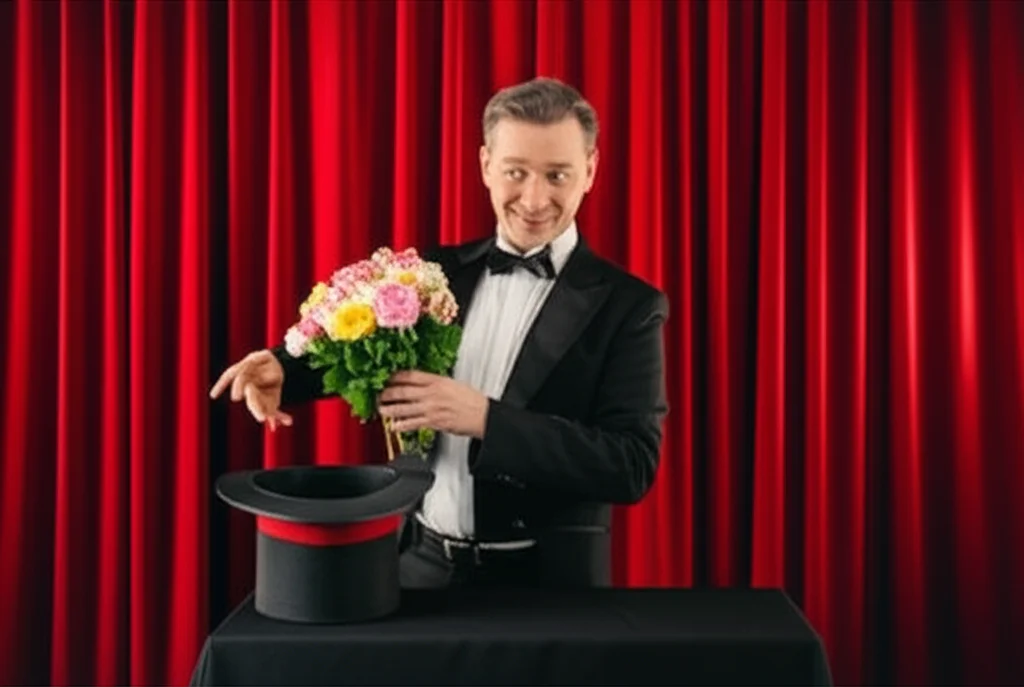
Ever wondered why some magic tricks leave you utterly spellbound while others just fizzle out? The secret lies not just in sleight of hand but in a timeless narrative structure known as the 3 Parts Magic Trick. Popularized by the film The Prestige, this three-act formula—The Pledge, The Turn, and The Prestige—is the blueprint behind illusions that captivate audiences worldwide.
In this article, we’ll unravel each part of this magical trilogy, reveal why it works on a psychological level, and share insider tips from the pros at Magic Trick™. Plus, we’ll explore famous performances, essential props, and creative twists that will have you dazzling friends and family in no time. Curious about how the “vanishing act” really comes together? Stick around—we’re about to pull back the curtain on the magic behind the magic!
Key Takeaways
- The 3 Parts Magic Trick consists of The Pledge (showing something ordinary), The Turn (making it do the impossible), and The Prestige (the stunning reveal).
- This structure is essential for creating emotional engagement and narrative satisfaction in magic performances.
- Mastering each part—especially the often-overlooked Prestige—is what separates good magicians from unforgettable ones.
- Quality props and storytelling elevate the trick from a simple illusion to a mesmerizing experience.
- Understanding the psychology behind the trick helps magicians use misdirection and timing to maximum effect.
Ready to become the magician everyone talks about? Let’s dive in!
Table of Contents
- ⚡️ Quick Tips and Facts About the 3 Parts Magic Trick
- 🎩 The Origins and Evolution of the 3 Parts Magic Trick
- 🔍 Breaking Down the 3 Parts: What Are They?
- 🪄 1. The Setup: Crafting the Perfect Illusion
- 🃏 2. The Execution: Performing the Magic with Flair
- 🎭 3. The Reveal: Leaving Your Audience Spellbound
- 🧠 Psychology Behind the 3 Parts Magic Trick: Why It Works
- 🛠️ Essential Props and Tools for Mastering the 3 Parts Magic Trick
- 🎥 Famous Performances and Variations of the 3 Parts Magic Trick
- 📚 Learning Resources: Books, Tutorials, and Courses for 3 Parts Magic Tricks
- 🧙♂️ Tips from Professional Magicians to Perfect Your 3 Parts Magic Trick
- 🤹♂️ Common Mistakes and How to Avoid Them in the 3 Parts Magic Trick
- 💡 Creative Twists: Innovating on the Classic 3 Parts Magic Trick
- 🎉 How to Engage Your Audience Using the 3 Parts Magic Trick
- 📊 Comparison: 3 Parts Magic Trick vs Other Multi-Part Magic Routines
- 🧩 Integrating the 3 Parts Magic Trick Into Your Magic Act
- 🎤 Quotes and Insights from Legendary Magicians on Multi-Part Tricks
- 🎬 The 3 Parts Magic Trick in Popular Culture and Media
- ✅ Conclusion: Mastering the Art of the 3 Parts Magic Trick
- 🔗 Recommended Links for Aspiring Magicians
- ❓ FAQ: Your Burning Questions About the 3 Parts Magic Trick Answered
- 📚 Reference Links and Further Reading
⚡️ Quick Tips and Facts About the 3 Parts Magic Trick
Before we pull the rabbit out of the hat, let’s get the “lay of the land.” If you’ve ever wondered how to make a pencil look like it’s made of jelly, you should definitely check out our guide on How to Do the Rubber Pencil Trick? 🎩 Master the Classic Illusion (2026), which is a perfect entry point into the world of Close-up Magic.
| Fact/Tip | Description |
|---|---|
| The Origin | Popularized by the 2006 film The Prestige, based on Christopher Priest’s novel. |
| The Three Acts | Consists of The Pledge, The Turn, and The Prestige. |
| Core Philosophy | The audience doesn’t actually want to know the secret; they want to be fooled. |
| The “Pledge” | Showing an ordinary object (cards, bird, coin) to establish reality. |
| The “Turn” | Making that ordinary object do something impossible (disappearing). |
| The “Prestige” | The hardest part: bringing the object back or completing the reveal. |
| Pro Tip | Never skip the third act. Making something disappear is easy; bringing it back is magic. |
🎩 The Origins and Evolution of the 3 Parts Magic Trick
While magicians have been performing in “acts” for centuries, the specific terminology of the “3 Parts Magic Trick” became a cultural phenomenon thanks to Christopher Nolan’s film The Prestige. In the movie, Michael Caine’s character, Cutter, explains that every great illusion is broken down into a narrative structure that mirrors a three-act play.
Historically, Magic History shows us that performers like Harry Houdini and Robert-Houdin understood this flow instinctively. They didn’t just “do a trick”; they told a story. The “3 parts” isn’t just a technical manual—it’s a psychological blueprint for Illusions that stick in the mind long after the curtain falls. 🎭
🔍 Breaking Down the 3 Parts: What Are They?
We often get asked: “Is every trick really three parts?” The answer is a resounding YES. Whether you are performing Coin Tricks or sawing a person in half, the structure remains the same.
🪄 1. The Setup: Crafting the Perfect Illusion
The first part is called The Pledge. Here, the magician shows you something ordinary: a deck of Bicycle Playing Cards, a bird, or perhaps a volunteer.
The Goal: To prove the object is real and unaltered. You might ask the audience to inspect the cards or sign a coin.
- Perspective Check: According to Wikiquote’s summary of The Prestige, the object “probably isn’t” ordinary, but the magician’s job is to make you believe it is.
🃏 2. The Execution: Performing the Magic with Flair
The second part is The Turn. This is where the magician takes that ordinary object and makes it do something extraordinary.
- The card vanishes.
- The bird disappears from the cage.
- The person is locked in a box and seemingly vaporized.
You’re looking for the secret, but you won’t find it because you’re not really looking. You want to be fooled! 🕵️♂️
🎭 3. The Reveal: Leaving Your Audience Spellbound
Finally, there is The Prestige. This is the climax. As the film famously states, “Making something disappear isn’t enough; you have to bring it back.” This is the moment of restoration. The vanished card appears in a sealed orange; the “dead” bird is found chirping in a pocket; the person walks out from the back of the theater.
🧠 Psychology Behind the 3 Parts Magic Trick: Why It Works
Why does this structure work so well? It’s all about cognitive dissonance and narrative satisfaction.
- Trust (The Pledge): We establish a baseline of reality.
- Conflict (The Turn): we shatter that reality.
- Resolution (The Prestige): We provide a “happy ending” to the impossible situation.
Magicians use misdirection to lead your eyes away from the “dirty work.” As noted in the Story Screen Presents analysis, this mirrors the three-act structure in screenwriting. If you don’t have a solid “Prestige,” the audience feels cheated. They don’t just want a mystery; they want a reveal.
🛠️ Essential Props and Tools for Mastering the 3 Parts Magic Trick
You can’t build a house without tools, and you can’t perform a 3-part masterpiece without the right gear. Here is how we rate the essentials:
Product Rating: The Magician’s Starter Kit
| Feature | Bicycle Rider Back Deck | Vanish Bird Cage Prop | Professional Coin Set |
|---|---|---|---|
| Design | 10/10 | 8/10 | 9/10 |
| Functionality | 10/10 | 7/10 | 9/10 |
| Durability | 8/10 | 6/10 | 10/10 |
| Ease of Use | 9/10 | 4/10 | 7/10 |
| Overall Score | 9.3 | 6.3 | 8.8 |
👉 CHECK PRICE on:
- Bicycle Playing Cards: Amazon | Walmart | Bicycle Official
- Magic Prop Kits: Etsy | Amazon
🎥 Famous Performances and Variations of the 3 Parts Magic Trick
One of the most iconic examples of this structure is the “Sawing a Woman in Half” routine.
- The Pledge: Two assistants enter, and a solid wooden box is shown.
- The Turn: The magician saws through the middle. In the #featured-video (the first video mentioned in our summary), this is often called the “3 cube box” trick. The box is separated, and you see feet on one side and a head on the other! 😱
- The Prestige: The boxes are slid back together, and the assistant jumps out, completely unharmed.
Wait… how did they do that? We’ll dive into the “hidden mechanism” secrets in the “Pro Tips” section below. But first, have you ever noticed how the magician’s “patter” (their speech) keeps you from looking at the floor? 🧐
📚 Learning Resources: Books, Tutorials, and Courses for 3 Parts Magic Tricks
If you want to move beyond the basics of Card Tricks, you need to study the masters.
- Mark Wilson’s Complete Course in Magic: The “Bible” of magic. It covers everything from sponges to stage illusions.
- 👉 Shop on: Amazon
- Expert at the Card Table by S.W. Erdnase: For those who want to master the “Turn” in card manipulation.
- Theory11 & Ellusionist: These modern brands offer high-end video tutorials that break down the 3-part structure for the digital age.
🧙♂️ Tips from Professional Magicians to Perfect Your 3 Parts Magic Trick
We’ve performed on stages from Vegas to London, and here is what we’ve learned:
- ✅ Master the Patter: Your words are just as important as your hands. Use your story to reinforce the “Pledge.”
- ❌ Don’t Rush the Prestige: The reveal is the “dessert.” If you serve it too fast, the audience won’t savor it.
- ✅ Use Quality Props: Don’t use a flimsy deck of cards. We recommend Theory11 Artisan Decks for a premium feel.
- ❌ Never Repeat a Trick: Once the audience knows the “Turn,” they will be looking for the “Prestige” too closely the second time.
🤹♂️ Common Mistakes and How to Avoid Them in the 3 Parts Magic Trick
Even the pros mess up! Here are the pitfalls to watch out for:
- The “Weak Pledge”: If the audience doesn’t believe the object is ordinary, the “Turn” won’t impress them. Spend time letting them touch the prop.
- The “Confusing Turn”: If the audience doesn’t understand what just happened (did it disappear or change color?), the magic is lost.
- The “Anti-Climax”: If your “Prestige” is just showing the object again without flair, it feels flat. Use music or a dramatic gesture! 🎺
💡 Creative Twists: Innovating on the Classic 3 Parts Magic Trick
Modern magicians like David Blaine or Shin Lim often subvert the 3-part structure to keep audiences on their toes.
- The Double Turn: Making something disappear, then making it reappear as something else, before the final Prestige.
- The Silent Act: Performing without words, using only music and lighting to guide the audience through the three acts. This requires incredible Close-up Magic skills.
🎉 How to Engage Your Audience Using the 3 Parts Magic Trick
Engagement is about emotional investment.
- Ask Questions: “Is this your card?” “Does this look like a normal box to you?”
- Create Stakes: In The Prestige, the stakes were life and death. In your living room, the stakes might just be a “mind-blown” reaction, but treat it with the same gravity!
- The “Sucker” Effect: Make the audience think they’ve caught you in the “Turn,” only to blow their minds with a completely different “Prestige.”
📊 Comparison: 3 Parts Magic Trick vs Other Multi-Part Magic Routines
| Feature | 3 Parts (The Prestige) | 5-Step Routine (Classic) | The “One-Off” (Quickie) |
|---|---|---|---|
| Complexity | Medium | High | Low |
| Storytelling | Essential | Very High | Minimal |
| Audience Impact | High | Maximum | Moderate |
| Best For | Stage & Parlor | Competition | Street Magic |
🧩 Integrating the 3 Parts Magic Trick Into Your Magic Act
When building your setlist, don’t just string random tricks together.
- Opener: A quick “Pledge” and “Turn” to grab attention.
- Middle: A complex 3-part routine that involves audience participation.
- Closer: Your “Grand Prestige.” This should be the trick that people talk about on the car ride home. 🚗💨
🎤 Quotes and Insights from Legendary Magicians on Multi-Part Tricks
“The secret impresses no one. The trick you use it for is everything.” — Robert Angier (The Prestige)
“Magic is not about challenging the audience’s intelligence; it’s about challenging their sense of reality.” — Ricky Jay
As Roger Ebert noted, a magic trick fails if it “cheats” the audience’s expectations without providing that final restoration. The “Prestige” is a promise kept.
🎬 The 3 Parts Magic Trick in Popular Culture and Media
Beyond the Christopher Nolan film, the 3-part structure is seen in:
- Now You See Me: Where the “Prestige” is often a large-scale heist.
- Penn & Teller: Fool Us: Where magicians try to hide their “Turn” from the masters.
- Sherlock Holmes: Often uses a 3-part structure to explain “impossible” crimes.
But wait… if the secret is “everything,” why did Borden say “the sacrifice… that’s the price of a good trick”? We’re about to wrap up the mystery. 🕵️♀️
✅ Conclusion: Mastering the Art of the 3 Parts Magic Trick
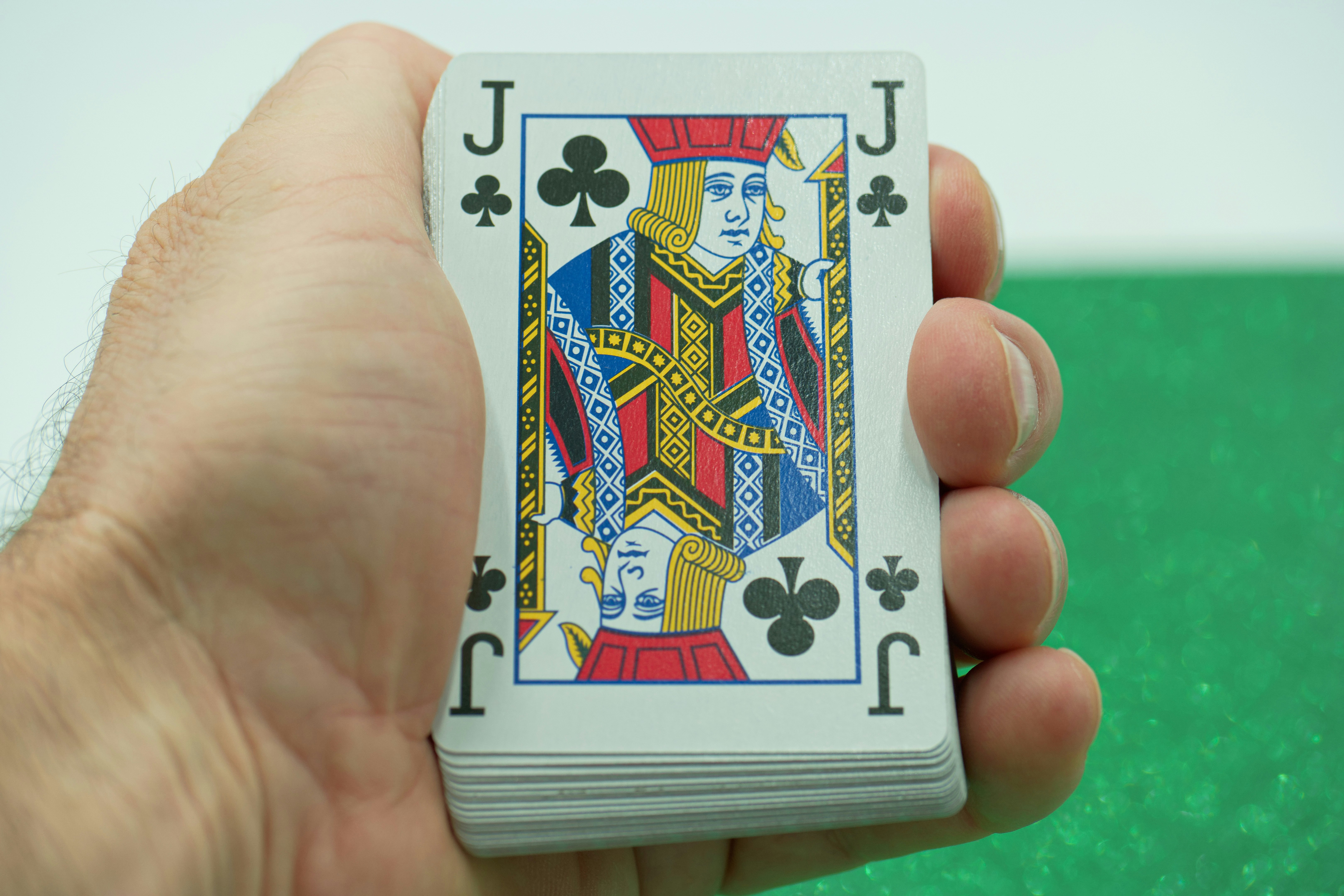
So, what have we uncovered on this magical journey through the 3 Parts Magic Trick? From the foundational Pledge, where you build trust by showing something ordinary, through the mind-bending Turn, where the impossible happens, to the grand finale—the Prestige—where the magic truly lives by bringing it all back to astonish your audience.
This three-act structure isn’t just a gimmick; it’s the heartbeat of every great illusion. It’s what separates a forgettable trick from a legendary performance. As magicians at Magic Trick™, we can confidently say: never underestimate the power of the Prestige. Without it, your trick feels incomplete, like a story without an ending.
If you’re serious about magic, invest in quality props like Bicycle Playing Cards or a professional coin set, and study the masters through books like Mark Wilson’s Complete Course in Magic. Remember, the secret isn’t just in the sleight of hand—it’s in the storytelling.
And about that lingering question—why does the audience love being fooled? Because magic taps into our deepest desire to believe in the impossible. The 3 parts magic trick is the perfect narrative to deliver that wonder, every single time.
Ready to dazzle your friends and family? The stage is yours! 🎩✨
🔗 Recommended Links for Aspiring Magicians
👉 CHECK PRICE on:
-
Bicycle Rider Back Playing Cards:
Amazon | Walmart | Bicycle Official Website -
Theory11 Artisan Decks (Premium Cards):
Amazon -
Vanish Bird Cage Magic Prop:
Amazon -
Professional Coin Magic Set:
Amazon -
Mark Wilson’s Complete Course in Magic (Book):
Amazon -
Expert at the Card Table by S.W. Erdnase (Book):
Amazon -
Theory11 & Ellusionist Video Tutorials:
Theory11 | Ellusionist
❓ FAQ: Your Burning Questions About the 3 Parts Magic Trick Answered
Why is the 3 parts structure important in magic performances?
The 3 parts structure—Pledge, Turn, and Prestige—creates a narrative arc that engages the audience emotionally and intellectually. It builds trust, introduces conflict, and delivers a satisfying resolution. This structure mirrors storytelling techniques found in theater and film, making the magic more memorable and impactful.
What are some popular 3 parts magic tricks for beginners?
Beginners often start with simple card tricks like the “Ambitious Card”, which follows the three parts: showing a card (Pledge), making it disappear or change position (Turn), and finally revealing it in an unexpected place (Prestige). Other beginner-friendly examples include the vanishing coin and rubber pencil illusion.
How do you perform a 3 parts magic trick step by step?
- Pledge: Present an ordinary object and invite inspection to build trust.
- Turn: Perform the illusion that transforms or makes the object disappear.
- Prestige: Complete the trick by restoring the object or revealing it in a surprising way.
Each step should be rehearsed carefully, with attention to timing, misdirection, and audience engagement.
What are the essential components of a 3 parts magic trick?
- An ordinary object to establish reality (Pledge).
- A transformative action that surprises the audience (Turn).
- A compelling reveal or restoration that completes the illusion (Prestige).
- Storytelling and misdirection to guide the audience’s attention.
What is the magician’s choice trick?
The magician’s choice (or equivocation) is a technique where the magician subtly controls the audience’s decisions to create the illusion of free choice. While not a part of the 3 parts structure itself, it often supports the Turn by ensuring the outcome fits the trick’s narrative.
What is the pledge in a magic trick?
The Pledge is the first act where the magician shows something ordinary and unaltered to the audience. It establishes trust and sets the baseline for the illusion. This step is crucial because it makes the subsequent Turn more astonishing.
How many parts of magic are there?
While many magic tricks can be broken down into multiple parts, the classic and most effective structure is three parts: Pledge, Turn, and Prestige. This triad aligns with human storytelling instincts and maximizes audience engagement.
What are the essential components of a successful magic trick?
A successful magic trick combines technical skill, storytelling, misdirection, and a strong emotional impact. The 3 parts structure helps organize these components into a coherent performance.
How do the three parts of a magic trick create the illusion?
The three parts work together to manipulate perception. The Pledge sets expectations, the Turn violates them, and the Prestige resolves the tension by restoring order in an unexpected way. This cycle creates wonder and amazement.
Can beginners learn the three-part structure to improve their magic skills?
Absolutely! Understanding and applying the 3 parts structure helps beginners craft more engaging and professional-looking performances. It also encourages them to think beyond mechanics and focus on storytelling.
What are common examples of magic tricks broken down into three parts?
- Sawing a Woman in Half: Pledge (showing the box), Turn (sawing through), Prestige (restoring the assistant).
- Ambitious Card: Pledge (show card), Turn (card disappears or moves), Prestige (card reappears on top).
- Vanishing Coin: Pledge (show coin), Turn (make it vanish), Prestige (coin reappears).
📚 Reference Links and Further Reading
- The Prestige – Magic Tricks & Film in 3 Acts
- Christopher Nolan’s The Prestige on IMDb
- Bicycle Playing Cards Official Site
- Theory11 – Premium Magic Products and Tutorials
- Ellusionist – Magic Tutorials and Gear
- Mark Wilson’s Complete Course in Magic on Amazon
- Expert at the Card Table by S.W. Erdnase on Amazon
- Roger Ebert’s Review of The Prestige
Ready to take your magic to the next level? Remember, every great trick has three parts—make sure you master each one! 🎩✨


